Weed
hairy clustervine, clustervine
True seedTrue seed:
A mature fertilized ovule consisting of an embryo, with or without and external food reserve (e.g., endosperm) enclosed by the testa.
ObovateObovate:
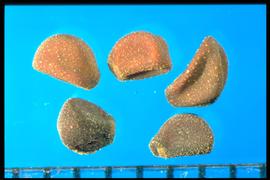
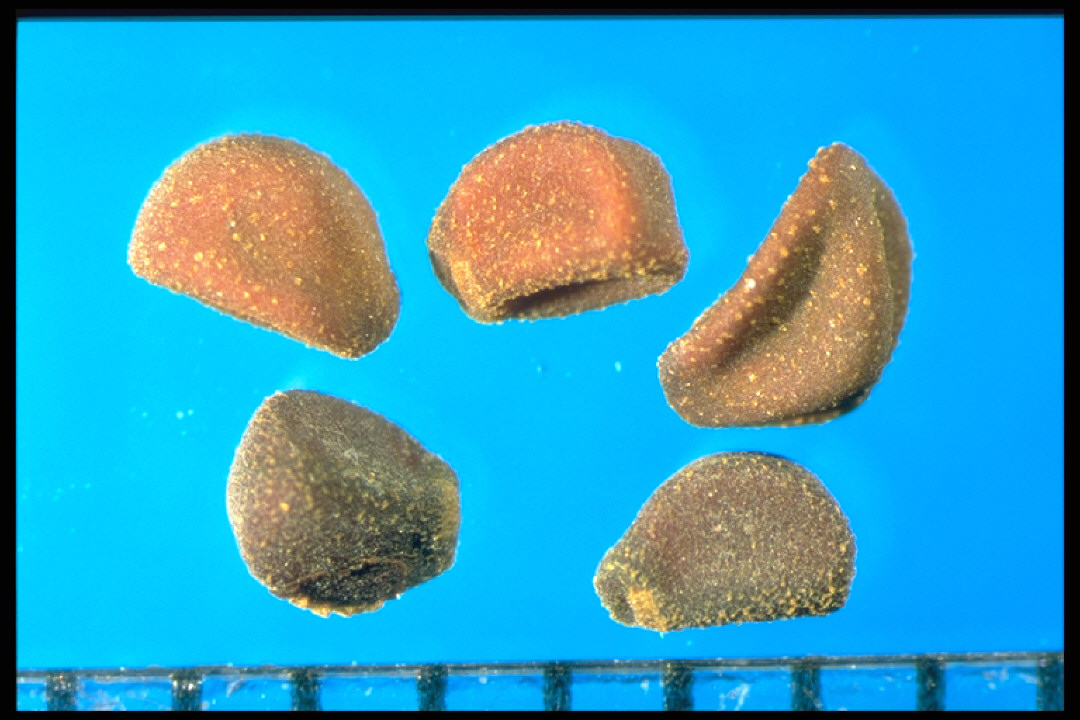
Inverted egg shaped with apical end the broadest.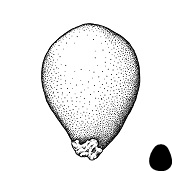 with two flat sides
Brown
Dull with tuberculateTuberculate:
Having small pimple-like protuberances.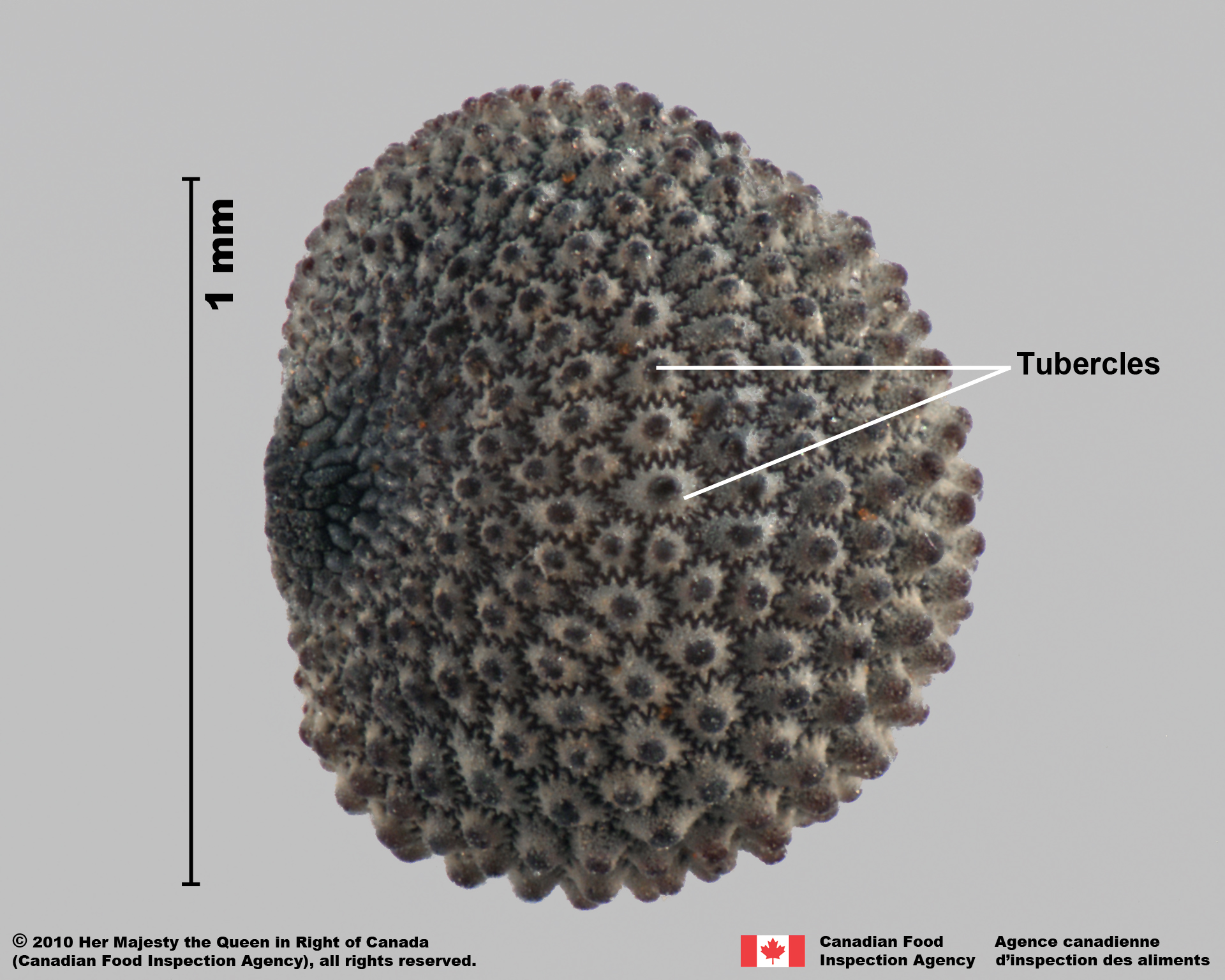 protuberances
HilumHilum:
The scar on the seed coat at the place of its detachment from the seed stalk (funiculus).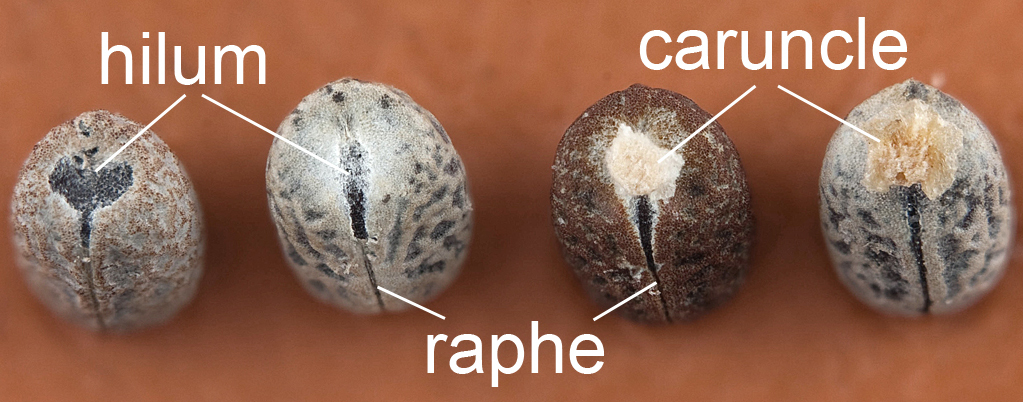 axis is not parallel to seed axis.
Seeds very small with wide-spaced tubercles. Axis of hilumHilum:
The scar on the seed coat at the place of its detachment from the seed stalk (funiculus). is not parallel to seed axis.
Not listed
Not included
Convolvulaceae
Jacquemontia tamnifolia (L.) Griseb.
Ipomoea tamnifolia L.
Thyella tamnifolia (L.) Raf.