Imperata brasiliensis

Species category

Weed

Common name

Brazilian satintail

Diagnostic characters

Planting unit

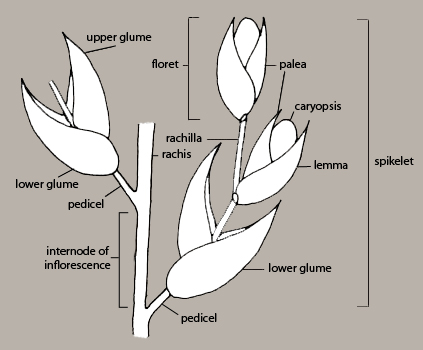
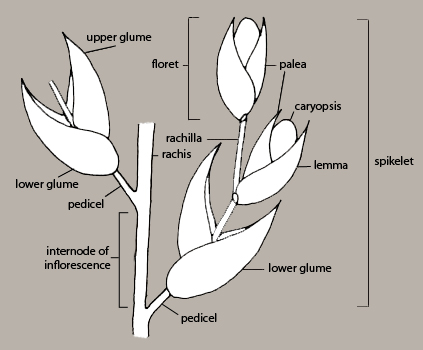
FloretFloret:
A small flower in a clustered inflorescence (e.g., sunflower, grasses). In grasses, a floret consists of the lemma, palea, stamens, and pistil.
Shape

Lanceolate 

Size

  • Length 3–3.5 mm 
  • Width 0.4–0.6 mm 
  • Thickness 0.4–0.6 mm 

Color

Light brown

Texture

Smooth 

Lemma

Long, pointed without awnAwn:
A narrow, bristle-like organ, as on the glumes or lemmas of grasses (Poaceae).
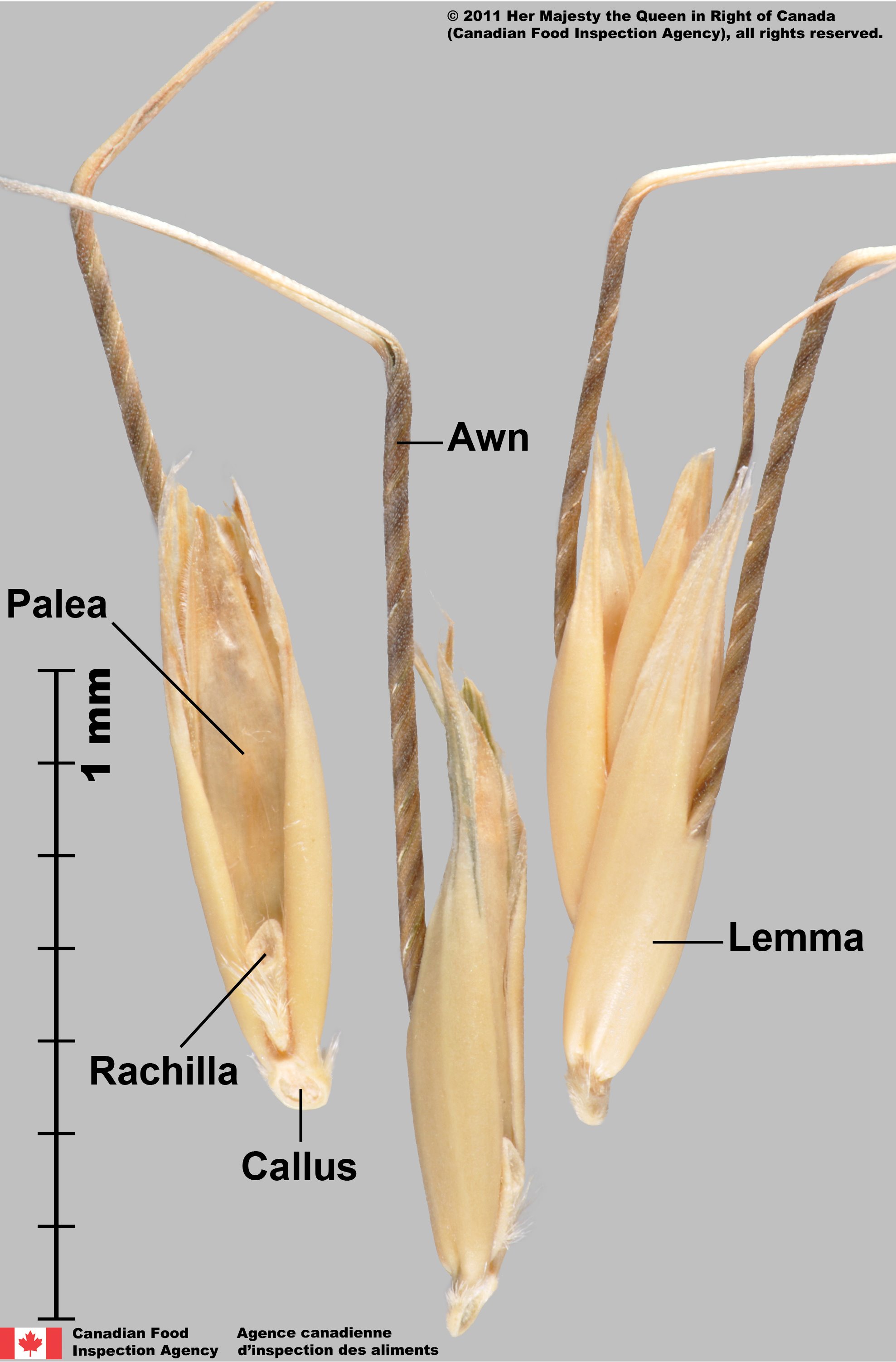
Palea

Length same as lemmaLemma:
One of two bracts of the grass floret; it is located on the side nearest the embryo and opposite the rachilla.
; apicalApical:
The distal end of the fruit or seed away from the point of attachment or attachment scar.
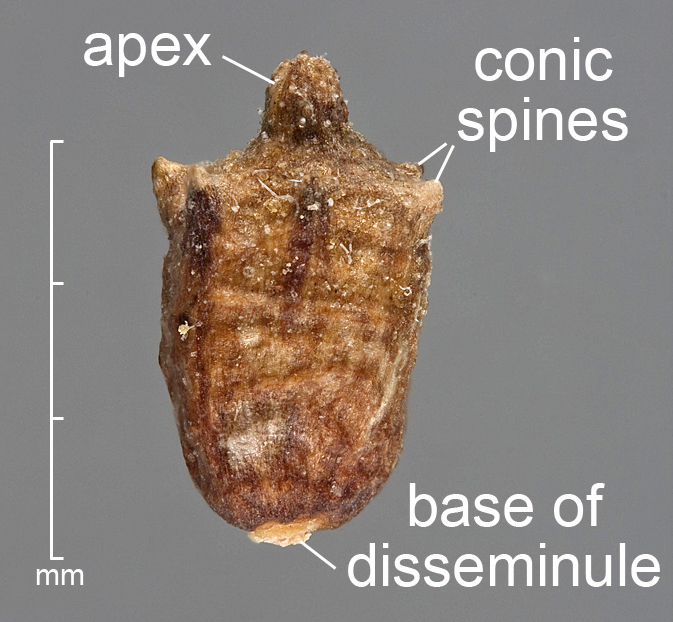
ends transparent.

Other structures

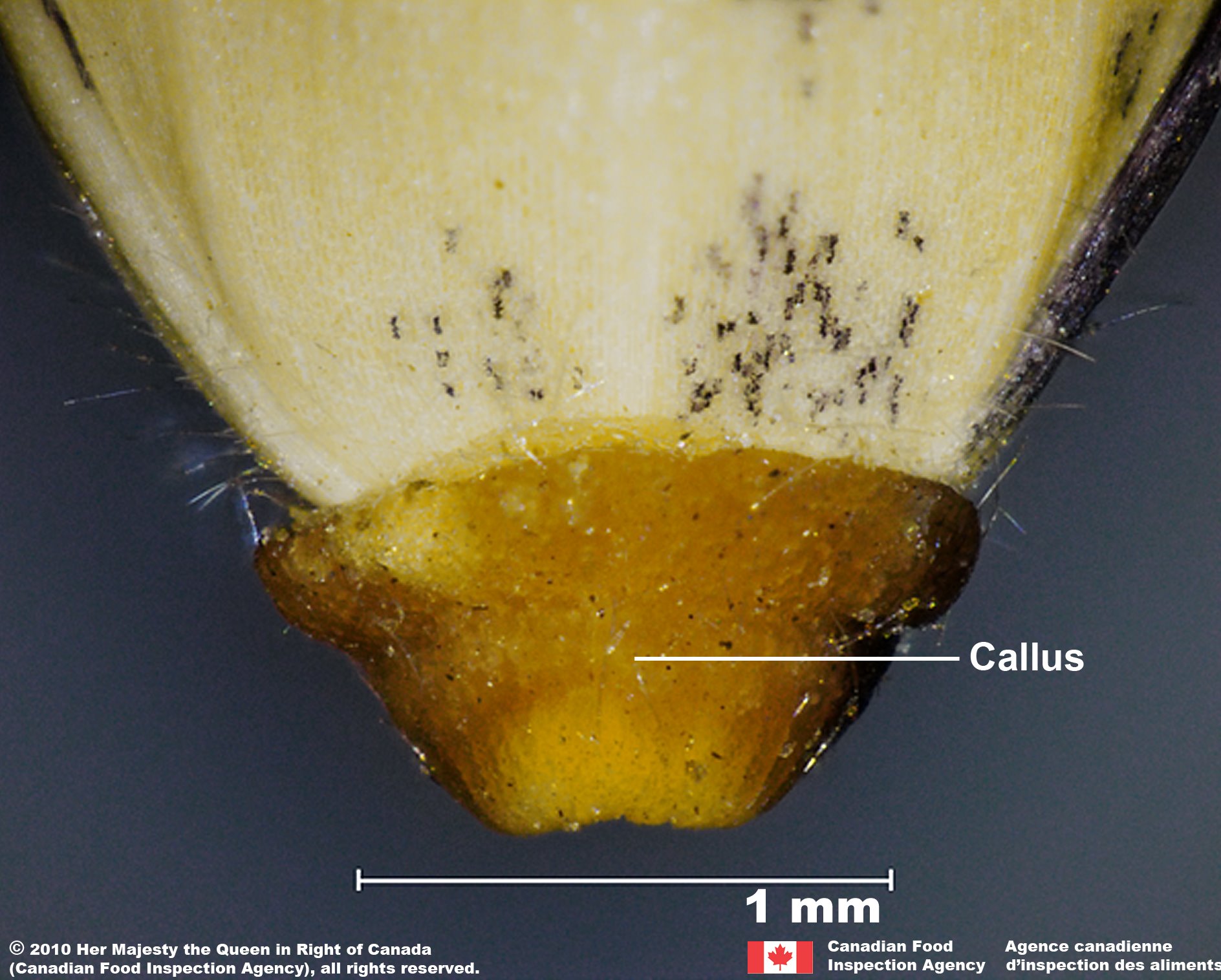
Many long, silky hairs from the callusCallus:
The hard base of grass florets or spikelets, just above the point of disarticulation.
Identification notes

Caryopses are obovateObovate:
Inverted egg shaped with apical end the broadest.
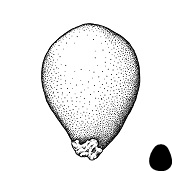
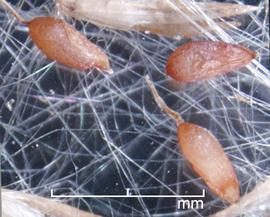
, brown, and about 1 mm long.

Noxious weed seed categories

Federal 

Learn more on ITP's Federal Noxious Weed Disseminules tool.

AOSA examination list

Not included

Nomenclature

Family

Poaceae

Valid name

Imperata brasiliensis Trin.

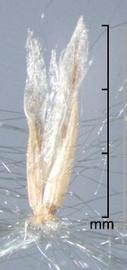
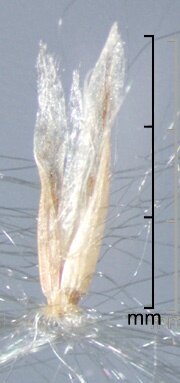
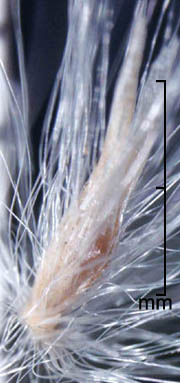
 Imperata brasiliensis.  Florets with transparent apical ends. Photo by Julia Scher, USDA-APHIS-PPQ.
Imperata brasiliensis. Florets with transparent apical ends. Photo by Julia Scher, USDA-APHIS-PPQ.
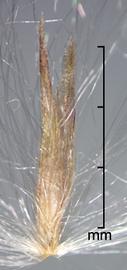
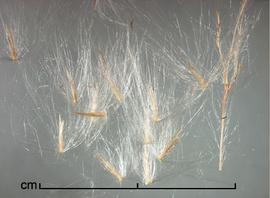
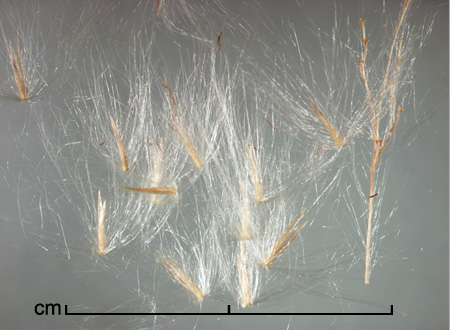
 Imperata brasiliensis.  Florets with many long, silky hairs coming from the callus. Photo by Julia Scher, USDA-APHIS-PPQ.
Imperata brasiliensis. Florets with many long, silky hairs coming from the callus. Photo by Julia Scher, USDA-APHIS-PPQ.
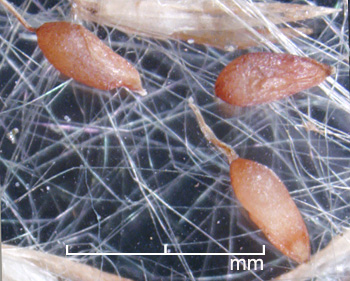
 Imperata brasiliensis.  Caryopses are obovate, brown, and about 1 mm long. Photo by Julia Scher, USDA-APHIS-PPQ.
Imperata brasiliensis. Caryopses are obovate, brown, and about 1 mm long. Photo by Julia Scher, USDA-APHIS-PPQ.
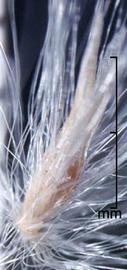
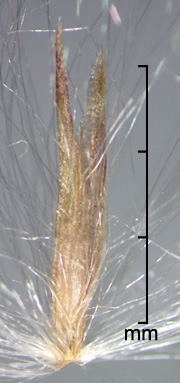
 Imperata brasiliensis.  Florets with many long, silky hairs coming from the callus. Photo by Julia Scher, USDA-APHIS-PPQ.
Imperata brasiliensis. Florets with many long, silky hairs coming from the callus. Photo by Julia Scher, USDA-APHIS-PPQ.
 Imperata brasiliensis.  Florets with many long, silky hairs coming from the callus. Photo by Julia Scher, USDA-APHIS-PPQ.
Imperata brasiliensis. Florets with many long, silky hairs coming from the callus. Photo by Julia Scher, USDA-APHIS-PPQ.