Weed
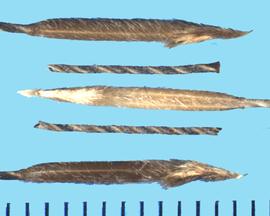
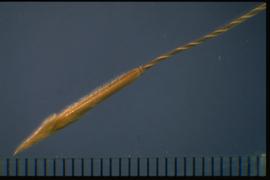
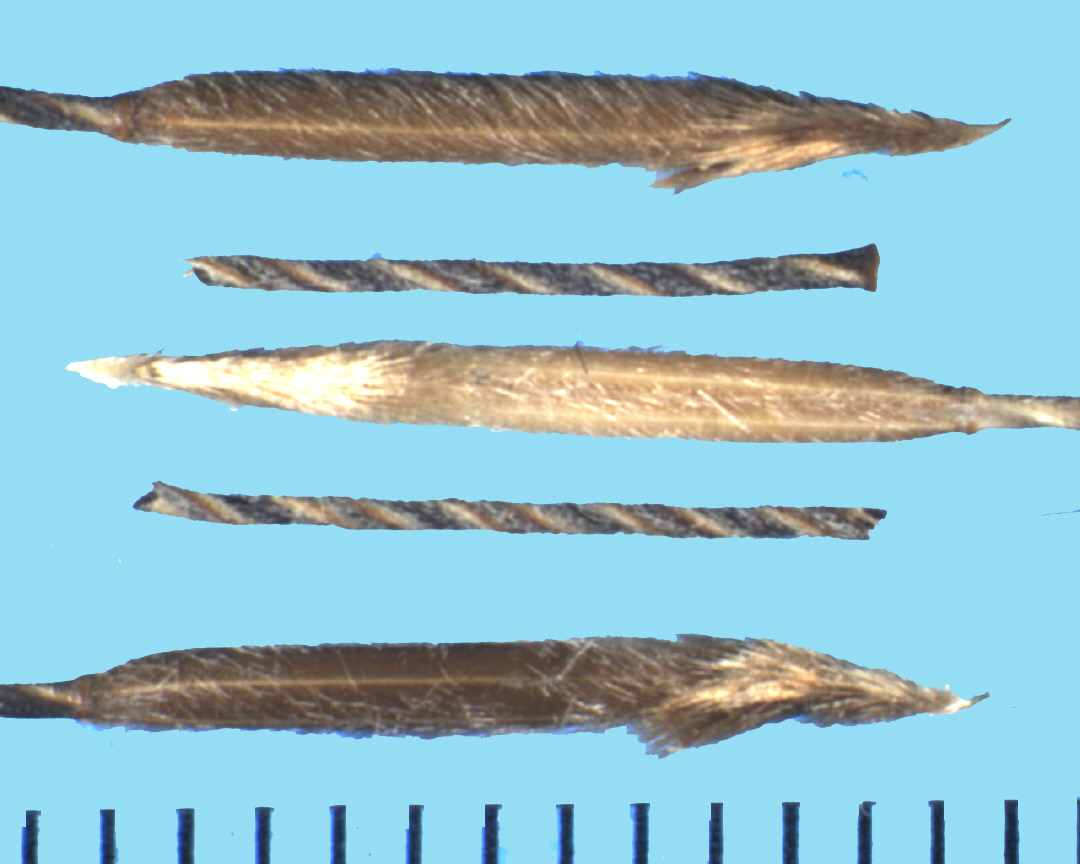
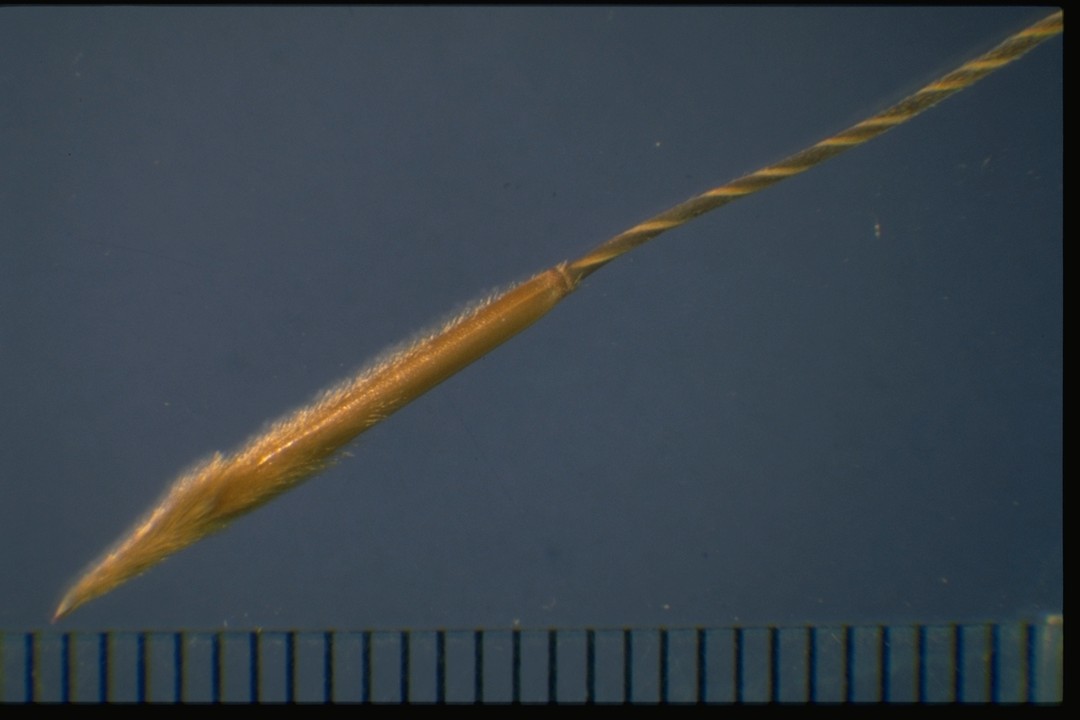
porcupinegrass
FloretFloret:
A small flower in a clustered inflorescence (e.g., sunflower, grasses). In grasses, a floret consists of the lemma, palea, stamens, and pistil.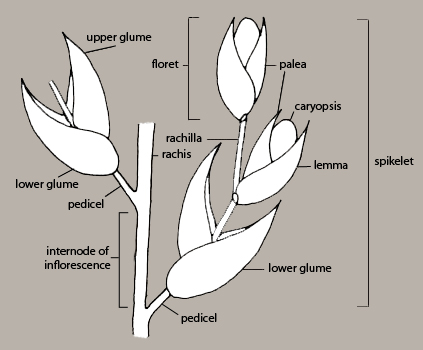
Linear to cylindrical
Brown; light brown longitudinal lines
CallusCallus:
The hard base of grass florets or spikelets, just above the point of disarticulation.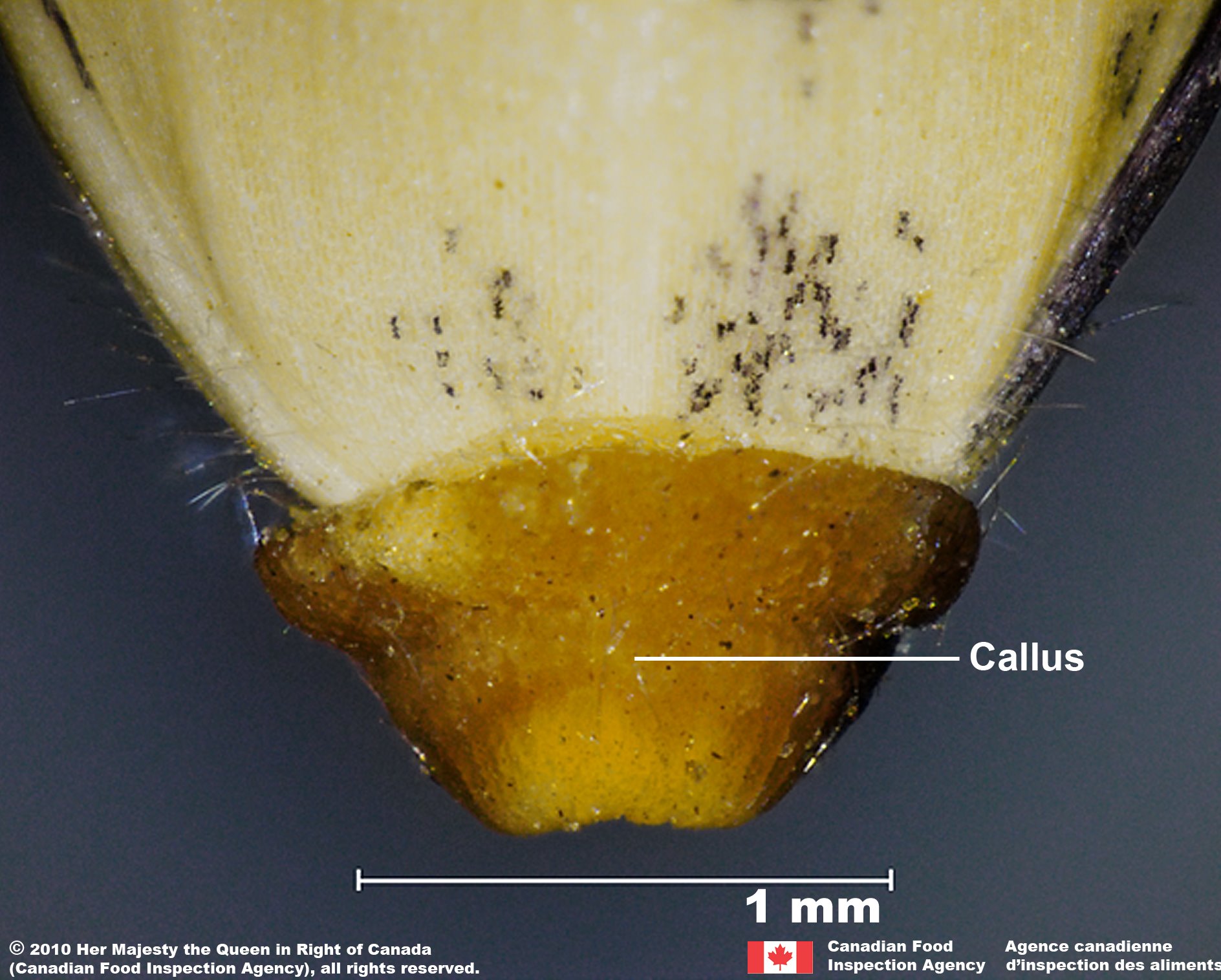 with long, backward pointing hairs; short hairs on the lemmaLemma:
One of two bracts of the grass floret; it is located on the side nearest the embryo and opposite the rachilla.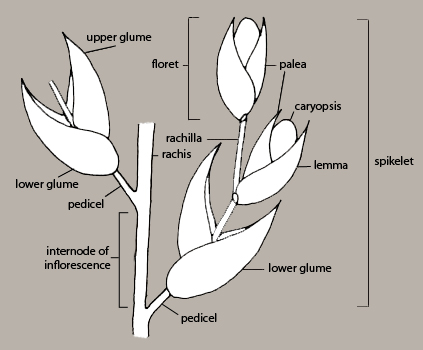 .
.
CallusCallus:
The hard base of grass florets or spikelets, just above the point of disarticulation. is sharp pointed. Both callusCallus:
The hard base of grass florets or spikelets, just above the point of disarticulation. and lemmaLemma:
One of two bracts of the grass floret; it is located on the side nearest the embryo and opposite the rachilla. are hard. LemmaLemma:
One of two bracts of the grass floret; it is located on the side nearest the embryo and opposite the rachilla. with a small crown on the apexApical:
The distal end of the fruit or seed away from the point of attachment or attachment scar.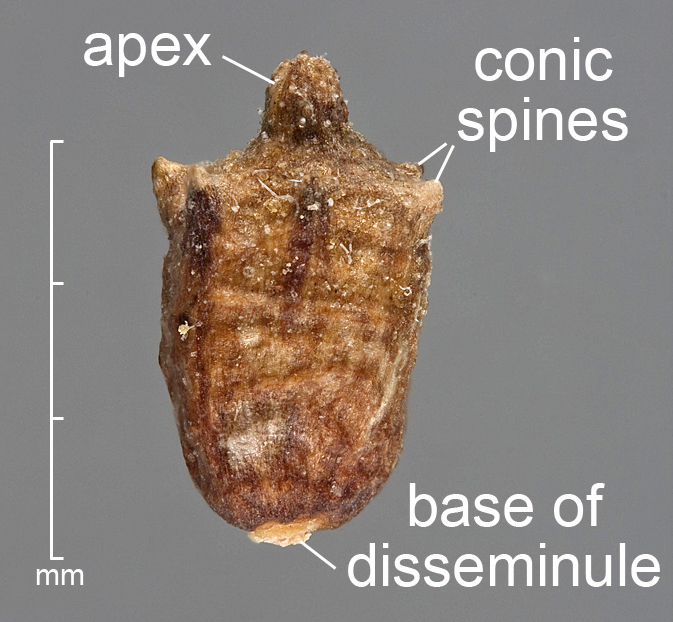 supporting a geniculateGeniculate:
Bent at a sharp angle.
awn.
Totally enclosed in the lemmaLemma:
One of two bracts of the grass floret; it is located on the side nearest the embryo and opposite the rachilla.
Long twisted awnAwn:
A narrow, bristle-like organ, as on the glumes or lemmas of grasses (Poaceae).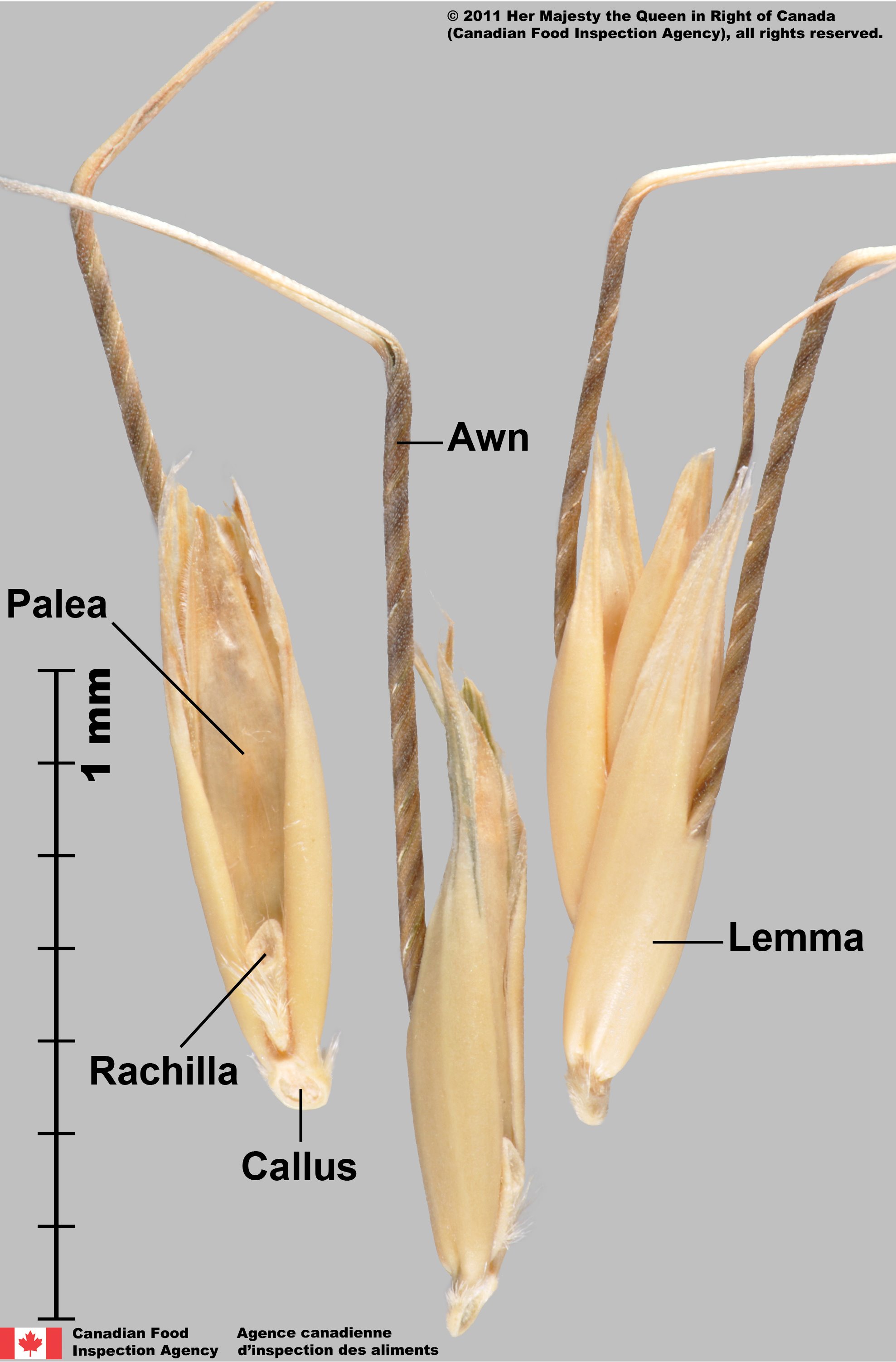 terminating with a lateral arm.
Point of the callusCallus:
The hard base of grass florets or spikelets, just above the point of disarticulation. slightly curved.
Not listed
Not included
Poaceae
Hesperostipa spartea (Trin.) Barkworth
Stipa spartea Trin.