Weed
American mannagrass
FloretFloret:
A small flower in a clustered inflorescence (e.g., sunflower, grasses). In grasses, a floret consists of the lemma, palea, stamens, and pistil.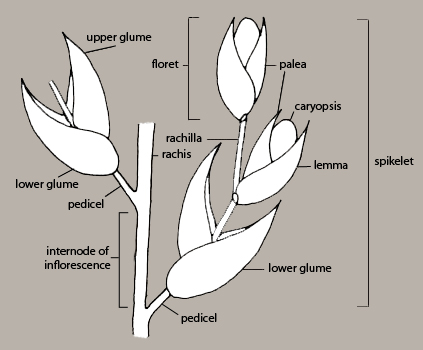
ObovateObovate:
Inverted egg shaped with apical end the broadest.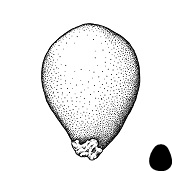
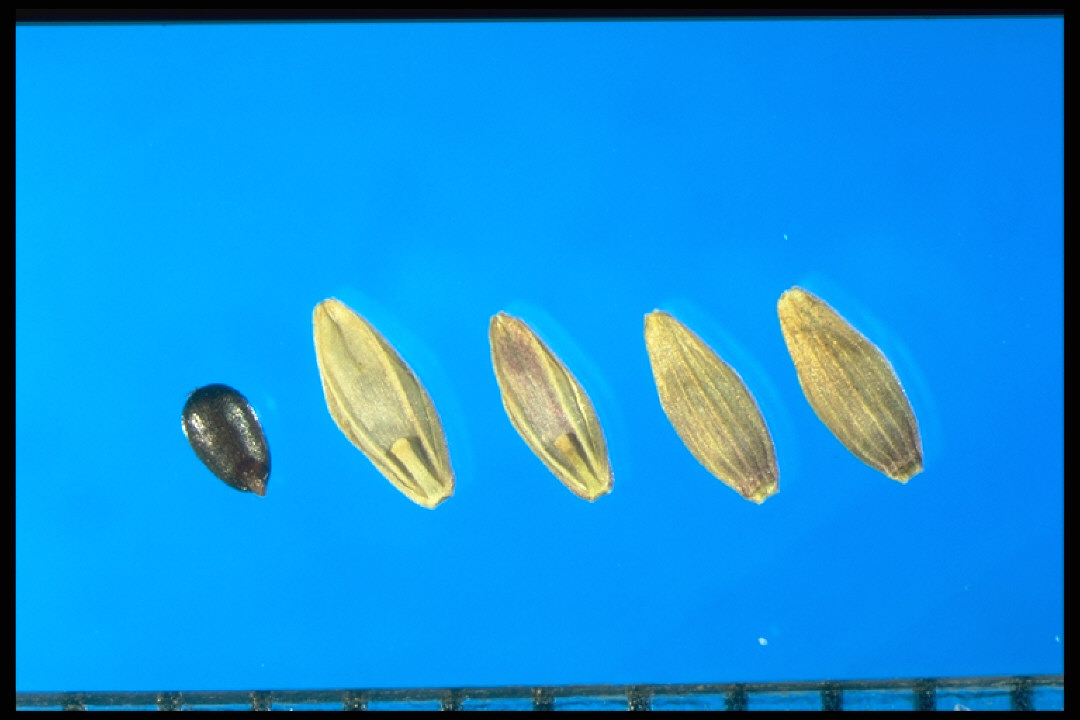
Light brown with purple tinge
Lines on lemmaLemma:
One of two bracts of the grass floret; it is located on the side nearest the embryo and opposite the rachilla.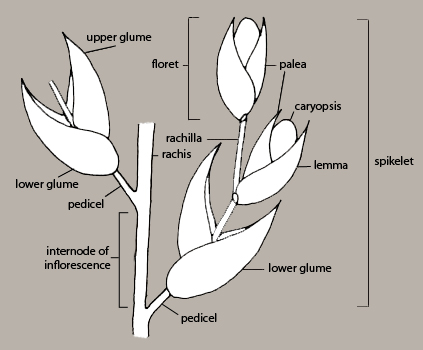 finely tuberculateTuberculate:
Having small pimple-like protuberances.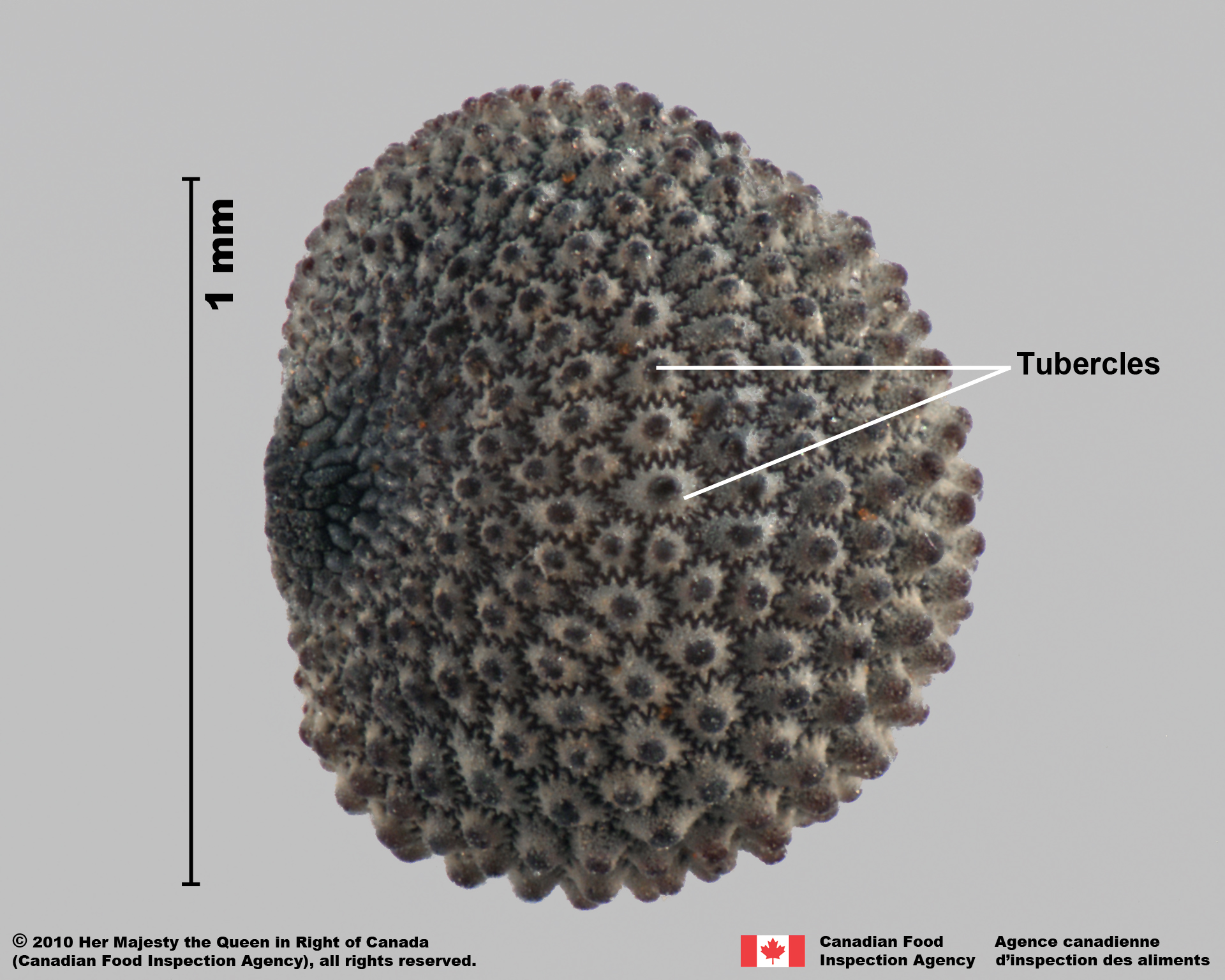 ; paleaPalea:
One of the thin bracts of grass floret enclosing the fruit (caryopsis) that is located on the side opposite the embryo.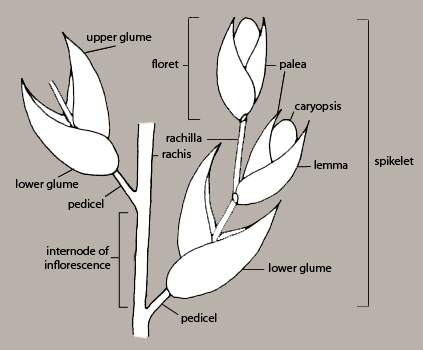 smooth and hairy margins.
5-6 longitudinal lines; small, thin hump above callusCallus:
The hard base of grass florets or spikelets, just above the point of disarticulation.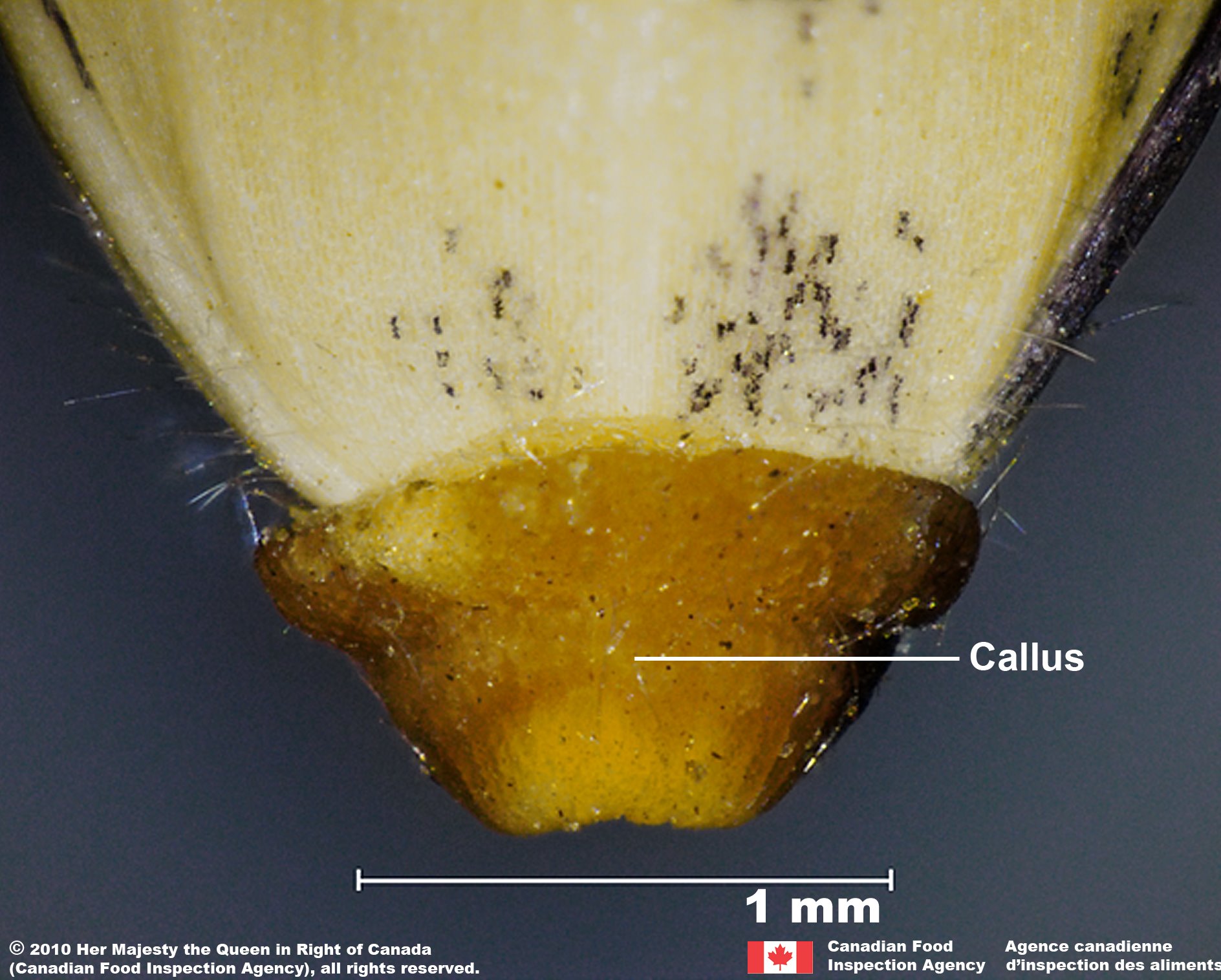 .
.
Same length as lemmaLemma:
One of two bracts of the grass floret; it is located on the side nearest the embryo and opposite the rachilla. and protruding outward
Thin callusCallus:
The hard base of grass florets or spikelets, just above the point of disarticulation. below hump; rachillaRachilla:
The axis of a spikelet.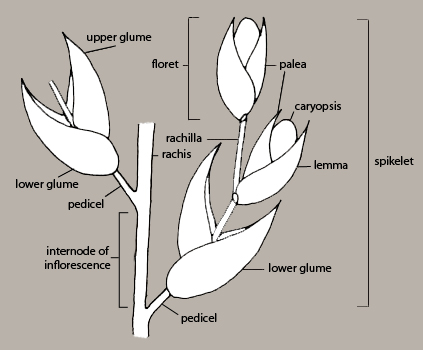 widest at base and apexApical:
The distal end of the fruit or seed away from the point of attachment or attachment scar.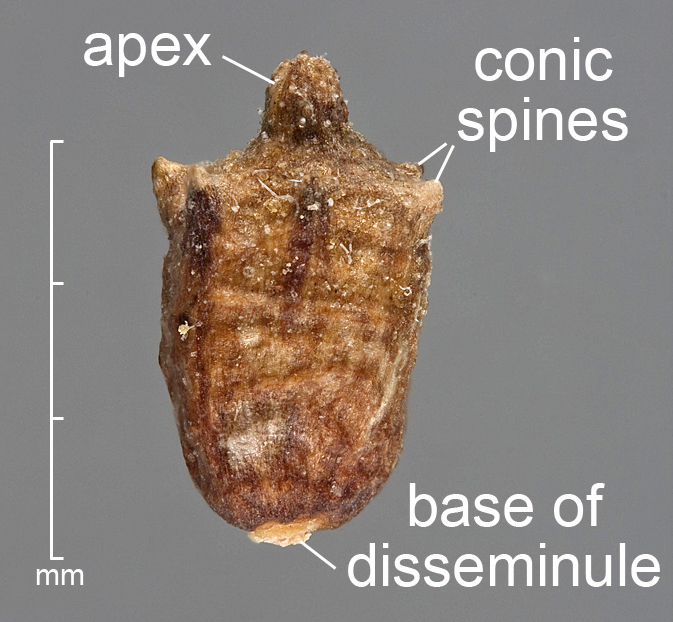 .
.
CaryopsisCaryopsis:
The single-seeded fruit or grain of the grass family (Poaceae); the fruit wall (pericarp) is united with the seed coat (testa).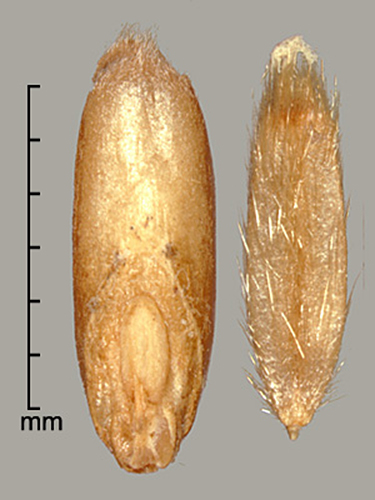 is very dark and obovoid. PaleaPalea:
One of the thin bracts of grass floret enclosing the fruit (caryopsis) that is located on the side opposite the embryo. is slightly convex at its base to accommodate the rounded caryopsisCaryopsis:
The single-seeded fruit or grain of the grass family (Poaceae); the fruit wall (pericarp) is united with the seed coat (testa)..
Not listed
Included
Poaceae
Glyceria grandis S. Watson