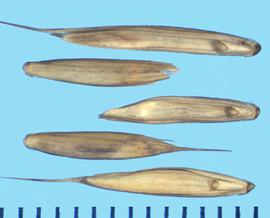
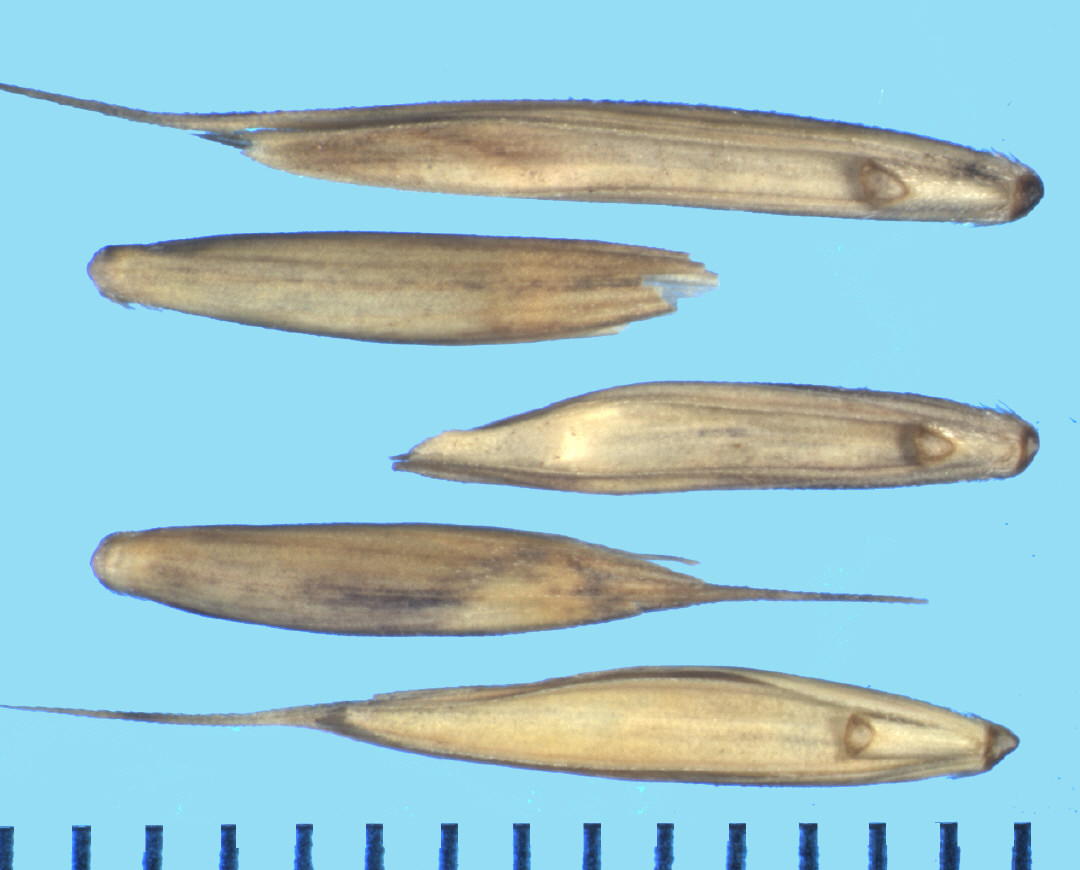
Revegetation or Rangeland
lappelm
FloretFloret:
A small flower in a clustered inflorescence (e.g., sunflower, grasses). In grasses, a floret consists of the lemma, palea, stamens, and pistil.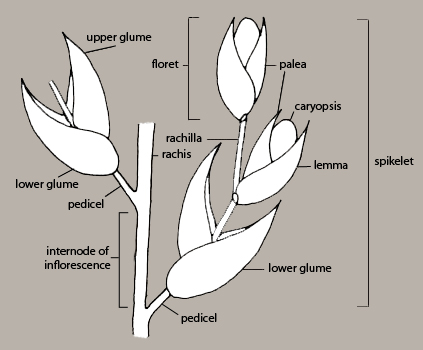
EllipticElliptic:
Outline of an ellipse; greatest width midway sloping to an equally pointed apex and base.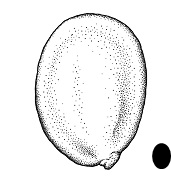
Brown
Smooth
Lanceolate; no hump near the callusCallus:
The hard base of grass florets or spikelets, just above the point of disarticulation.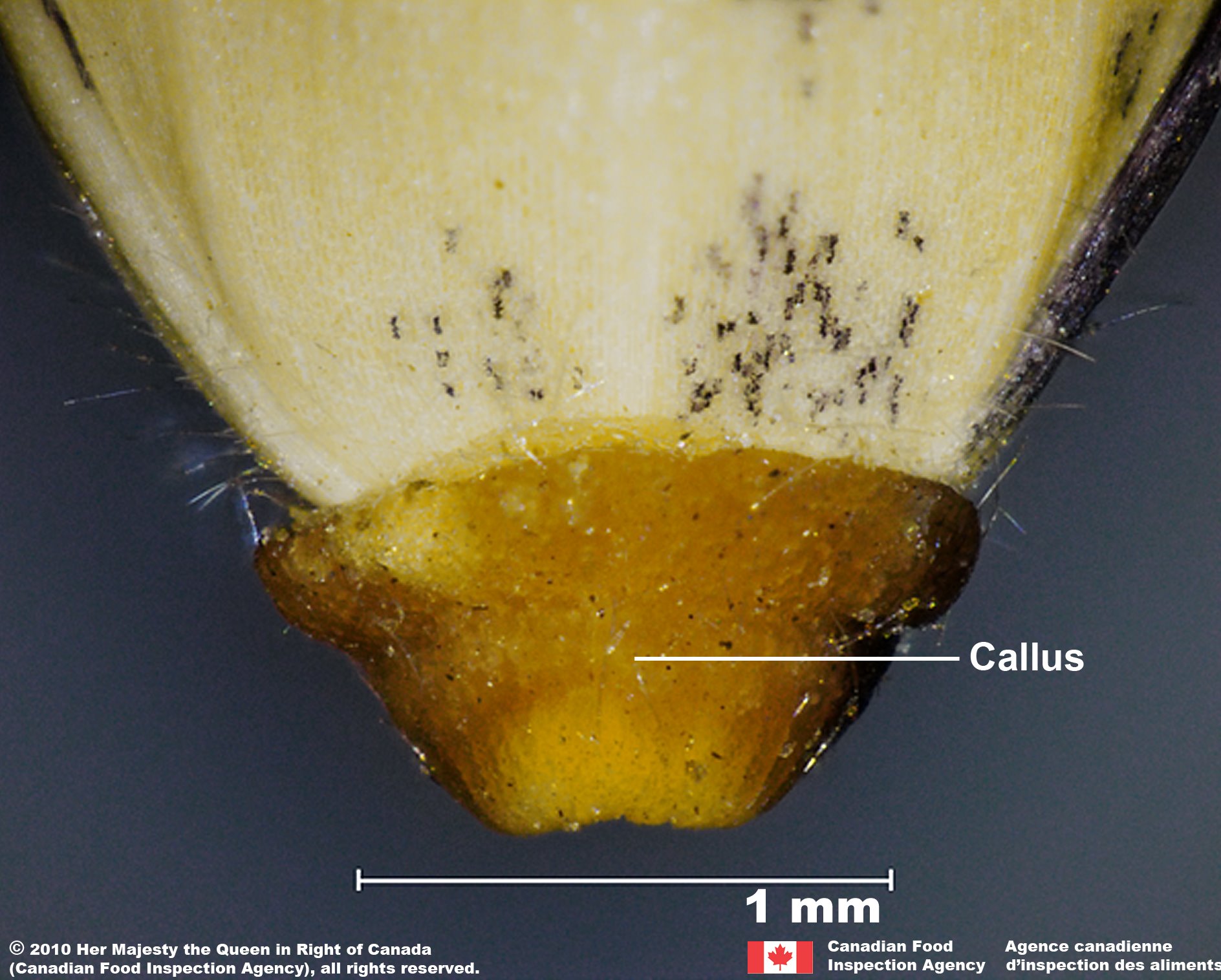 .
.
Keels ciliate. PaleaPalea:
One of the thin bracts of grass floret enclosing the fruit (caryopsis) that is located on the side opposite the embryo.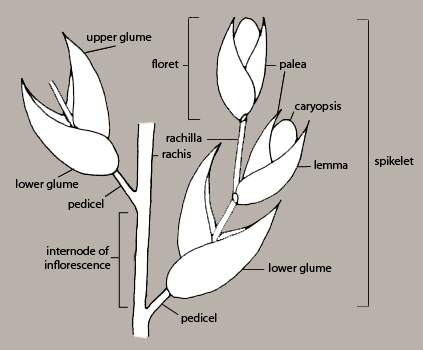 is the same length as the lemmaLemma:
One of two bracts of the grass floret; it is located on the side nearest the embryo and opposite the rachilla.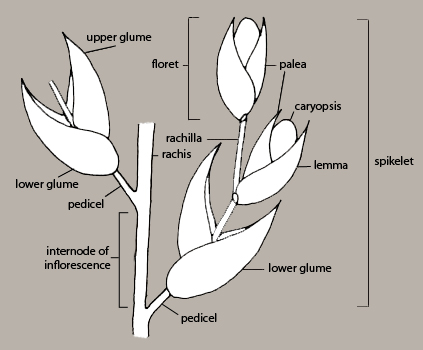 .
.
Short awnAwn:
A narrow, bristle-like organ, as on the glumes or lemmas of grasses (Poaceae).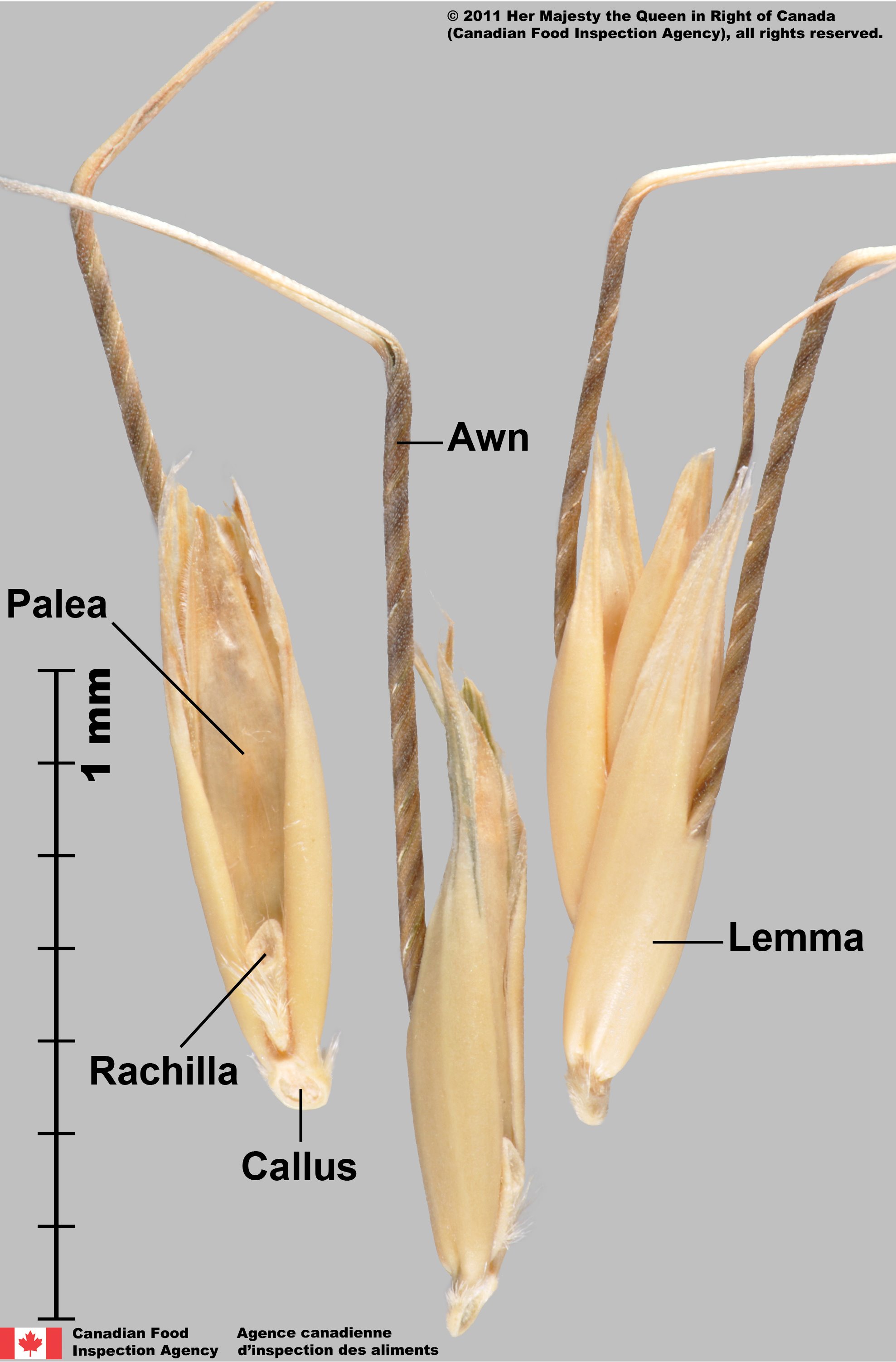 . Lateral sides of the callusCallus:
The hard base of grass florets or spikelets, just above the point of disarticulation. have hispid hairs.
RachillaRachilla:
The axis of a spikelet.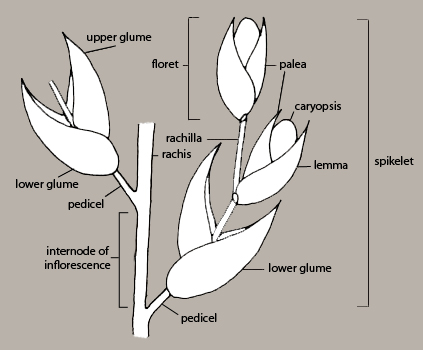 is pubescentPubescent:
Having hairs.
.
Not listed
Not included
Poaceae
Elymus mutabilis (Drobow) Tzvelev