Crupina crupinastrum

Species category

Weed

Common name

false saw wort

Diagnostic characters

Planting unit

AcheneAchene:
A dry, hard, one-chambered, one-seeded indehiscent fruit, as in buckwheat (Fagopyrum) or sunflower (Helianthus). The fruit wall is not united with the seed coat.
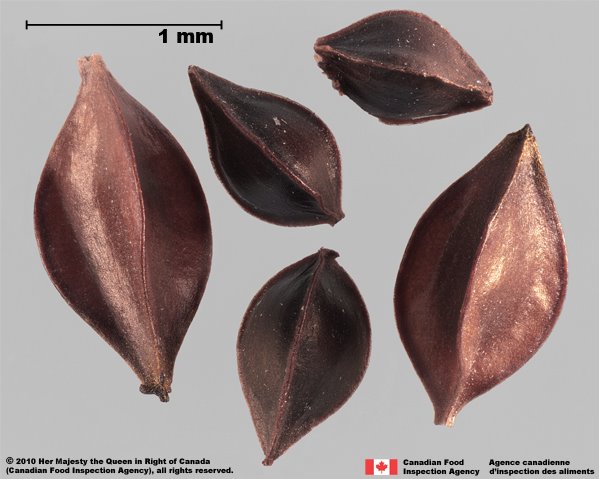
Shape

Cylindrical, but tapered at the base

Size

  • Length 4–4.2 mm
  • Width 2–2.1 mm
  • Thickness 2–2.1 mm

Color

Light to dark brown

Texture

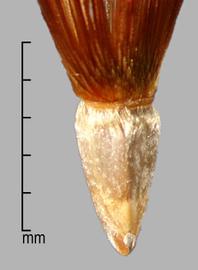
Hairy, soft, and scurfyScurf:
Having flakes on the surface.
at the base

Other structures

HilumHilum:
The scar on the seed coat at the place of its detachment from the seed stalk (funiculus).
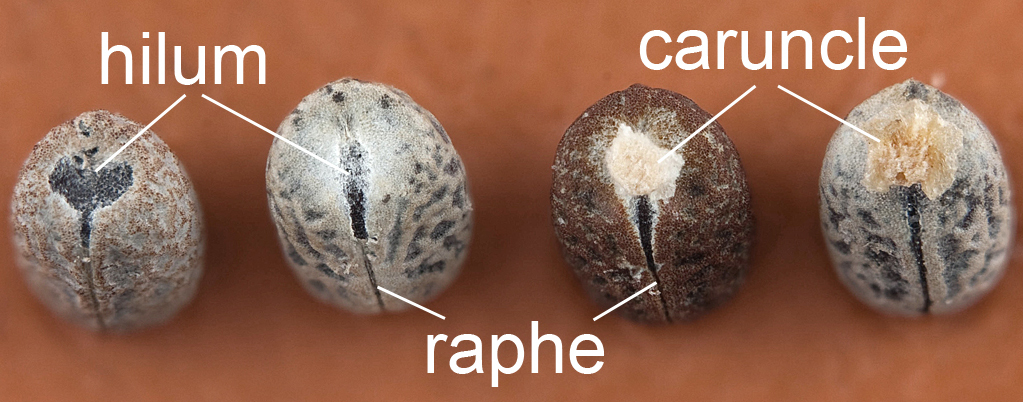
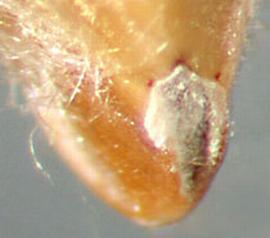
lateral to the base and with a white cover

Identification notes

PappusPappus:
Modified calyx in Asteraceae, composed of hairs, bristles, awns, or scales. The pappus-like structure attached to milkweed seeds is termed a coma. 
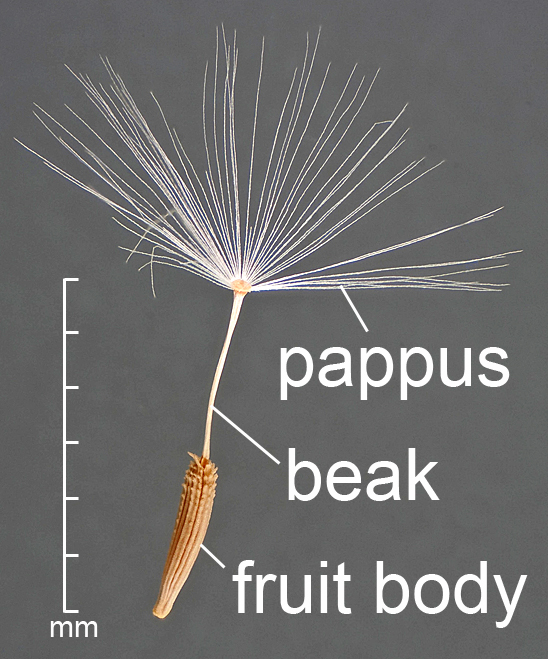
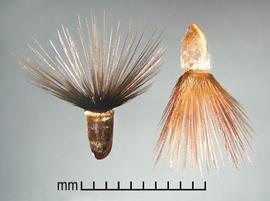
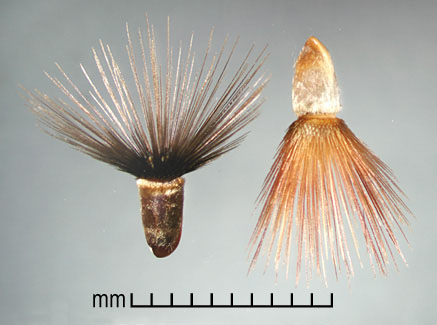
is straight and thick with colors of brown to black.

Noxious weed seed categories

Not listed

AOSA examination list

Not included

Nomenclature

Family

Asteraceae

Valid name

Crupina crupinastrum (Moris) Vis.
 Crupina crupinastrum.  Achenes with a straight, thick, black, and brown pappus. Photo by Julia Scher, USDA-APHIS-PPQ.
Crupina crupinastrum. Achenes with a straight, thick, black, and brown pappus. Photo by Julia Scher, USDA-APHIS-PPQ.
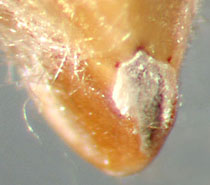
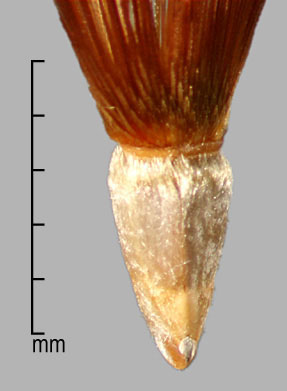
 Crupina crupinastrum.  Achenes that are hairy, soft, and scurfy at the base. Photo by Julia Scher, USDA-APHIS-PPQ.
Crupina crupinastrum. Achenes that are hairy, soft, and scurfy at the base. Photo by Julia Scher, USDA-APHIS-PPQ.
 Crupina crupinastrum.  Achenes that are hairy, soft, and scurfy at the base. Photo by Julia Scher, USDA-APHIS-PPQ.
Crupina crupinastrum. Achenes that are hairy, soft, and scurfy at the base. Photo by Julia Scher, USDA-APHIS-PPQ.