Agricultural, Vegetable
field mustard
True seedTrue seed:
A mature fertilized ovule consisting of an embryo, with or without and external food reserve (e.g., endosperm) enclosed by the testa.
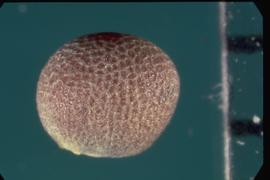
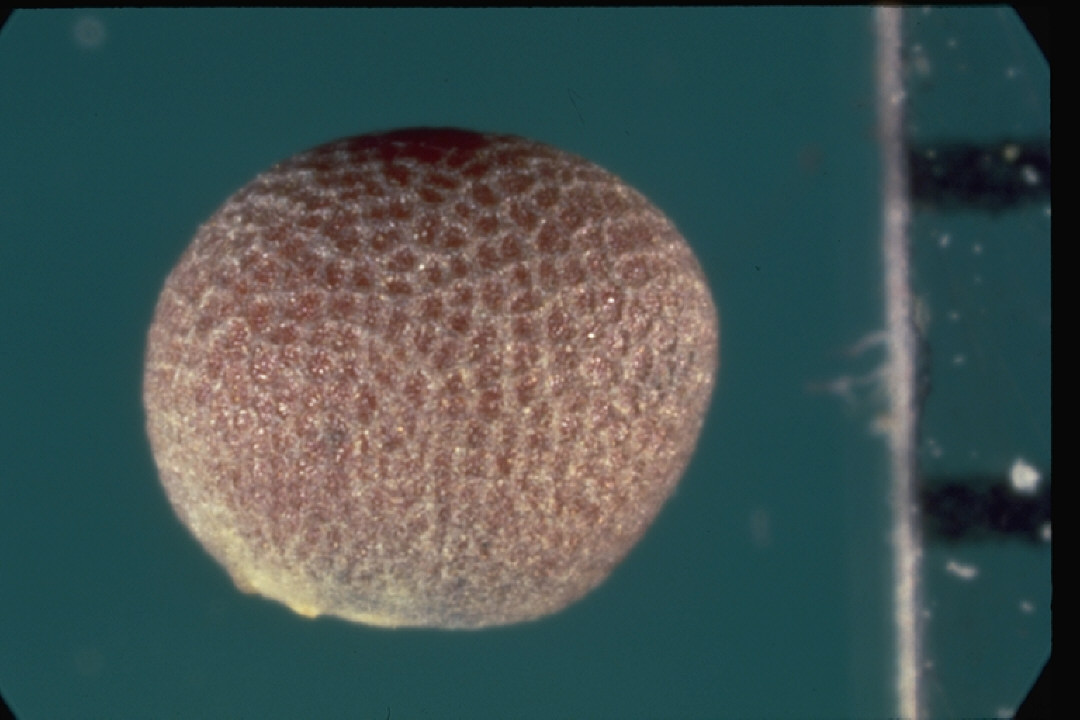
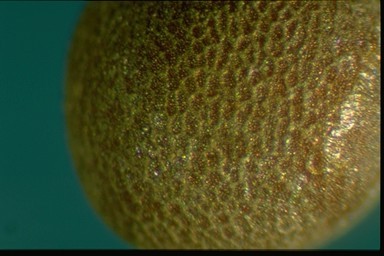
Globose
Reddish-bronze
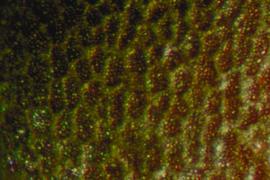
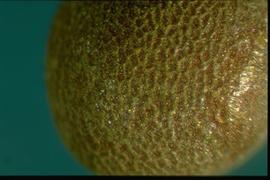
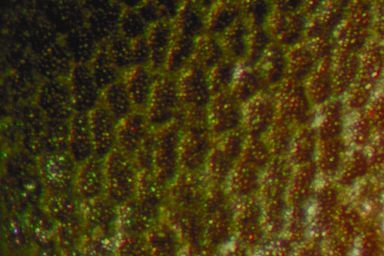
Reticulum strong and with stipplesStipples:
Numerous small dots or specks.
.
HilumHilum:
The scar on the seed coat at the place of its detachment from the seed stalk (funiculus).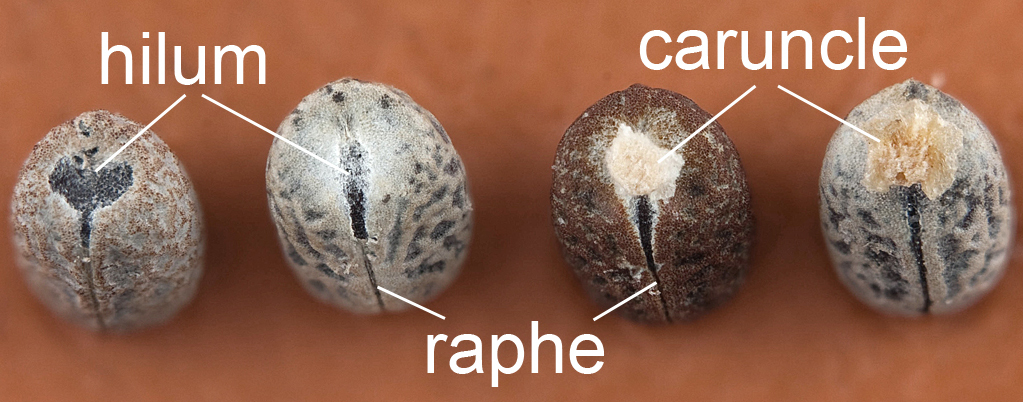 rises slightly above the seed surface.
Seeds are spherical. Reticulum well-developed. StipplesStipples:
Numerous small dots or specks.
are present on the reticulum and in the interspaces. Color bronze to reddish.
Seed of this species is considered noxious only as a contaminant. Check individual states for interpretations.
State Noxious Weed: Alabama, Arizona, Connecticut, Florida, Georgia, Illinois, Kansas, Louisiana, Maine, Massachusetts, Mississippi, Nebraska, New Hampshire, North Carolina, Oklahoma, Rhode Island, South Carolina, Tennessee, Texas, Virginia, Vermont
Included
For more information, see ISMA fact sheet.
Brassicaceae
Brassica rapa L.