Agricultural, Revegetation or Rangeland
yellow bluestem
SpikeletSpikelet:
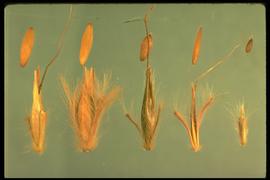
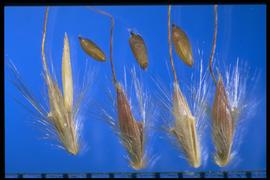
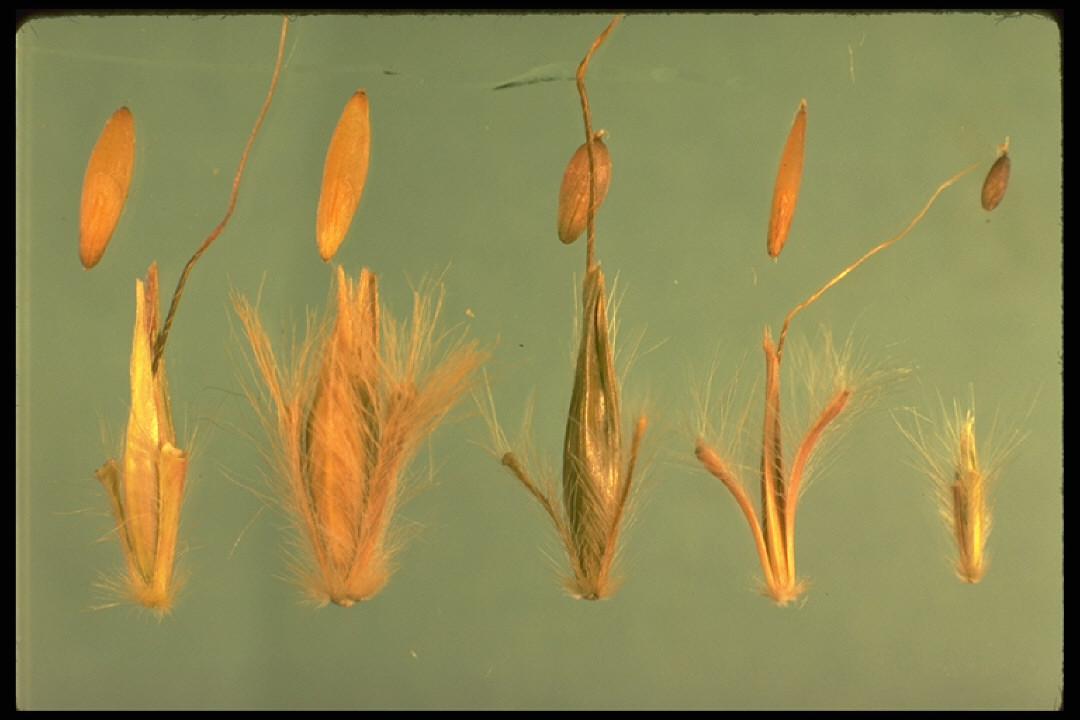
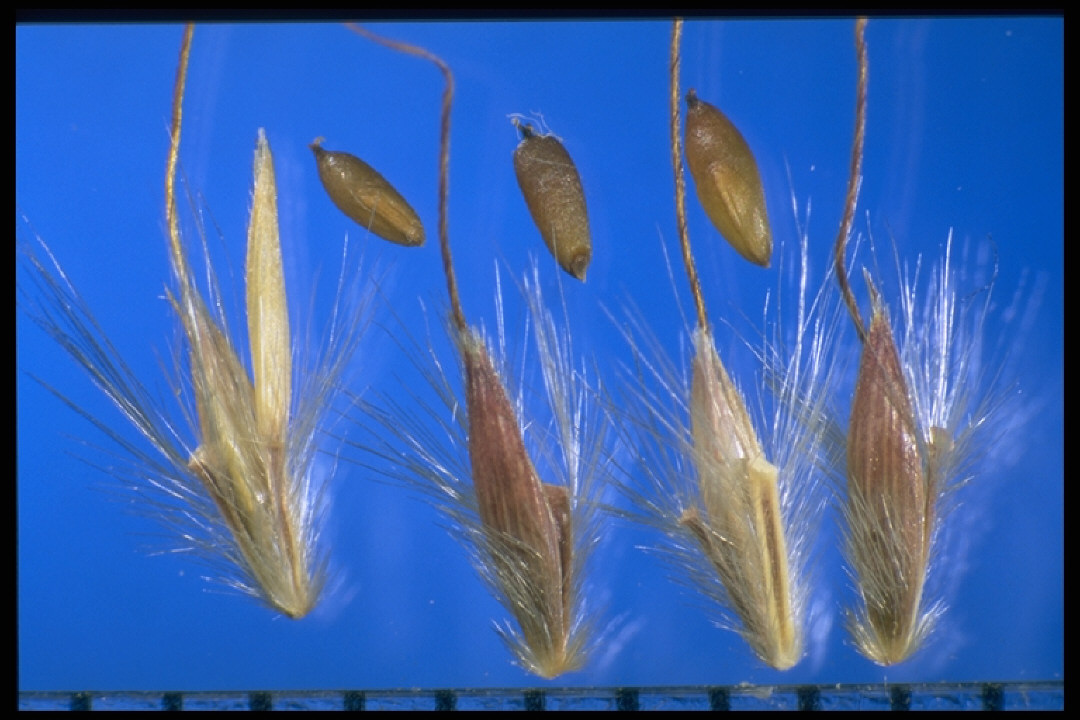
One or more florets that are subtended by a pair of bracts called glumes. Spikelets are pedicellate if located on a pedicle and sessile if attached directly to the rachis. Often spikelets with single florets have remnants of a second floret, usually a lemma.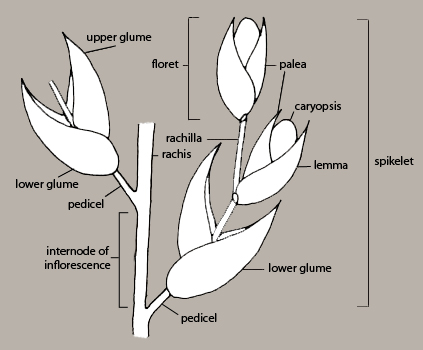
Lanceolate
Brown
GlumesGlume:
The pair of chaffy bracts that occur at the base of a grass spikelet, often completely enclosing it.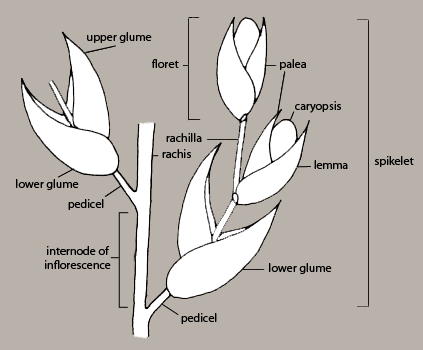 are smooth; attachments and callusCallus:
The hard base of grass florets or spikelets, just above the point of disarticulation.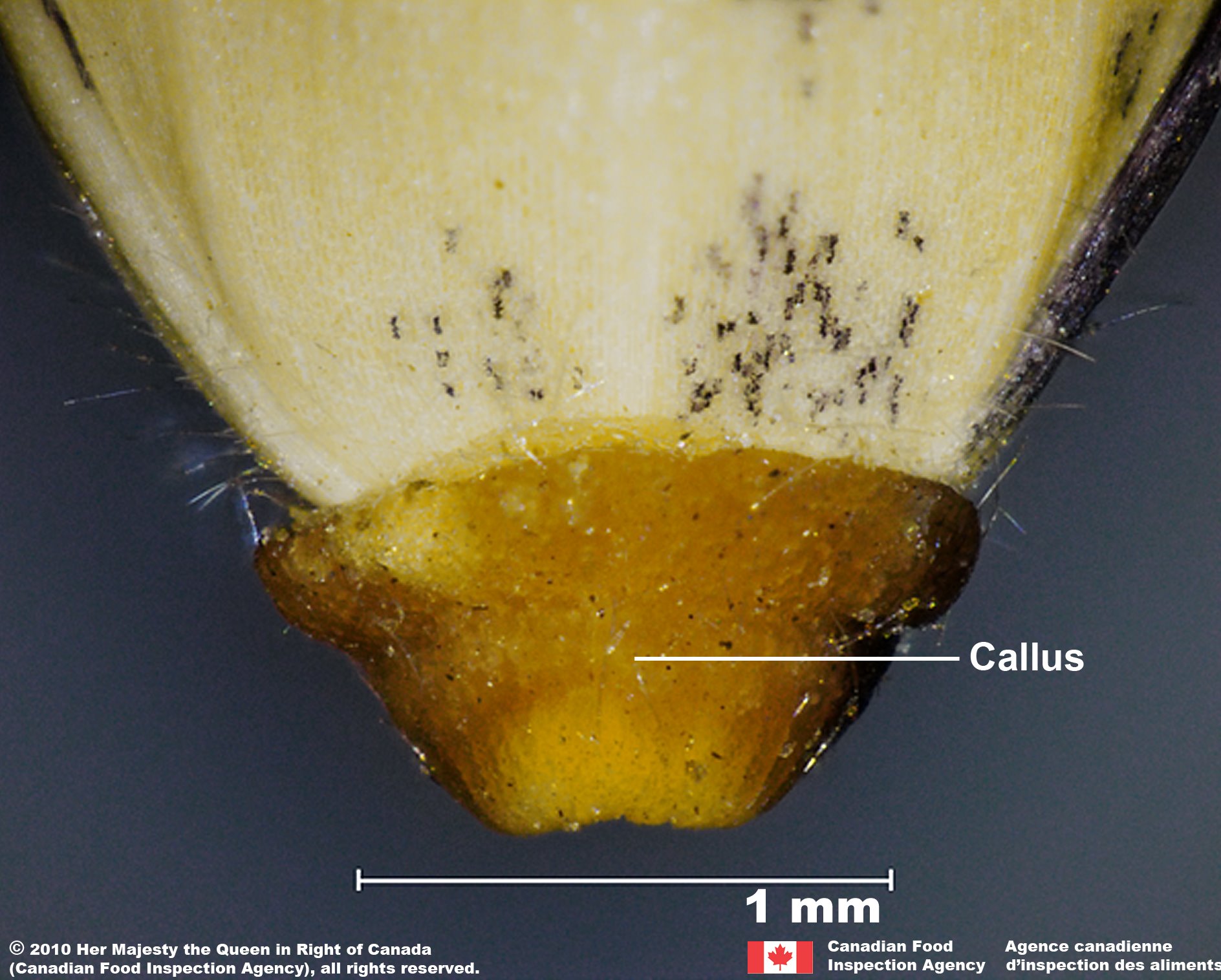 are very hairy.
Thin and papery, enclosed inside of glumesGlume:
The pair of chaffy bracts that occur at the base of a grass spikelet, often completely enclosing it.
Very small and often lacking
AwnAwn:
A narrow, bristle-like organ, as on the glumes or lemmas of grasses (Poaceae).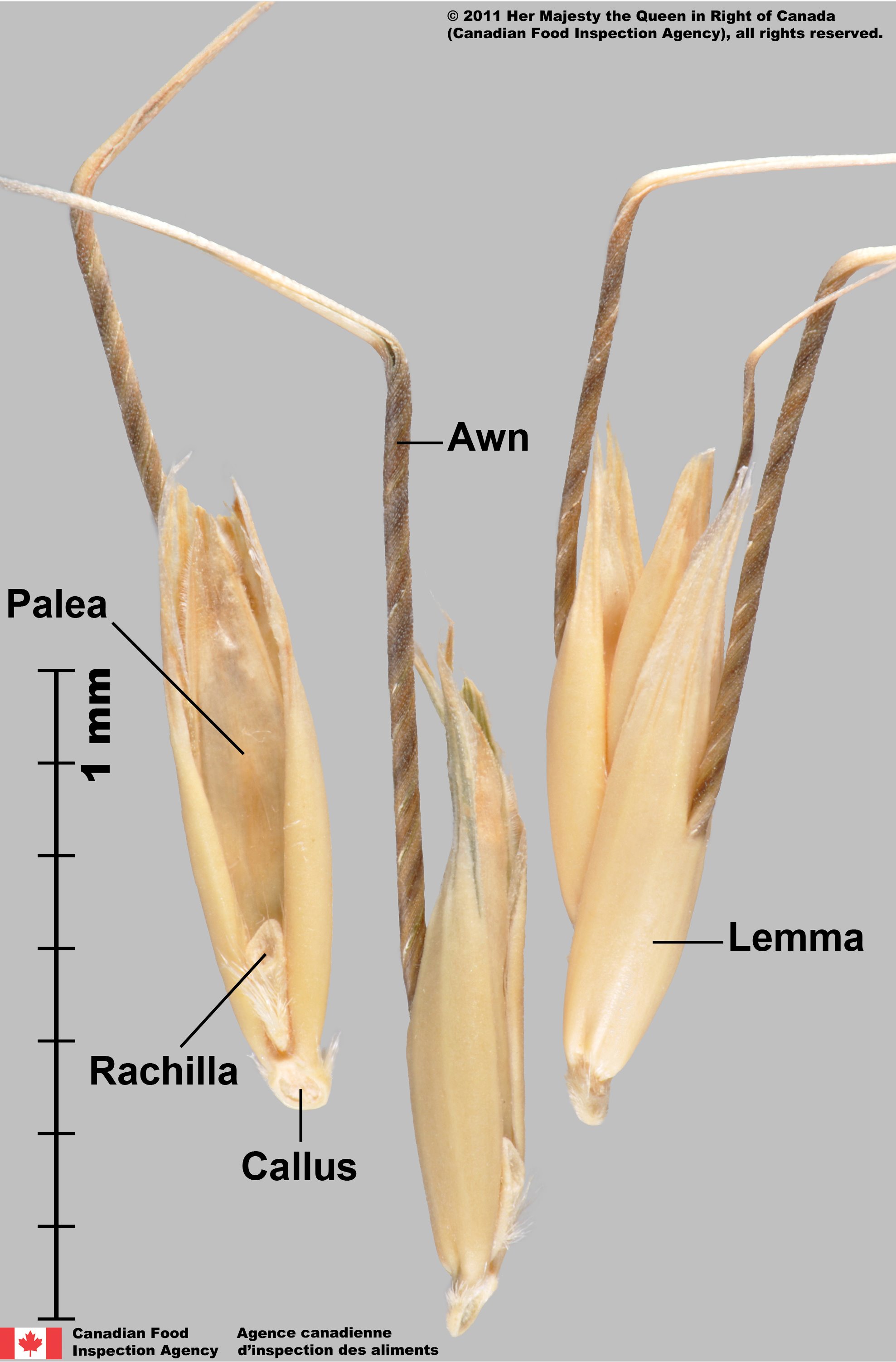 ; attachments of the rachis segmentRachis segment:
A segment of the central axis of the inflorescence (rachis). In some species (e.g. Andropogon) separation of the sessile spikelets occurs when the rachis disarticulates at the spikelet bases leaving the segment of the rachis between spikelets attached to the lower spikelet.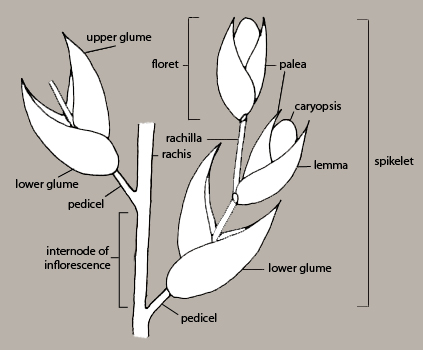 , and a pedicelPedicel:
The stalk within an inflorescence supporting a single flower or spikelet.
.
The caryopsisCaryopsis:
The single-seeded fruit or grain of the grass family (Poaceae); the fruit wall (pericarp) is united with the seed coat (testa).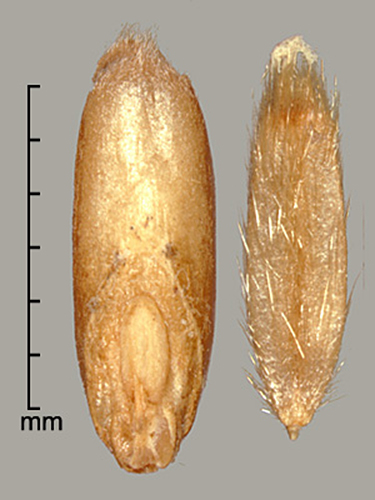 is obovateObovate:
Inverted egg shaped with apical end the broadest.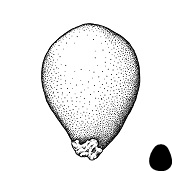 . The "seed unitSeed unit:
The structure usually regarded as a seed in planting practices and in commercial channels, consisting of a true seed with or without accessory structures, as defined in Section 2.6 of the AOSA Rules. See also true seed.
" is complex and consists of (from outer to inner): a short pedicelPedicel:
The stalk within an inflorescence supporting a single flower or spikelet.
(which usually is sterile), a segment of the rachisRachis:
The central axis of an inflorescence.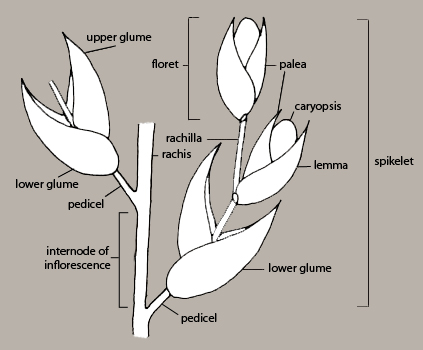 , a pair of glumesGlume:
The pair of chaffy bracts that occur at the base of a grass spikelet, often completely enclosing it., a sterile lemmaLemma:
One of two bracts of the grass floret; it is located on the side nearest the embryo and opposite the rachilla.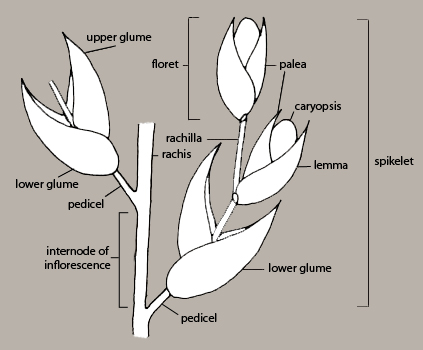 , a fertile lemmaLemma:
One of two bracts of the grass floret; it is located on the side nearest the embryo and opposite the rachilla., a small paleaPalea:
One of the thin bracts of grass floret enclosing the fruit (caryopsis) that is located on the side opposite the embryo.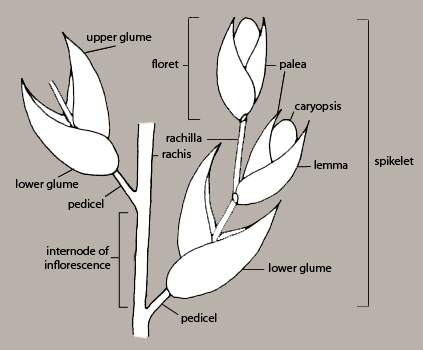 (sometimes lacking), and finally the caryopsisCaryopsis:
The single-seeded fruit or grain of the grass family (Poaceae); the fruit wall (pericarp) is united with the seed coat (testa).. The geniculateGeniculate:
Bent at a sharp angle.
awn arises from the central nerve of the fertile lemmaLemma:
One of two bracts of the grass floret; it is located on the side nearest the embryo and opposite the rachilla.. A dark longitudinal groove is present on the attachments. Sometimes a sterile spikeletSpikelet:
One or more florets that are subtended by a pair of bracts called glumes. Spikelets are pedicellate if located on a pedicle and sessile if attached directly to the rachis. Often spikelets with single florets have remnants of a second floret, usually a lemma. is attached to the pedicelPedicel:
The stalk within an inflorescence supporting a single flower or spikelet.
.
State Noxious Weed: Arizona, Kansas, Nebraska
Included
For more information, see ISMA fact sheet.
Poaceae
Bothriochloa ischaemum (L.) Keng