Weed
skeletonleaf bur ragweed
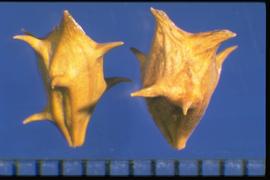
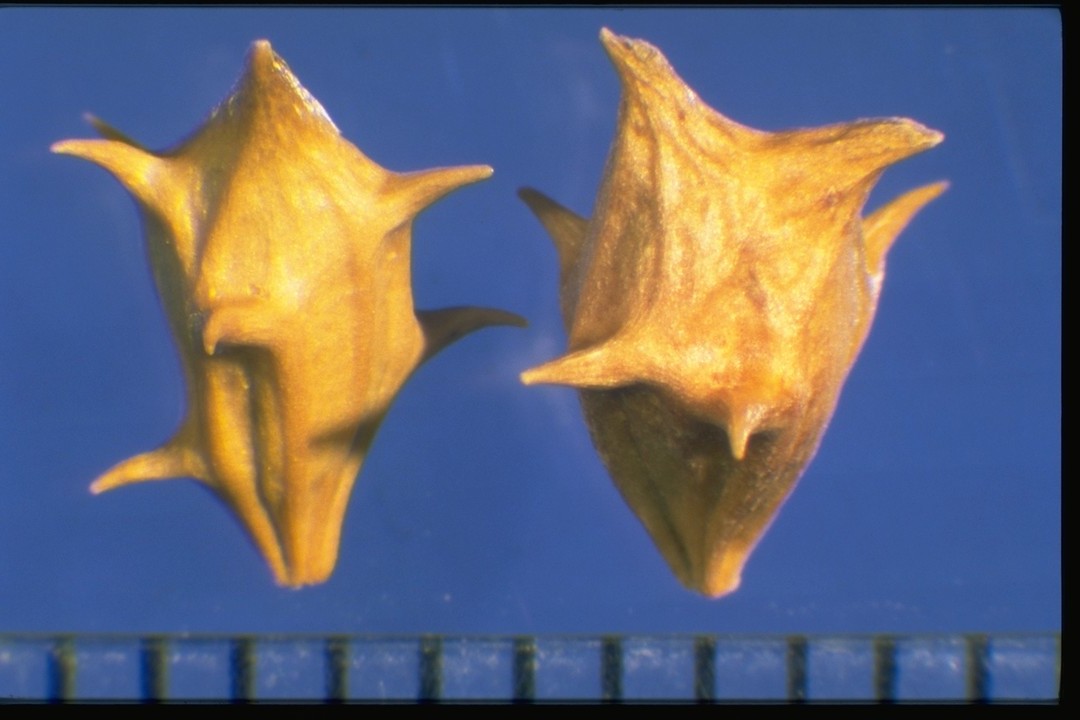
AcheneAchene:
A dry, hard, one-chambered, one-seeded indehiscent fruit, as in buckwheat (Fagopyrum) or sunflower (Helianthus). The fruit wall is not united with the seed coat.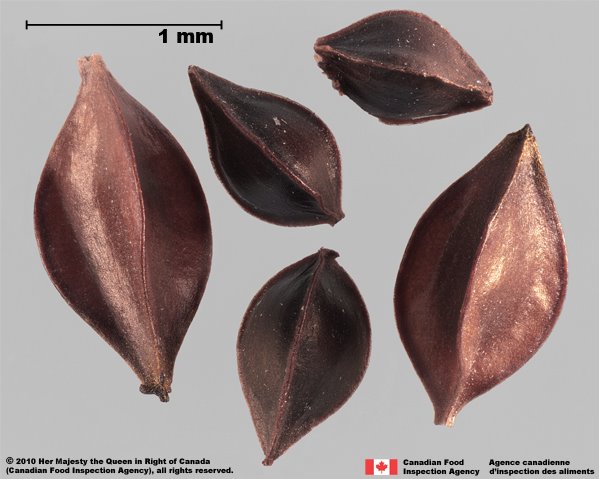
ObovateObovate:
Inverted egg shaped with apical end the broadest.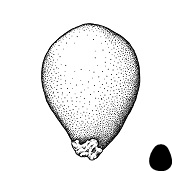
Brown
Smooth
Large spines on apicalApical:
The distal end of the fruit or seed away from the point of attachment or attachment scar.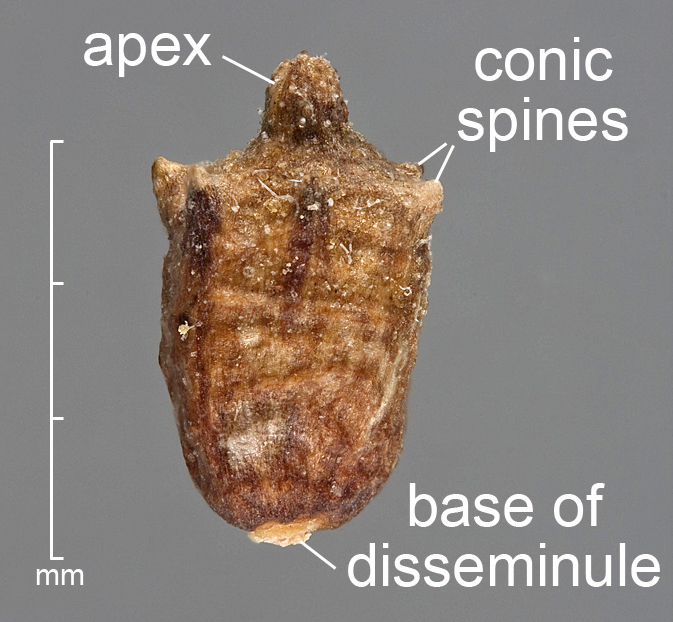 half
half
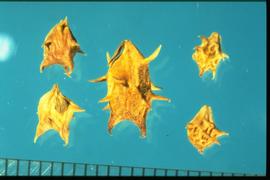
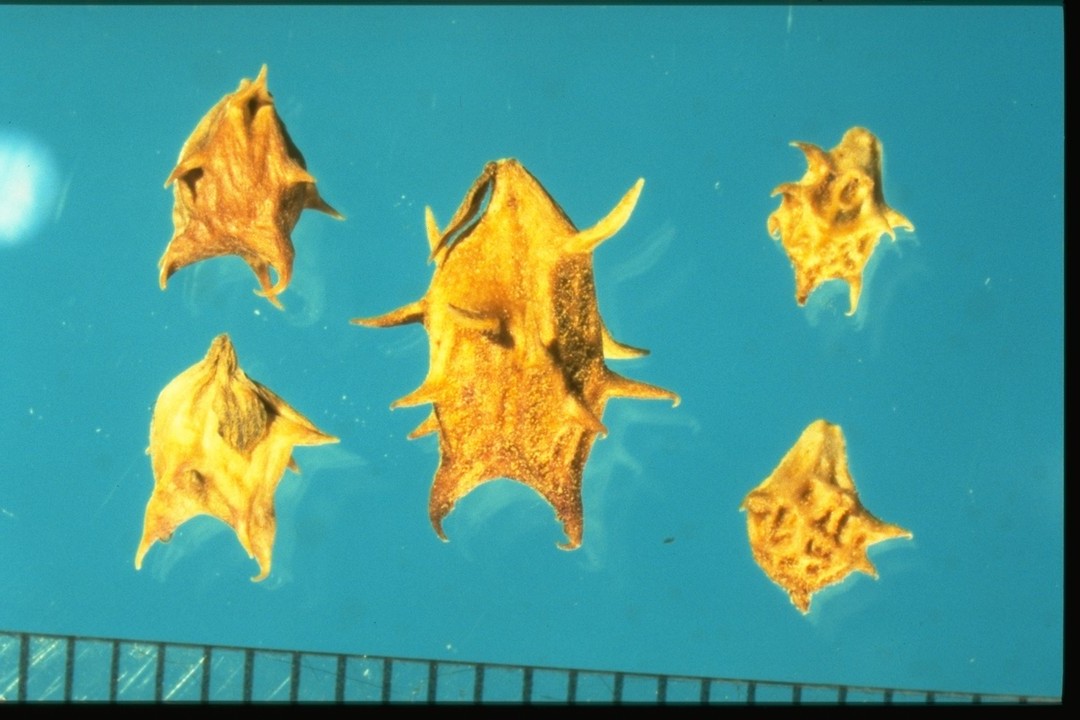
Seed type is best described as an acheneAchene:
A dry, hard, one-chambered, one-seeded indehiscent fruit, as in buckwheat (Fagopyrum) or sunflower (Helianthus). The fruit wall is not united with the seed coat. enclosed in an involucreInvolucre:
A number of bracts (often leaf-like) that subtend an inflorescence such as the head in sunflowers.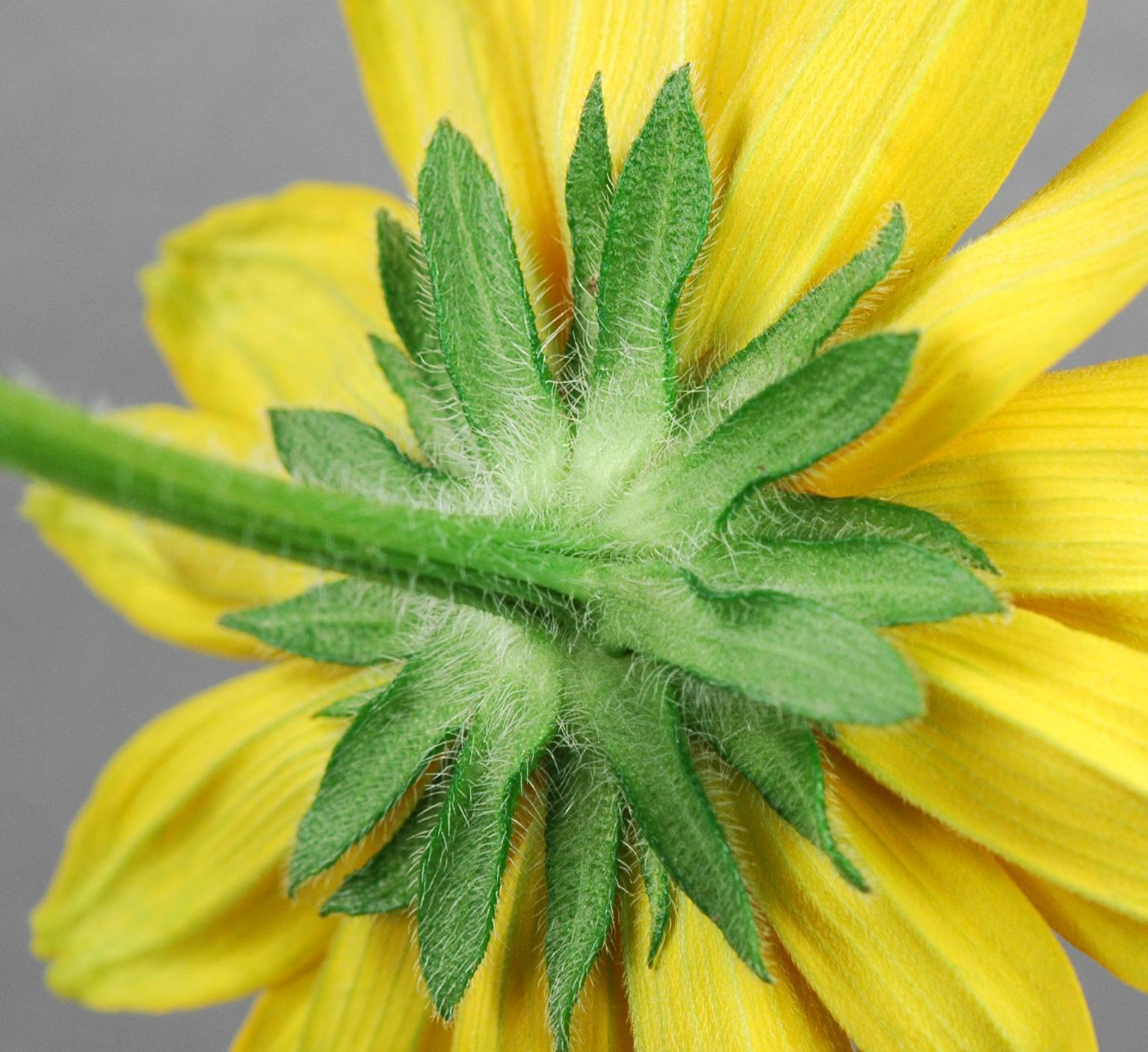 . Midsize of the bursages. Usually with two terminal spikesSpike:
Has a strong central axis (rachis) on which flowers or spikelets are directly attached (sessile), e.g. wheatgrasses. .
.
State Noxious Weed: Colorado, Hawaii, Idaho, Nebraska, Wyoming
Not included
Asteraceae
Ambrosia tomentosa Nutt.
Franseria discolor Nutt.
Franseria tomentosa (Nutt.) A. Nelson, non A. Gray
Gaertneria discolor (Nutt.) Kuntze
Gaertneria tomentosa (Nutt.) A. Heller