Weed
annual ragweed
AcheneAchene:
A dry, hard, one-chambered, one-seeded indehiscent fruit, as in buckwheat (Fagopyrum) or sunflower (Helianthus). The fruit wall is not united with the seed coat.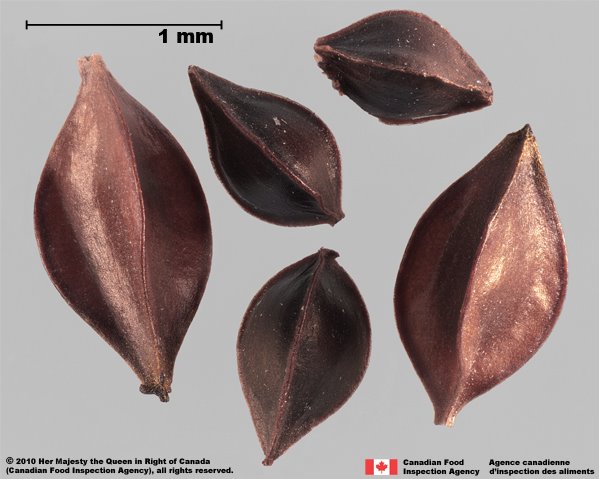 in an involucreInvolucre:
A number of bracts (often leaf-like) that subtend an inflorescence such as the head in sunflowers.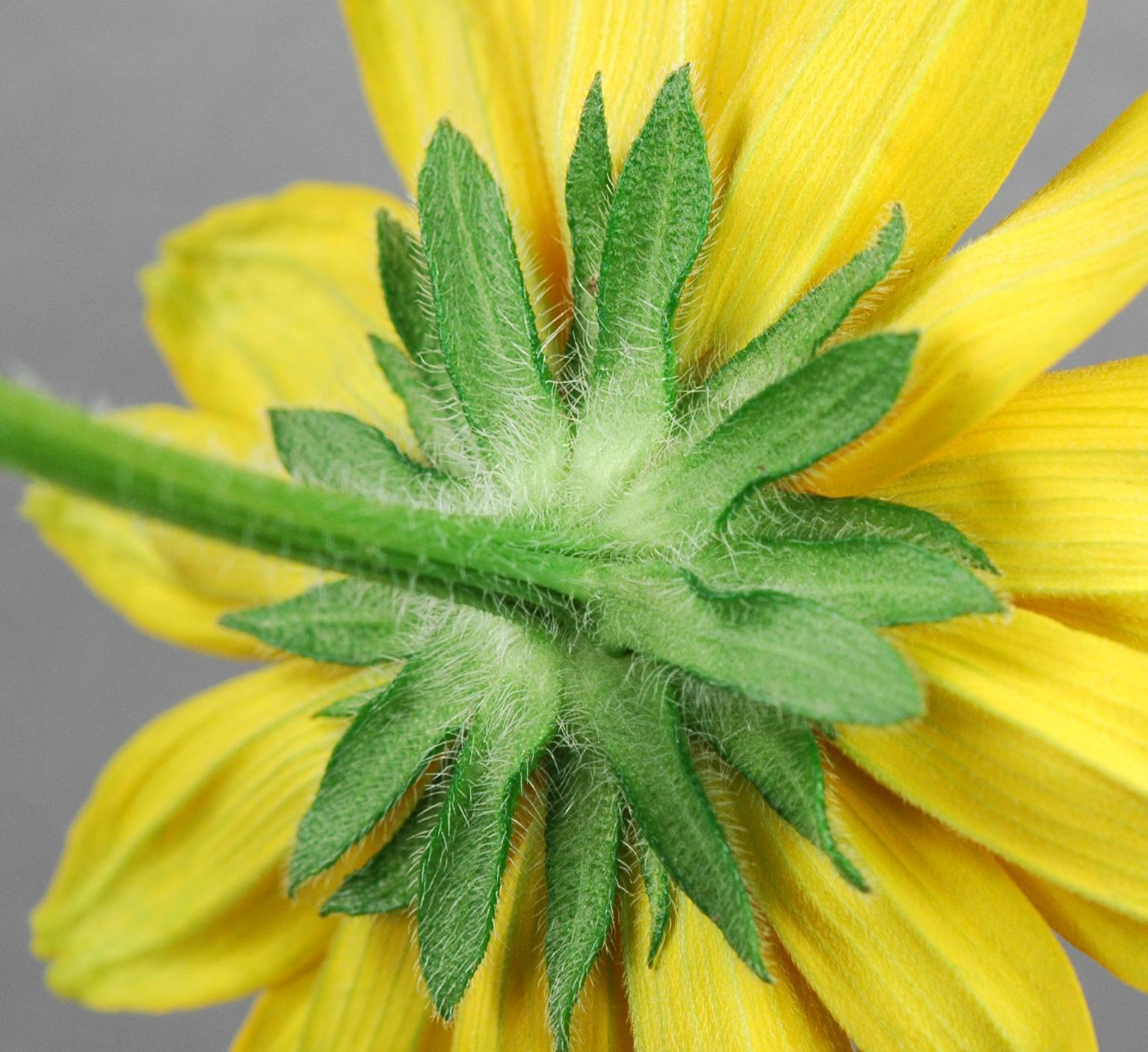
ObovateObovate:
Inverted egg shaped with apical end the broadest.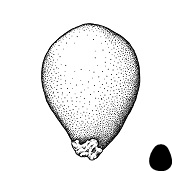
Brown
Smooth apicalApical:
The distal end of the fruit or seed away from the point of attachment or attachment scar.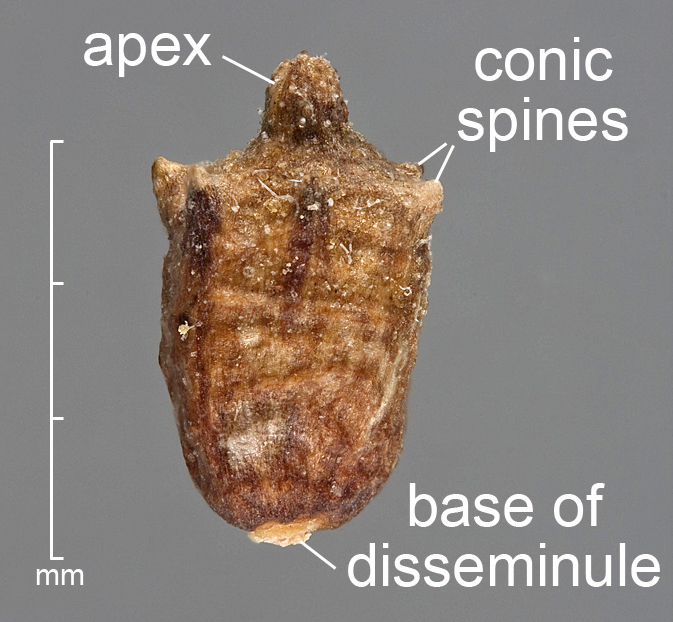 points
StylarStylar:
The end of the fruit or seed that contains the style or the apical end.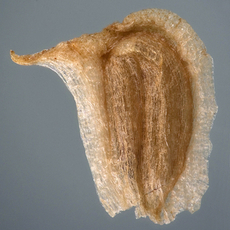 and shoulder points.
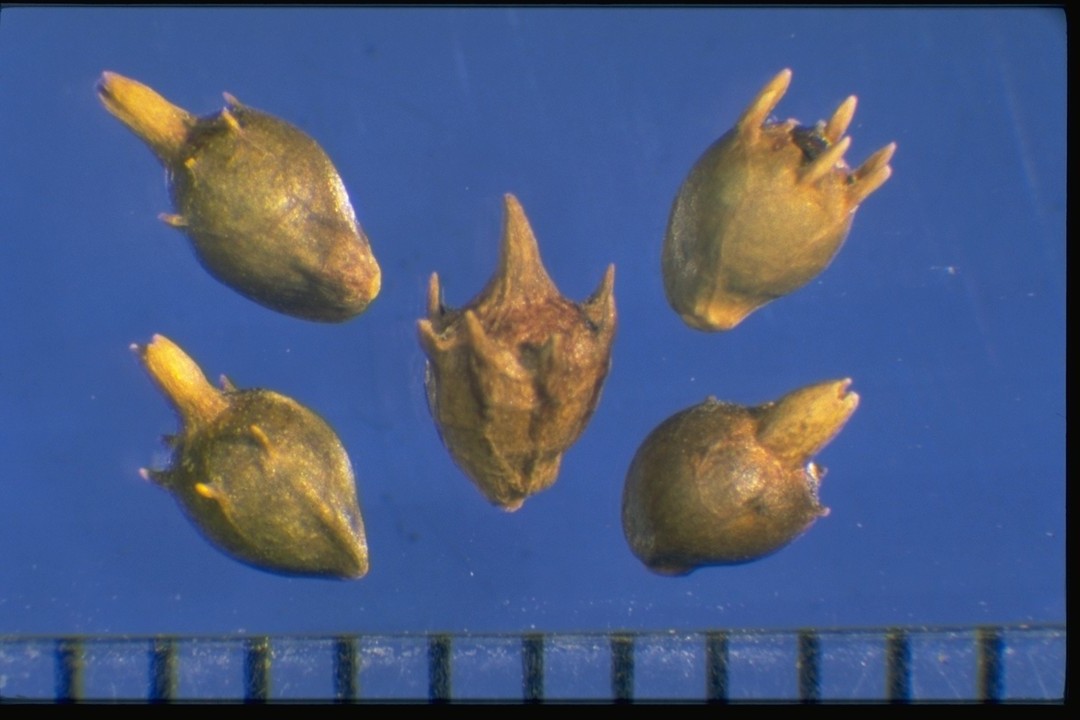
Seed type is best described as an acheneAchene:
A dry, hard, one-chambered, one-seeded indehiscent fruit, as in buckwheat (Fagopyrum) or sunflower (Helianthus). The fruit wall is not united with the seed coat. enclosed in an involucreInvolucre:
A number of bracts (often leaf-like) that subtend an inflorescence such as the head in sunflowers.. SpikesSpike:
Has a strong central axis (rachis) on which flowers or spikelets are directly attached (sessile), e.g. wheatgrasses.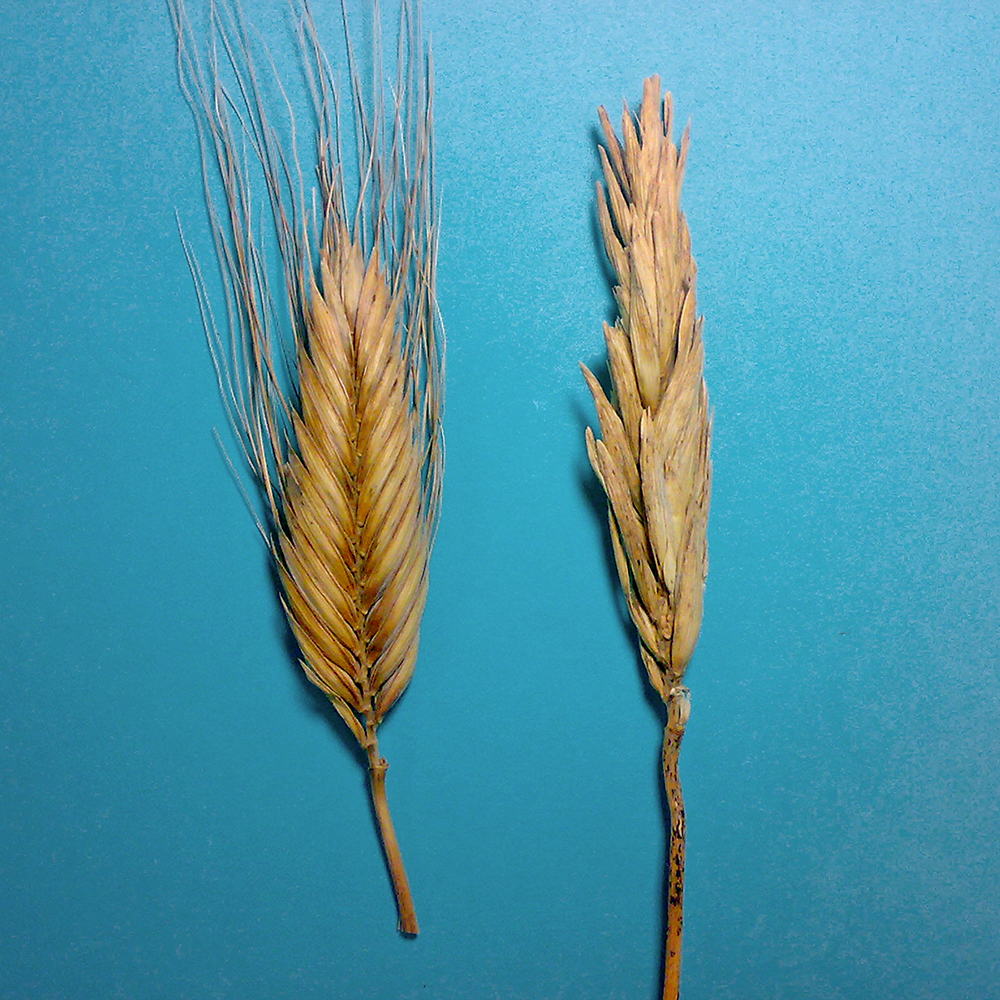 on apicalApical:
The distal end of the fruit or seed away from the point of attachment or attachment scar. end represent tips of involucreInvolucre:
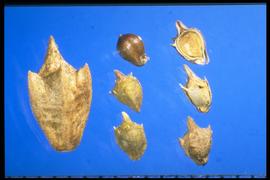
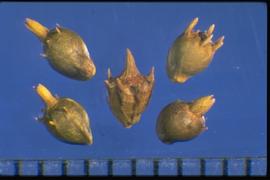
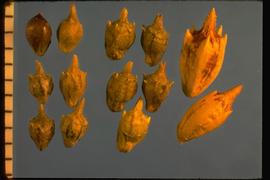
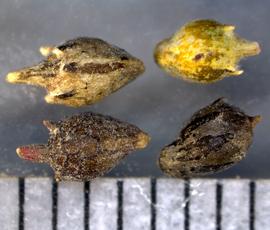
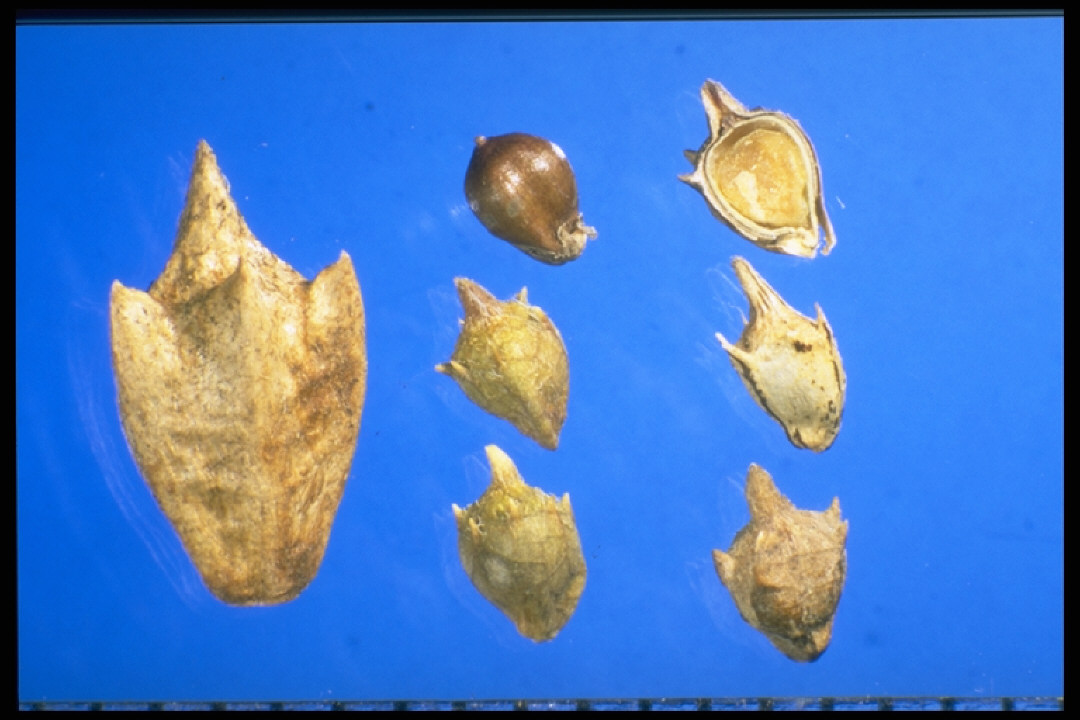
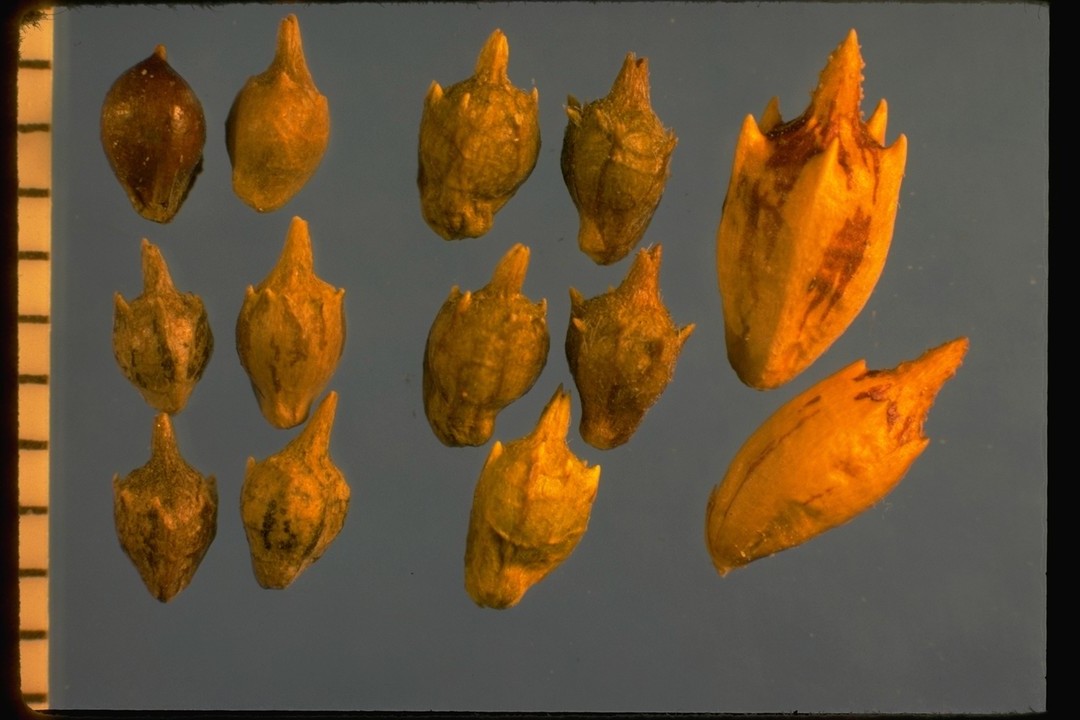
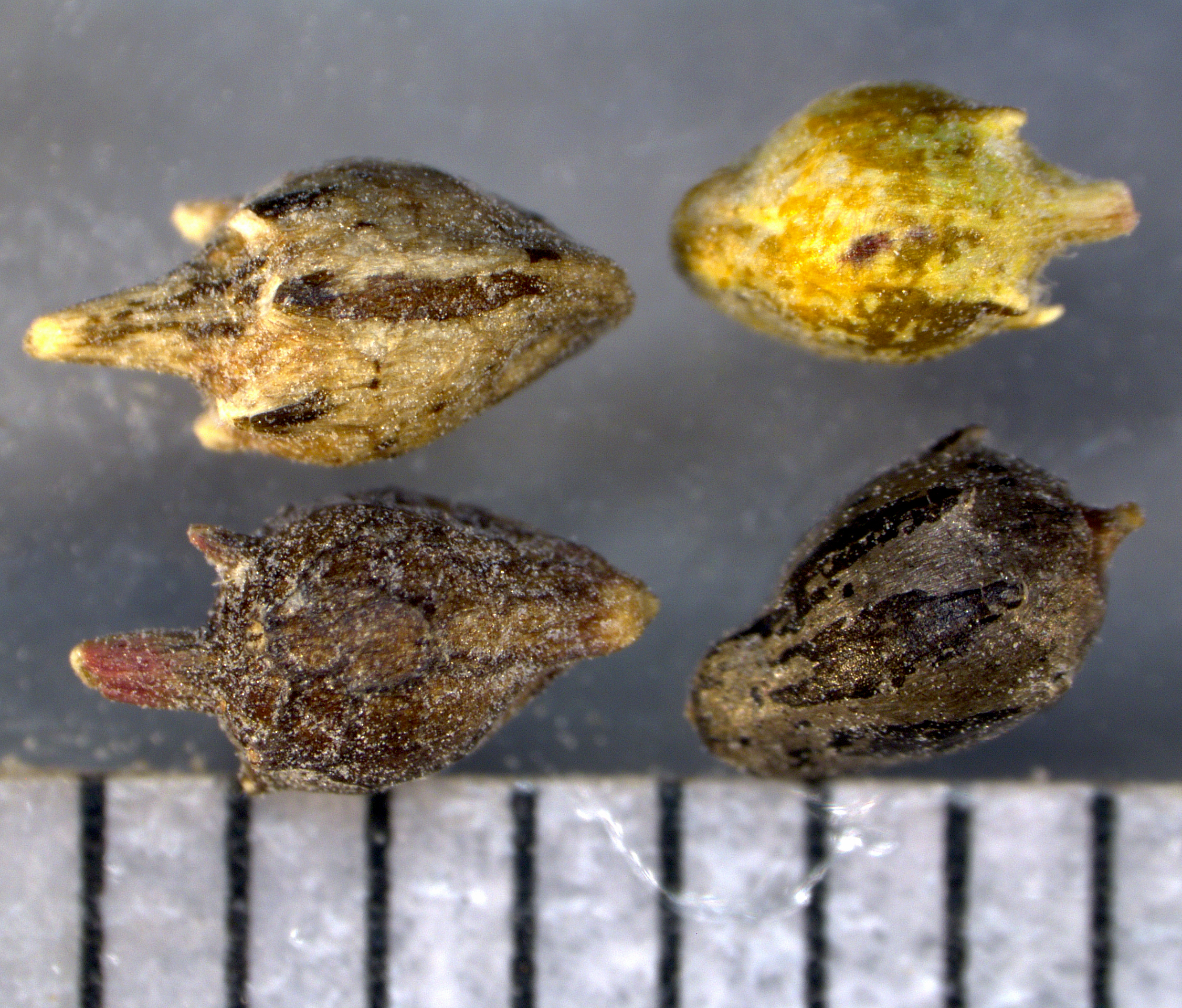
A number of bracts (often leaf-like) that subtend an inflorescence such as the head in sunflowers. bracts. Ambrosia trifida is substantially larger than the other two. A. artemisifolia has a smaller and more pointed base than A. psilostachya. A. psilostachya is more hairy.
See first photo for more details.
State Noxious Weed: Oregon, Hawaii
Included
For more information, see ISMA fact sheet.
Asteraceae
Ambrosia artemisiifolia L.