Weed
western tansymustard
True seedTrue seed:
A mature fertilized ovule consisting of an embryo, with or without and external food reserve (e.g., endosperm) enclosed by the testa.
Compressed ovalOval:
Broadly elliptic.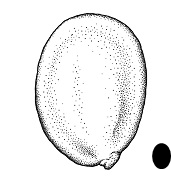
Brown
Longitudinal rows of small tubercles
Weak longitudinal groove between the radicleRadicle:
The rudimentary root of the embryo, developing into the primary root after emergence from the seed coat.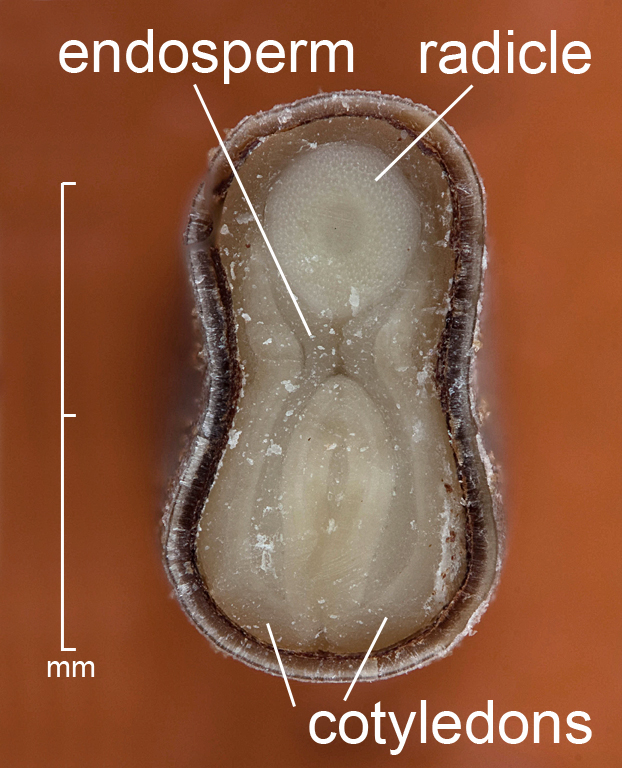 and cotyledonCotyledon:
The modified storage leaf or pair of leaves of an embryo and seedling (see primary leaf).
lobes
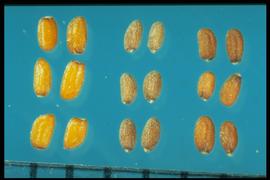
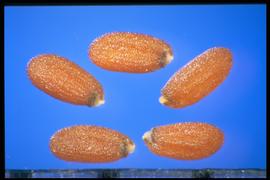
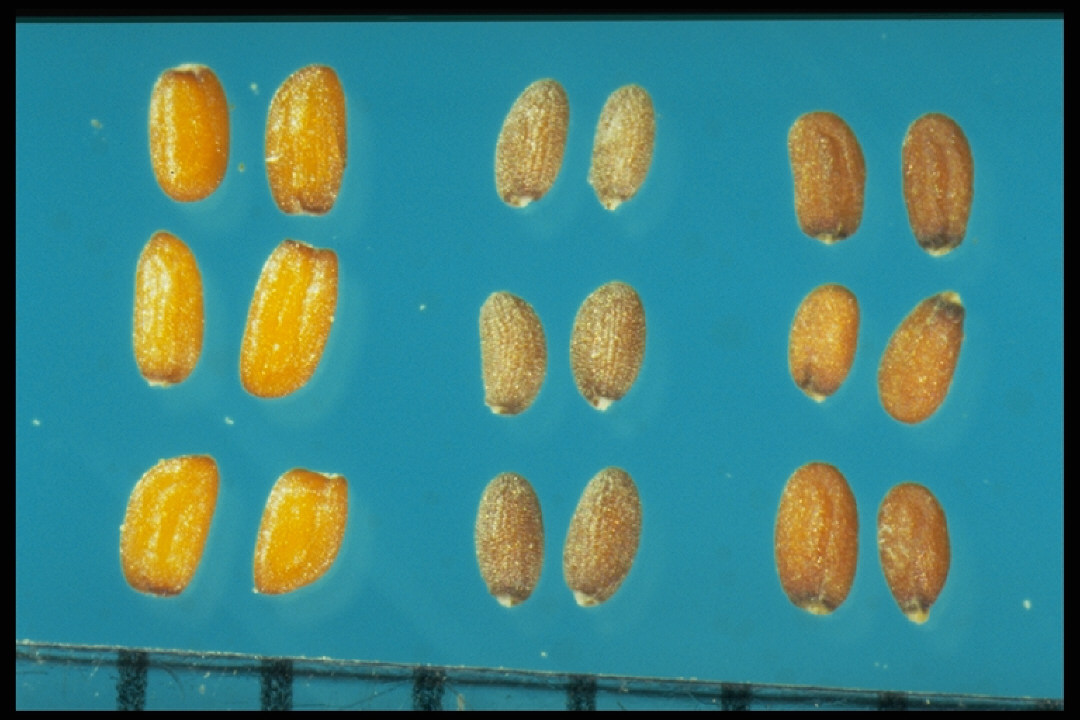
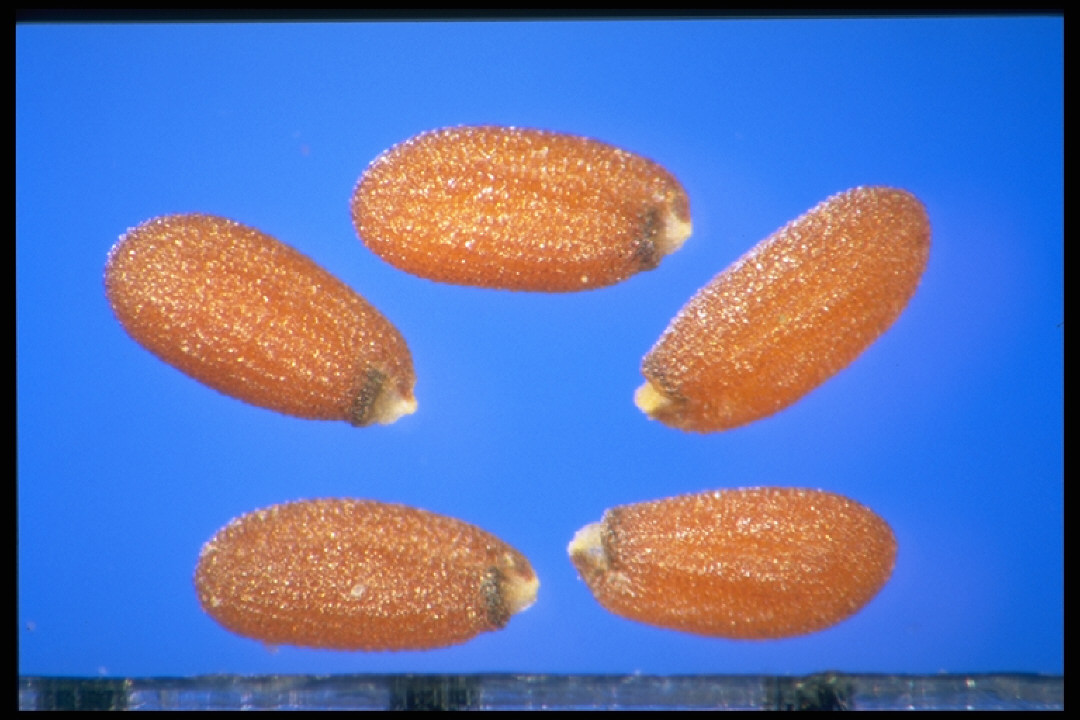
Seeds are compressed ovals. The seed coatSeed coat:
The protective covering of a seed usually composed of the inner and outer integuments. Also called the testa.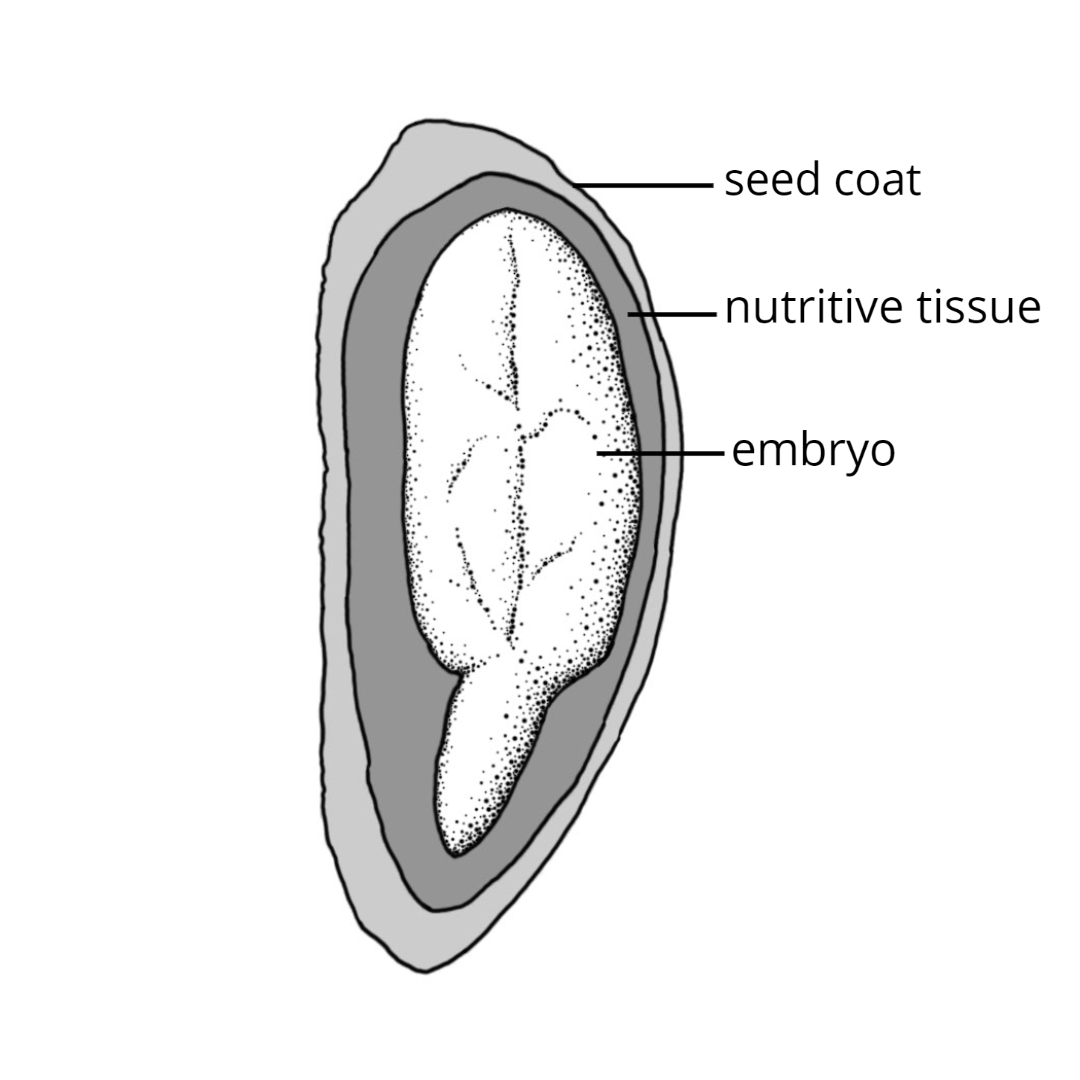 is covered with longitudinal rows of small reticulations. No strong indentation between radicleRadicle:
The rudimentary root of the embryo, developing into the primary root after emergence from the seed coat. and cotyledonCotyledon:
The modified storage leaf or pair of leaves of an embryo and seedling (see primary leaf).
lobes. Color is brown.
Not listed
Not included
Brassicaceae
Descurainia pinnata (Walter) Britton