Weed
Japanese bristlegrass, tall green bristlegrass, Chinese foxtail, Chinese millet, giant bristlegrass, nodding foxtail, giant foxtail
FloretFloret:
A small flower in a clustered inflorescence (e.g., sunflower, grasses). In grasses, a floret consists of the lemma, palea, stamens, and pistil.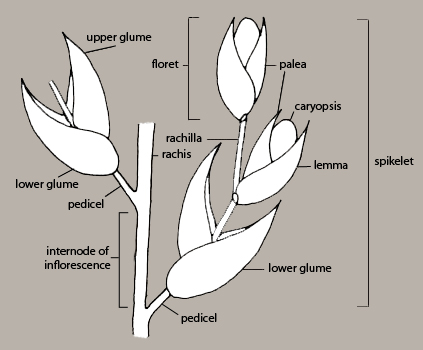
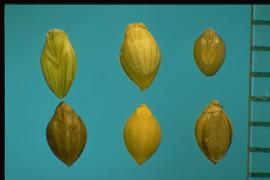
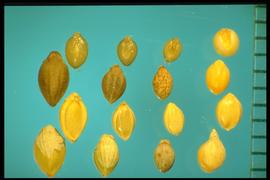
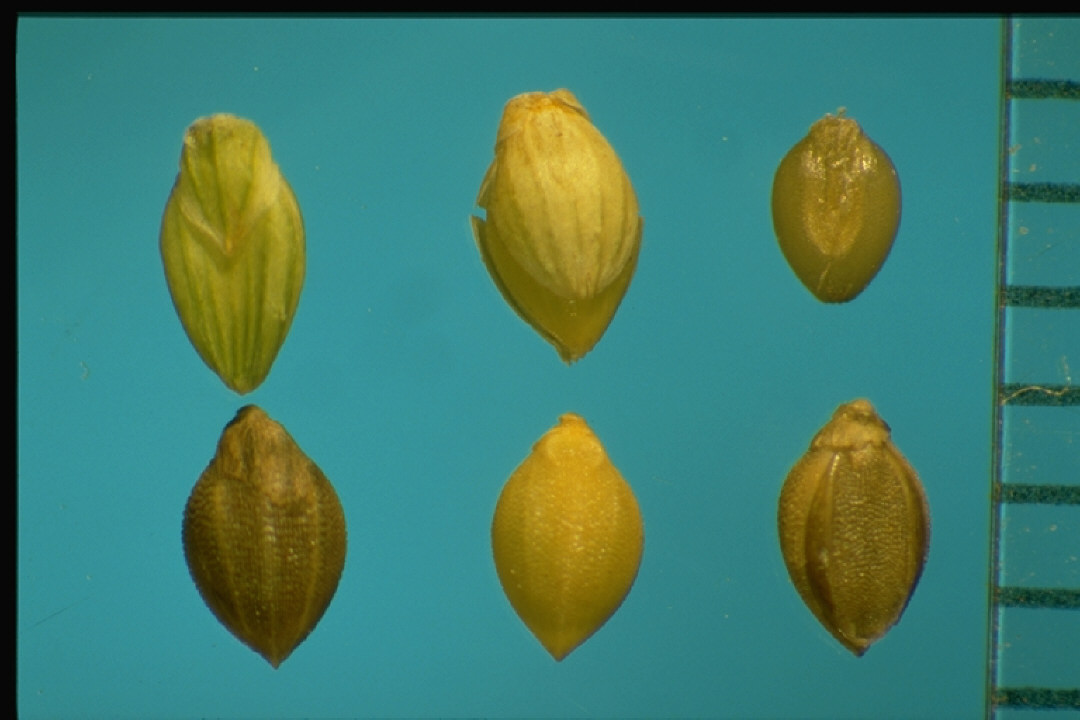
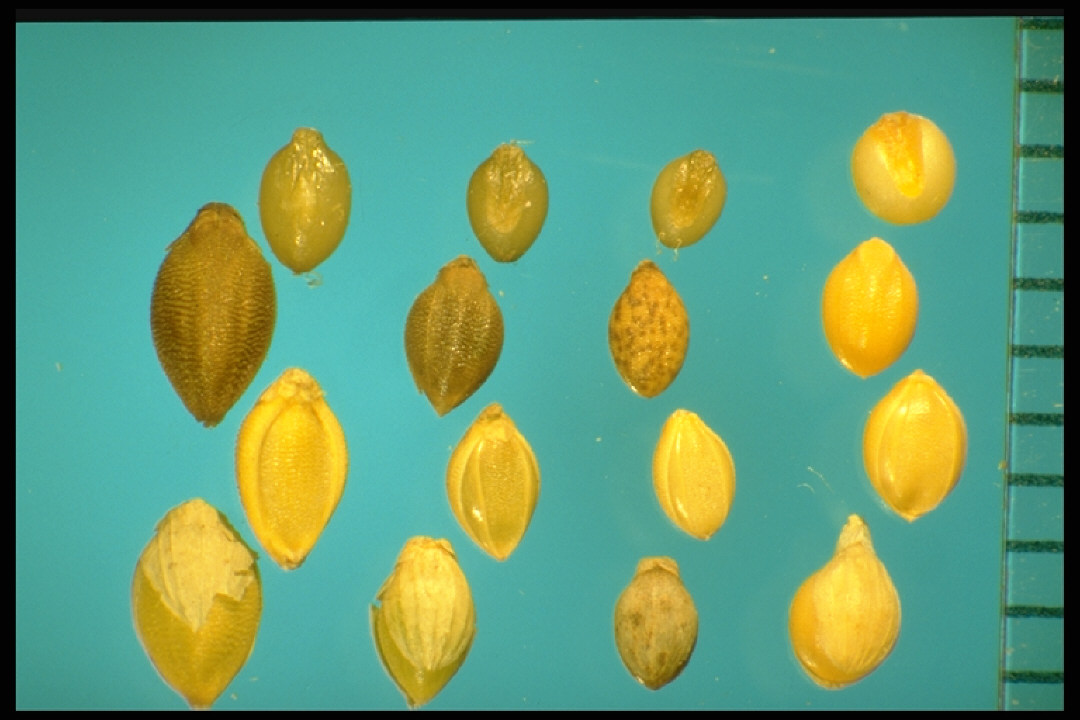
Mixed light and dark brown
TransverseTransverse:
Set crosswise, crossing or at right angles.
ridges on floretFloret:
A small flower in a clustered inflorescence (e.g., sunflower, grasses). In grasses, a floret consists of the lemma, palea, stamens, and pistil.; glumesGlume:
The pair of chaffy bracts that occur at the base of a grass spikelet, often completely enclosing it. and sterile lemmaLemma:
One of two bracts of the grass floret; it is located on the side nearest the embryo and opposite the rachilla.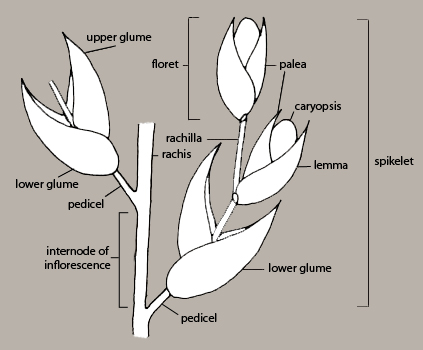 papery.
TransverseTransverse:
Set crosswise, crossing or at right angles.
ridges at basalBasal:
The base of the fruit or seed opposite the apical end.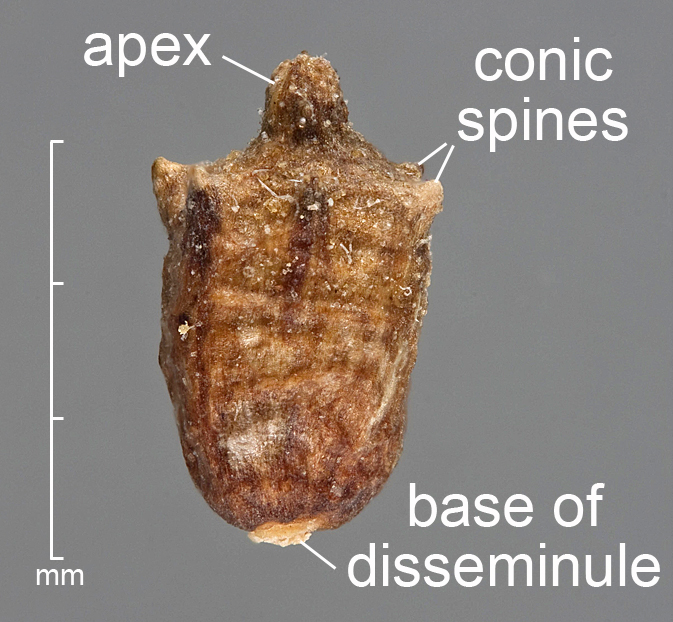 half diminishing at apexApical:
The distal end of the fruit or seed away from the point of attachment or attachment scar.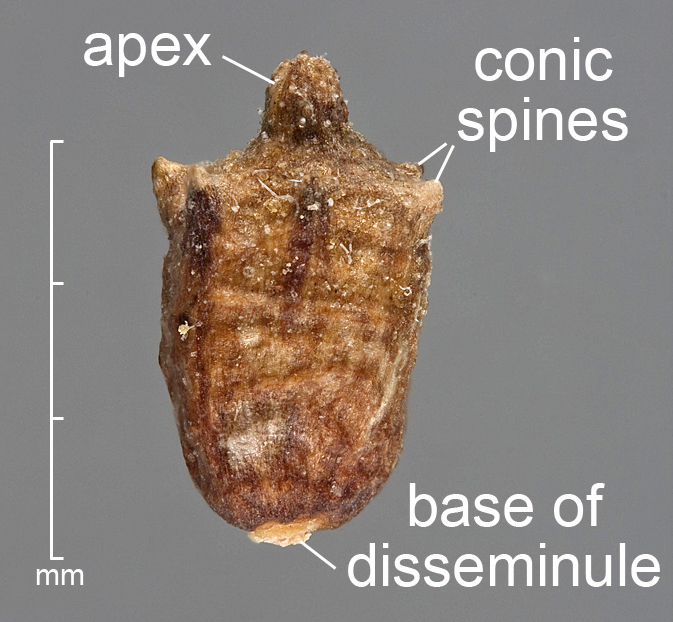
TransverseTransverse:
Set crosswise, crossing or at right angles.
ridges in center; glossy edges exposed.
When present, the second glumeGlume:
The pair of chaffy bracts that occur at the base of a grass spikelet, often completely enclosing it. is three-fourths the length of the floretFloret:
A small flower in a clustered inflorescence (e.g., sunflower, grasses). In grasses, a floret consists of the lemma, palea, stamens, and pistil..
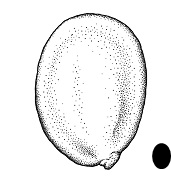
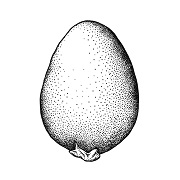
This species is found as both spikeletsSpikelet:
One or more florets that are subtended by a pair of bracts called glumes. Spikelets are pedicellate if located on a pedicle and sessile if attached directly to the rachis. Often spikelets with single florets have remnants of a second floret, usually a lemma.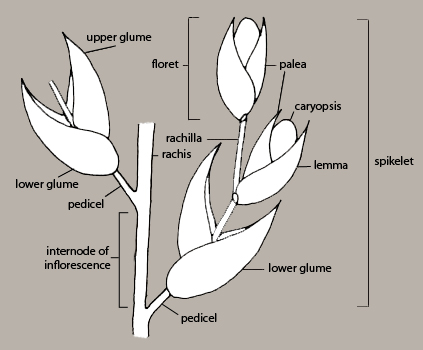 and floretsFloret:
A small flower in a clustered inflorescence (e.g., sunflower, grasses). In grasses, a floret consists of the lemma, palea, stamens, and pistil.. The apicalApical:
The distal end of the fruit or seed away from the point of attachment or attachment scar. half of the lemmaLemma:
One of two bracts of the grass floret; it is located on the side nearest the embryo and opposite the rachilla. is more pointed and smoother than the basalBasal:
The base of the fruit or seed opposite the apical end. half. The smooth edges of the paleaPalea:
One of the thin bracts of grass floret enclosing the fruit (caryopsis) that is located on the side opposite the embryo.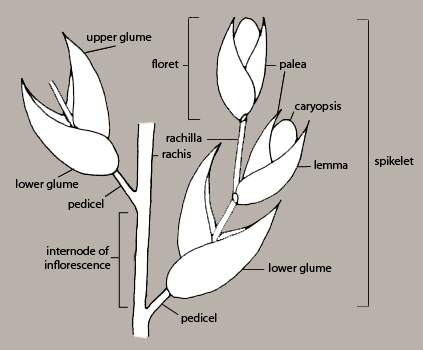 show, and the second glumeGlume:
The pair of chaffy bracts that occur at the base of a grass spikelet, often completely enclosing it. is three-fourths the length of the lemmaLemma:
One of two bracts of the grass floret; it is located on the side nearest the embryo and opposite the rachilla..
State Noxious Weed: Alabama, Arkansas, California, Colorado, Delaware, Georgia, Illinois, Indiana, Iowa, Kansas, Kentucky, Maryland, Michigan, Minnesota, Missouri, Mississippi, North Carolina, Oklahoma, South Carolina, South Dakota, Tennessee, Texas, Virginia, West Virginia
Included
For more information, see ISMA fact sheet.
Poaceae
Setaria faberi R.A.W. Herrm.