Weed
hairy whitetop
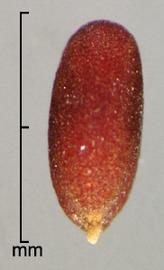
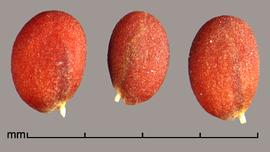
True seedTrue seed:
A mature fertilized ovule consisting of an embryo, with or without and external food reserve (e.g., endosperm) enclosed by the testa.
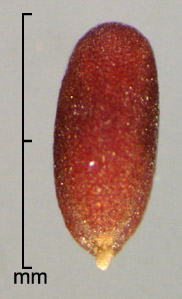
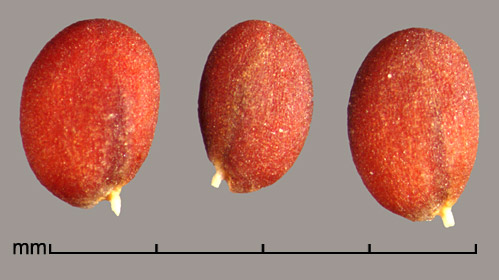
Compressed ovalOval:
Broadly elliptic.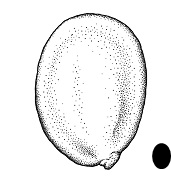
Brown
Dull
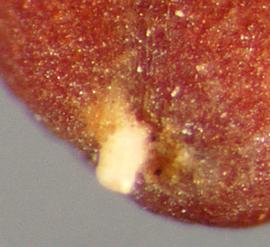
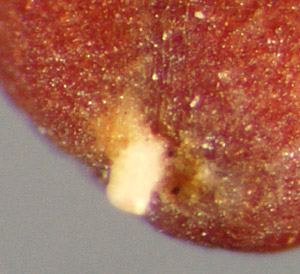
Strong line separating the radicleRadicle:
The rudimentary root of the embryo, developing into the primary root after emergence from the seed coat.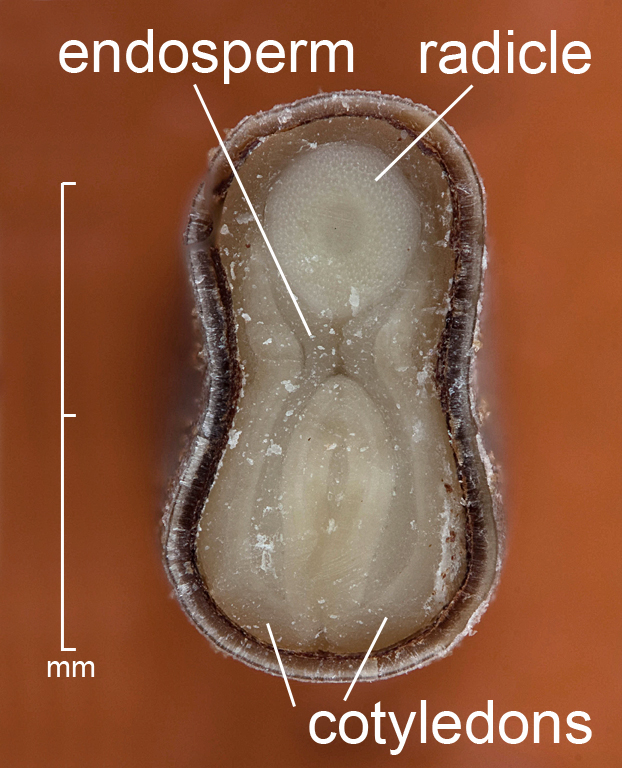 and cotyledonCotyledon:
The modified storage leaf or pair of leaves of an embryo and seedling (see primary leaf).
lobes.
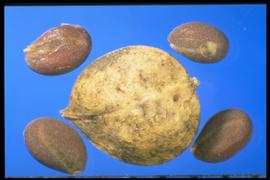
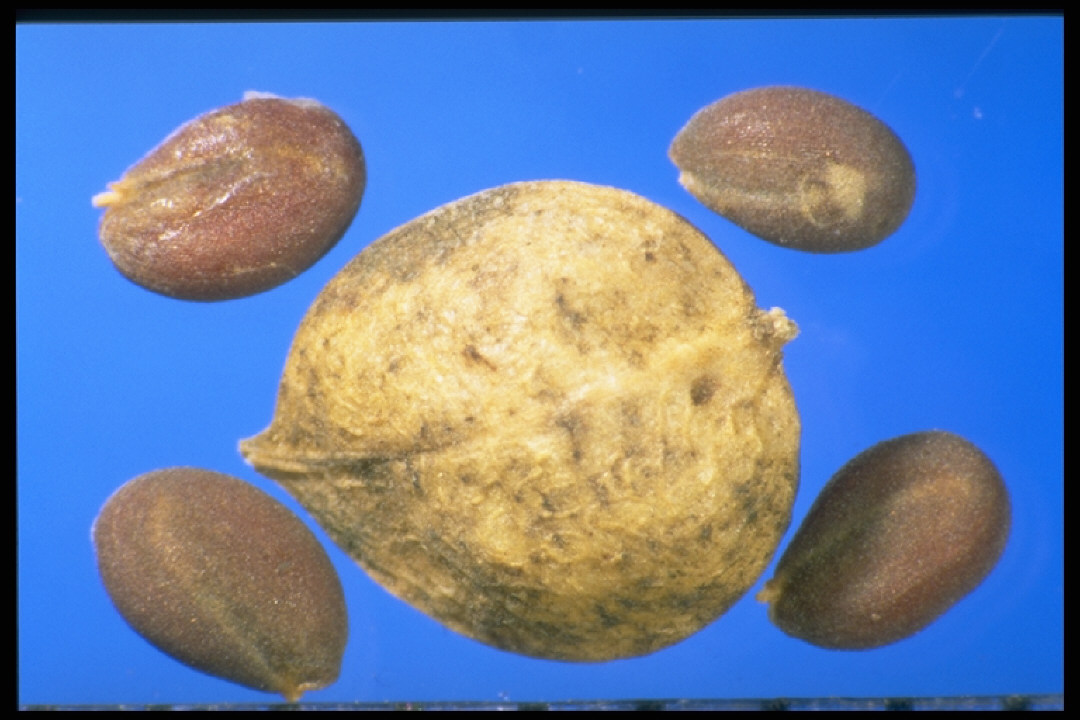
Seeds are compressed ovalOval:
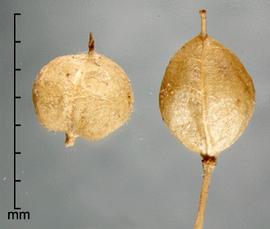
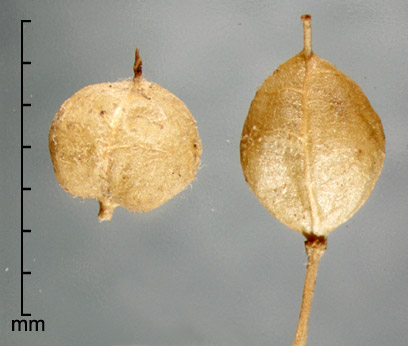
Broadly elliptic. and appear very much like C. draba. The significant difference is that the siliqueSilique:
A fruit usually dehiscing by two lateral valves (having a central septum). The fruits can be long or short in length and round or flat in cross section. Contains more than one seed. Found in Brassicaceae.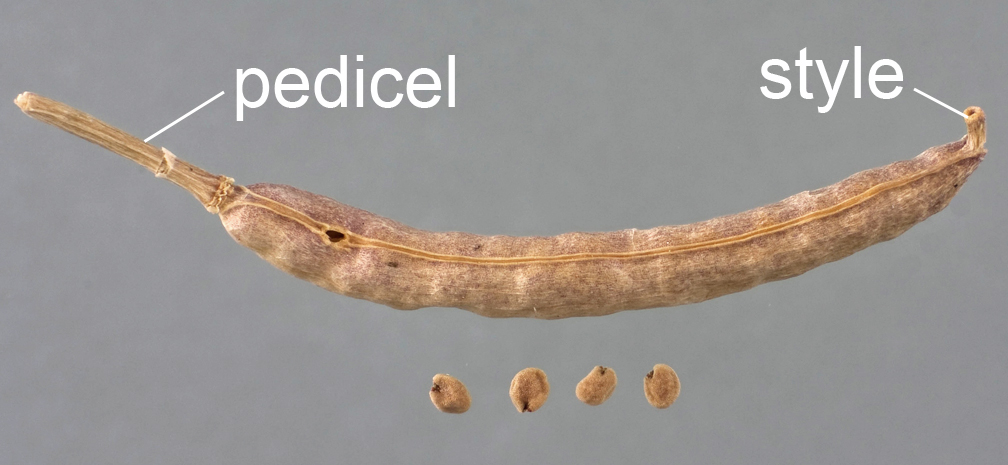 of C. pubescens is ball-shaped and not heart-shaped. The surface is also smoother.
State Noxious Weed: Alaska, California, Colorado, Hawaii, New Mexico, Nevada, Ohio, Oregon, Utah, Washington
Federal: This species is actionable only when found in field or vegetable seed for planting; toleranceTolerance:
The amount by which a second test may differ from a first test without being attributed to an actual difference in seed quality. Tolerances are usually based on normal random variation, or sampling error.
applies, see (7 CFR 361.6(a)(2)).
Learn more on ITP's Federal Noxious Weed Disseminules tool.
Not included
Brassicaceae
Cardaria pubescens (C.A. Mey.) Jarmolenko
Cardaria pubescens (C.A. Mey.) Jarmolenko var. elongata Rollins
Hymenophysa pubescens C.A. Mey.
Lepidium appelianum Al-Shehbaz