Weed
Johnsongrass, aleppo milletgrass, herbe de Cuba, sorgho d'Alep, sorgo de alepo, zacate Johnson
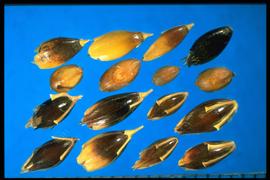
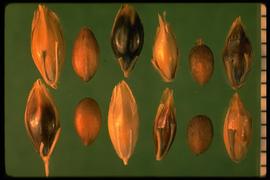
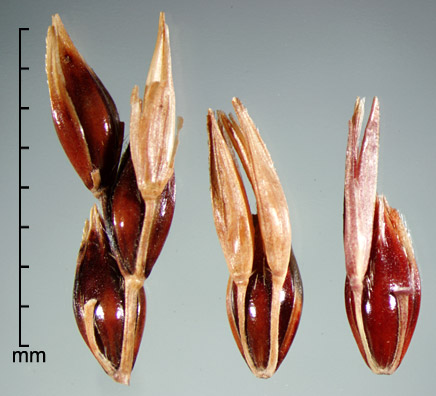
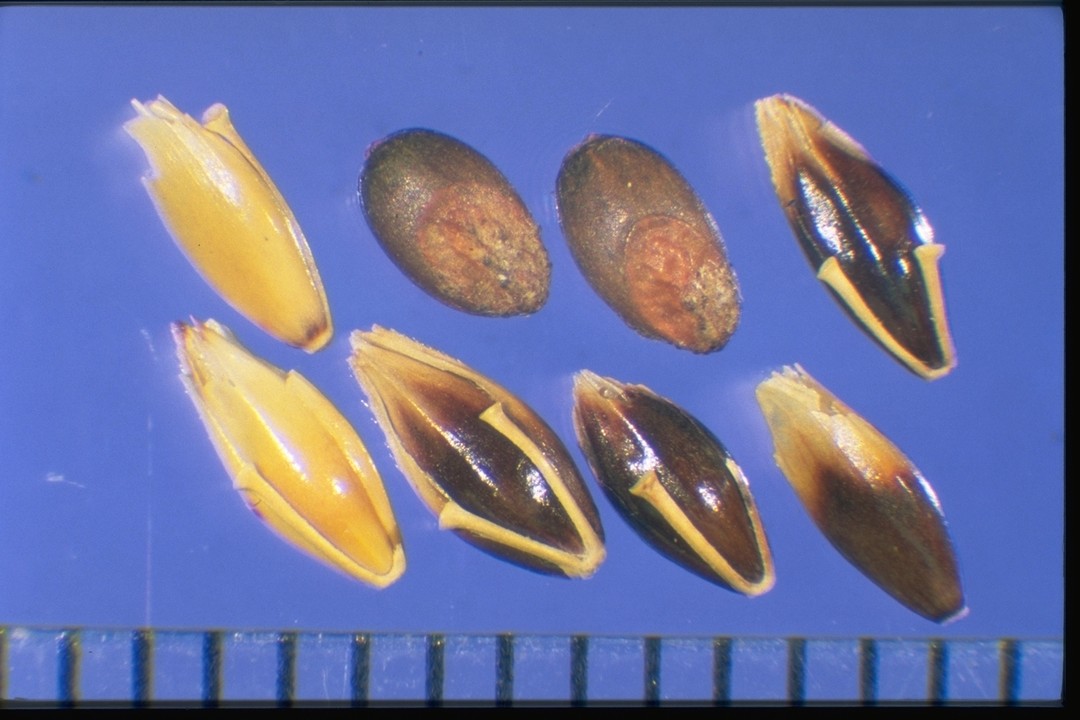
SpikeletSpikelet:
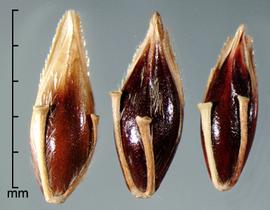
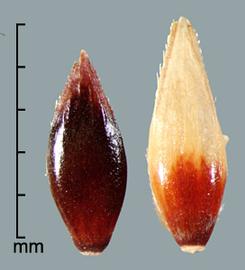
One or more florets that are subtended by a pair of bracts called glumes. Spikelets are pedicellate if located on a pedicle and sessile if attached directly to the rachis. Often spikelets with single florets have remnants of a second floret, usually a lemma.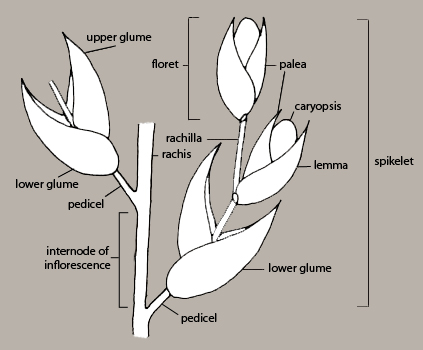
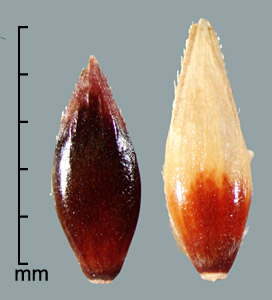
Lanceolate
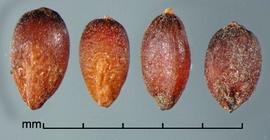
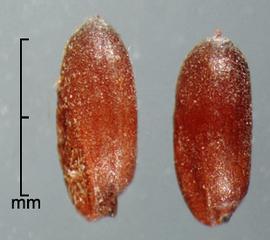
Light brown to black with gradations
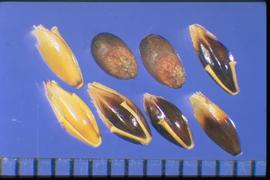
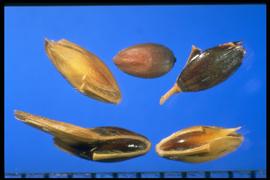
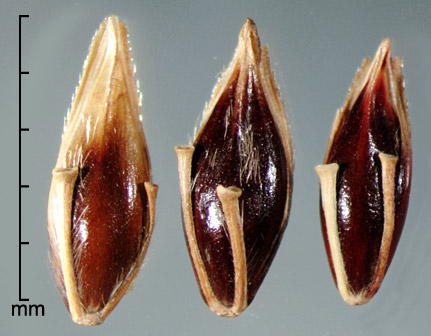
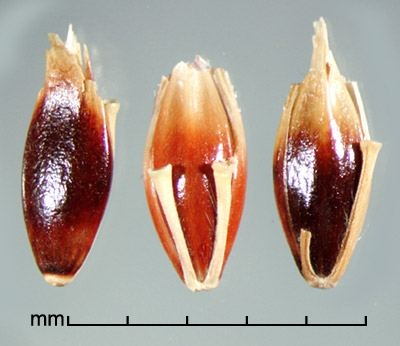
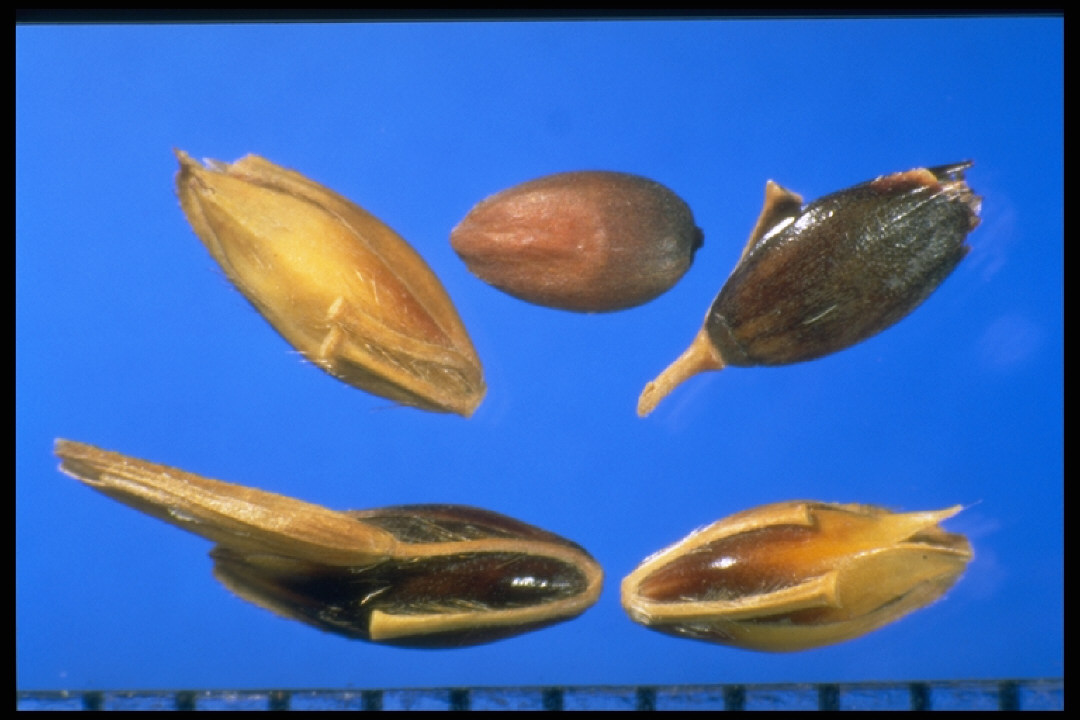
SpikeletSpikelet:
One or more florets that are subtended by a pair of bracts called glumes. Spikelets are pedicellate if located on a pedicle and sessile if attached directly to the rachis. Often spikelets with single florets have remnants of a second floret, usually a lemma. smooth and shiny; sparce hairs on appendages.
Not visible
Not visible
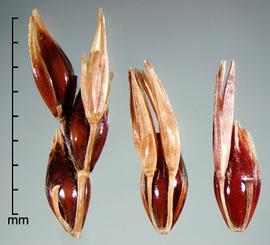
Rachis segmentRachis segment:
A segment of the central axis of the inflorescence (rachis). In some species (e.g. Andropogon) separation of the sessile spikelets occurs when the rachis disarticulates at the spikelet bases leaving the segment of the rachis between spikelets attached to the lower spikelet.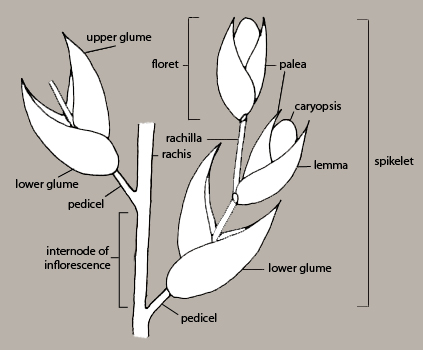 and pedicelPedicel:
The stalk within an inflorescence supporting a single flower or spikelet.
intact; spikeletSpikelet:
One or more florets that are subtended by a pair of bracts called glumes. Spikelets are pedicellate if located on a pedicle and sessile if attached directly to the rachis. Often spikelets with single florets have remnants of a second floret, usually a lemma. base is smooth.
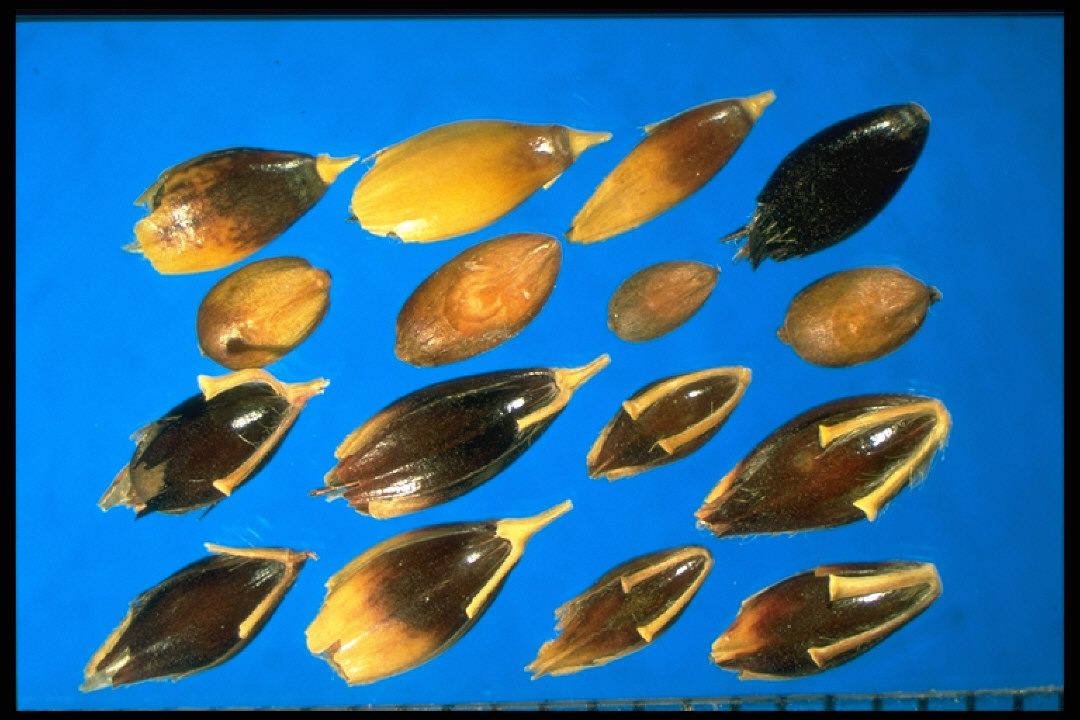
Units are mostly found as spikeletsSpikelet:
One or more florets that are subtended by a pair of bracts called glumes. Spikelets are pedicellate if located on a pedicle and sessile if attached directly to the rachis. Often spikelets with single florets have remnants of a second floret, usually a lemma. with the separation between spikeletsSpikelet:
One or more florets that are subtended by a pair of bracts called glumes. Spikelets are pedicellate if located on a pedicle and sessile if attached directly to the rachis. Often spikelets with single florets have remnants of a second floret, usually a lemma. by a clean disarticulation at the bases, leaving no fragments. Therefore the rachis segmentRachis segment:
A segment of the central axis of the inflorescence (rachis). In some species (e.g. Andropogon) separation of the sessile spikelets occurs when the rachis disarticulates at the spikelet bases leaving the segment of the rachis between spikelets attached to the lower spikelet. and pedicelPedicel:
The stalk within an inflorescence supporting a single flower or spikelet.
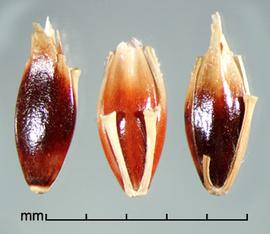
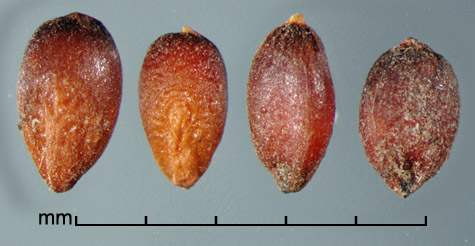
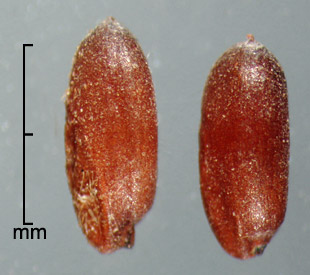
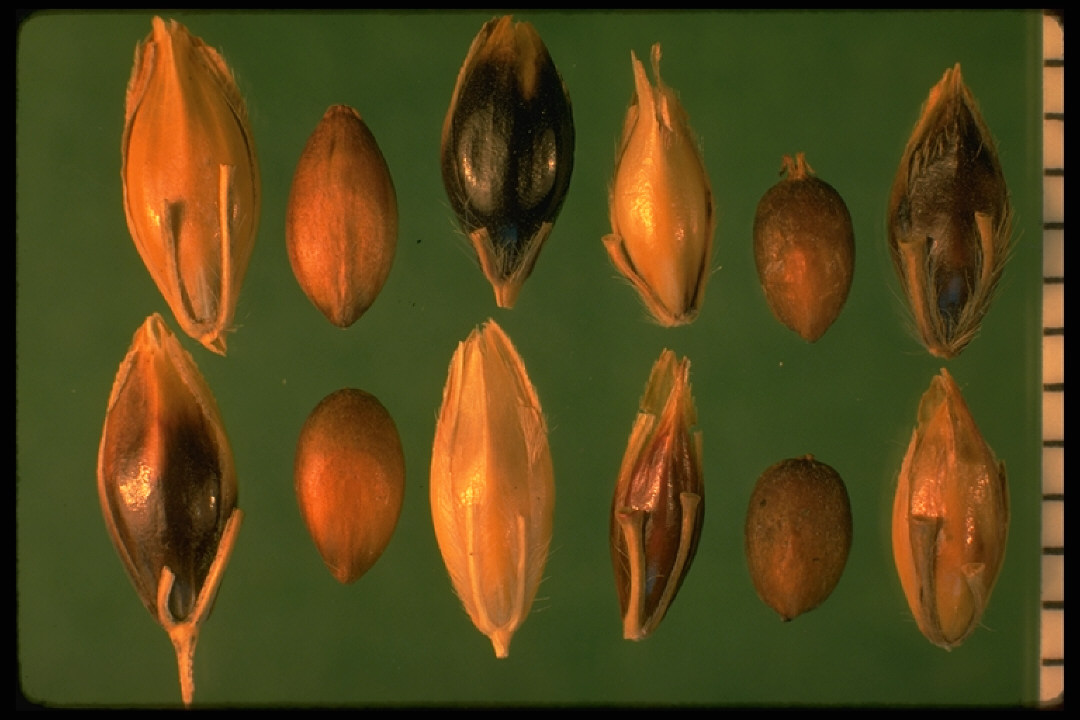
are usually intact with cuplike structures at their apexes. The caryopsisCaryopsis:
The single-seeded fruit or grain of the grass family (Poaceae); the fruit wall (pericarp) is united with the seed coat (testa).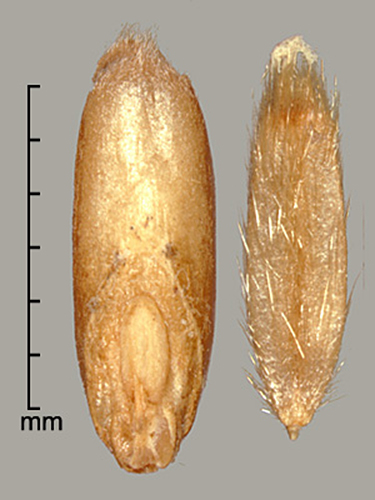 has a rounded apexApical:
The distal end of the fruit or seed away from the point of attachment or attachment scar.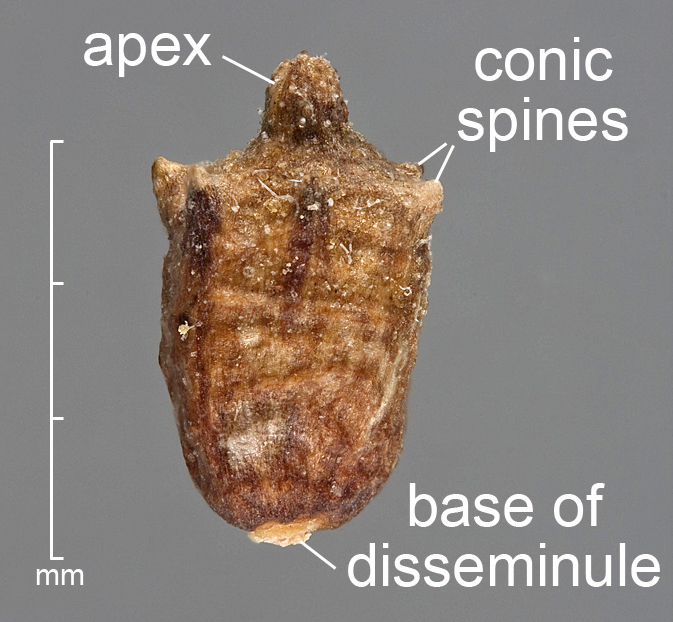 .
.
See individual states for noxious weed interpretations.
State Noxious Weed: Alabama, Arkansas, Arizona, California, Colorado, Delaware, Florida, Georgia, Hawaii, Idaho, Illinois, Kansas, Kentucky, Louisiana, Michigan, Maryland, Minnesota, Mississippi, Missouri, Nebraska, New Jersey, New Mexico, Nevada, North Carolina, Ohio, Oklahoma, Oregon, Pennsylvania, South Carolina, Tennessee, Texas, Utah, Virginia, Washington, West Virginia
Federal: This species is actionable only when found in field or vegetable seed for planting; toleranceTolerance:
The amount by which a second test may differ from a first test without being attributed to an actual difference in seed quality. Tolerances are usually based on normal random variation, or sampling error.
applies, see (7 CFR 361.6(a)(2)).
Learn more on ITP's Federal Noxious Weed Disseminules tool.
Included
Poaceae
Sorghum halepense (L.) Pers.
Holcus halepensis L.
Sorghum miliaceum (Roxb.) Snowden