Weed
hedgemustard, hedge tumblemustard, hedgeweed, hairypod hedgemustard, wild mustard
True seedTrue seed:
A mature fertilized ovule consisting of an embryo, with or without and external food reserve (e.g., endosperm) enclosed by the testa.
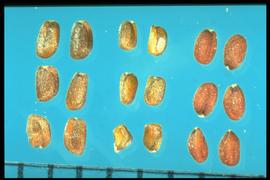
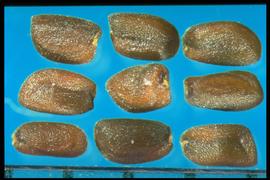
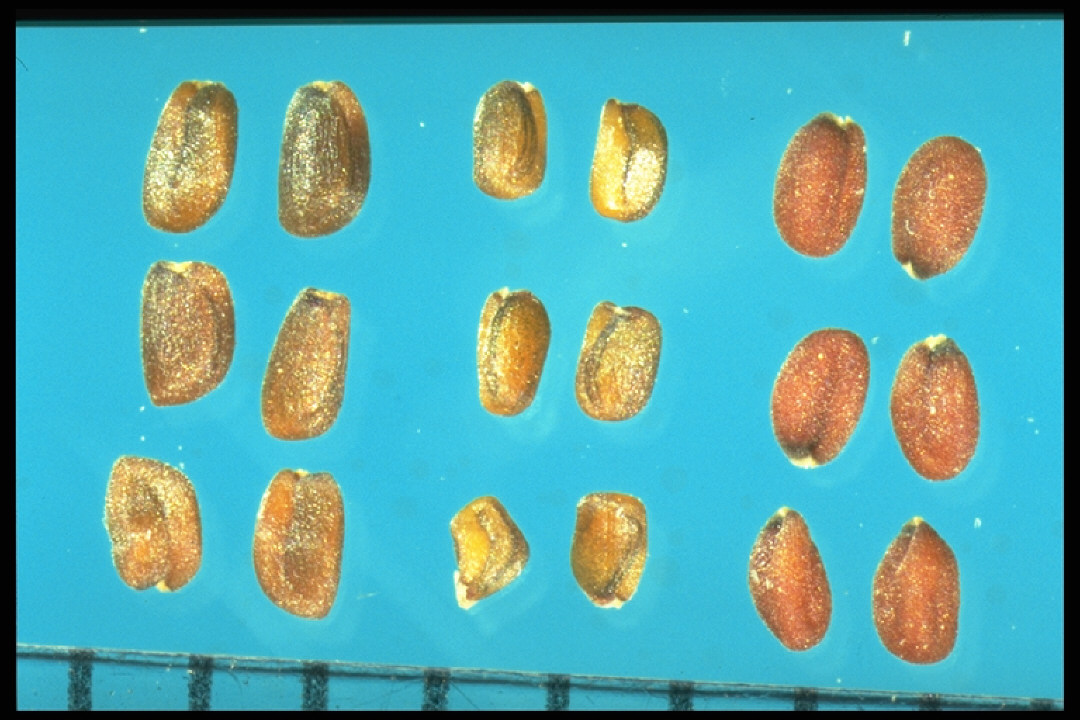
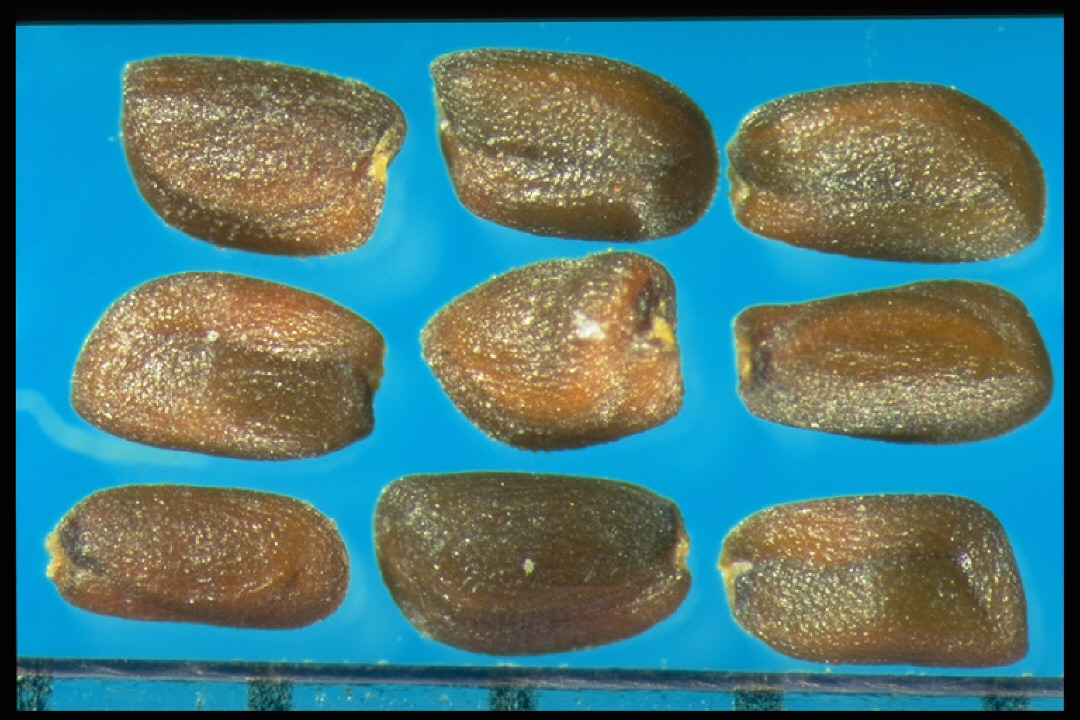
Blocky and irregular
Brown with greenish cast
Reticulations small and irregular
Groove between lobes is indistinct.
Seeds are compressed rectangular with one surface flat and the other humped. Margins of cotyledonsCotyledon:
The modified storage leaf or pair of leaves of an embryo and seedling (see primary leaf).
are not distinctly marked with a green line. Color is dark greenish brown. Surface is rough. Seeds 1mm or longer, making them somewhat longer than S. altissimum.
Not listed
Not included
For more information, see ISMA fact sheet.
Brassicaceae
Sisymbrium officinale (L.) Scop.
Erysimum officinale L.
Sisymbrium officinale (L.) Scop. var. leiocarpum DC.