Weed
hedge false bindweed
True seedTrue seed:
A mature fertilized ovule consisting of an embryo, with or without and external food reserve (e.g., endosperm) enclosed by the testa.
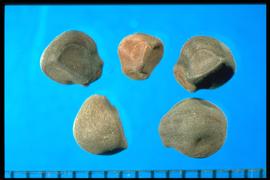
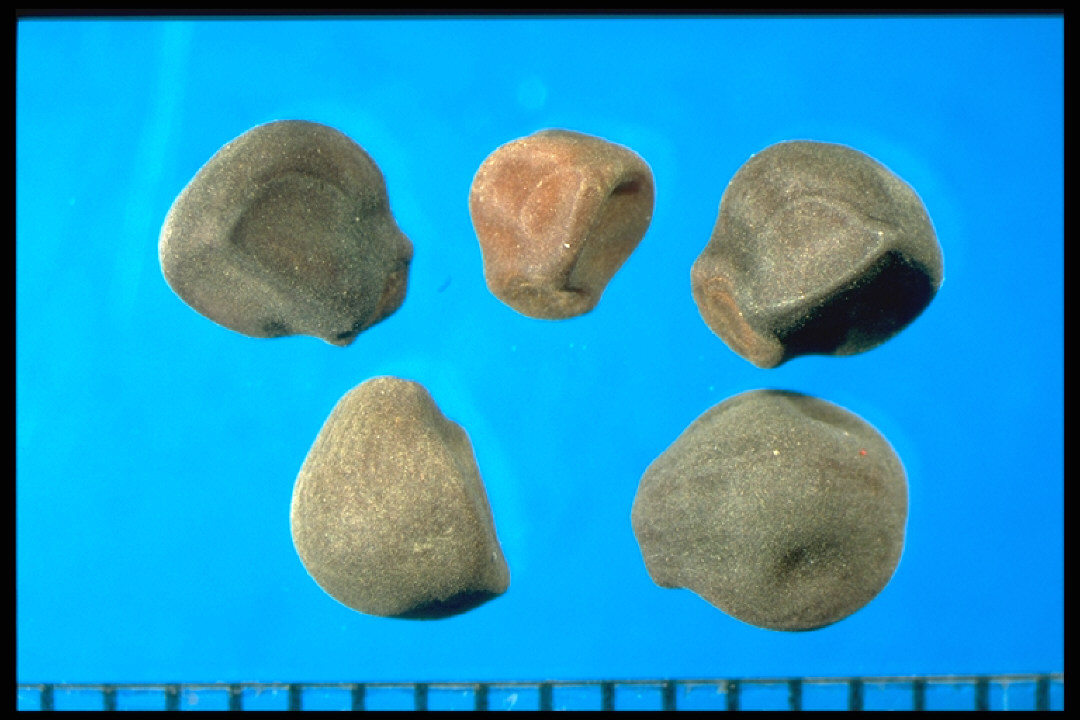
ObovateObovate:
Inverted egg shaped with apical end the broadest.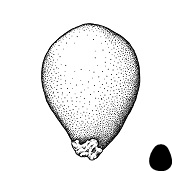
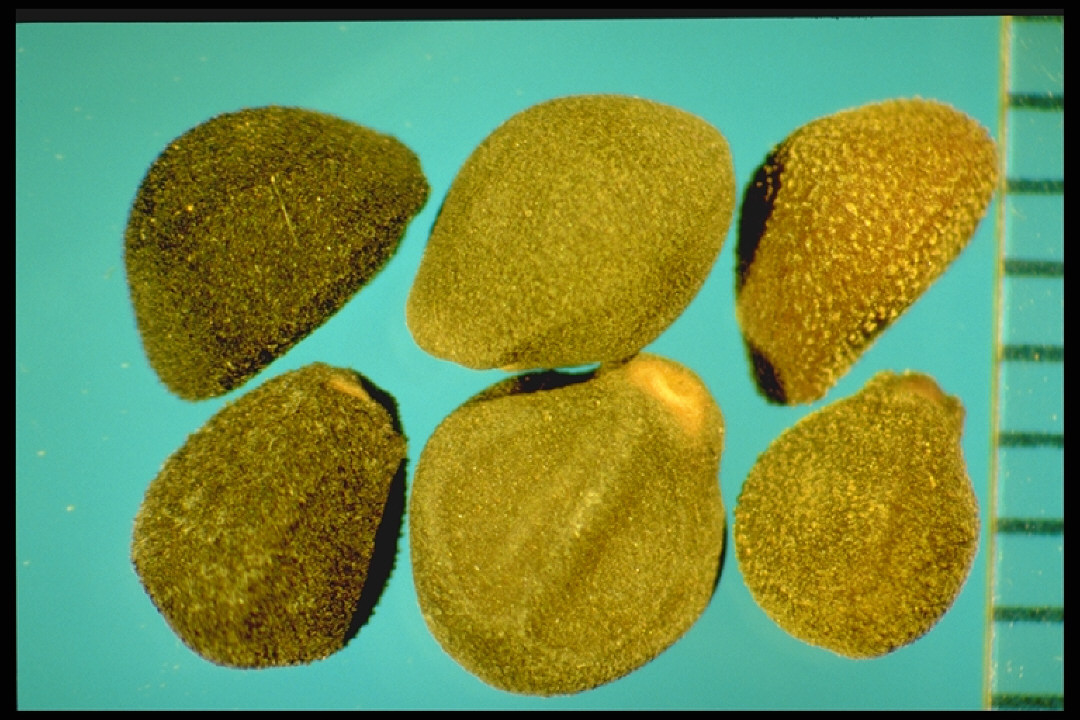
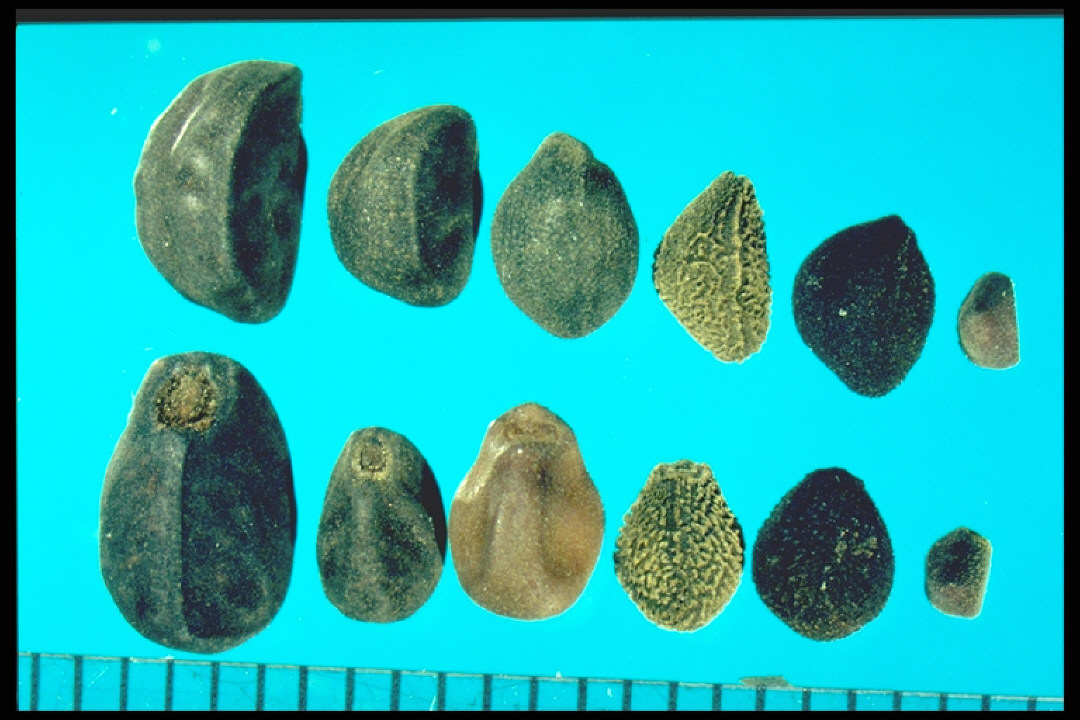
Dark gray
Smooth
Usually two flat surfaces adjacent to each other
The seeds are usually borne three to four in a podPod:
A dehiscent fruit produced by leguminous plants (beans, peas). Also known as a legume.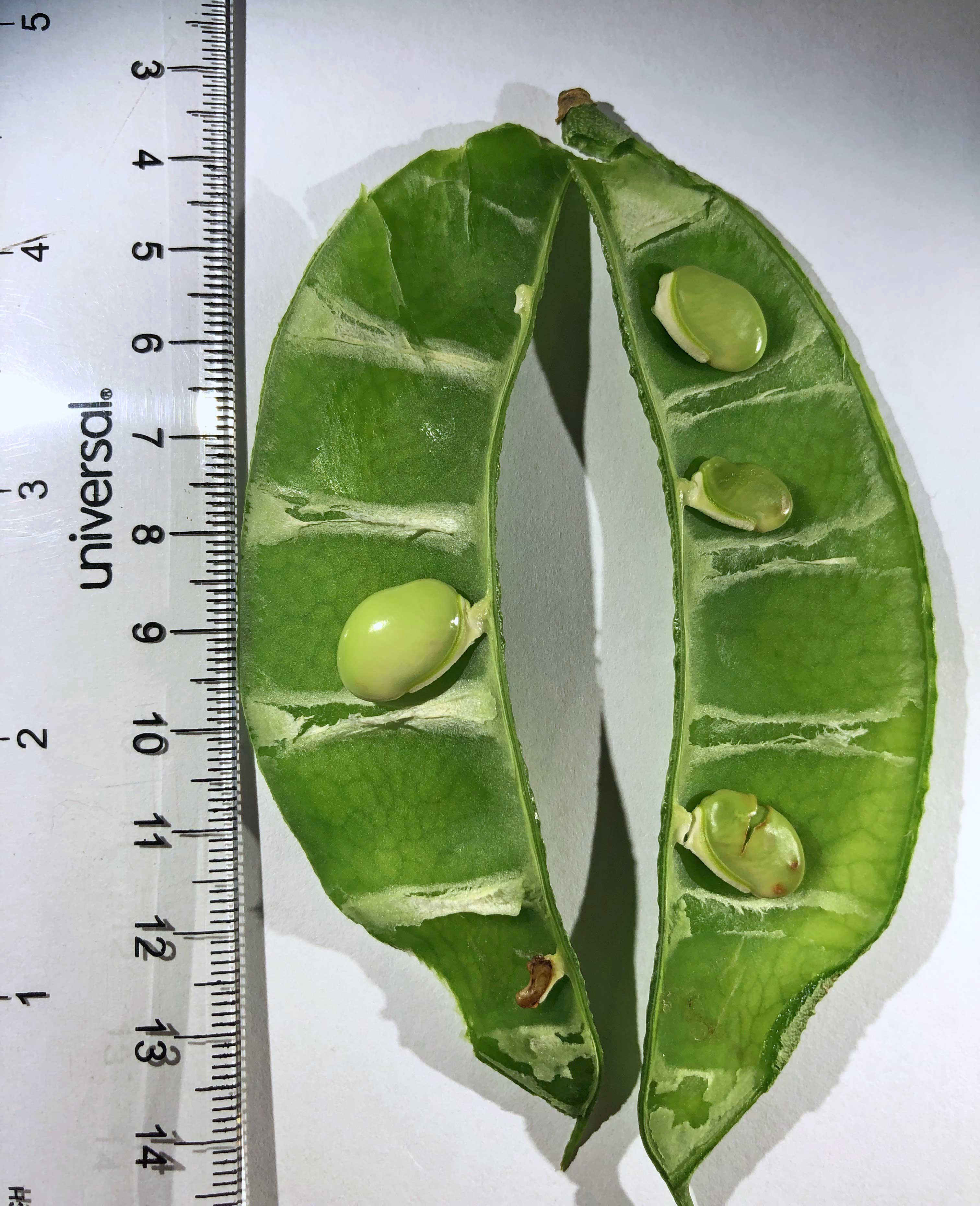 . The pressure of the seeds against each other accounts for the flat surfaces. The surface of the hilumHilum:
The scar on the seed coat at the place of its detachment from the seed stalk (funiculus).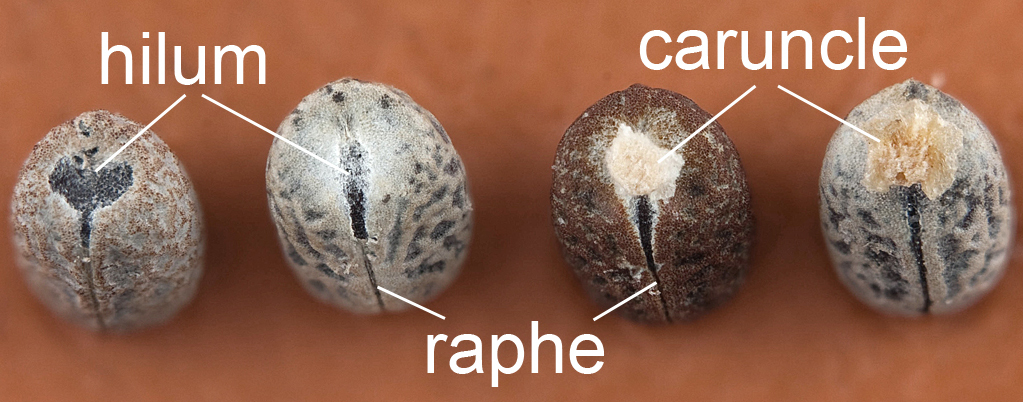 is not parallel to the longitudinal axis of the seed.
State Noxious Weed: Alabama, Arkansas, Georgia, Hawaii, Kansas, Louisiana, Michigan, Mississippi, Missouri, New Jersey, North Carolina, North Dakota, Ohio, Oklahoma, Pennsylvania, South Carolina, South Dakota, Tennessee, Texas, Washington, West Virginia
Included
For more information, see ISMA fact sheet.
Convolvulaceae
Calystegia sepium (L.) R. Br.