Agricultural
Sudangrass, chicken-corn, sordan, shattercane
SpikeletSpikelet:
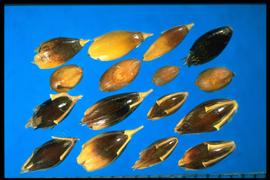
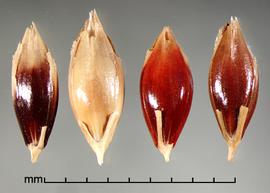
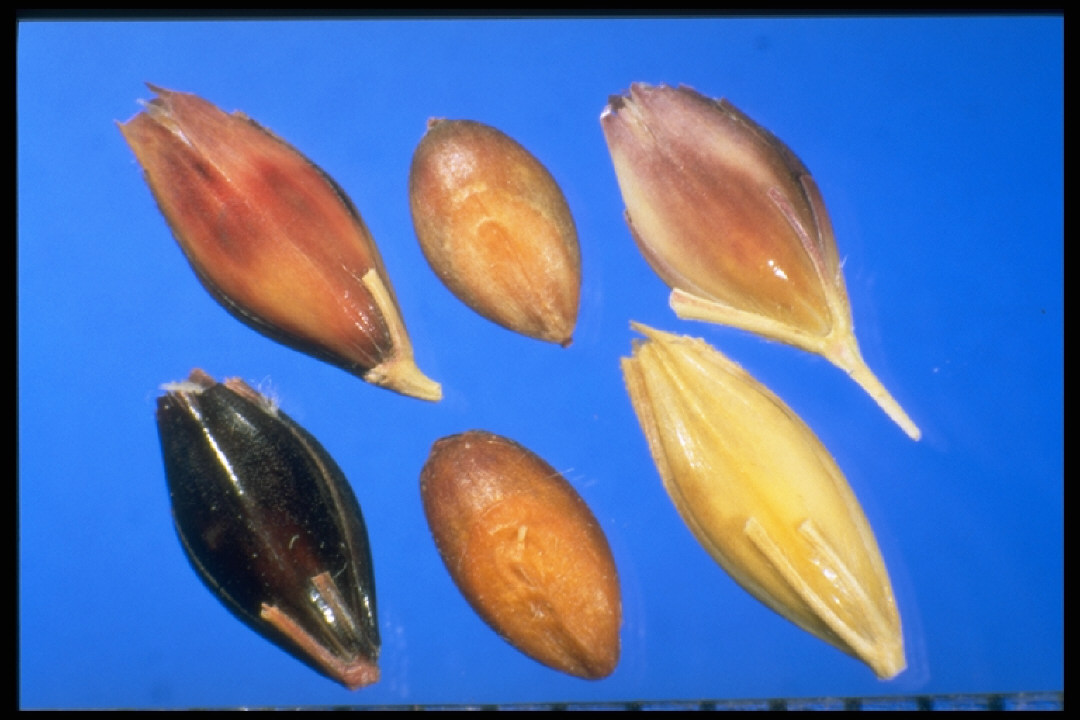
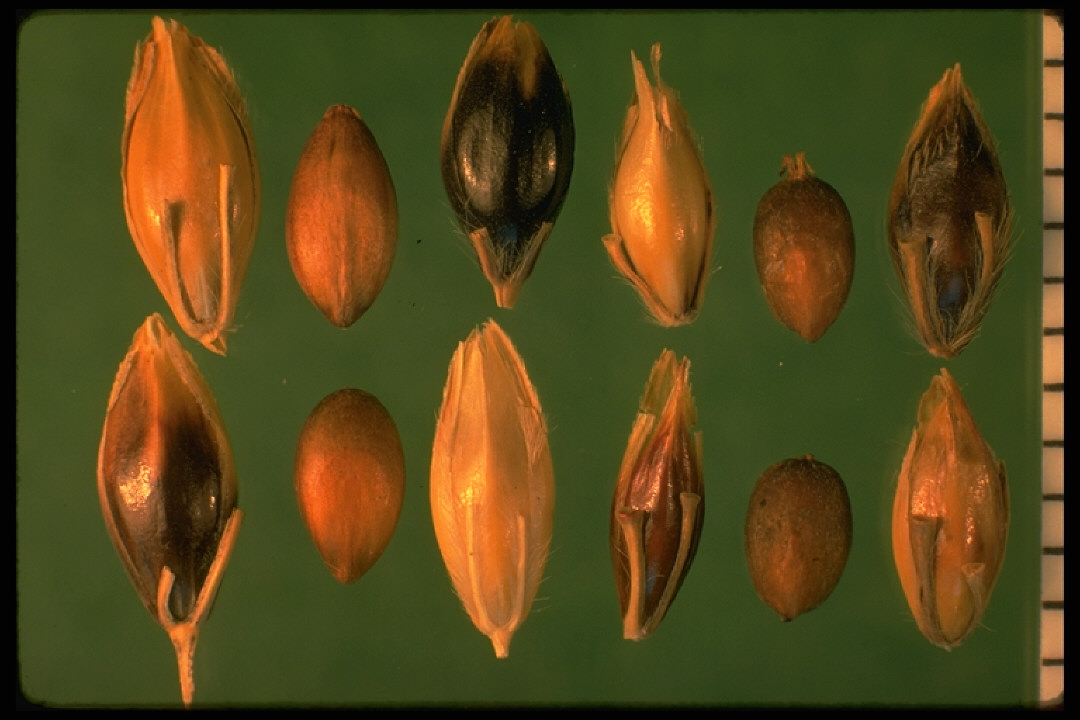
One or more florets that are subtended by a pair of bracts called glumes. Spikelets are pedicellate if located on a pedicle and sessile if attached directly to the rachis. Often spikelets with single florets have remnants of a second floret, usually a lemma.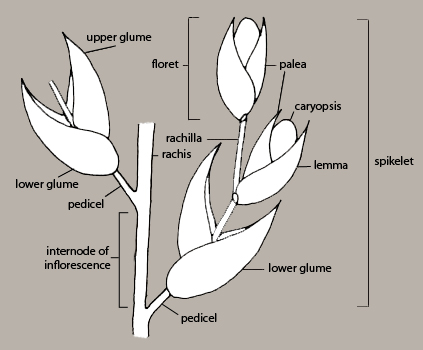
EllipticElliptic:
Outline of an ellipse; greatest width midway sloping to an equally pointed apex and base.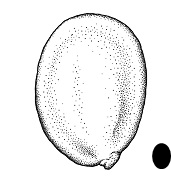
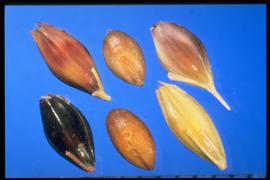
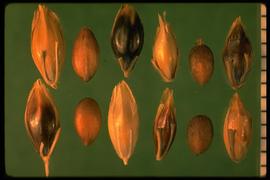
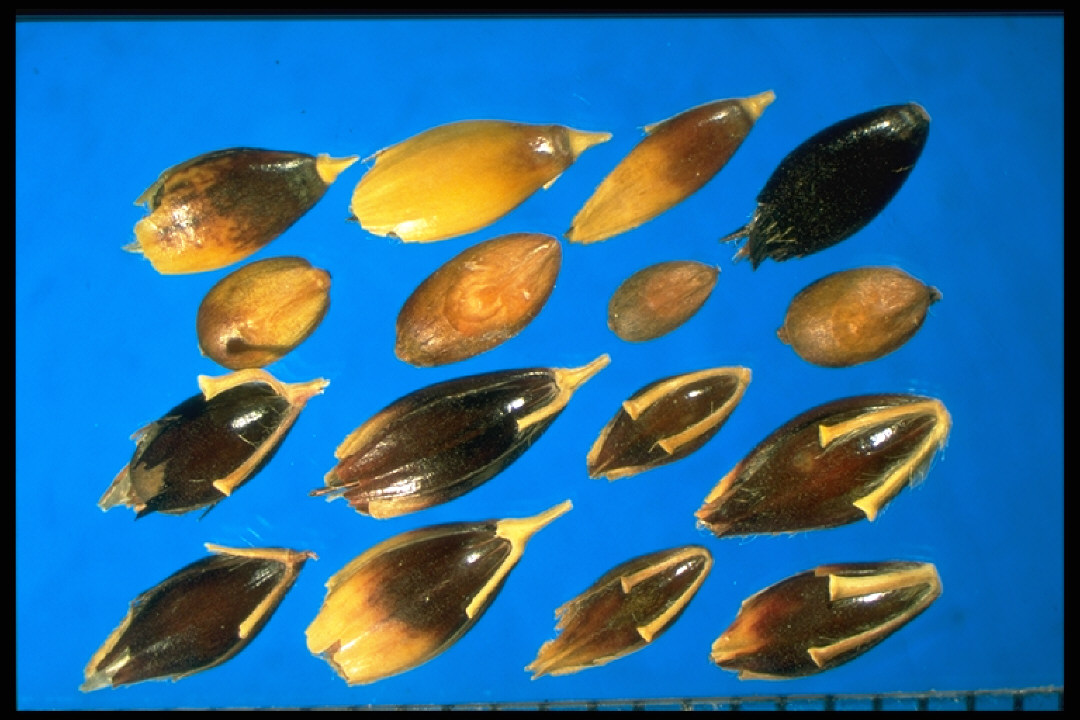
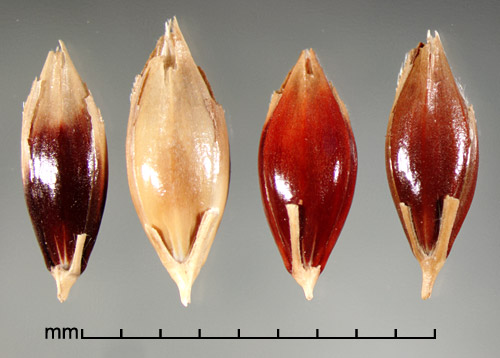
Yellow to black with some reddish and some mixed
Mostly glabrousGlabrous:
Lacking hairs or pubescence.
, smooth.
Thin, mostly not seen
Thin, mostly not seen
All pedicels and rachisRachis:
The central axis of an inflorescence.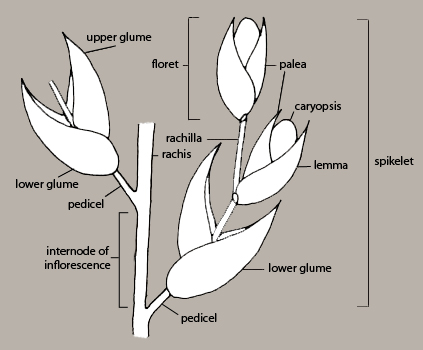 segments fractured, no abscission.
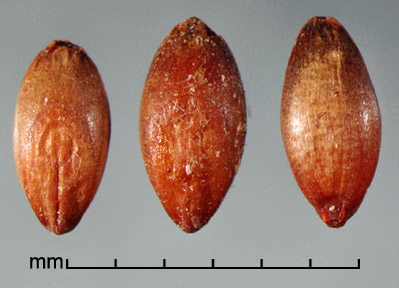
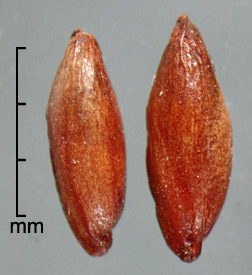
All the disarticulation in this species is by fracture. There is no sign of an abscission crease at the base of the spikeletSpikelet:
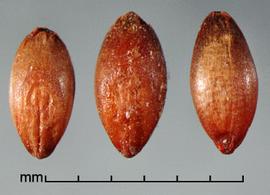
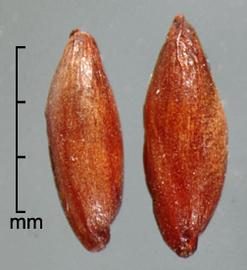
One or more florets that are subtended by a pair of bracts called glumes. Spikelets are pedicellate if located on a pedicle and sessile if attached directly to the rachis. Often spikelets with single florets have remnants of a second floret, usually a lemma.. The caryopsisCaryopsis:
The single-seeded fruit or grain of the grass family (Poaceae); the fruit wall (pericarp) is united with the seed coat (testa).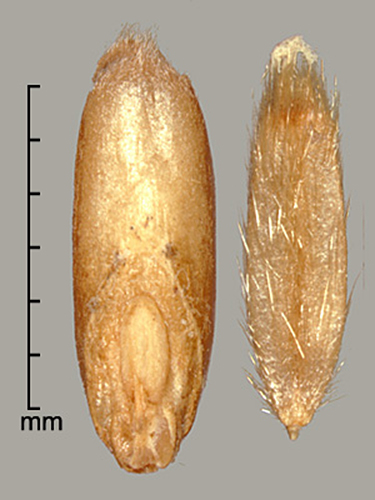 is less rounded at the apexApical:
The distal end of the fruit or seed away from the point of attachment or attachment scar.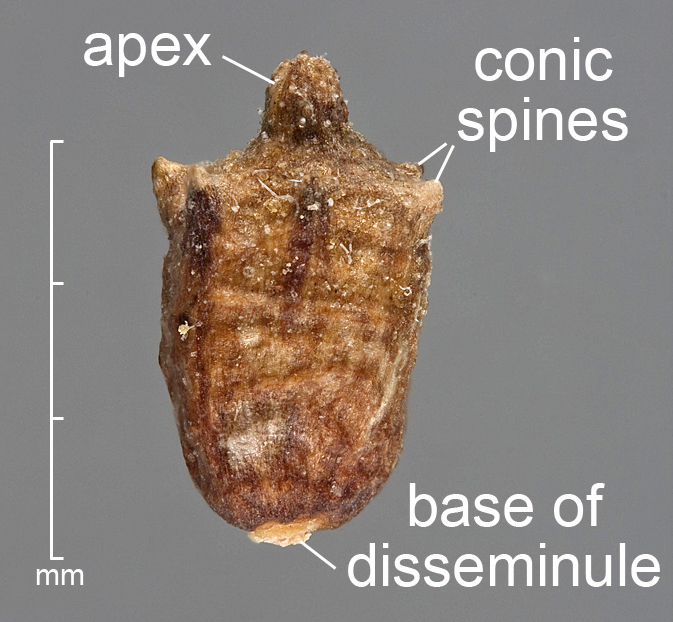 , where the slope is more gradual from the middle to the top.
Seed of this species is considered noxious only as a contaminant. check individual states for interpretations.
State Noxious Weed: Alabama, California, Delaware, Illinois, Kansas, Kentucky, Maryland, Minnesota, Mississippi, New Jersey, Nevada, Ohio, Pennsylvania, South Carolina, Texas, Utah, Virginia, Washington, West Virginia
Included
Poaceae
Sorghum bicolor nothosubsp. drummondii (Nees ex Steud.) de Wet ex Davidse
Andropogon drummondii Nees ex Steud.
Sorghum bicolor (L.) Moench var. drummondii (Nees ex Steud.) Mohlenbr.
Sorghum bicolor (L.) Moench var. sudanense (Piper) Hitchc.
Sorghum drummondii (Nees ex Steud.) Millsp. & Chase
Sorghum sudanense (Piper) Stapf
Sorghum vulgare Pers. var. drummondii (Nees ex Steud.) Hack. ex Chiov.
Sorghum vulgare Pers. var. sudanense (Piper) Hitchc.