Weed
marsh bristlegrass, knotroot bristlegrass, yellow bristlegrass
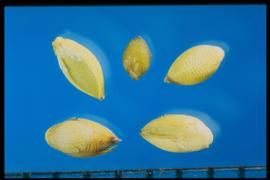
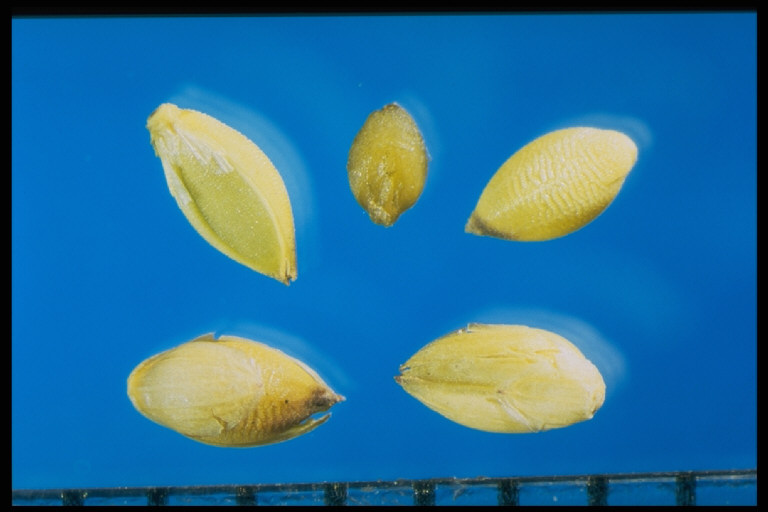
FloretFloret:
A small flower in a clustered inflorescence (e.g., sunflower, grasses). In grasses, a floret consists of the lemma, palea, stamens, and pistil.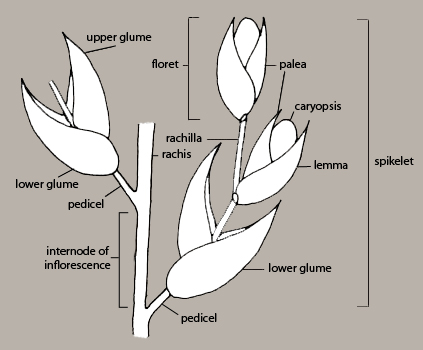
OvateOvate:
Egg-shaped with basal end the broadest.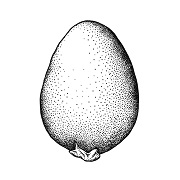
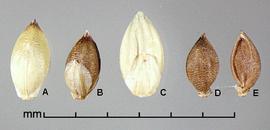
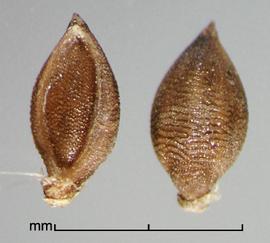
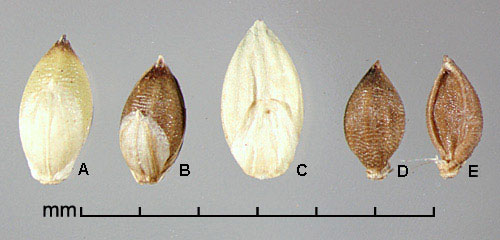
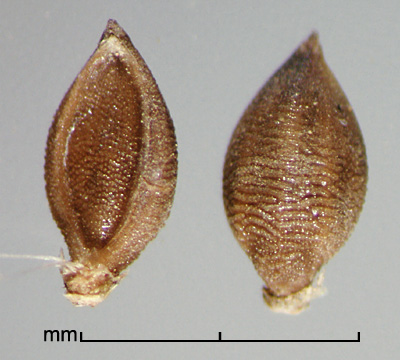
Yellow to brown
TransverseTransverse:
Set crosswise, crossing or at right angles.
ridges on both lemmaLemma:
One of two bracts of the grass floret; it is located on the side nearest the embryo and opposite the rachilla.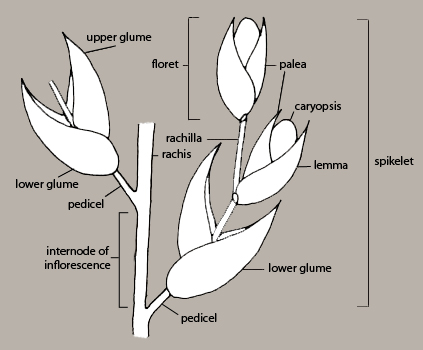 and paleaPalea:
One of the thin bracts of grass floret enclosing the fruit (caryopsis) that is located on the side opposite the embryo.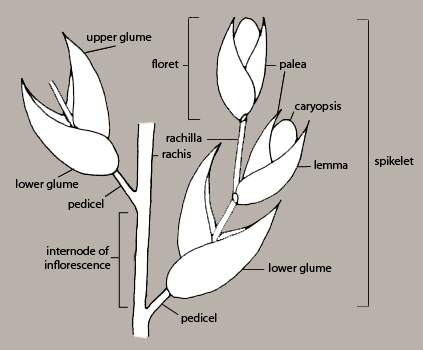
Hard, arched and with U-shaped line over the embryoEmbryo:
A rudimentary plant contained in a seed, usually consisting of a more or less differentiated axis and attached cotyledon(s).
Hard, flat with shiny edges not showing
Papery glumesGlume:
The pair of chaffy bracts that occur at the base of a grass spikelet, often completely enclosing it.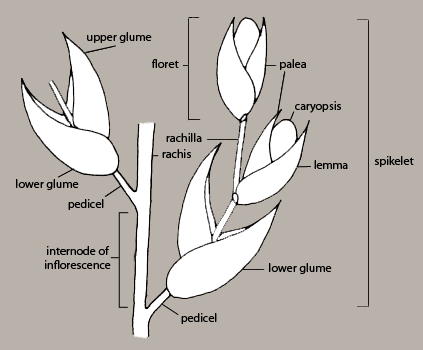 are sometimes present.
The second glumeGlume:
The pair of chaffy bracts that occur at the base of a grass spikelet, often completely enclosing it. is three-fourths the length of the lemmaLemma:
One of two bracts of the grass floret; it is located on the side nearest the embryo and opposite the rachilla.. The floretFloret:
A small flower in a clustered inflorescence (e.g., sunflower, grasses). In grasses, a floret consists of the lemma, palea, stamens, and pistil. is somewhat narrow compared to other species of Setaria. The edges of the paleaPalea:
One of the thin bracts of grass floret enclosing the fruit (caryopsis) that is located on the side opposite the embryo. are covered by the lemmaLemma:
One of two bracts of the grass floret; it is located on the side nearest the embryo and opposite the rachilla..
Not listed
Included
Poaceae
Setaria parviflora (Poir.) Kerguélen
Chaetochloa geniculata (Lam.) Millsp. & Chase
Chaetochloa imberbis (Poir.) Scribn.
Panicum geniculatum Lam.
Setaria geniculata (Wild.) P. Beauv., nom. illeg.
Setaria gracilis Kunth