Weed
loose silkybent
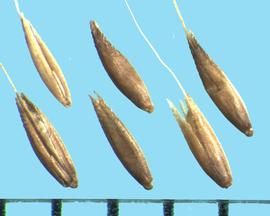
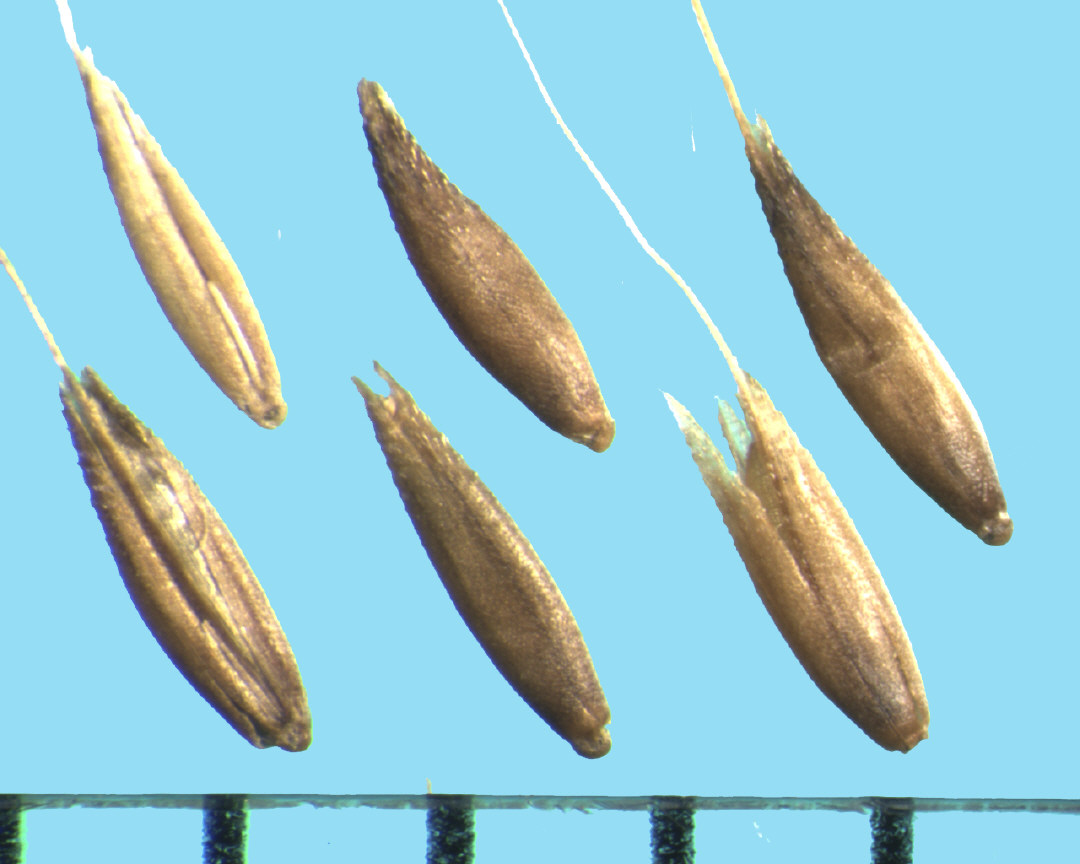
FloretFloret:
A small flower in a clustered inflorescence (e.g., sunflower, grasses). In grasses, a floret consists of the lemma, palea, stamens, and pistil.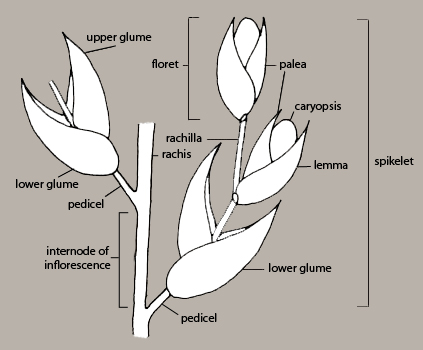
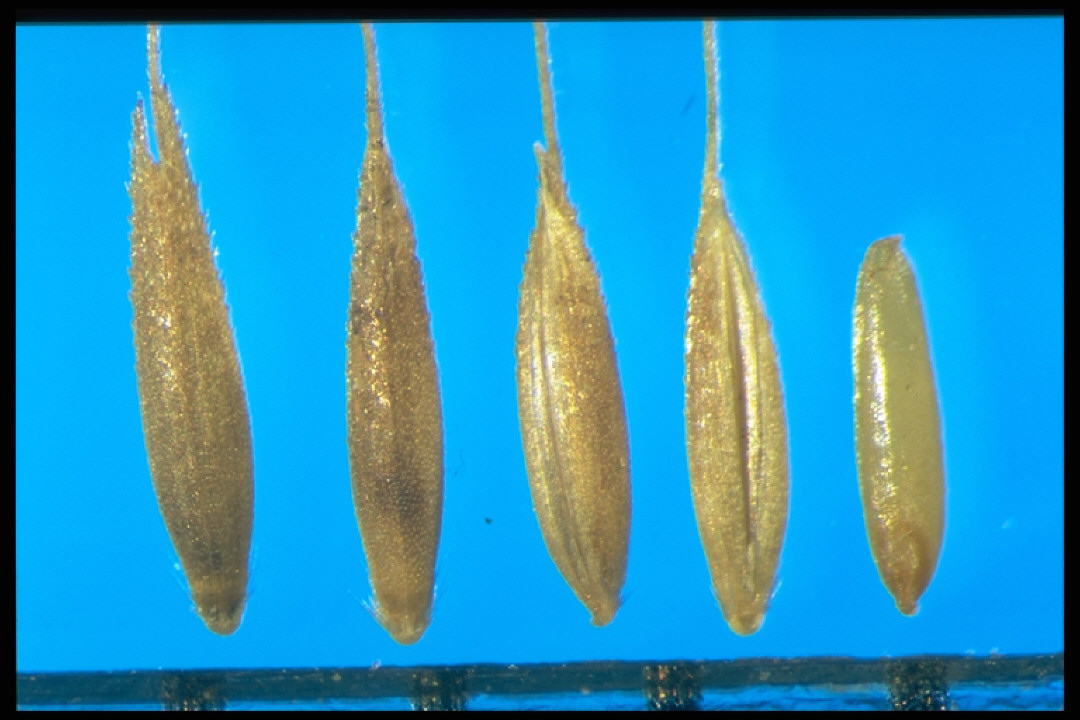
Lanceolate
Yellowish-brown
Short hispid hairs on upper part of lemmaLemma:
One of two bracts of the grass floret; it is located on the side nearest the embryo and opposite the rachilla.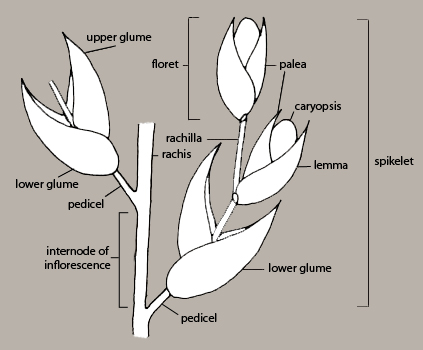
Surrounds entire floretFloret:
A small flower in a clustered inflorescence (e.g., sunflower, grasses). In grasses, a floret consists of the lemma, palea, stamens, and pistil.
Enclosed by lemmaLemma:
One of two bracts of the grass floret; it is located on the side nearest the embryo and opposite the rachilla.
Long thin awnsAwn:
A narrow, bristle-like organ, as on the glumes or lemmas of grasses (Poaceae).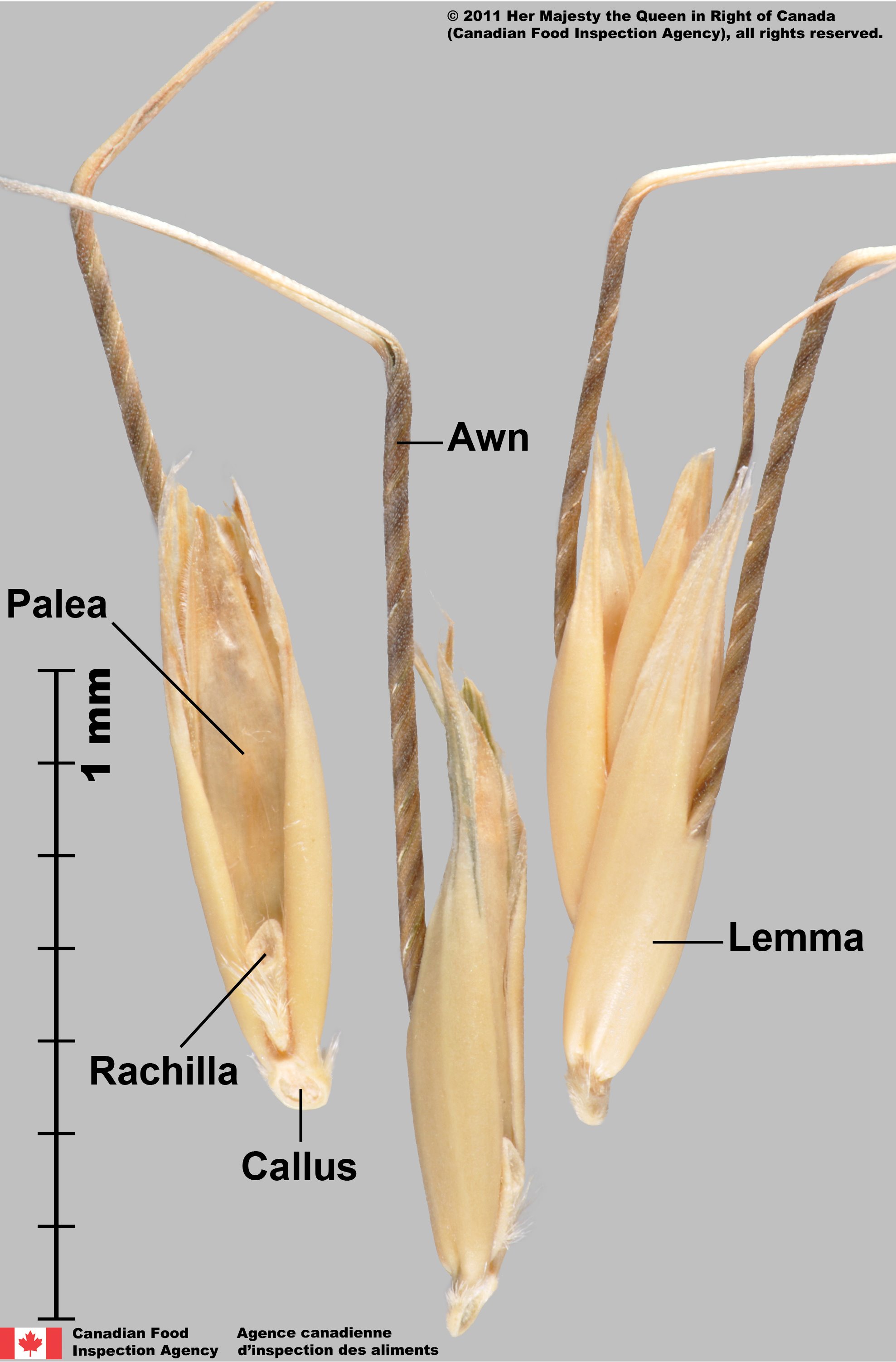 at tip of lemmaLemma:
One of two bracts of the grass floret; it is located on the side nearest the embryo and opposite the rachilla.; vestigial rachillaRachilla:
The axis of a spikelet.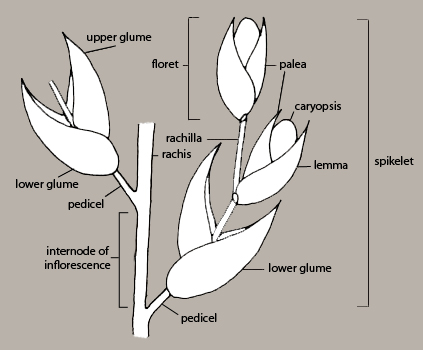 .
.
The caryopsisCaryopsis:
The single-seeded fruit or grain of the grass family (Poaceae); the fruit wall (pericarp) is united with the seed coat (testa).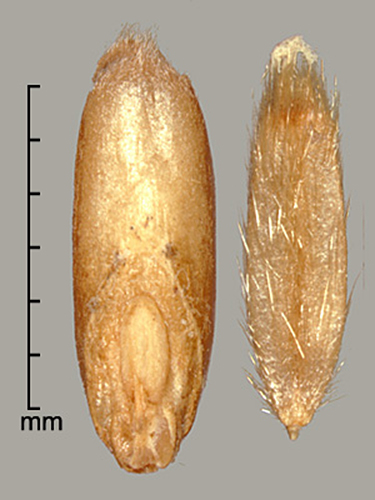 is yellowish and semi-soft. SpikeletsSpikelet:
One or more florets that are subtended by a pair of bracts called glumes. Spikelets are pedicellate if located on a pedicle and sessile if attached directly to the rachis. Often spikelets with single florets have remnants of a second floret, usually a lemma.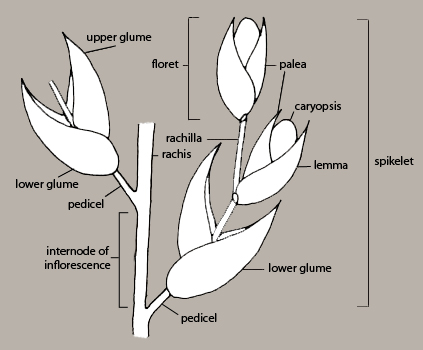 are one-flowered and disarticulation is above the glumesGlume:
The pair of chaffy bracts that occur at the base of a grass spikelet, often completely enclosing it.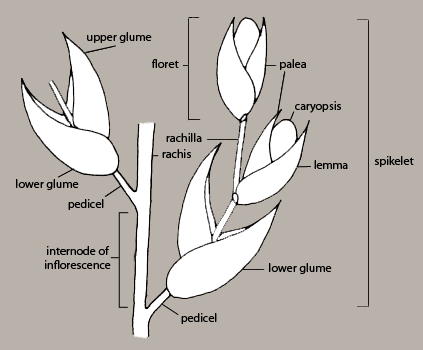 .
.
Not listed
Included
For more information, see ISMA fact sheet.
Poaceae
Apera spica-venti (L.) P. Beauv.
Agrostis spica-venti L.