Weed
field pennycress, Frenchweed, pennycress, stinkweed, fanweed
True seedTrue seed:
A mature fertilized ovule consisting of an embryo, with or without and external food reserve (e.g., endosperm) enclosed by the testa.
Compressed ovalOval:
Broadly elliptic.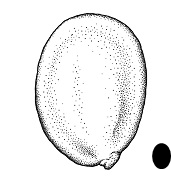
Black
Concentric ridges of compressed tubercles
HilumHilum:
The scar on the seed coat at the place of its detachment from the seed stalk (funiculus).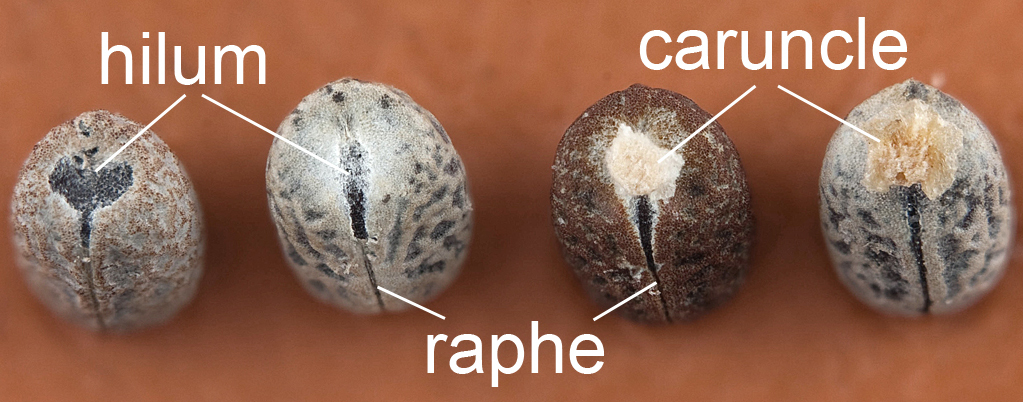 is on basalBasal:
The base of the fruit or seed opposite the apical end.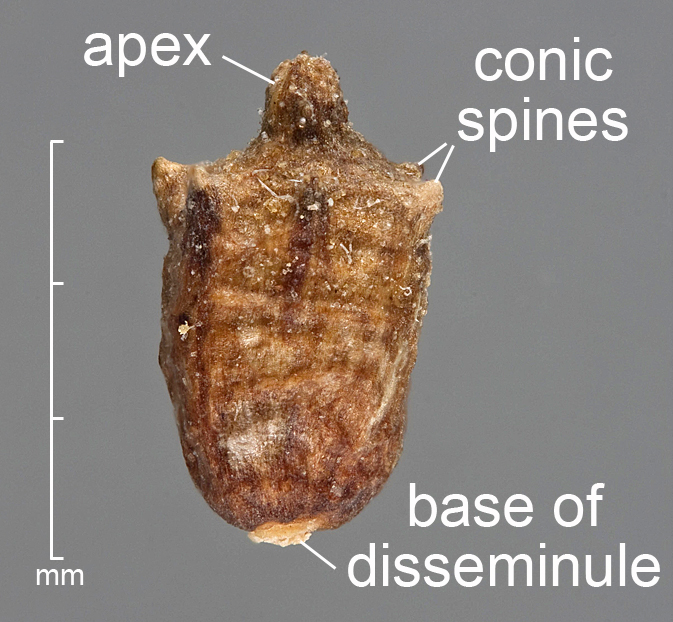 end.
end.
Seeds are compressed ovals with cotyledonCotyledon:
The modified storage leaf or pair of leaves of an embryo and seedling (see primary leaf).
lobe more curved than the radicleRadicle:
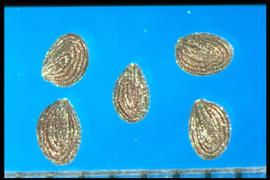
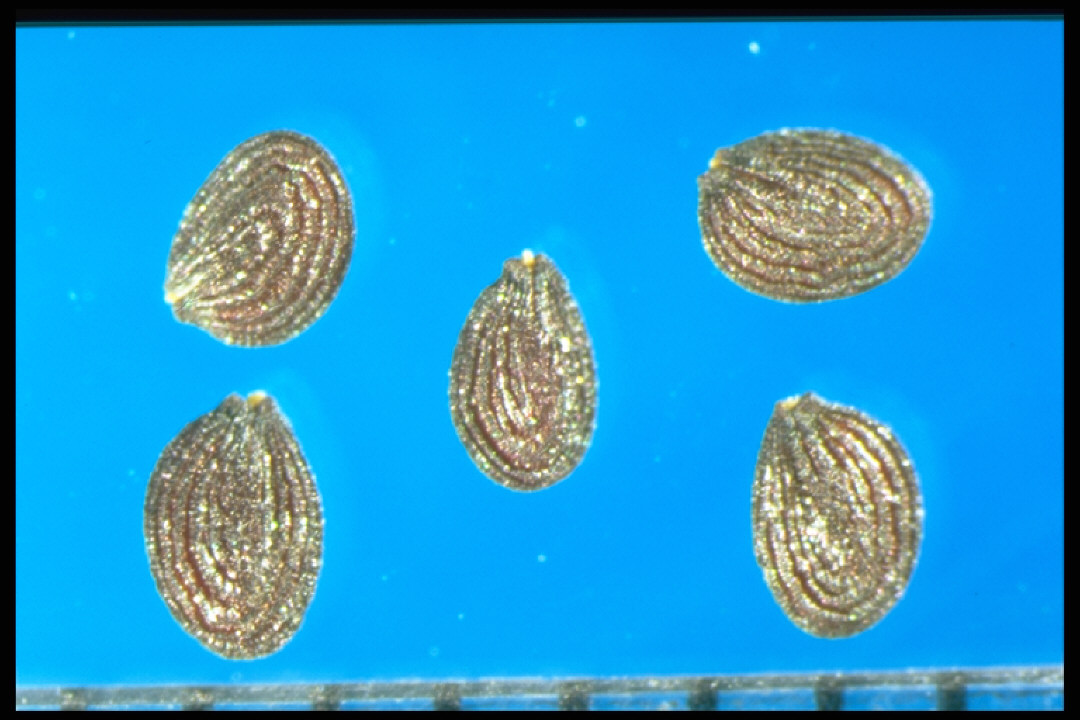
The rudimentary root of the embryo, developing into the primary root after emergence from the seed coat.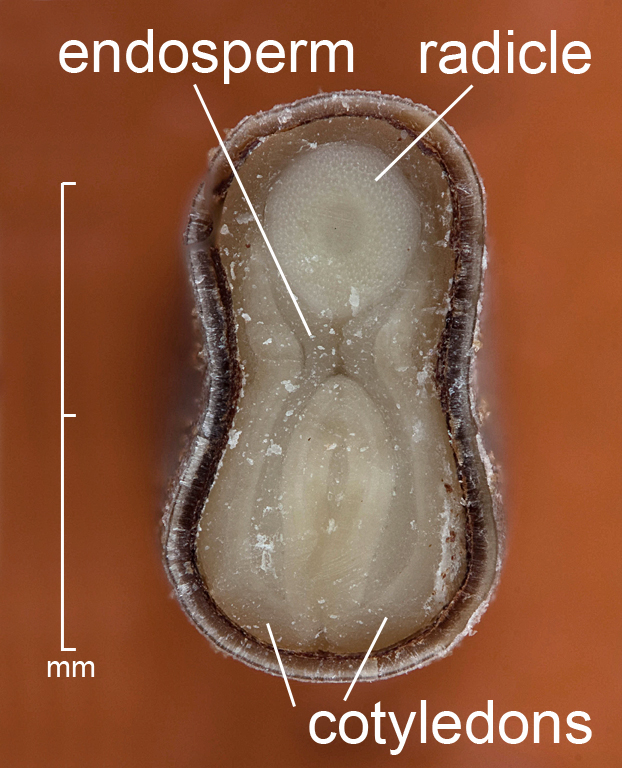 lobe. Seeds with 4-5 concentric ridges on each side, which make these seeds very distinct. Color is black.
State Noxious Weed: Indiana, Kansas, Michigan, Minnesota, Nebraska, Nevada, Ohio, South Dakota, Washington, West Virginia
Included
For more information, see ISMA fact sheet.
Brassicaceae
Thlaspi arvense L.