Revegetation or Rangeland, Turf
centipede grass
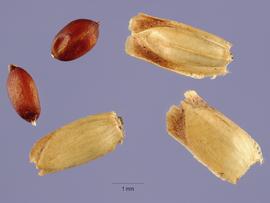
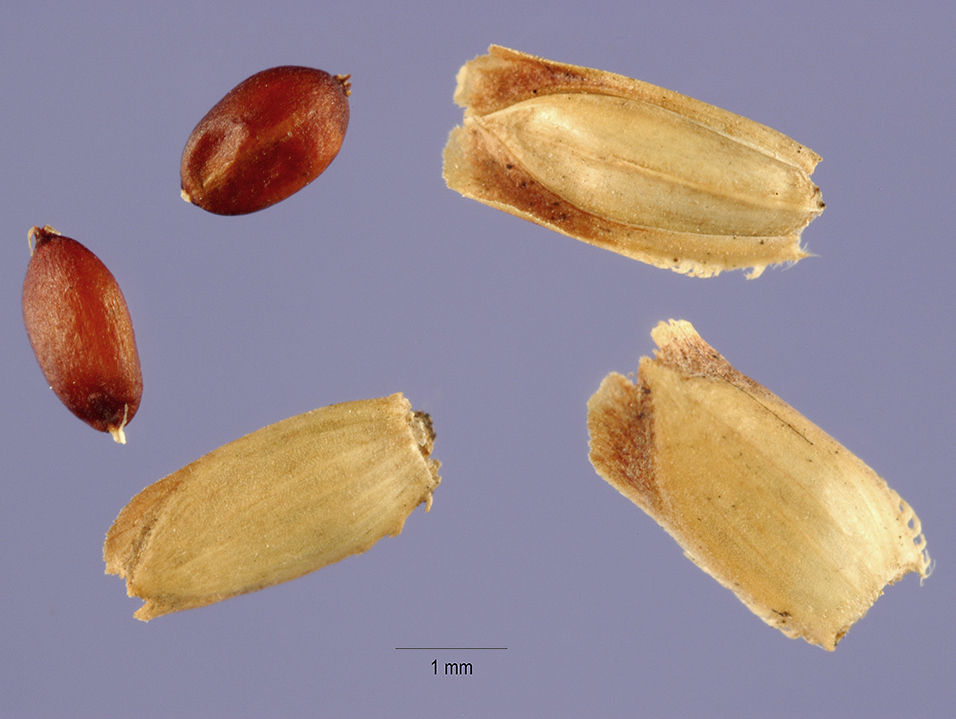
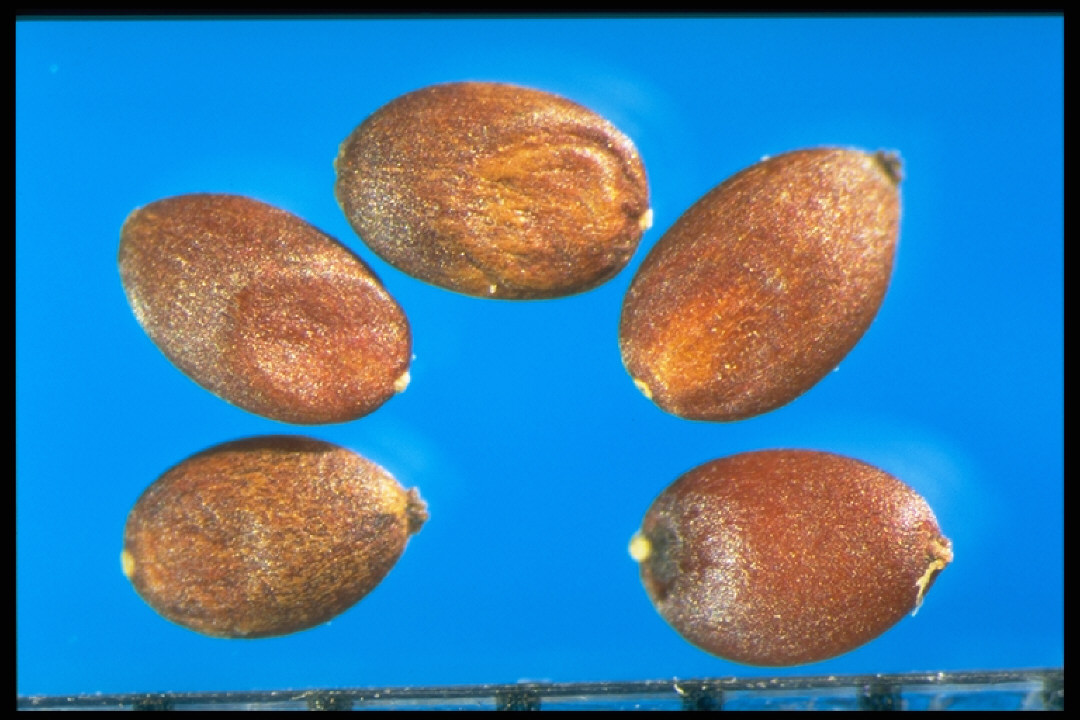
CaryopsisCaryopsis:
The single-seeded fruit or grain of the grass family (Poaceae); the fruit wall (pericarp) is united with the seed coat (testa).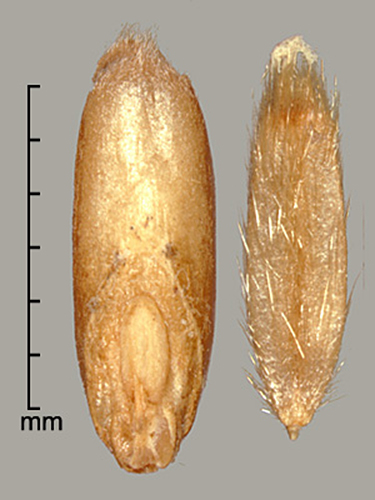
OvalOval:
Broadly elliptic.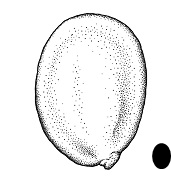
Dark brown
Reticulations are minute.
Missing in commercial seed
Missing in commercial seed
Scar on the ventralVentral:
Adaxial; of the side of an organ facing the axis (compare dorsal).
side of the base
GlumesGlume:
The pair of chaffy bracts that occur at the base of a grass spikelet, often completely enclosing it.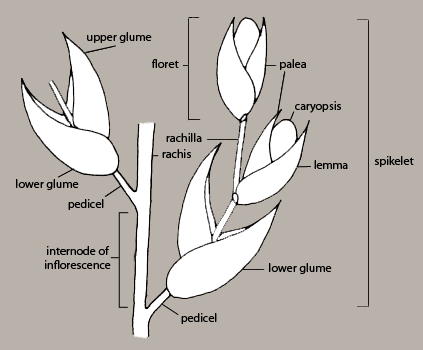 of a fertile sessile spikeletSpikelet:
One or more florets that are subtended by a pair of bracts called glumes. Spikelets are pedicellate if located on a pedicle and sessile if attached directly to the rachis. Often spikelets with single florets have remnants of a second floret, usually a lemma.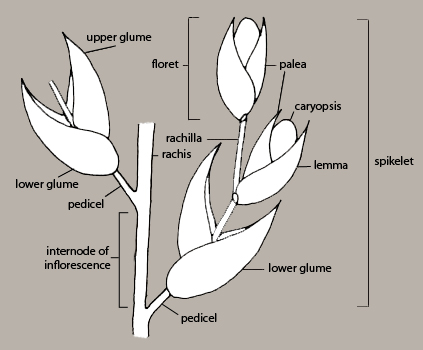 are smooth, glabrousGlabrous:
Lacking hairs or pubescence.
and broadly winged at the summit. Commercial seed is usually a hulled caryopsisCaryopsis:
The single-seeded fruit or grain of the grass family (Poaceae); the fruit wall (pericarp) is united with the seed coat (testa)..
Not listed
Included
Poaceae
Eremochloa ophiuroides (Munro) Hack.
Ischaemum ophiuroides Munro