Weed
spreading snakeroot
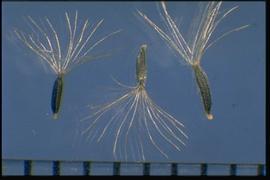
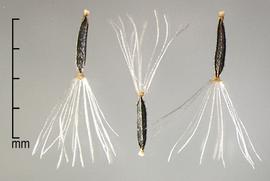
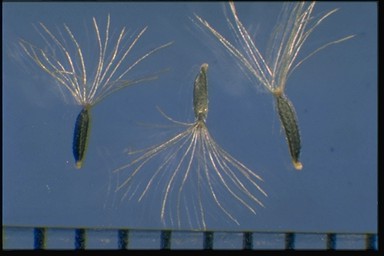
AcheneAchene:
A dry, hard, one-chambered, one-seeded indehiscent fruit, as in buckwheat (Fagopyrum) or sunflower (Helianthus). The fruit wall is not united with the seed coat.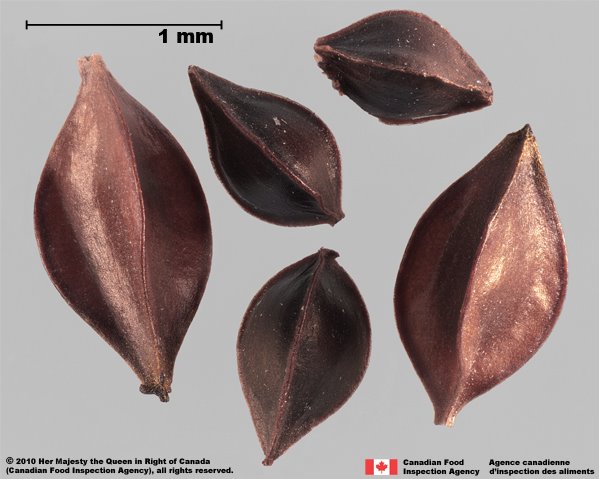
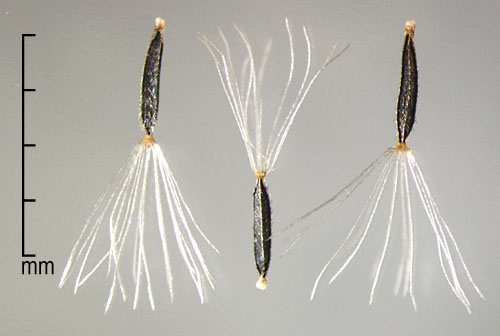
Linear to lanceolate
Black, with a yellow base adjacent to the acheneAchene:
A dry, hard, one-chambered, one-seeded indehiscent fruit, as in buckwheat (Fagopyrum) or sunflower (Helianthus). The fruit wall is not united with the seed coat. scar.
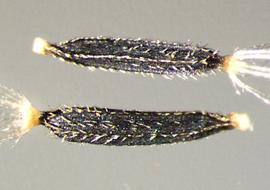
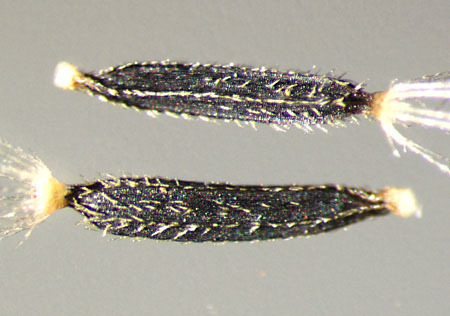
PubescentPubescent:
Having hairs.
with short teeth.
Long barbed pappusPappus:
Modified calyx in Asteraceae, composed of hairs, bristles, awns, or scales. The pappus-like structure attached to milkweed seeds is termed a coma. 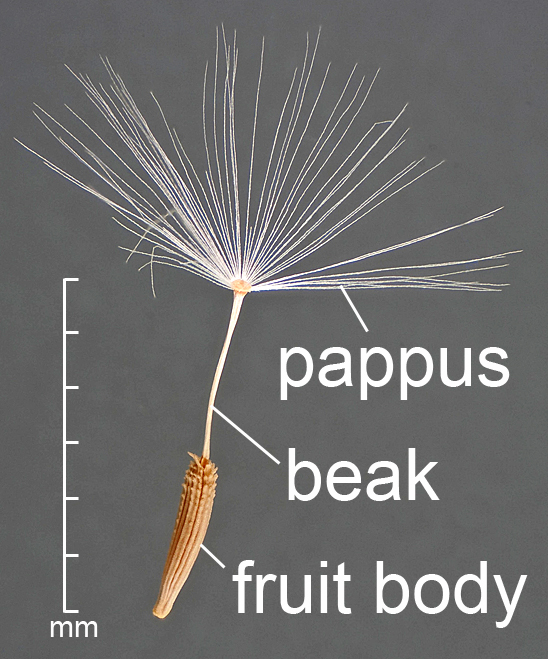 . Strong longitudinal ridges.
AcheneAchene:
A dry, hard, one-chambered, one-seeded indehiscent fruit, as in buckwheat (Fagopyrum) or sunflower (Helianthus). The fruit wall is not united with the seed coat. is black with longitudinal ridges running the length; most hairs are along these ridges. Surface texture is rough with pubescence.
State Noxious Weed: Hawaii
FederalLearn more on ITP's Federal Noxious Weed Disseminules tool.
Not included
Asteraceae
Ageratina riparia (Regel) R.M. King & H. Rob.
Eupatorium riparium Regel