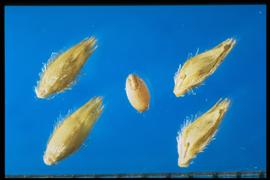
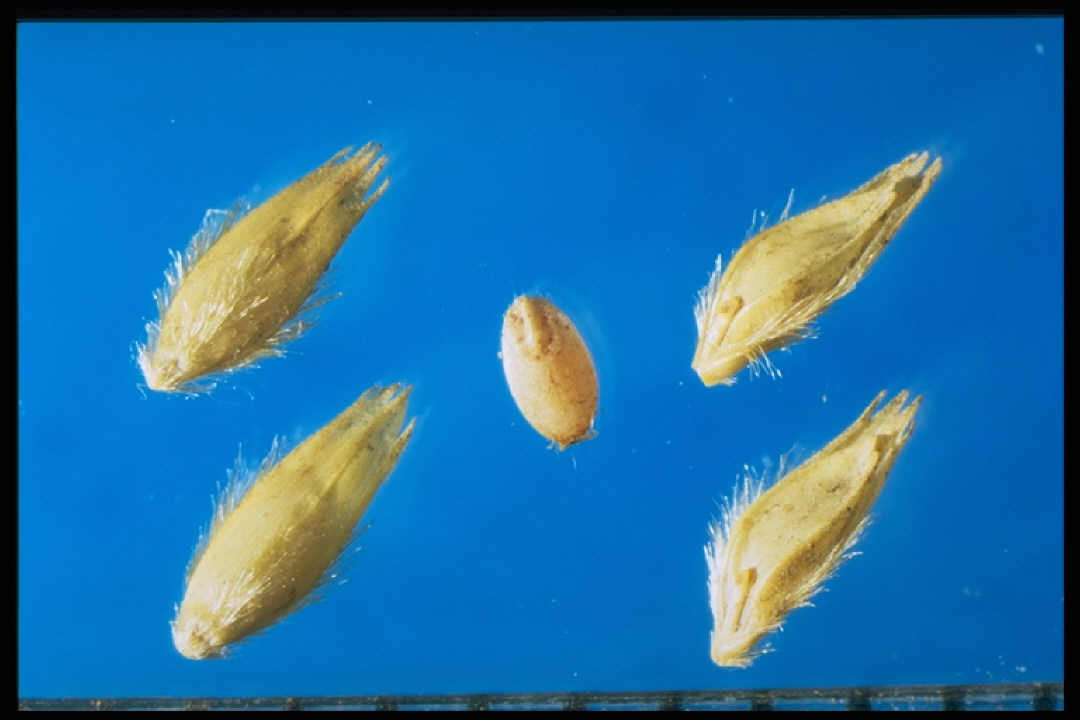
Weed
purpletop tridens, purpletop
FloretFloret:
A small flower in a clustered inflorescence (e.g., sunflower, grasses). In grasses, a floret consists of the lemma, palea, stamens, and pistil.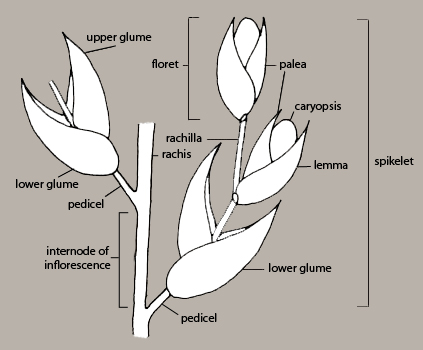
ObovateObovate:
Inverted egg shaped with apical end the broadest.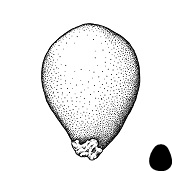
Light brown
The nerves on the lemmaLemma:
One of two bracts of the grass floret; it is located on the side nearest the embryo and opposite the rachilla.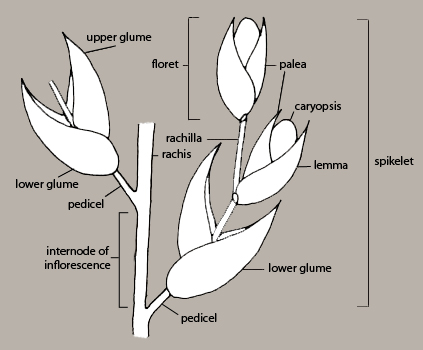 have fairly long and fine hairs.
The mid and two lateral nerves extend beyond the lemmaLemma:
One of two bracts of the grass floret; it is located on the side nearest the embryo and opposite the rachilla. forming three short awnsAwn:
A narrow, bristle-like organ, as on the glumes or lemmas of grasses (Poaceae).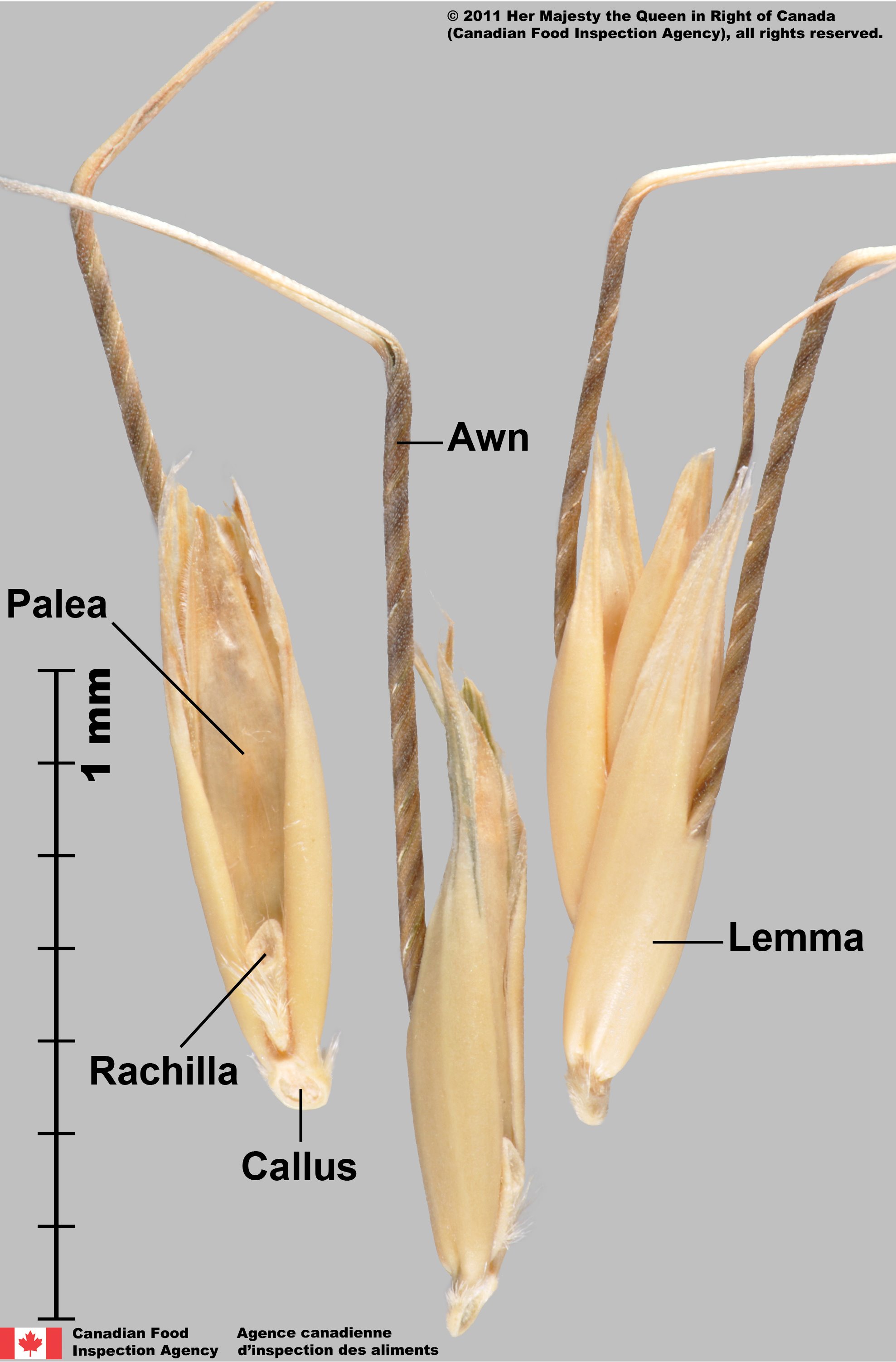 .
.
Shorter than lemmaLemma:
One of two bracts of the grass floret; it is located on the side nearest the embryo and opposite the rachilla.; thickest in the middle and quickly sloping off to the base and apexApical:
The distal end of the fruit or seed away from the point of attachment or attachment scar.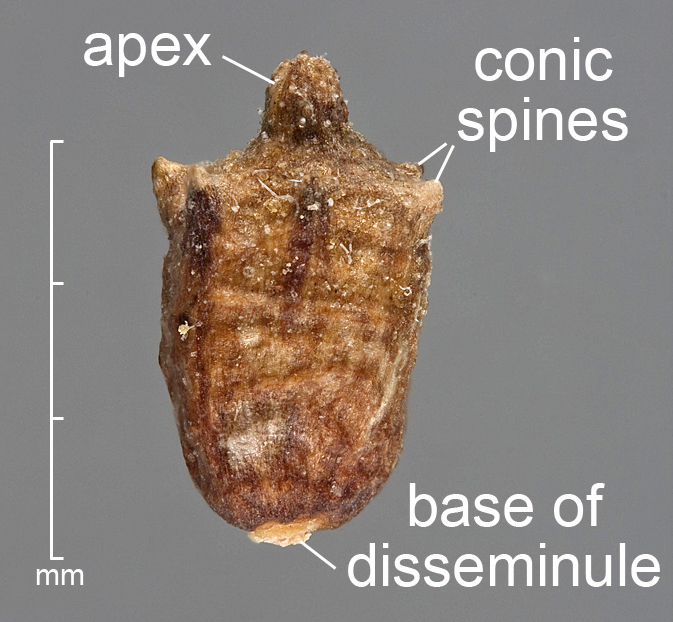 .
.
Sturdy rachillaRachilla:
The axis of a spikelet.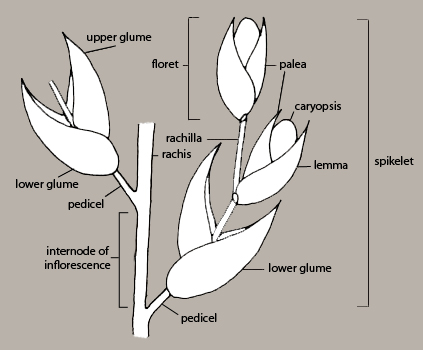 and callusCallus:
The hard base of grass florets or spikelets, just above the point of disarticulation.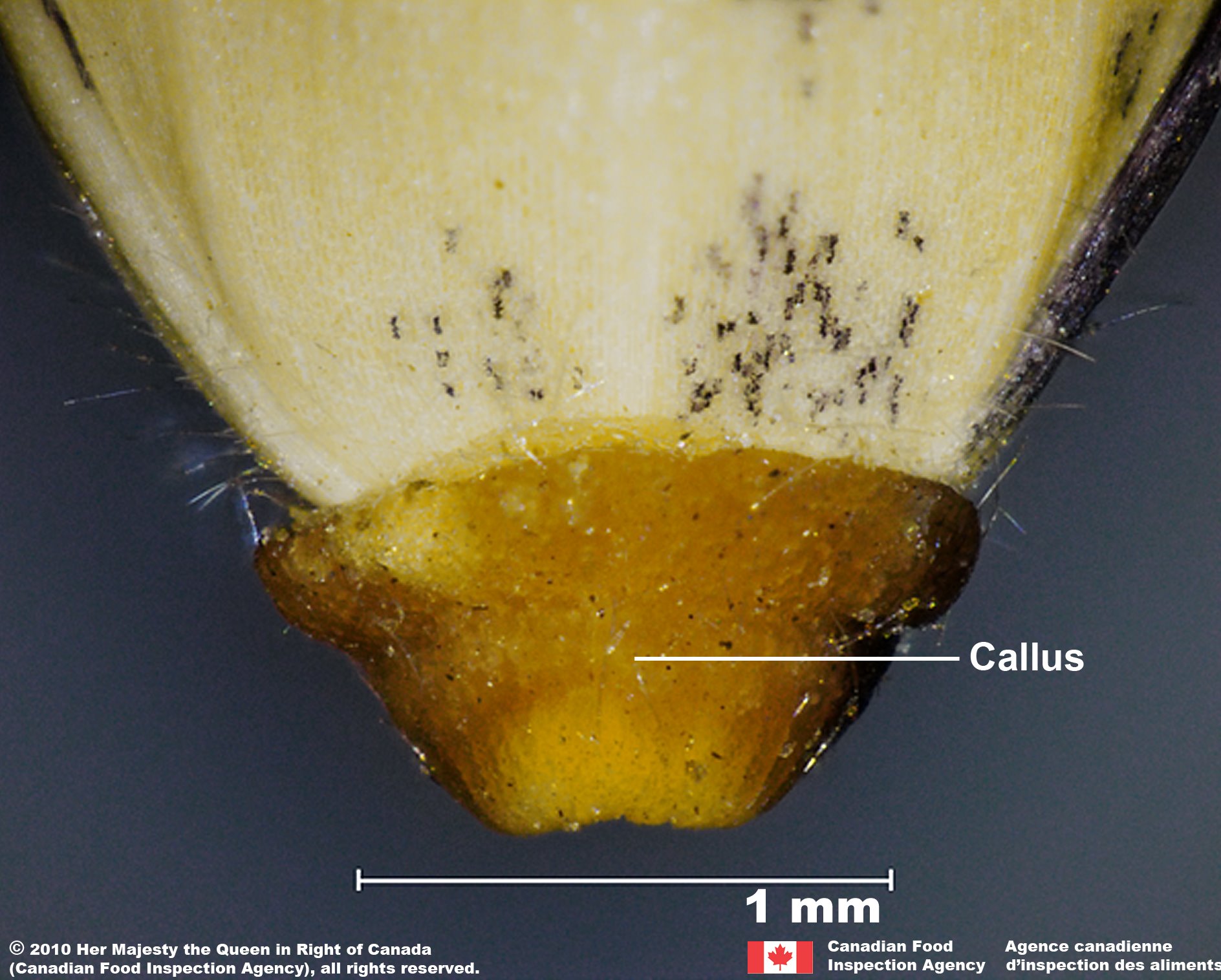
The triple short awnsAwn:
A narrow, bristle-like organ, as on the glumes or lemmas of grasses (Poaceae). extending from the lemmaLemma:
One of two bracts of the grass floret; it is located on the side nearest the embryo and opposite the rachilla. are unique for this genus. CaryopsisCaryopsis:
The single-seeded fruit or grain of the grass family (Poaceae); the fruit wall (pericarp) is united with the seed coat (testa).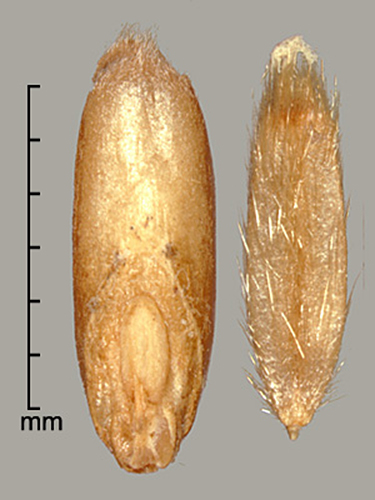 is ovalOval:
Broadly elliptic.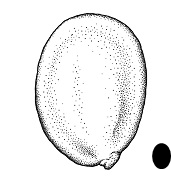 .
.
Not listed
Not included
Poaceae
Tridens flavus (L.) Hitchc.