Agricultural, Turf
grazing brome
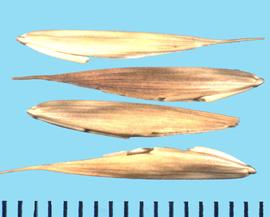
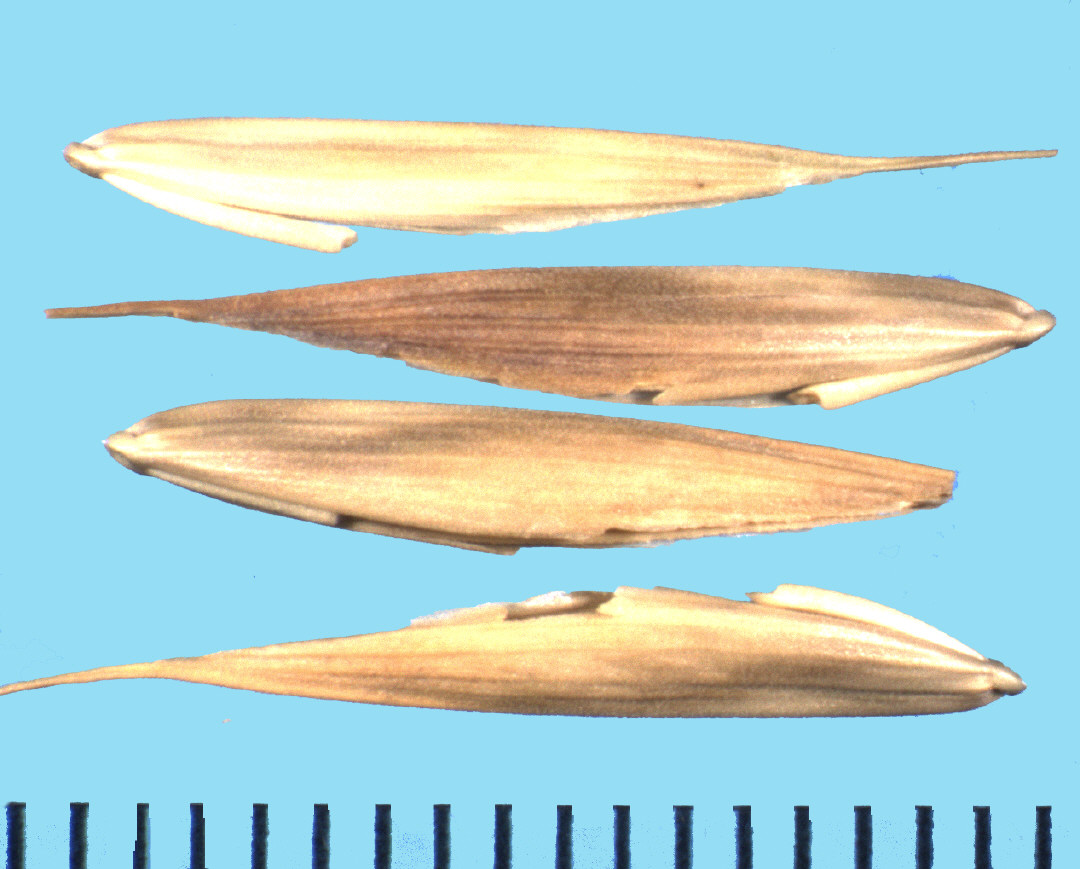
FloretFloret:
A small flower in a clustered inflorescence (e.g., sunflower, grasses). In grasses, a floret consists of the lemma, palea, stamens, and pistil.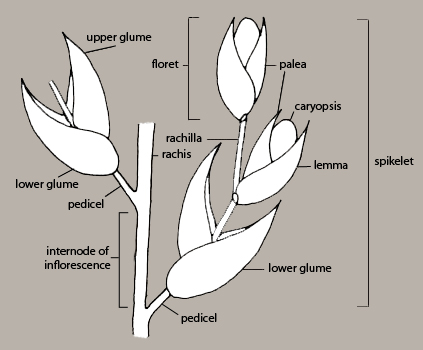
Lanceolate; laterally compressed.
Brown
Smooth
Longitudinal nerves
Folded into the caryopsisCaryopsis:
The single-seeded fruit or grain of the grass family (Poaceae); the fruit wall (pericarp) is united with the seed coat (testa).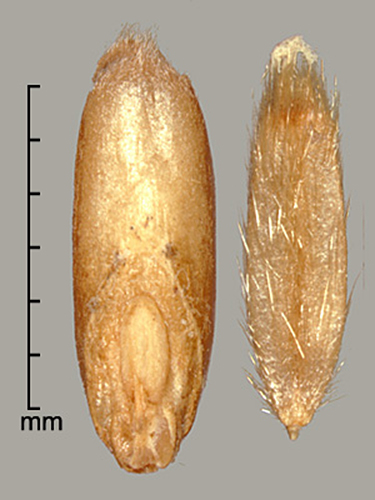
Central lemmaLemma:
One of two bracts of the grass floret; it is located on the side nearest the embryo and opposite the rachilla.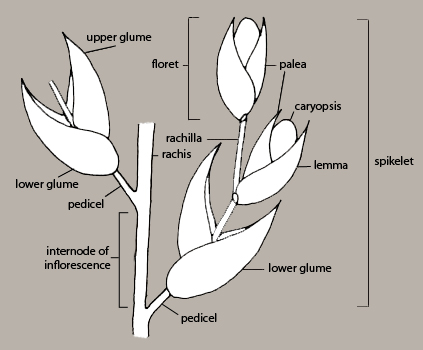 nerve extends into an awnAwn:
A narrow, bristle-like organ, as on the glumes or lemmas of grasses (Poaceae).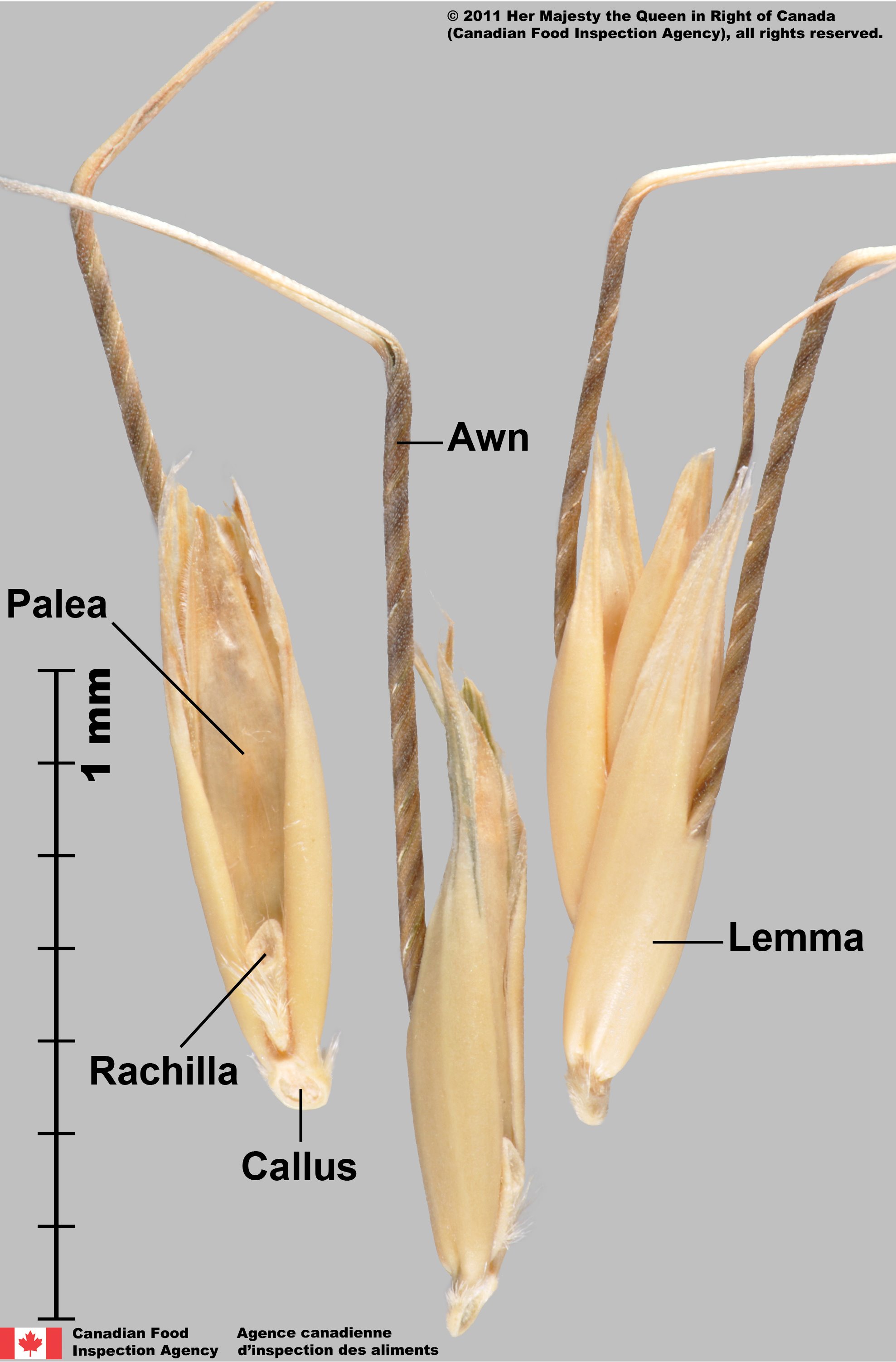 .
.
RachillaRachilla:
The axis of a spikelet.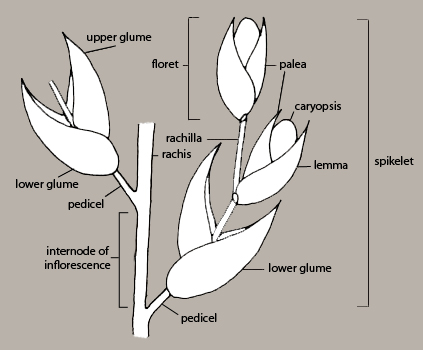 scar surface parallel to rachillaRachilla:
The axis of a spikelet. axis.
Not listed
Not included
Poaceae
Bromus cebadilla Steud.
Bromus catharticus Vahl subsp. stamineus (É. Desv.) A.N. Massa
Bromus catharticus Vahl var. elatus (É. Desv.) Planchuelo
Bromus stamineus É. Desv.
Bromus valdivianus Phil.