Convolvulus arvensis

Species category

Weed

Common name

field bindweed

Diagnostic characters

Planting unit

True seedTrue seed:
A mature fertilized ovule consisting of an embryo, with or without and external food reserve (e.g., endosperm) enclosed by the testa.

Shape

ObovateObovate:
Inverted egg shaped with apical end the broadest.
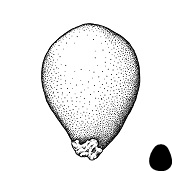
with two flat sides

Size

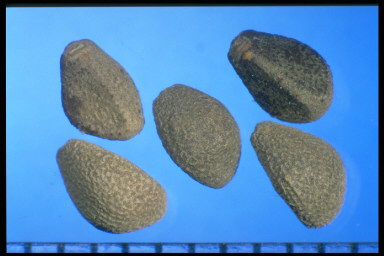
  • Length 3.5 mm
  • Width 2.5 mm
  • Thickness 2.5 mm

Color

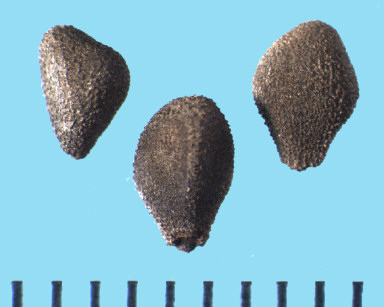
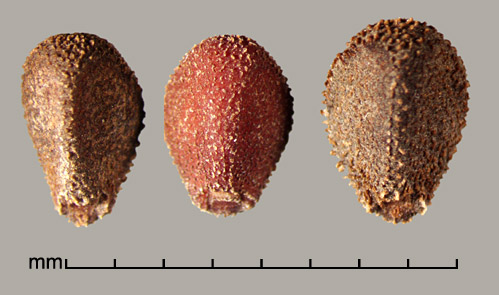
Gray black, sometimes brown

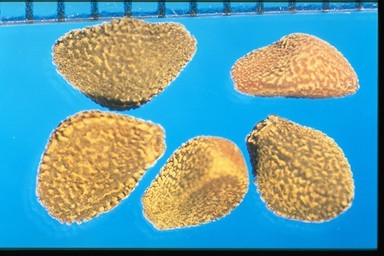
Texture

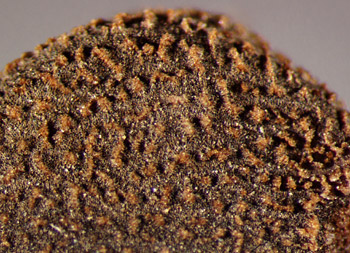
Covered with tuberculateTuberculate:
Having small pimple-like protuberances.
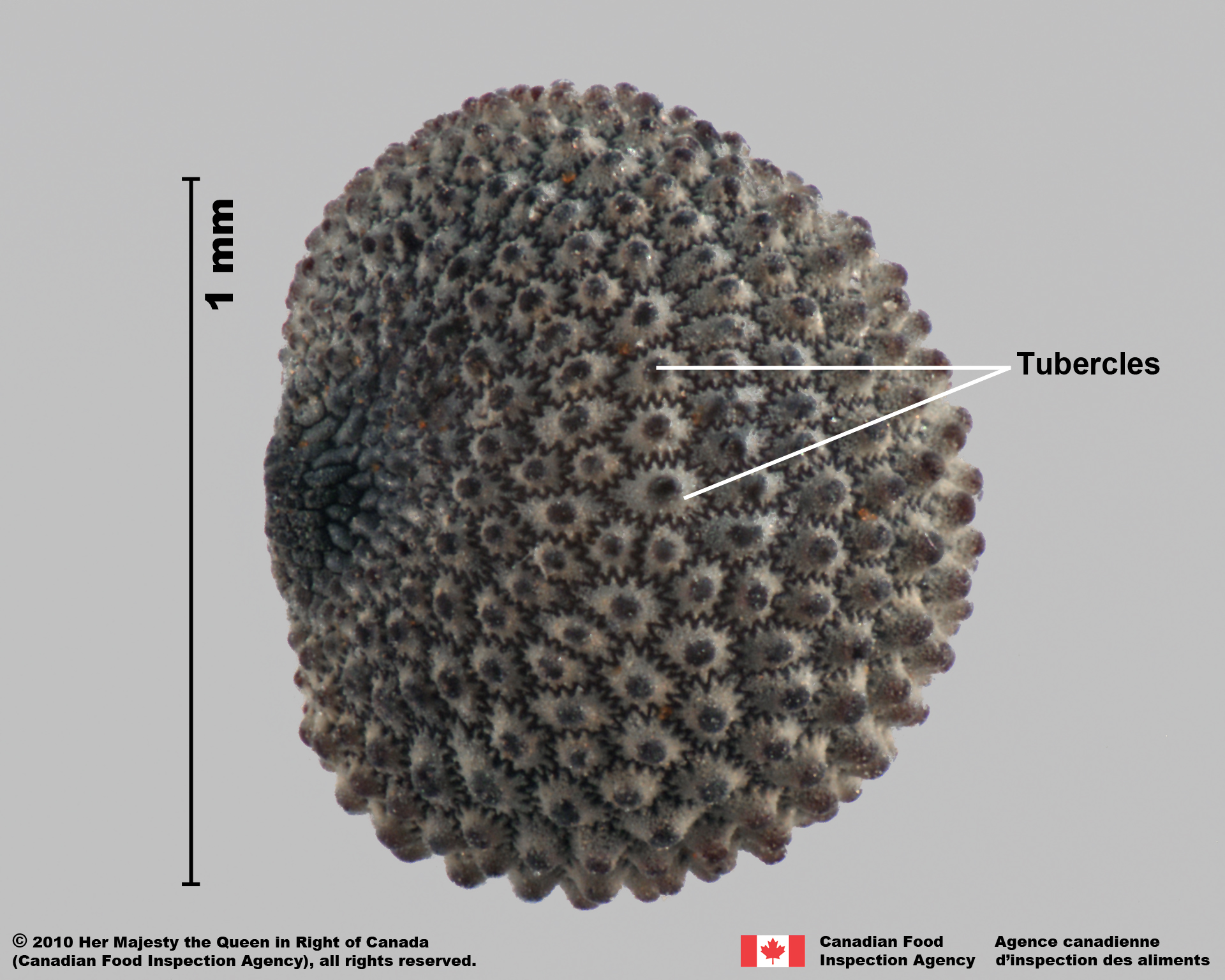
, wavy lines or points

Other structures

HilumHilum:
The scar on the seed coat at the place of its detachment from the seed stalk (funiculus).
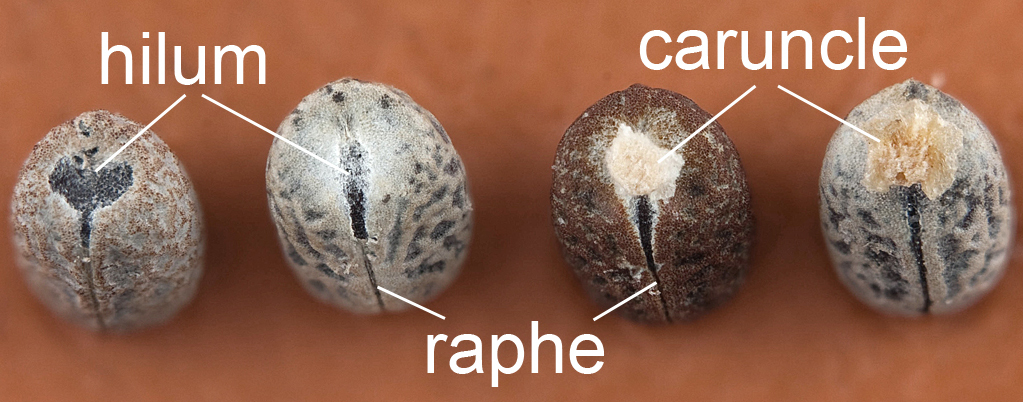
is kidney-shaped, and the surface is not parallel to the seed axis.

Identification notes

The two flat surfaces reflect the crowding of the seeds within the ovary. The seed surface is roughened by tuberculateTuberculate:
Having small pimple-like protuberances.
, wavy lines. The plane of the hilumHilum:
The scar on the seed coat at the place of its detachment from the seed stalk (funiculus).
is oblique to the axis of the seed. The hilumHilum:
The scar on the seed coat at the place of its detachment from the seed stalk (funiculus).
is large and blunt.

Noxious weed seed categories

State Noxious Weed: Alabama, Alaska, Arizona, Arkansas, California, Colorado, Connecticut, Delaware, DC., Florida, Georgia, Hawaii, Idaho, Iowa, Illinois, Indiana, Louisiana, Maine, Maryland, Massachusetts, Mississippi, Minnesota, Michigan, Missouri, Montana, Nebraska, Nevada, New Hampshire, New Jersey, New Mexico, New York, North Carolina, North Dakota, Ohio, Oklahoma, Oregon, Pennsylvania, Rhode Island, South Carolina, South Dakota, Tennessee, Texas, Utah, Vermont, Virginia, Washington, West Virginia, Wisconsin, Wyoming 

AOSA examination list

Included

More information

For more information, see ISMA fact sheet.

Nomenclature

Family

Convolvulaceae

Valid name

Convolvulus arvensis L.

Synonyms

Convolvulus ambigens House
Convolvulus incanus auct. non Vahl
Strophocaulos arvensis (L.) Small
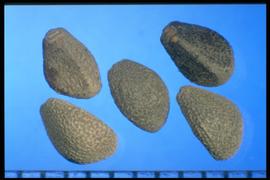
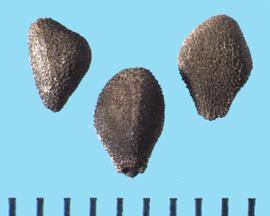
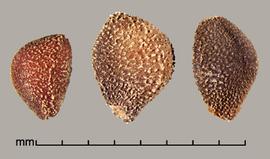
 Convolvulus arvensis . Seeds are covered with tuberculate, wavy lines or points.
Convolvulus arvensis. Seeds are covered with tuberculate, wavy lines or points.
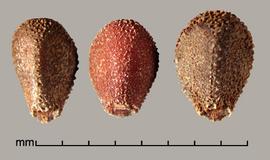
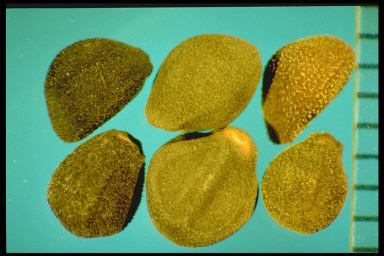
 Convolvulus arvensis . Seeds with two flat surfaces that reflect the crowding of the seeds within the ovary.
Convolvulus arvensis. Seeds with two flat surfaces that reflect the crowding of the seeds within the ovary.
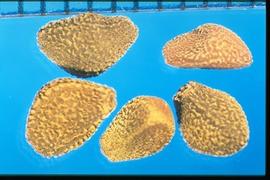
 Convolvulus arvensis . Seeds are covered with tuberculate, wavy lines or points.
Convolvulus arvensis. Seeds are covered with tuberculate, wavy lines or points.
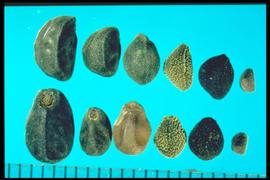
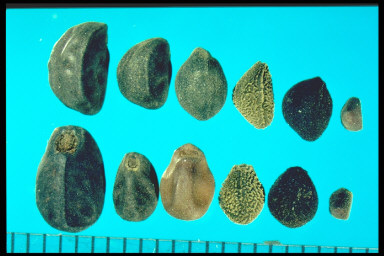
From Left to Right: 1.  Ipomea hederacea  2.  Ipomea purpurea  3.  Calystegia sepium  4.  Convolvulus arvensis  5.  Convolvulus equitans  6.  Jacquemontia tamnifolia . Seeds are covered with tuberculate, wavy lines or points. 
From Left to Right: 1. Ipomea hederacea 2. Ipomea purpurea 3. Calystegia sepium 4. Convolvulus arvensis 5. Convolvulus equitans 6. Jacquemontia tamnifolia. Seeds are covered with tuberculate, wavy lines or points. 
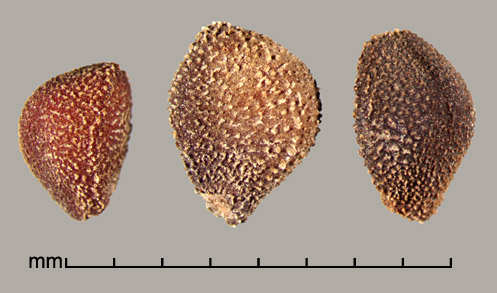
From Left to Right: 1.  Convolvulus equitans  2.  Calystegia sepium  3.  Convolvulus arvensis . Seeds are covered with tuberculate, wavy lines or points. 
From Left to Right: 1. Convolvulus equitans 2. Calystegia sepium 3. Convolvulus arvensis. Seeds are covered with tuberculate, wavy lines or points. 
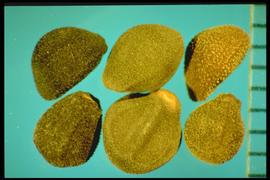
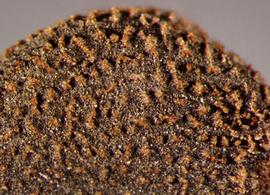
 Convolvulus arvensis.  Seeds are covered with tuberculate, wavy lines or points. Photo by Julia Scher, USDA-APHIS-PPQ.
Convolvulus arvensis. Seeds are covered with tuberculate, wavy lines or points. Photo by Julia Scher, USDA-APHIS-PPQ.
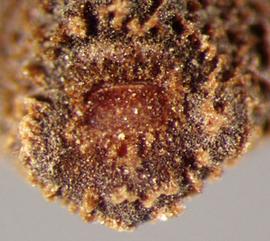
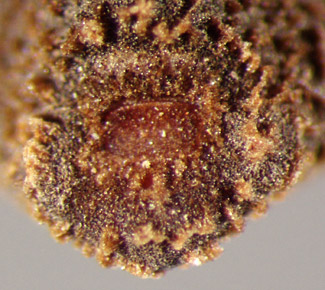
 Convolvulus arvensis.  Seeds with a large, blunt hilum. Photo by Julia Scher, USDA-APHIS-PPQ.
Convolvulus arvensis. Seeds with a large, blunt hilum. Photo by Julia Scher, USDA-APHIS-PPQ.
 Convolvulus arvensis.  Seeds are covered with tuberculate, wavy lines or points. Photo by Julia Scher, USDA-APHIS-PPQ.
Convolvulus arvensis. Seeds are covered with tuberculate, wavy lines or points. Photo by Julia Scher, USDA-APHIS-PPQ.
 Convolvulus arvensis.  The seed hilum is kidney-shaped, and the surface is not parallel to the seed axis. Photo by Julia Scher, USDA-APHIS-PPQ.
Convolvulus arvensis. The seed hilum is kidney-shaped, and the surface is not parallel to the seed axis. Photo by Julia Scher, USDA-APHIS-PPQ.
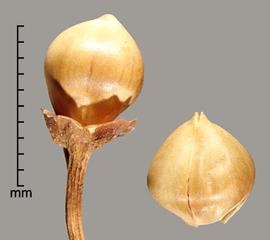
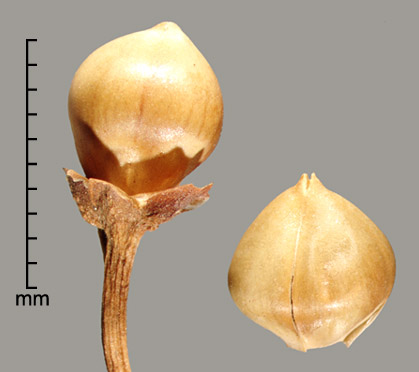
 Convolvulus arvensis.  Seed pods. Photo by Julia Scher, USDA-APHIS-PPQ.
Convolvulus arvensis. Seed pods. Photo by Julia Scher, USDA-APHIS-PPQ.