Weed
oxtongue broomrape
True seedTrue seed:
A mature fertilized ovule consisting of an embryo, with or without and external food reserve (e.g., endosperm) enclosed by the testa.
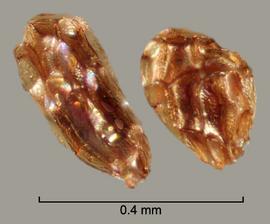
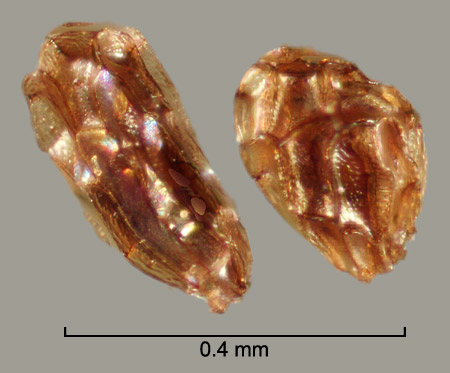
ObovateObovate:
Inverted egg shaped with apical end the broadest.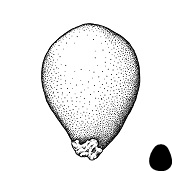
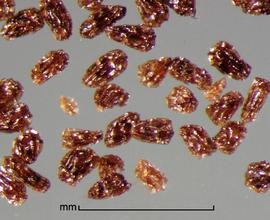
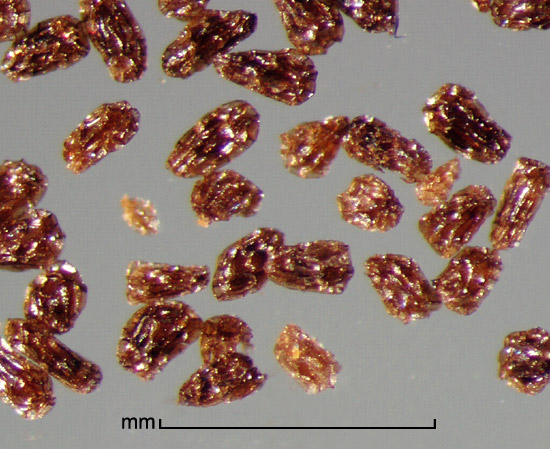
Dark brown
Deeply reticulate
HilumHilum:
The scar on the seed coat at the place of its detachment from the seed stalk (funiculus).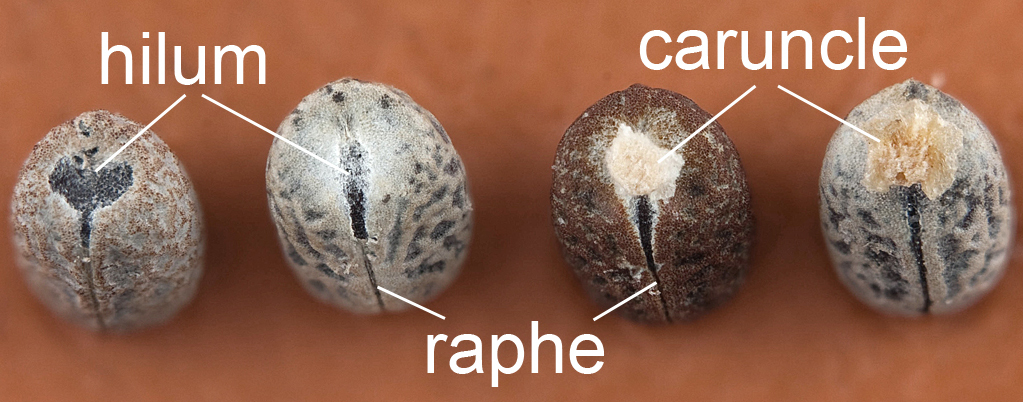 small and on pointed end.
Reticulations have shiny walls and stippled bases.
Not listed
All species of Orobanche are regulated as plant pests under 7 CFR 330, but not all species are listed on the federal noxious weed list. Learn more about Orobanche spp. and Phelipanche spp. on ITP's Federal Noxious Weed Disseminules tool.
Not included
For more information, see ISMA fact sheet, Orobanche and Phelipanche spp.
Orobanchaceae
Orobanche artemisiae-campestris Vaucher ex Gaudin
Orobanche loricata Rchb.