Agricultural, Vegetable
soybean, reseeding soybean, wild soybean
True seedTrue seed:
A mature fertilized ovule consisting of an embryo, with or without and external food reserve (e.g., endosperm) enclosed by the testa.
Circular, to broadly ellipticElliptic:
Outline of an ellipse; greatest width midway sloping to an equally pointed apex and base.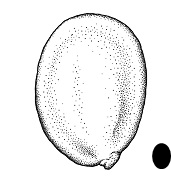 , to globose
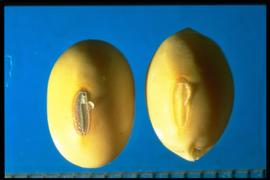
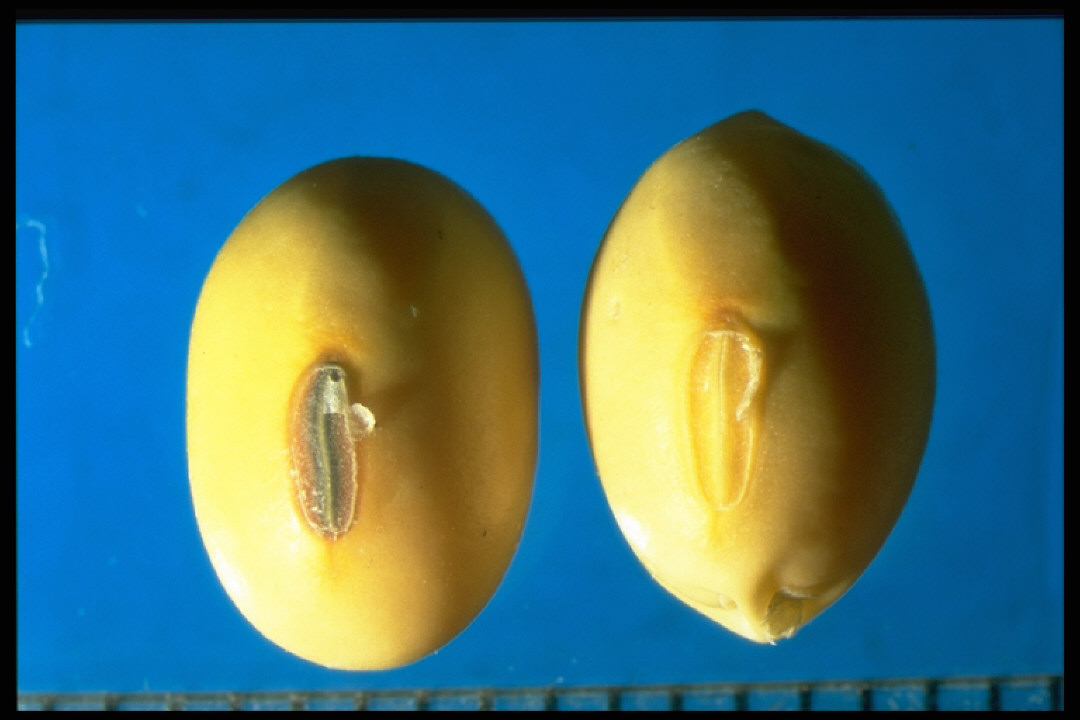
Yellow, to yellowish tan, to green, to olive green, to black
Smooth
The large ovalOval:
Broadly elliptic.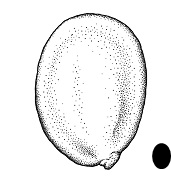 hilum will vary in color from buff to tan to black.
The roundness of this seed is a function of maturity; more mature seeds are rounder. HilumHilum:
The scar on the seed coat at the place of its detachment from the seed stalk (funiculus).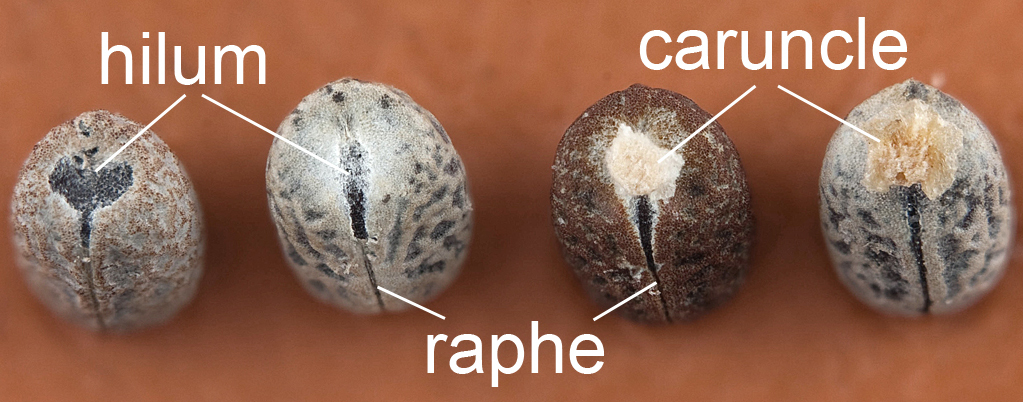 color varies with variety from yellow, imperfect black, brown to black.
Not listed
Included
For more information, see ISMA fact sheet.
Fabaceae
Glycine max (L.) Merr.
Dolichos soja L.
Glycine gracilis Skvortzov
Glycine hispida (Moench) Maxim.
Glycine soja (L.) Merr., non Siebold & Zucc., nom. illeg.
Glycine ussuriensis Regel & Maack
Phaseolus max L.
Soja hispida Moench
Soja max (L.) Piper