Revegetation or Rangeland
buffelgrass
FascicleFascicle:
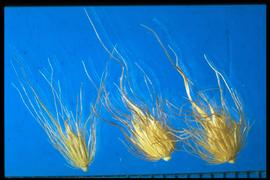
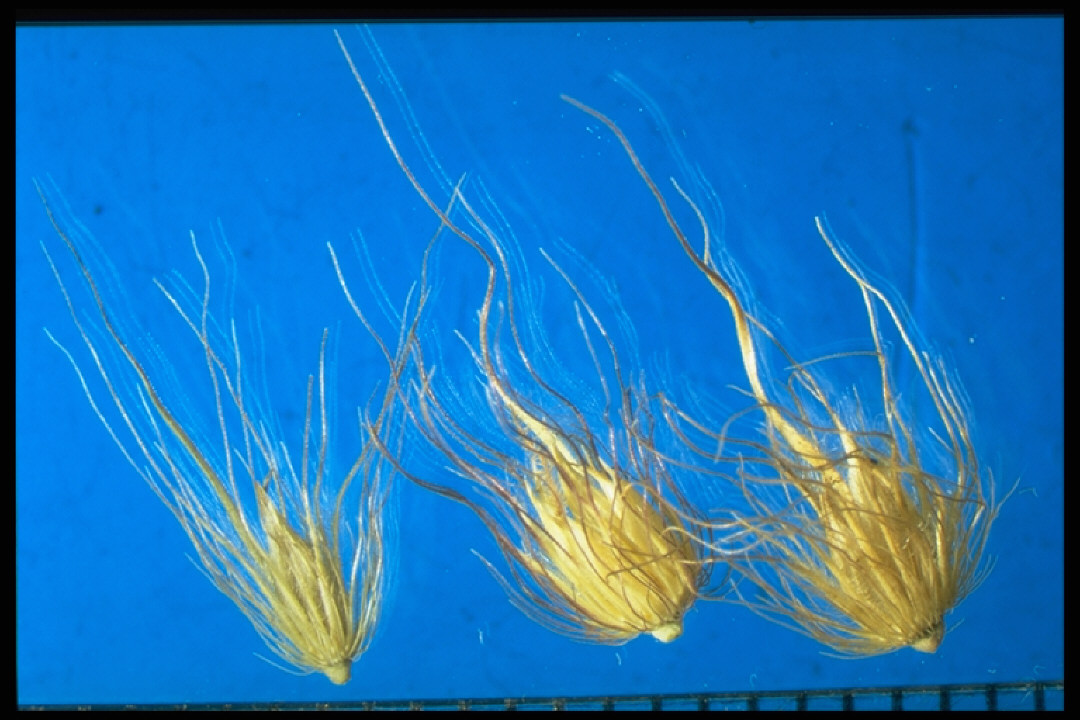
Much the same as a burr except the spikelet glumes are soft, e.g. buffelgrass.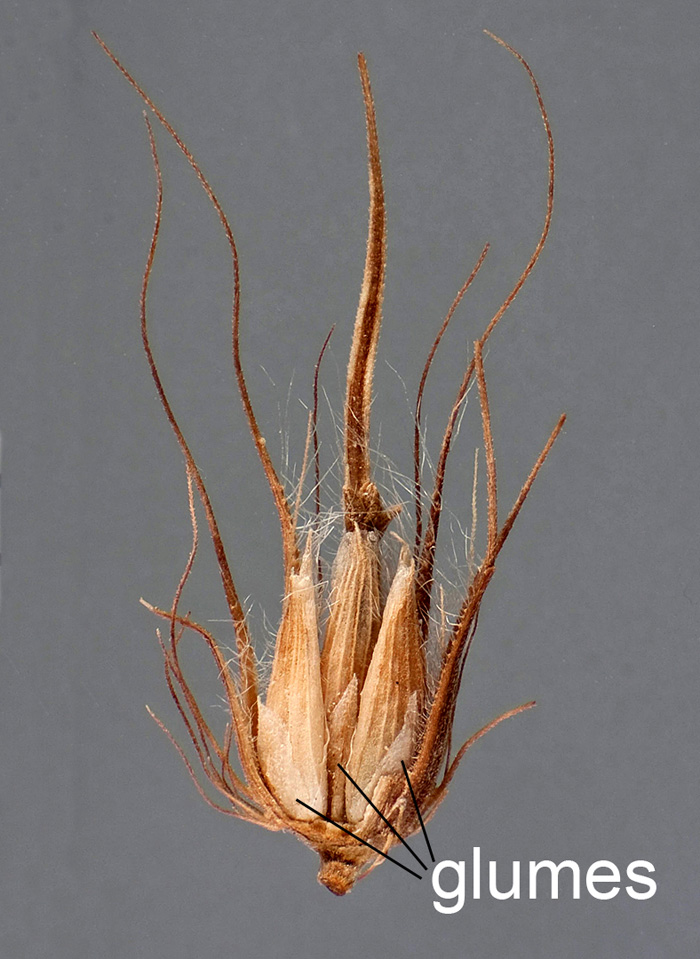
Globose
Yellow
Cluster of soft hairs
Not visible.
Not visible.
Numerous soft and hairlike glumesGlume:
The pair of chaffy bracts that occur at the base of a grass spikelet, often completely enclosing it.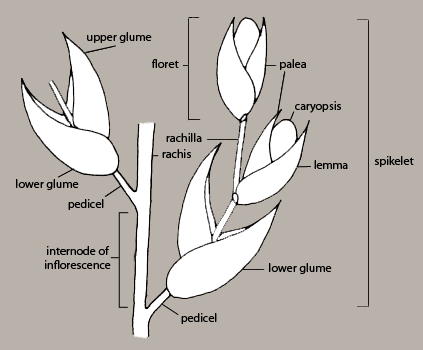
A fascicleFascicle:
Much the same as a burr except the spikelet glumes are soft, e.g. buffelgrass. is a dense bundle or cluster of soft spikeletsSpikelet:
One or more florets that are subtended by a pair of bracts called glumes. Spikelets are pedicellate if located on a pedicle and sessile if attached directly to the rachis. Often spikelets with single florets have remnants of a second floret, usually a lemma.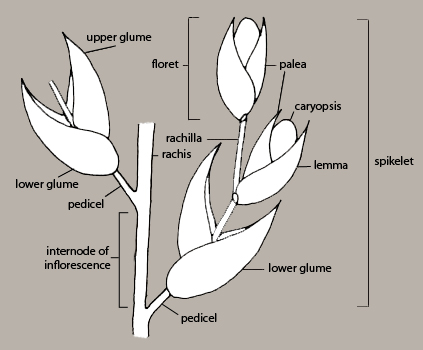 . Each fascicleFascicle:
Much the same as a burr except the spikelet glumes are soft, e.g. buffelgrass. can contain many spikeletsSpikelet:
One or more florets that are subtended by a pair of bracts called glumes. Spikelets are pedicellate if located on a pedicle and sessile if attached directly to the rachis. Often spikelets with single florets have remnants of a second floret, usually a lemma..
Seed of this species is considered noxious only as a contaminant. Check individual states for interpretations.
State Noxious Weed: Arizona
Included
Poaceae
Pennisetum ciliare (L.) Link
Cenchrus ciliaris L.
Pennisetum ciliare (L.) Link var. ciliare