Weed
barnyardgrass, barnyard grass, cockspur grass, Japanese millet, zacate de agua
SpikeletSpikelet:
One or more florets that are subtended by a pair of bracts called glumes. Spikelets are pedicellate if located on a pedicle and sessile if attached directly to the rachis. Often spikelets with single florets have remnants of a second floret, usually a lemma.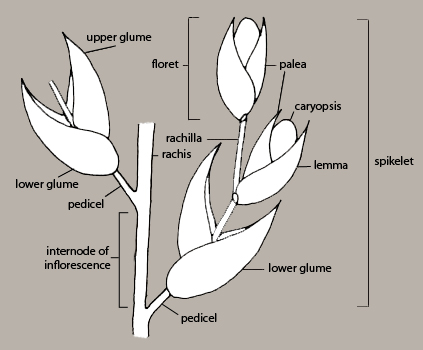
OvateOvate:
Egg-shaped with basal end the broadest.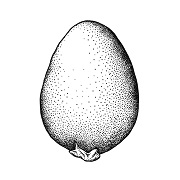
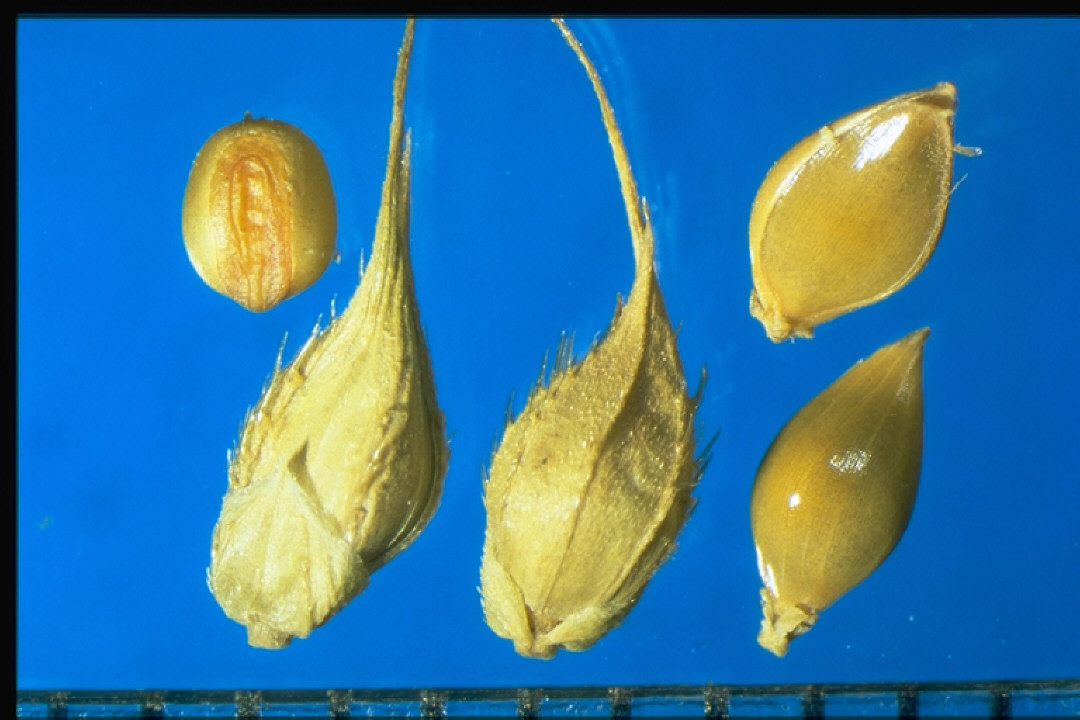
Brown glumesGlume:
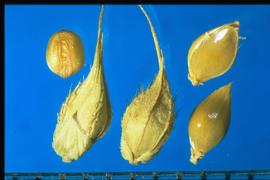
The pair of chaffy bracts that occur at the base of a grass spikelet, often completely enclosing it.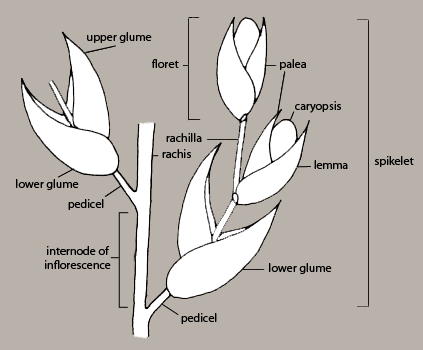 , yellow to gray floretsFloret:
A small flower in a clustered inflorescence (e.g., sunflower, grasses). In grasses, a floret consists of the lemma, palea, stamens, and pistil.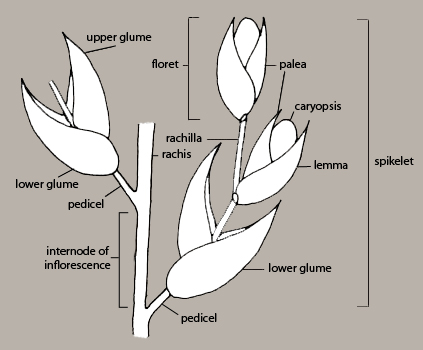 with yellow lines.
GlumesGlume:
The pair of chaffy bracts that occur at the base of a grass spikelet, often completely enclosing it. are strongly hispid on the veins. FloretsFloret:
A small flower in a clustered inflorescence (e.g., sunflower, grasses). In grasses, a floret consists of the lemma, palea, stamens, and pistil. are very smooth and shiny.
Very convex; apexApical:
The distal end of the fruit or seed away from the point of attachment or attachment scar.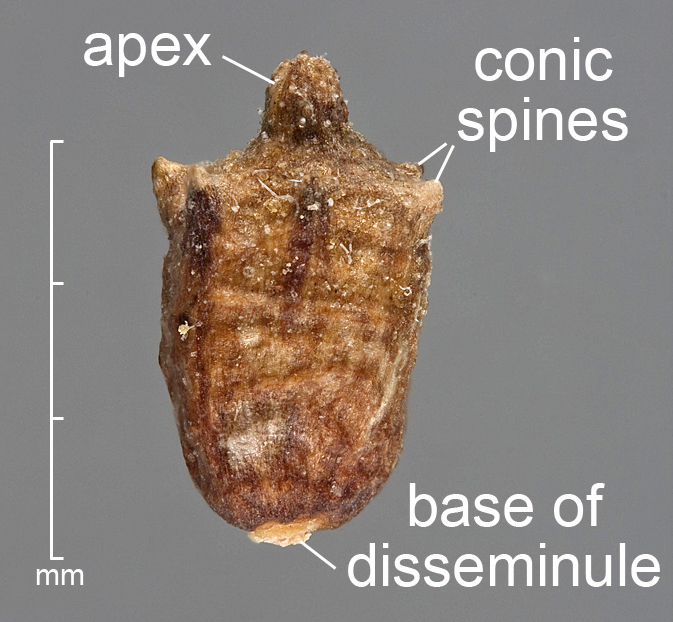 more pointed than the base.
Flat
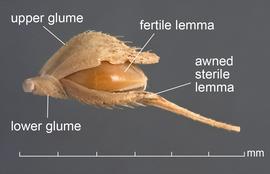
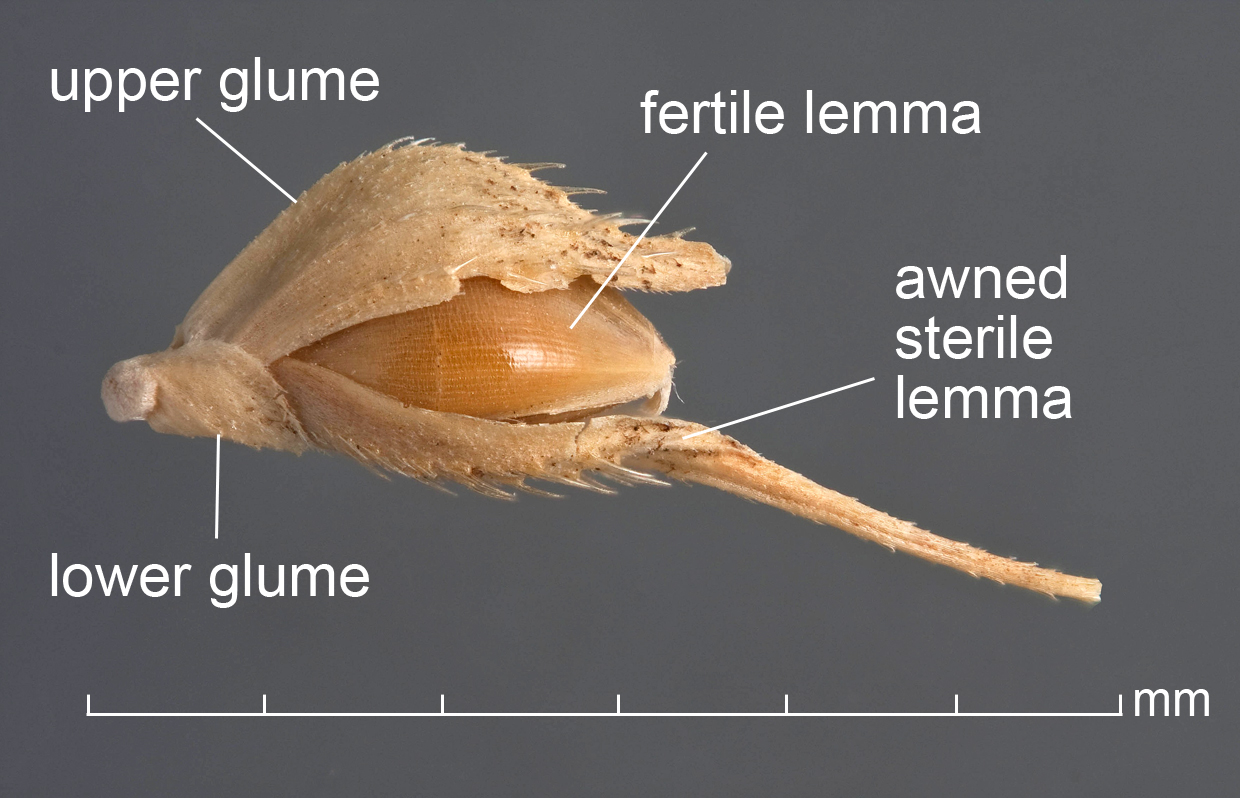
Sterile lemmaLemma:
One of two bracts of the grass floret; it is located on the side nearest the embryo and opposite the rachilla.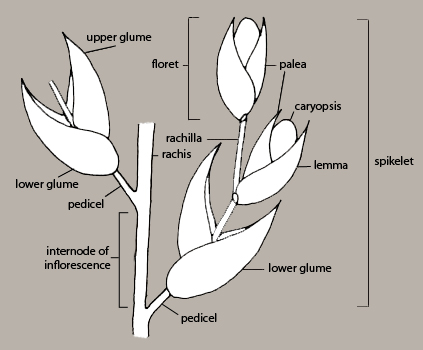 is long awned and slightly longer than the second glumeGlume:
The pair of chaffy bracts that occur at the base of a grass spikelet, often completely enclosing it..
This is the most hispid of the three Echinochloa spp. The lengths of the sterile lemmaLemma:
One of two bracts of the grass floret; it is located on the side nearest the embryo and opposite the rachilla. and second glumeGlume:
The pair of chaffy bracts that occur at the base of a grass spikelet, often completely enclosing it. are not equal favoring the sterile lemmaLemma:
One of two bracts of the grass floret; it is located on the side nearest the embryo and opposite the rachilla.. This species is found as a spikeletSpikelet:
One or more florets that are subtended by a pair of bracts called glumes. Spikelets are pedicellate if located on a pedicle and sessile if attached directly to the rachis. Often spikelets with single florets have remnants of a second floret, usually a lemma., floretFloret:
A small flower in a clustered inflorescence (e.g., sunflower, grasses). In grasses, a floret consists of the lemma, palea, stamens, and pistil. and caryopsisCaryopsis:
The single-seeded fruit or grain of the grass family (Poaceae); the fruit wall (pericarp) is united with the seed coat (testa).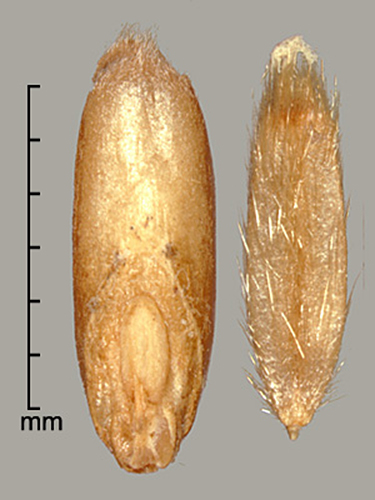 .
.
State Noxious Weed: Arkansas
Included
For more information, see ISMA fact sheet.
Poaceae
Echinochloa crus-galli (L.) P. Beauv.
Echinochloa crus-galli (L.) P. Beauv. ssp. spiralis (Vasinger) Tzvelev
Panicum crus-galli L.