Agricultural
winter vetch, hairy vetch
True seedTrue seed:
A mature fertilized ovule consisting of an embryo, with or without and external food reserve (e.g., endosperm) enclosed by the testa.
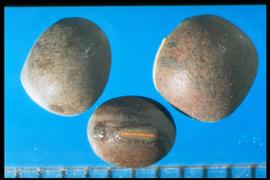
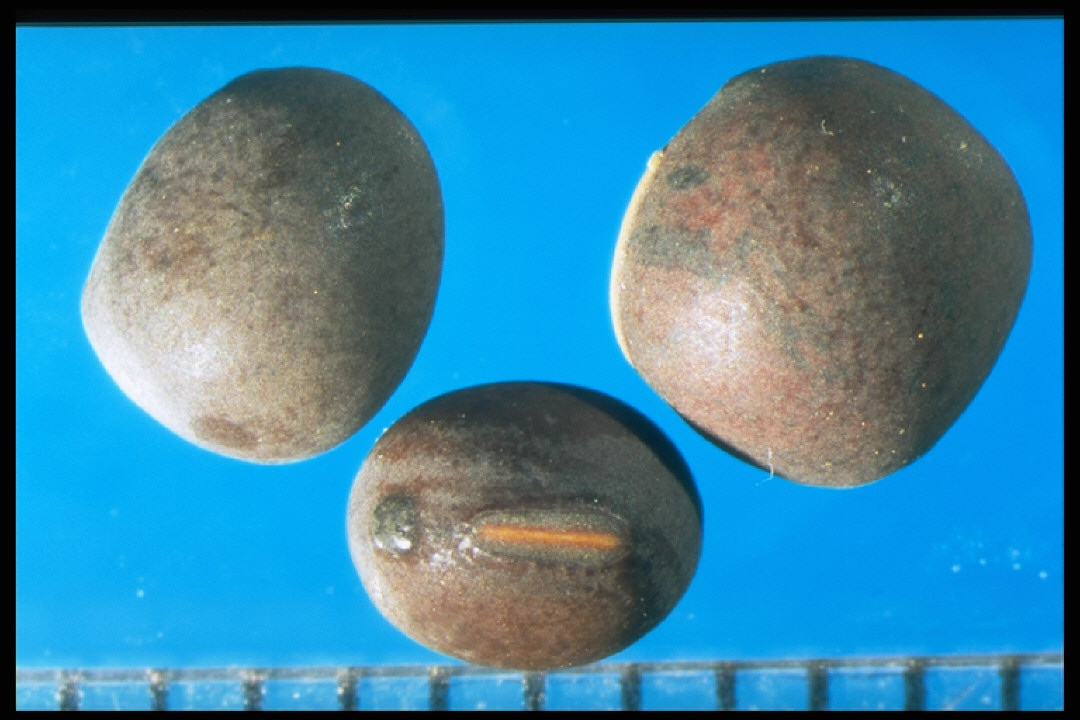
Globose
Black or obscurely mottled
Smooth to slightly granularGranular:
Resembling or consisting of small grains or particles.
HilumHilum:
The scar on the seed coat at the place of its detachment from the seed stalk (funiculus).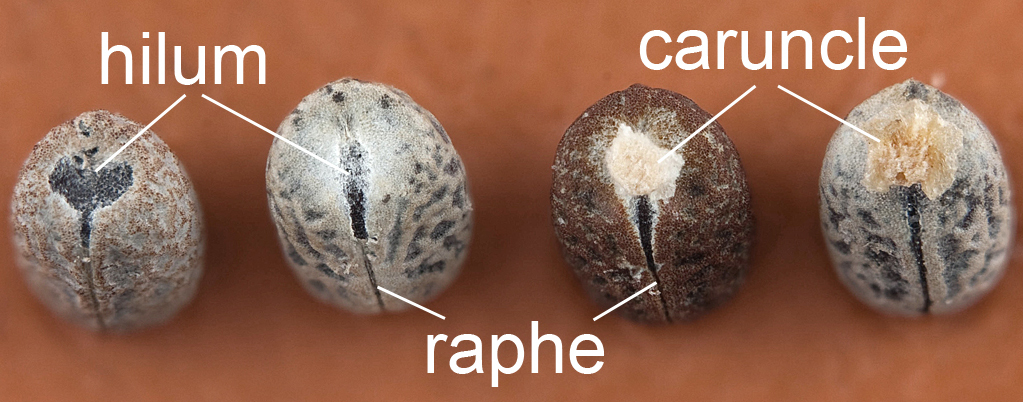 is ovalOval:
Broadly elliptic.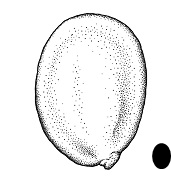 and 2 mm long and flush with the seed surface.
HilumHilum:
The scar on the seed coat at the place of its detachment from the seed stalk (funiculus). is ovalOval:
Broadly elliptic. and flush with the seed surface. ChalazaChalaza:
End of seed opposite the micropyle.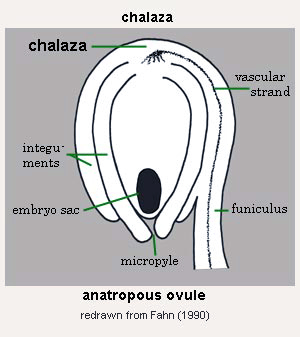 is near the end of the hilumHilum:
The scar on the seed coat at the place of its detachment from the seed stalk (funiculus)..
Not listed
Not included
Fabaceae
Vicia villosa subsp. varia (Host) Corb.
Vicia varia Host
Vicia varia Host var. varia
Vicia dasycarpa Ten.
Vicia glabrescens (W. D. J. Koch) Heimerl
Vicia villosa Roth subsp. dasycarpa (Ten.) Cavill.
Vicia villosa Roth var. glabrescens W. D. J. Koch