Flower, Revegetation or Rangeland
blue wildrye
FloretFloret:
A small flower in a clustered inflorescence (e.g., sunflower, grasses). In grasses, a floret consists of the lemma, palea, stamens, and pistil.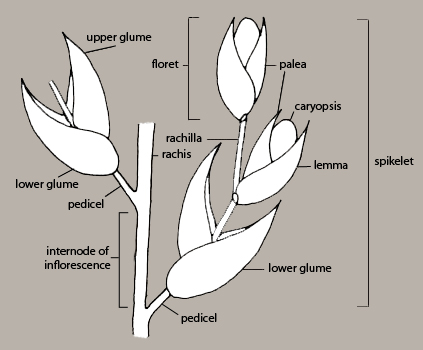
Lanceolate
Brown
LemmaLemma:
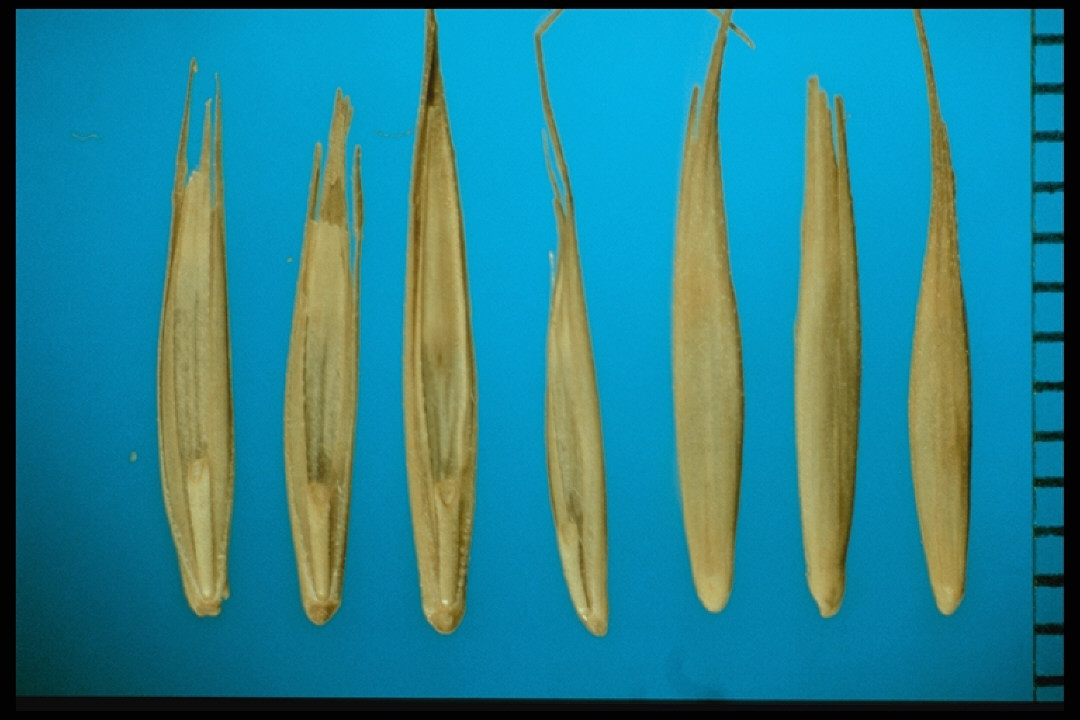
One of two bracts of the grass floret; it is located on the side nearest the embryo and opposite the rachilla.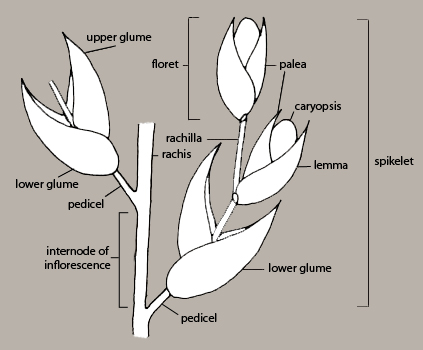 is coarsely granularGranular:
Resembling or consisting of small grains or particles.
and sparsely scabrousScabrous:
Rough to the touch, covered with minute points of very short, stiff hairs.
.
GlabrousGlabrous:
Lacking hairs or pubescence.
or scabrousScabrous:
Rough to the touch, covered with minute points of very short, stiff hairs.
; with an awnAwn:
A narrow, bristle-like organ, as on the glumes or lemmas of grasses (Poaceae).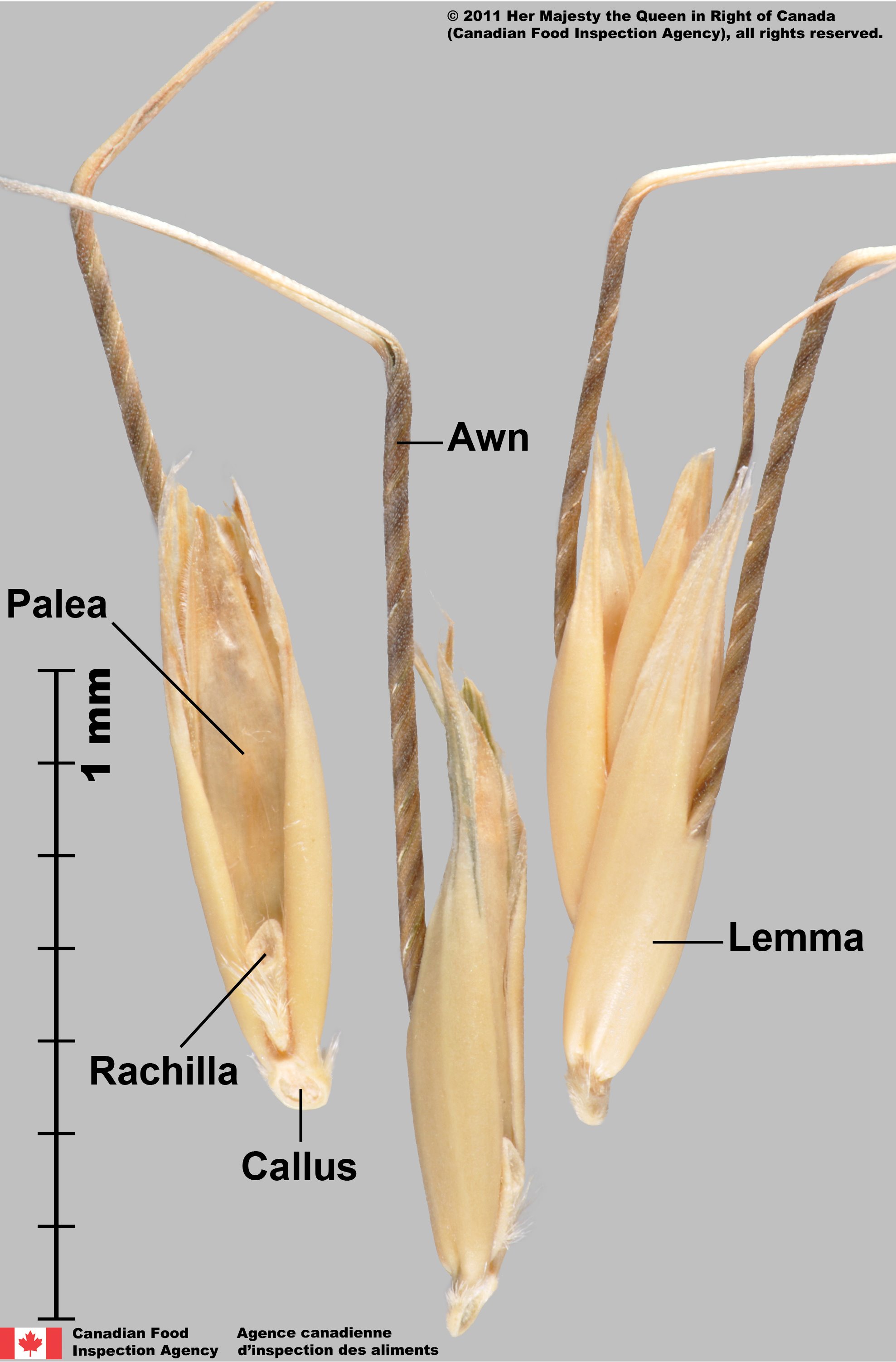 one to two times the length of the body.
Deeply concave, densely pubescentPubescent:
Having hairs.
, hairs on the keel short and wide
GlumesGlume:
The pair of chaffy bracts that occur at the base of a grass spikelet, often completely enclosing it.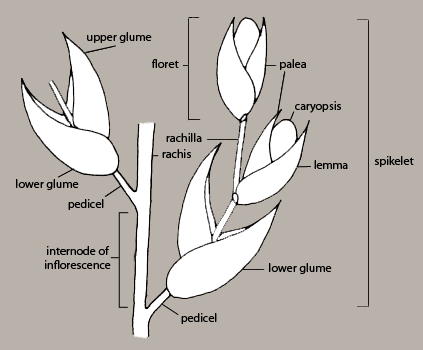 are lanceolate and long, with two to five scabrousScabrous:
Rough to the touch, covered with minute points of very short, stiff hairs.
nerves, and a long rachillaRachilla:
The axis of a spikelet.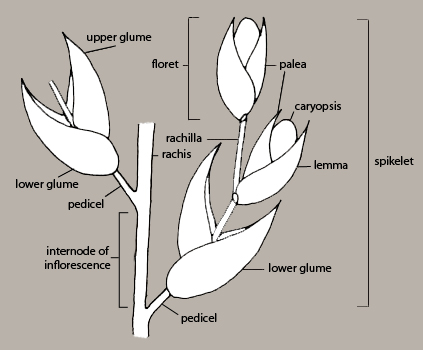 .
.
FloretFloret:
A small flower in a clustered inflorescence (e.g., sunflower, grasses). In grasses, a floret consists of the lemma, palea, stamens, and pistil. is granularGranular:
Resembling or consisting of small grains or particles.
with both lemmaLemma:
One of two bracts of the grass floret; it is located on the side nearest the embryo and opposite the rachilla. and palea pubescentPubescent:
Having hairs.
at their upper portions. Keels of the paleaPalea:
One of the thin bracts of grass floret enclosing the fruit (caryopsis) that is located on the side opposite the embryo.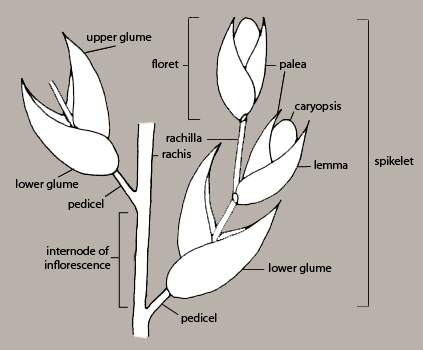 have coarse and widely spread teeth. CallusCallus:
The hard base of grass florets or spikelets, just above the point of disarticulation.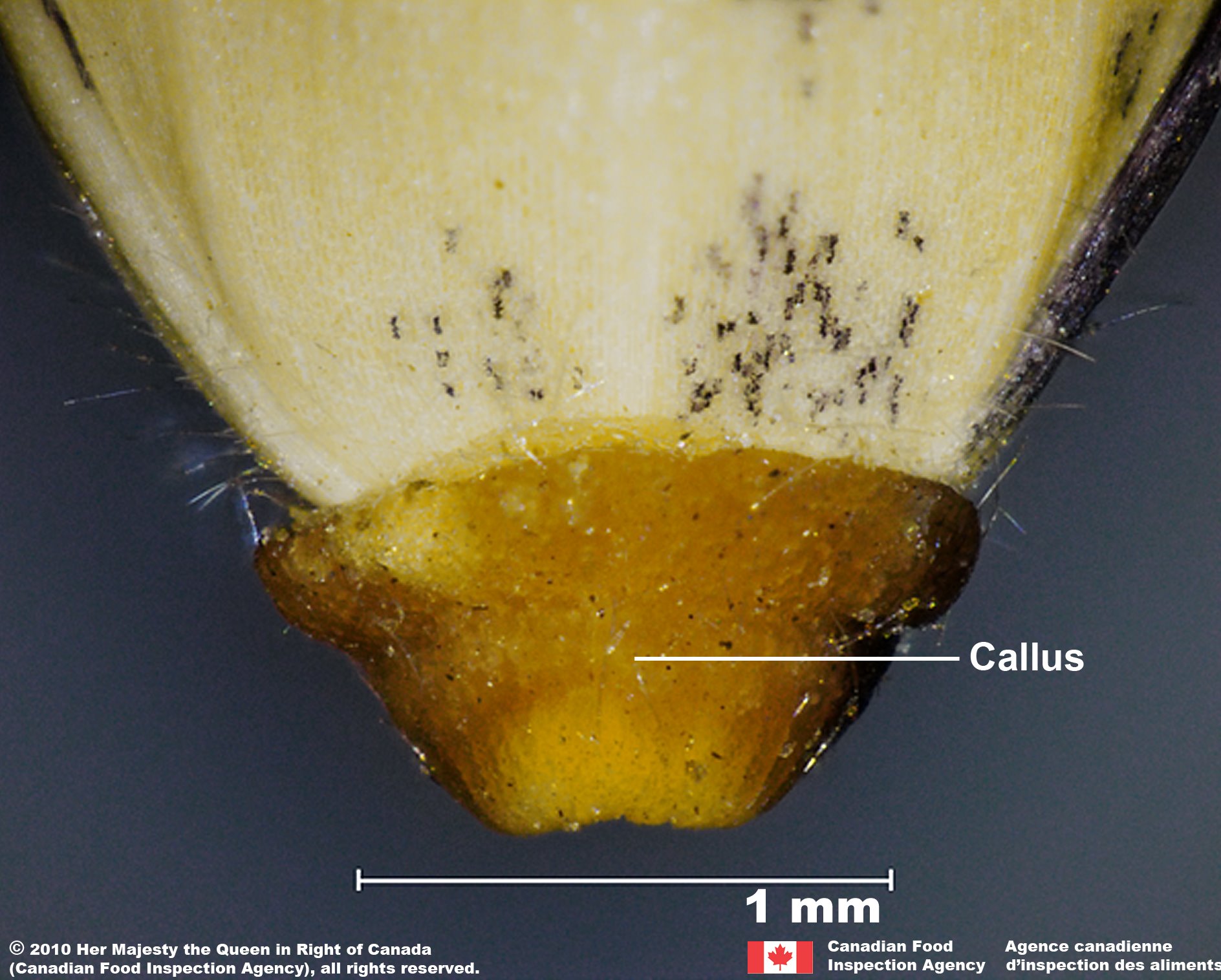 is wide (vertically) and dull.
Not listed
Not included
Poaceae
Elymus glaucus Buckley