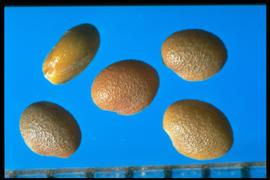
Agricultural
annual yellow sweetclover, Indian sweet-clover
True seedTrue seed:
A mature fertilized ovule consisting of an embryo, with or without and external food reserve (e.g., endosperm) enclosed by the testa.
OvalOval:
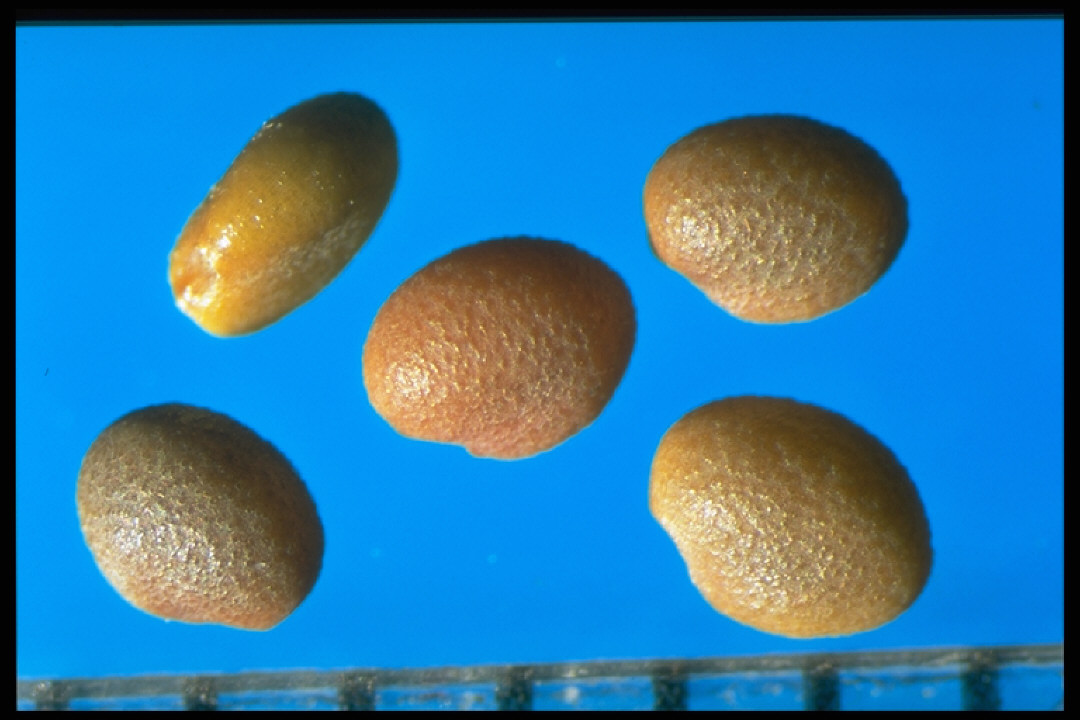
Broadly elliptic.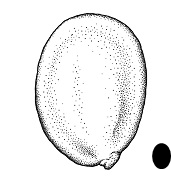
Olive-green
Roughened by minute tubercles or bumps
HilumHilum:
The scar on the seed coat at the place of its detachment from the seed stalk (funiculus).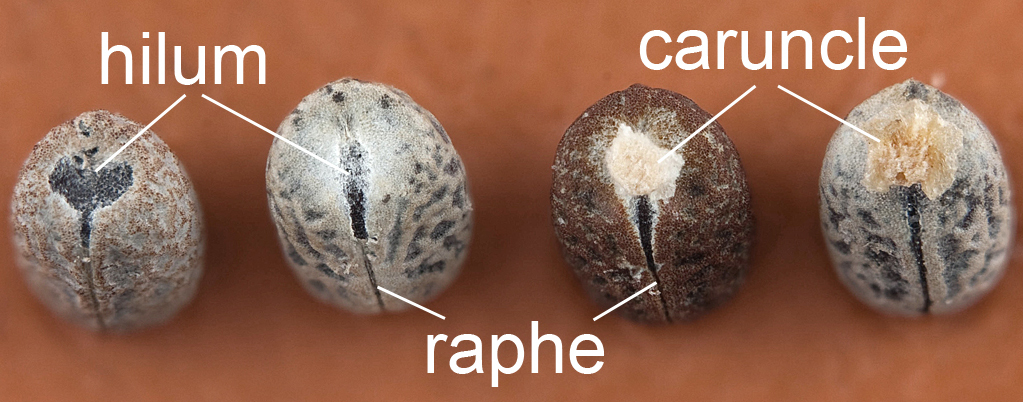 is located near the end of the radicleRadicle:
The rudimentary root of the embryo, developing into the primary root after emergence from the seed coat.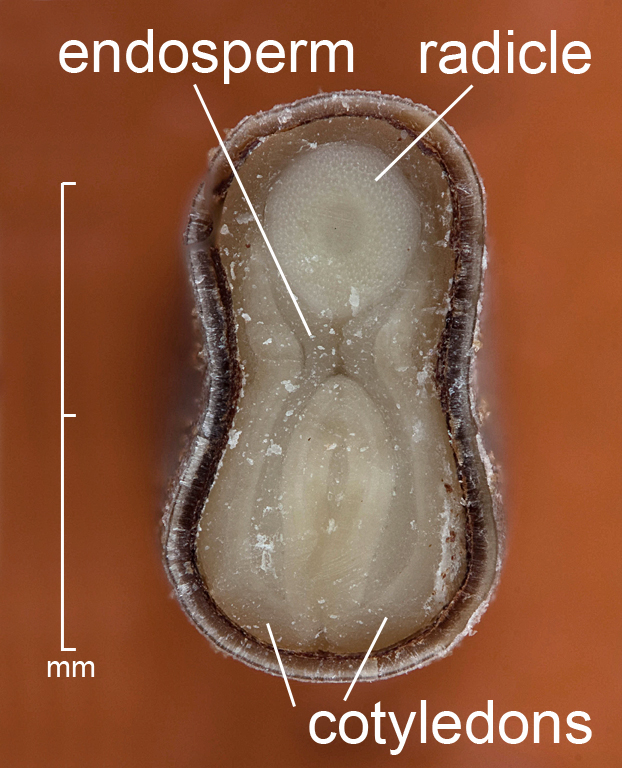 . RadicleRadicle:
The rudimentary root of the embryo, developing into the primary root after emergence from the seed coat. lobe is parallel with cotyledonCotyledon:
The modified storage leaf or pair of leaves of an embryo and seedling (see primary leaf).
axis, edge view symmetric.
The rough seed coatSeed coat:
The protective covering of a seed usually composed of the inner and outer integuments. Also called the testa.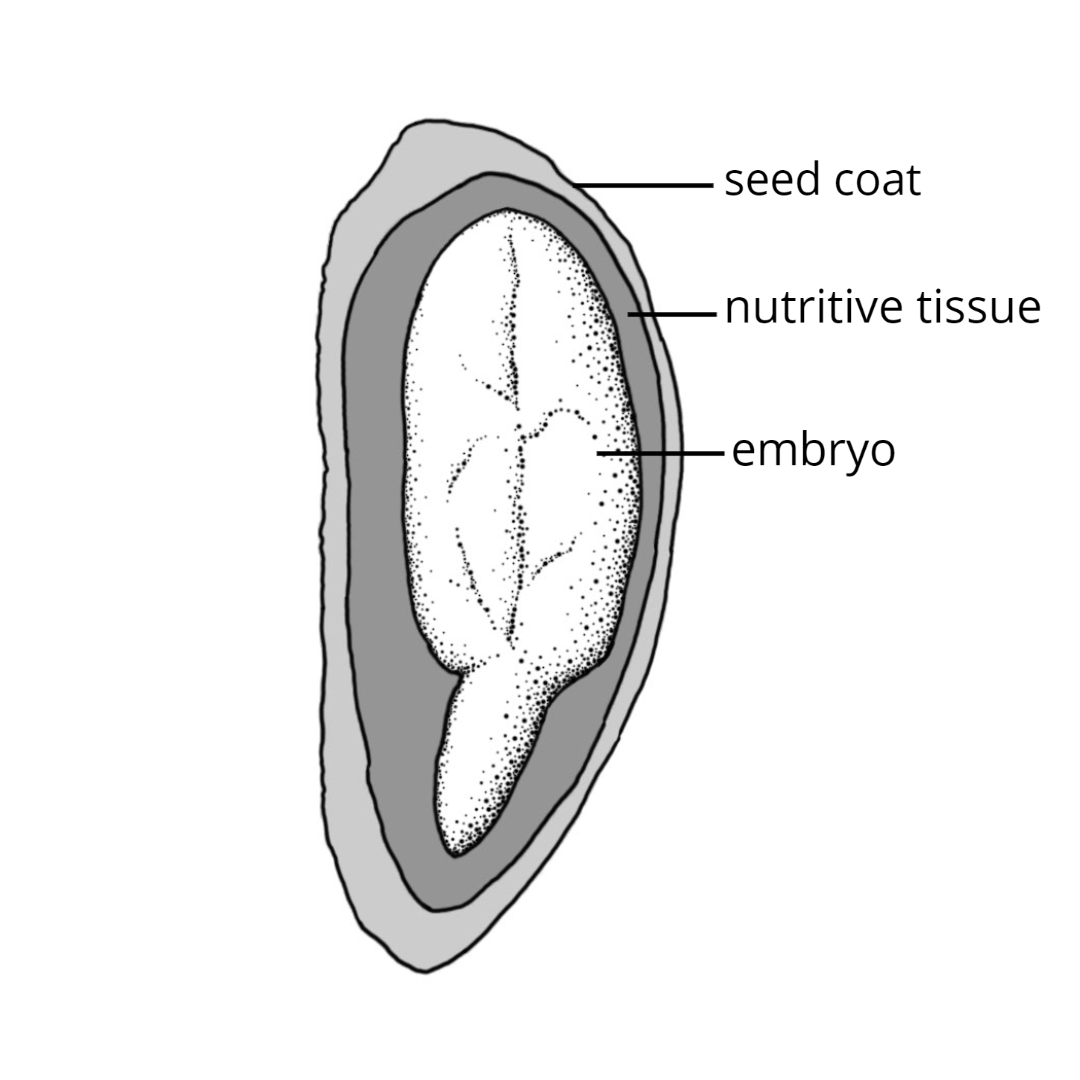 and dark color are the most significant identification characteristics.
Not listed
Included
Fabaceae
Melilotus indicus (L.) All.
Melilotus indica (L.) All.