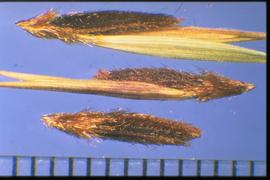
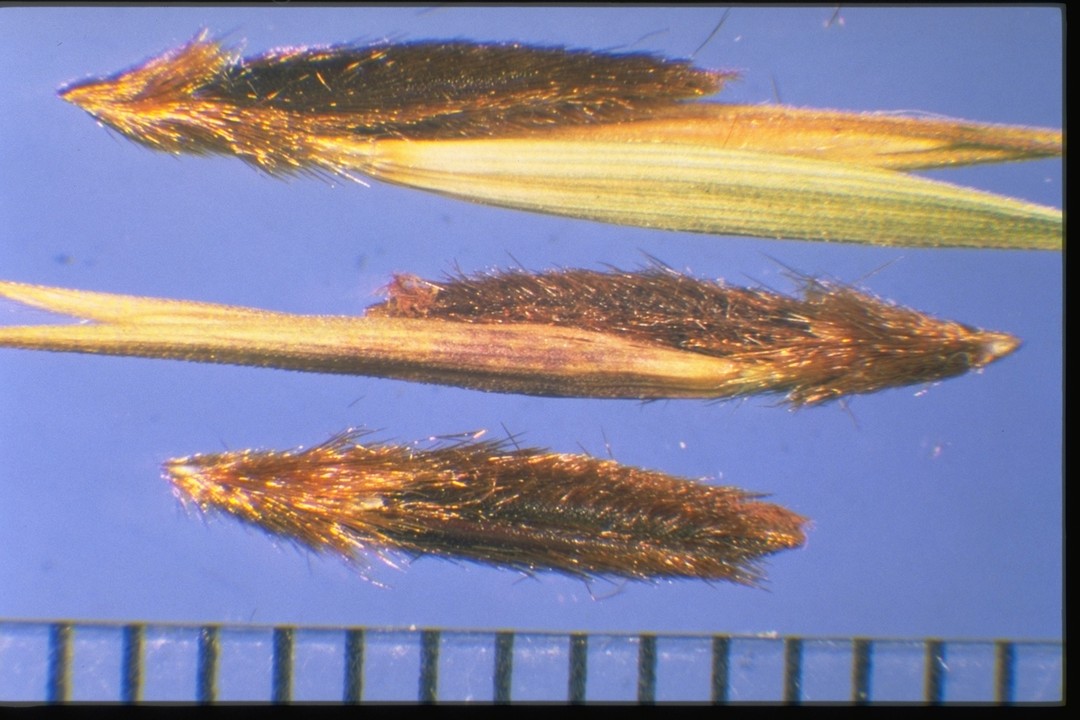
Weed
silky kangaroo grass, Lyon's grass
FloretFloret:
A small flower in a clustered inflorescence (e.g., sunflower, grasses). In grasses, a floret consists of the lemma, palea, stamens, and pistil.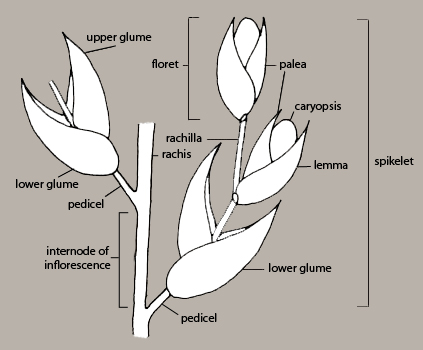
Lanceolate
Dark brown
Extremely pubescentPubescent:
Having hairs.
with callusCallus:
The hard base of grass florets or spikelets, just above the point of disarticulation.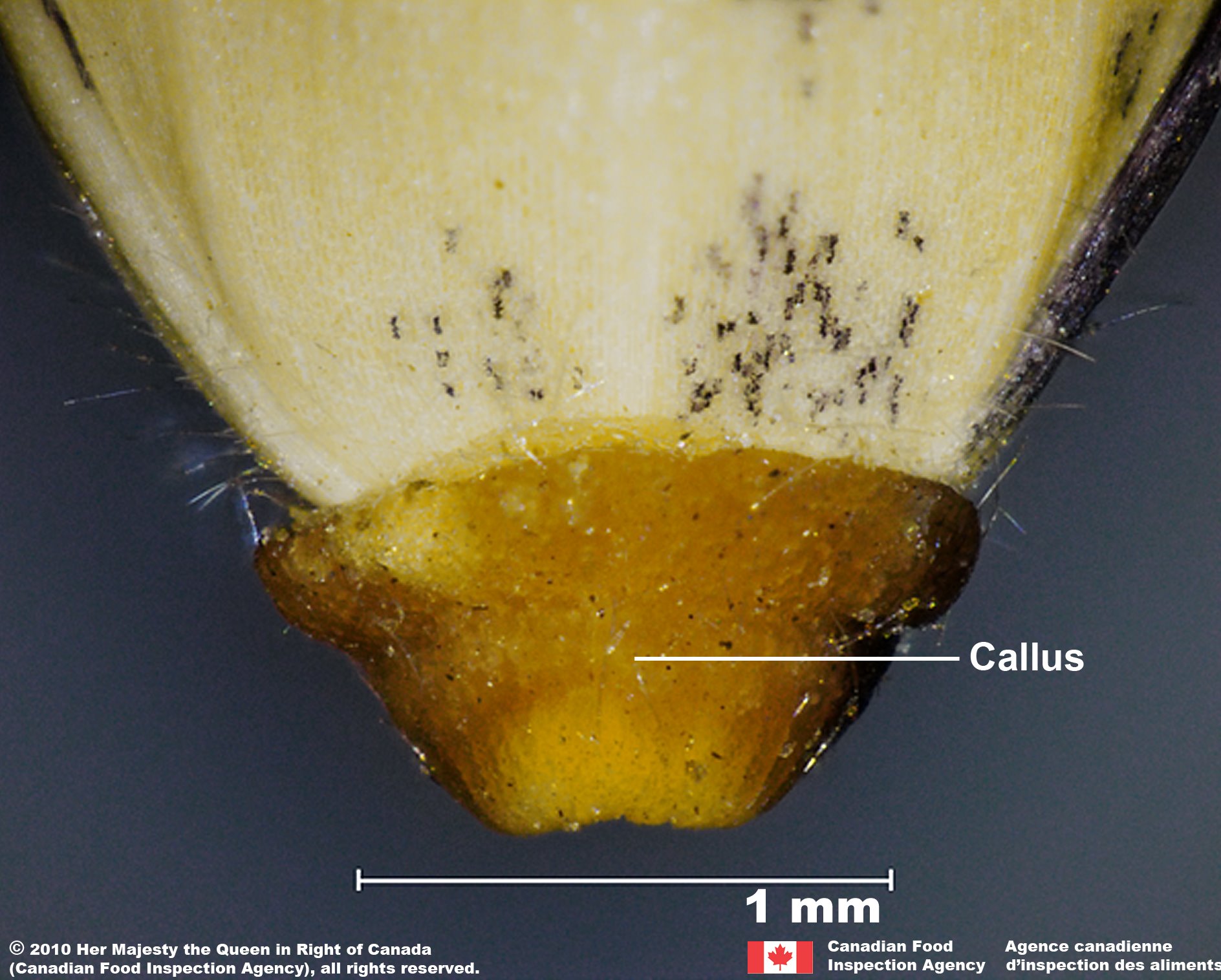 having even longer hairs
Hard with awnAwn:
A narrow, bristle-like organ, as on the glumes or lemmas of grasses (Poaceae).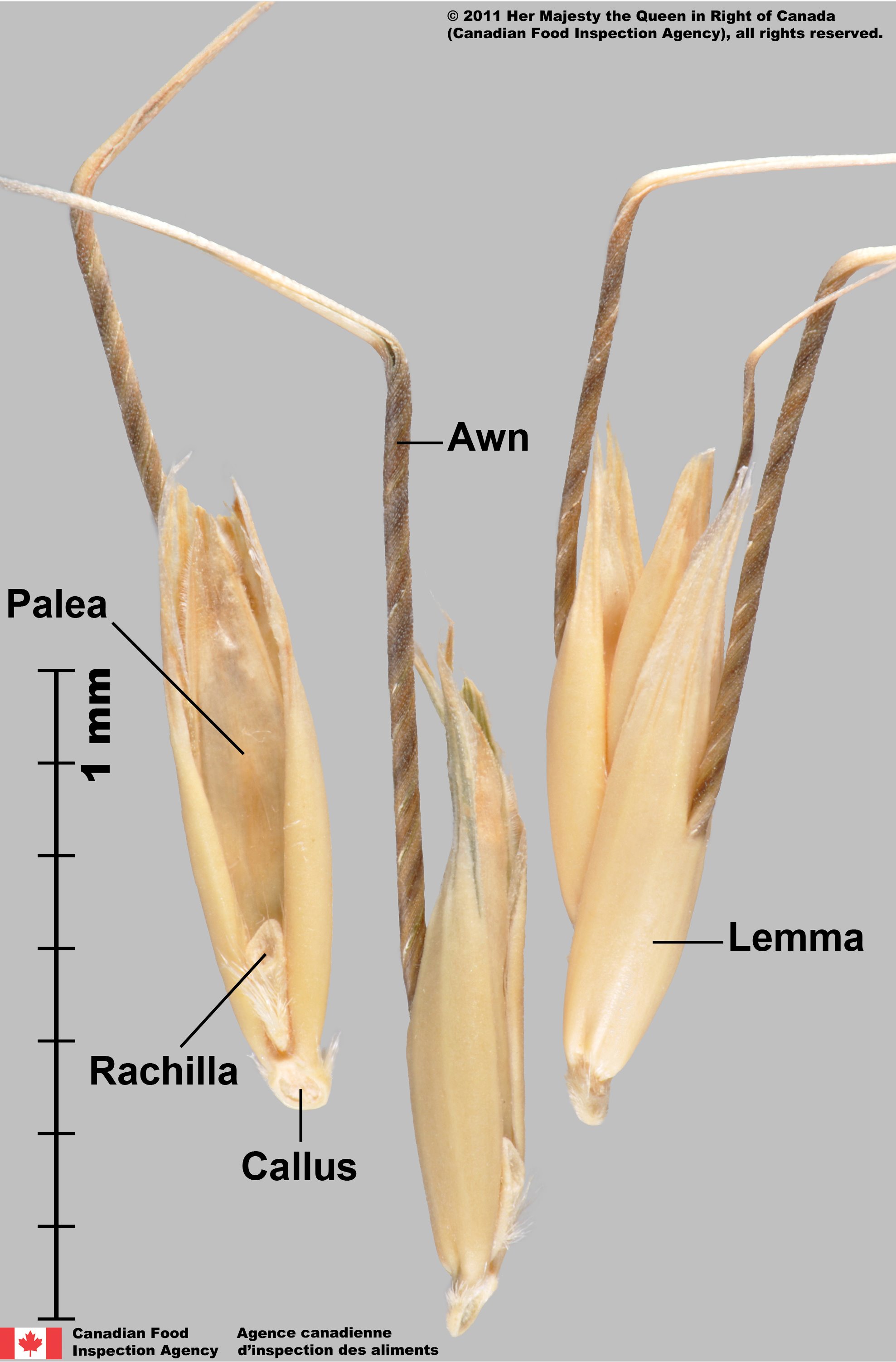 mostly detached
Hard; approximately the same length as lemmaLemma:
One of two bracts of the grass floret; it is located on the side nearest the embryo and opposite the rachilla.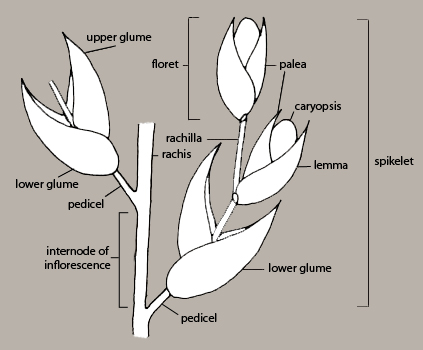 .
.
Sharp callusCallus:
The hard base of grass florets or spikelets, just above the point of disarticulation.; rachillaRachilla:
The axis of a spikelet.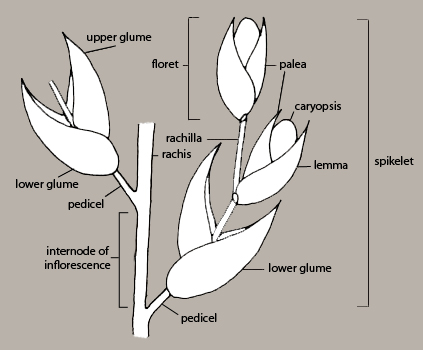 has sterile floretsFloret:
A small flower in a clustered inflorescence (e.g., sunflower, grasses). In grasses, a floret consists of the lemma, palea, stamens, and pistil..
Some texts describe this unit as a spikeletSpikelet:
One or more florets that are subtended by a pair of bracts called glumes. Spikelets are pedicellate if located on a pedicle and sessile if attached directly to the rachis. Often spikelets with single florets have remnants of a second floret, usually a lemma.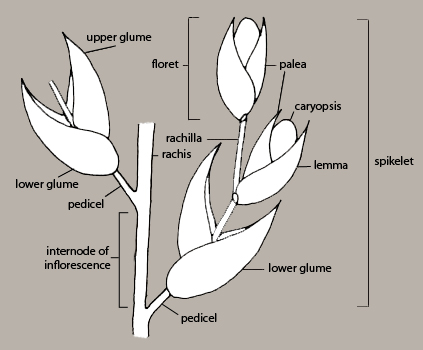 , but it appears that the term floretFloret:
A small flower in a clustered inflorescence (e.g., sunflower, grasses). In grasses, a floret consists of the lemma, palea, stamens, and pistil. is a better description. Strangely, the sterile structures attached to the rachillaRachilla:
The axis of a spikelet. are relatively glabrousGlabrous:
Lacking hairs or pubescence.
.
State Noxious Weed: Hawaii
Not included
Poaceae
Themeda villosa (Poir.) A. Camus
Themeda gigantea auct. non (Cav.) Hack.