Weed
Dyer's woad
SiliqueSilique:
A fruit usually dehiscing by two lateral valves (having a central septum). The fruits can be long or short in length and round or flat in cross section. Contains more than one seed. Found in Brassicaceae.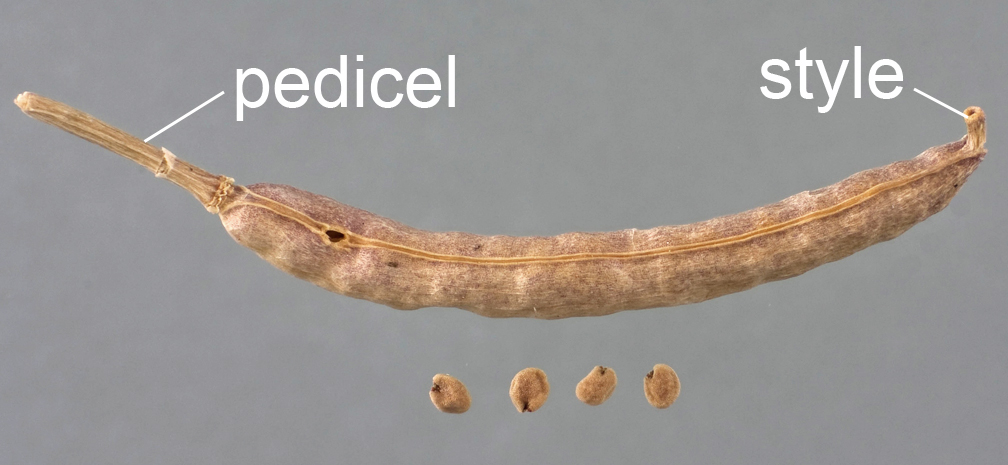
OvalOval:
Broadly elliptic.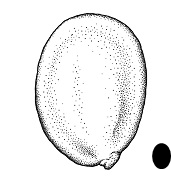 to obovateObovate:
Inverted egg shaped with apical end the broadest.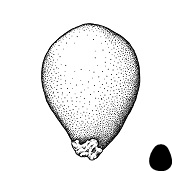
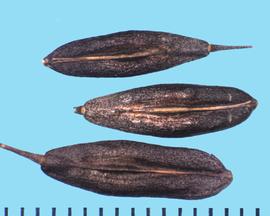
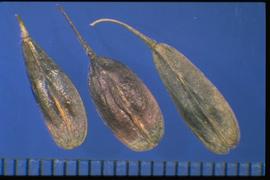
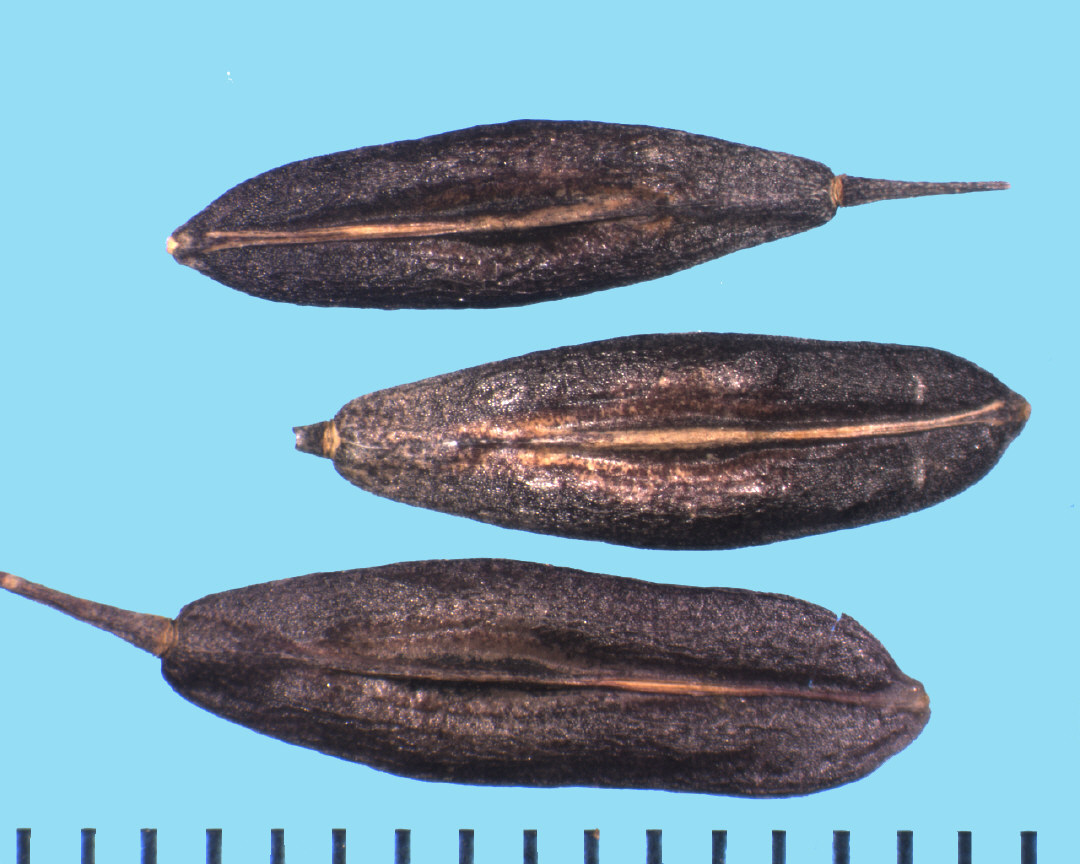
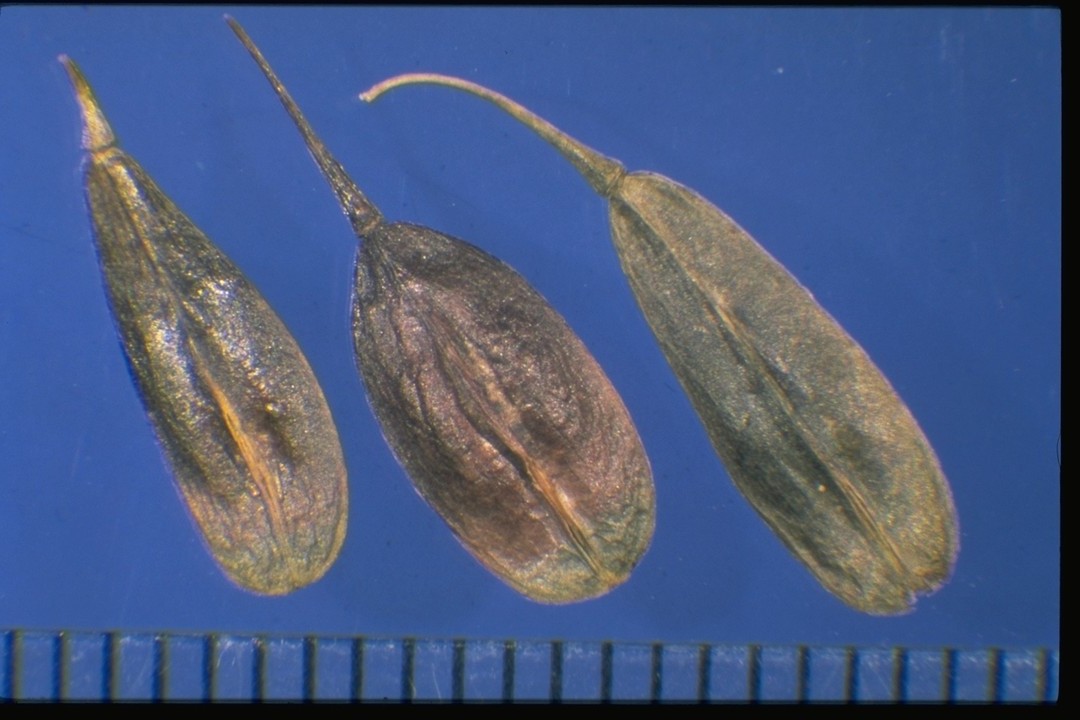
Dark lavender
Shiny and wrinkled
SiliqueSilique:
A fruit usually dehiscing by two lateral valves (having a central septum). The fruits can be long or short in length and round or flat in cross section. Contains more than one seed. Found in Brassicaceae. has a remnant of the pedicelPedicel:
The stalk within an inflorescence supporting a single flower or spikelet.
and a longitudinal line in the center.
SiliqueSilique:
A fruit usually dehiscing by two lateral valves (having a central septum). The fruits can be long or short in length and round or flat in cross section. Contains more than one seed. Found in Brassicaceae. does not open to release the individual seeds.
State Noxious Weed: Arizona, California, Colorado, Georgia, Idaho, Kentucky, Louisiana, Missouri, Montana, Nevada, Oregon, Utah, Washington, Wyoming
Not included
Brassicaceae
Isatis tinctoria L.