Weed
smooth rattlebox, pikakan, salts rattlebox, smooth crotalaria, smooth rattlepod, striped crotalaria,
True seedTrue seed:
A mature fertilized ovule consisting of an embryo, with or without and external food reserve (e.g., endosperm) enclosed by the testa.
OvalOval:
Broadly elliptic.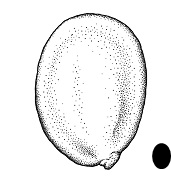 with a divergent radicleRadicle:
The rudimentary root of the embryo, developing into the primary root after emergence from the seed coat.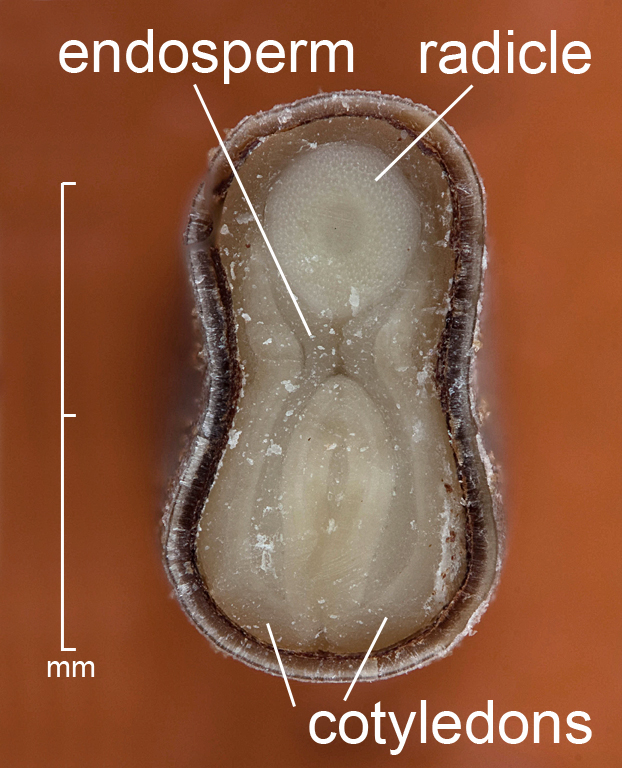
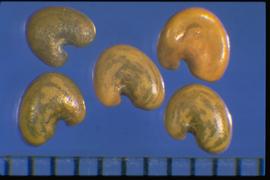
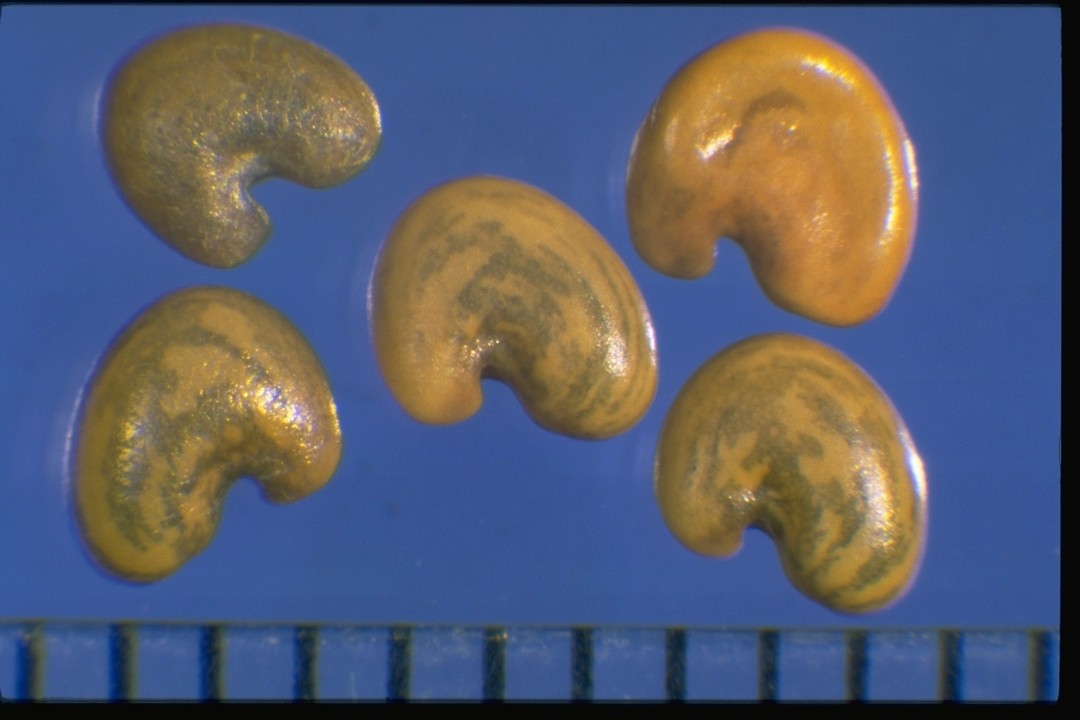
Brown with concentric streaks of dark olive-brown
Smooth to smooth-glossy
The hilumHilum:
The scar on the seed coat at the place of its detachment from the seed stalk (funiculus).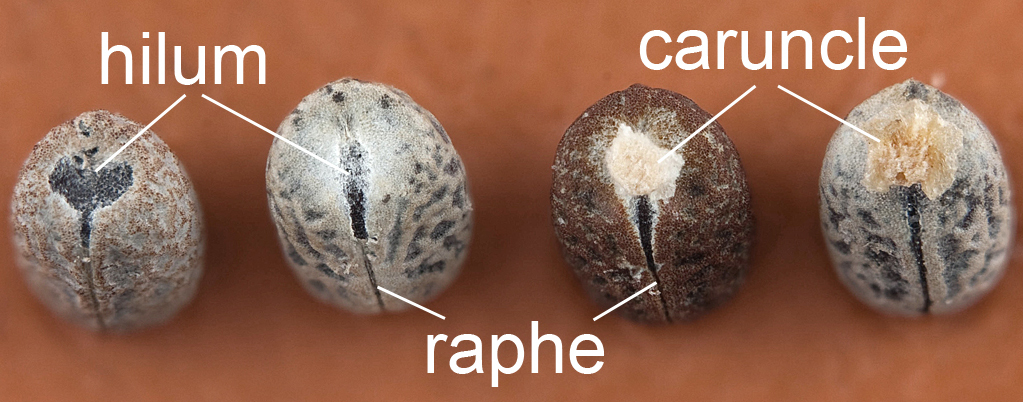 is deeply set into the seed margin but is not covered with the radicleRadicle:
The rudimentary root of the embryo, developing into the primary root after emergence from the seed coat. lobe.
The radicleRadicle:
The rudimentary root of the embryo, developing into the primary root after emergence from the seed coat. lobe is large and divergent but not hooked. The tip of the radicleRadicle:
The rudimentary root of the embryo, developing into the primary root after emergence from the seed coat. is thick and curves towards the cotyledonary lobe.
State Noxious Weed: Alabama, Arkansas, Florida, Georgia, Mississippi, North Carolina
Not included
Fabaceae
Crotalaria pallida Aiton
Crotalaria brownei Bertero ex DC.