Agricultural
dallisgrass, herbe de miel, herbe sirop, hiku nua, palpalum dilate, water grass
SpikeletSpikelet:
One or more florets that are subtended by a pair of bracts called glumes. Spikelets are pedicellate if located on a pedicle and sessile if attached directly to the rachis. Often spikelets with single florets have remnants of a second floret, usually a lemma.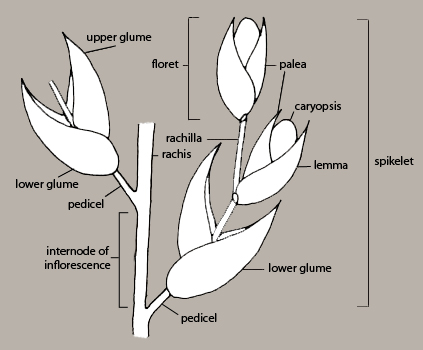
OvateOvate:
Egg-shaped with basal end the broadest.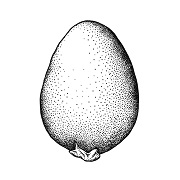
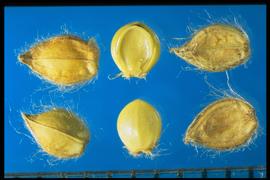
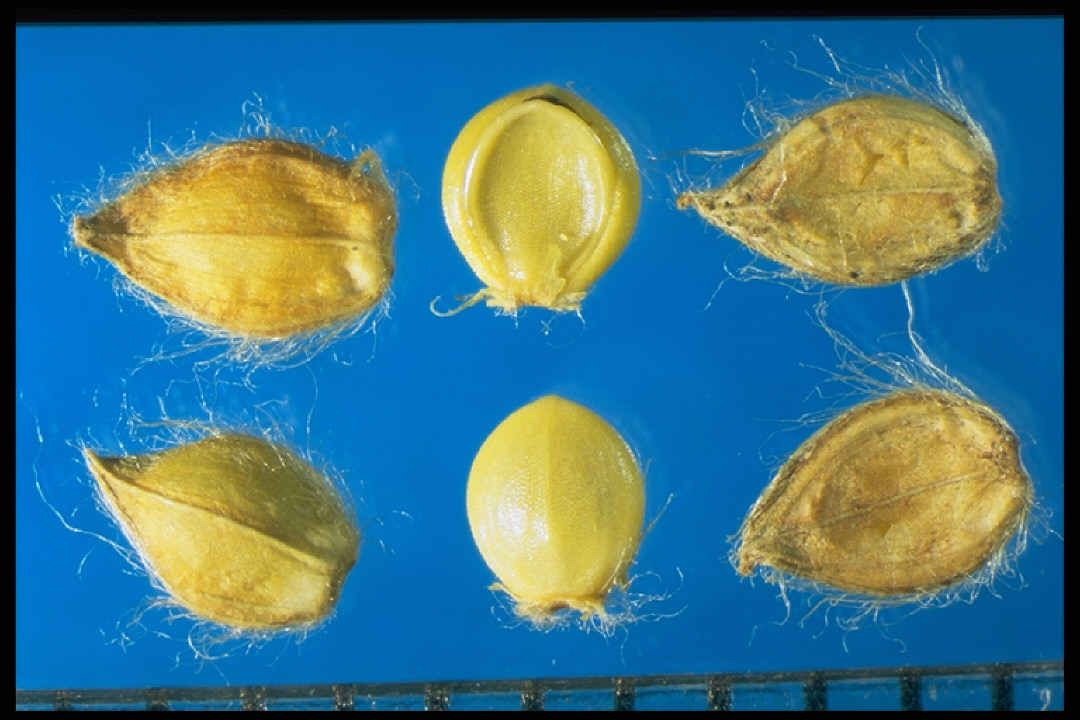
Light brown
GlumeGlume:
The pair of chaffy bracts that occur at the base of a grass spikelet, often completely enclosing it.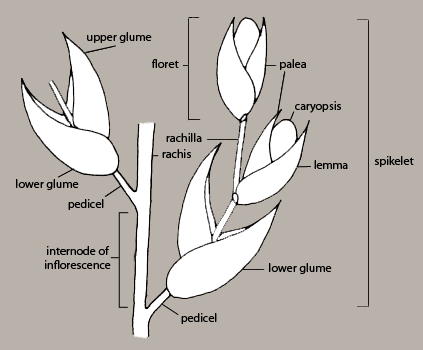 and sterile lemmaLemma:
One of two bracts of the grass floret; it is located on the side nearest the embryo and opposite the rachilla.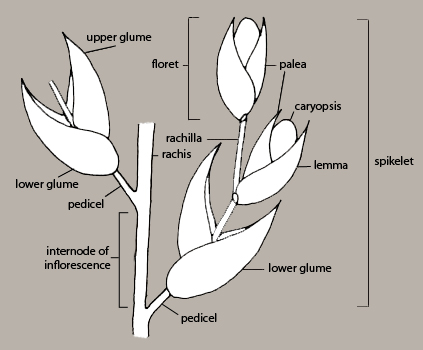 are finely pubescentPubescent:
Having hairs.
along the top and sides
Finely roughened by longitudinal rows of very fine tubercules
Strongly indented
SpikeletsSpikelet:
One or more florets that are subtended by a pair of bracts called glumes. Spikelets are pedicellate if located on a pedicle and sessile if attached directly to the rachis. Often spikelets with single florets have remnants of a second floret, usually a lemma. flattish, never strongly arched, short apex pointed.
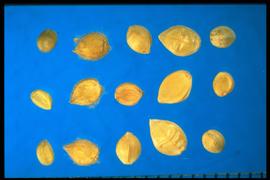
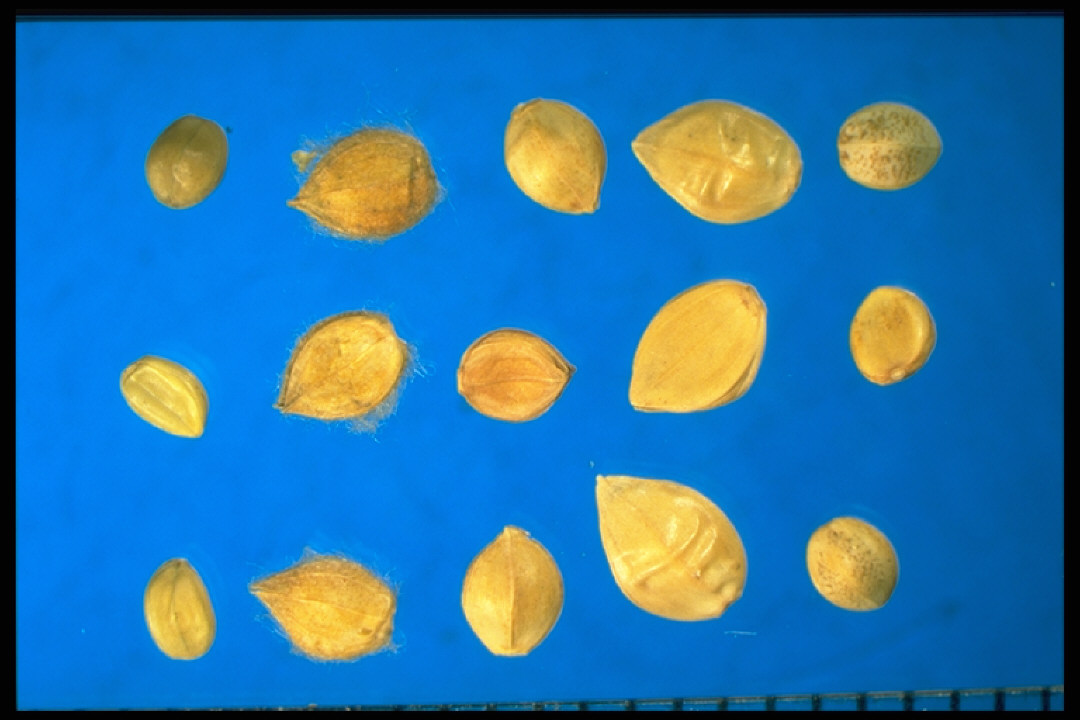
Unit mostly found as a spikeletSpikelet:
One or more florets that are subtended by a pair of bracts called glumes. Spikelets are pedicellate if located on a pedicle and sessile if attached directly to the rachis. Often spikelets with single florets have remnants of a second floret, usually a lemma.. A rudimentary first glumeGlume:
The pair of chaffy bracts that occur at the base of a grass spikelet, often completely enclosing it. is sometimes present. SpikeletsSpikelet:
One or more florets that are subtended by a pair of bracts called glumes. Spikelets are pedicellate if located on a pedicle and sessile if attached directly to the rachis. Often spikelets with single florets have remnants of a second floret, usually a lemma. are not arched but tend to be flattish. A strong midnerve is present which tends to be a bit off side.
Not listed
Included
For more information, see ISMA fact sheet.
Poaceae
Paspalum dilatatum Poir.