Revegetation or Rangeland
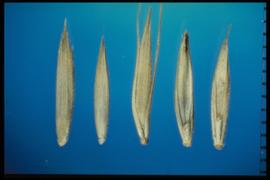
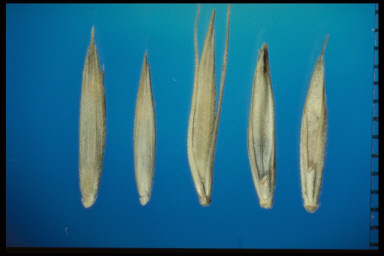
basin wildrye
FloretFloret:
A small flower in a clustered inflorescence (e.g., sunflower, grasses). In grasses, a floret consists of the lemma, palea, stamens, and pistil.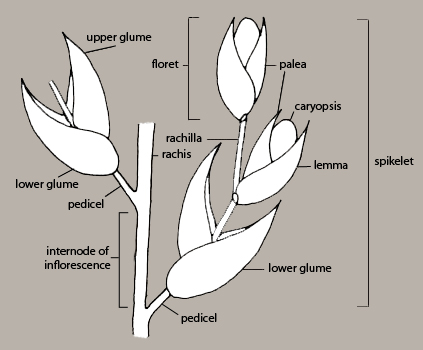
Lanceolate
Light brown
The lemmaLemma:
One of two bracts of the grass floret; it is located on the side nearest the embryo and opposite the rachilla.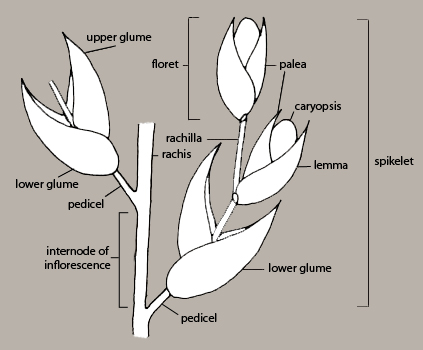 is sparsely hispid and villous along the sides and base.
Round back; none or short awnAwn:
A narrow, bristle-like organ, as on the glumes or lemmas of grasses (Poaceae).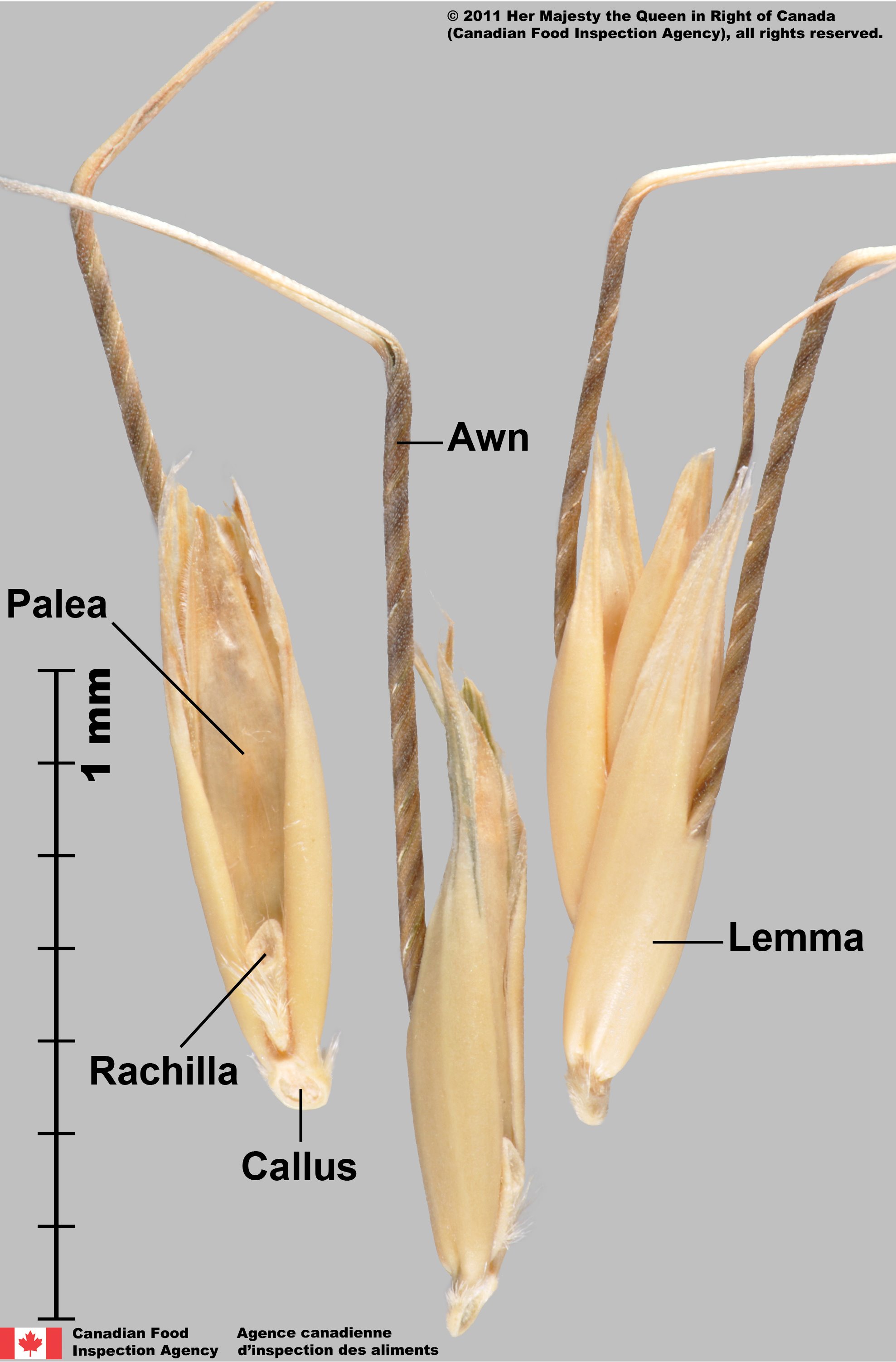 .
.
ApexApical:
The distal end of the fruit or seed away from the point of attachment or attachment scar.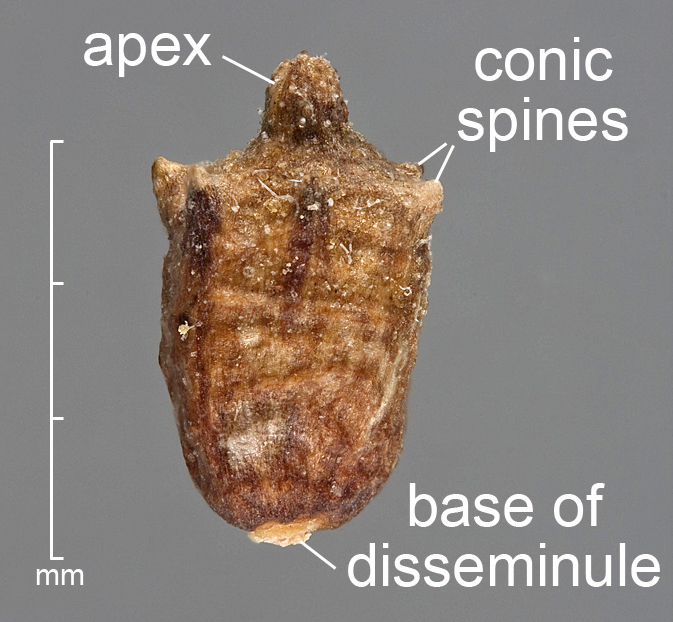 has a V-shaped notch at its base. A longitudinal groove may be present.
RachillaRachilla:
The axis of a spikelet.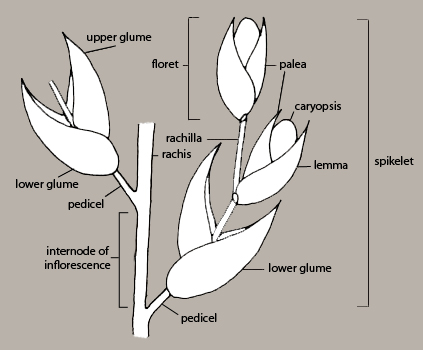 is slender with a fine brown line on the rim of its apexApical:
The distal end of the fruit or seed away from the point of attachment or attachment scar..
LemmaLemma:
One of two bracts of the grass floret; it is located on the side nearest the embryo and opposite the rachilla. is awnless or with short awnAwn:
A narrow, bristle-like organ, as on the glumes or lemmas of grasses (Poaceae).. CaryopsisCaryopsis:
The single-seeded fruit or grain of the grass family (Poaceae); the fruit wall (pericarp) is united with the seed coat (testa).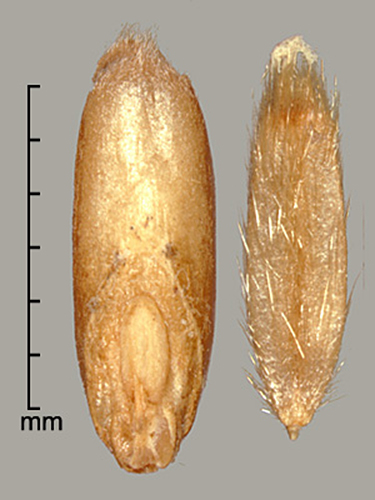 is relatively thin. PaleaPalea:
One of the thin bracts of grass floret enclosing the fruit (caryopsis) that is located on the side opposite the embryo.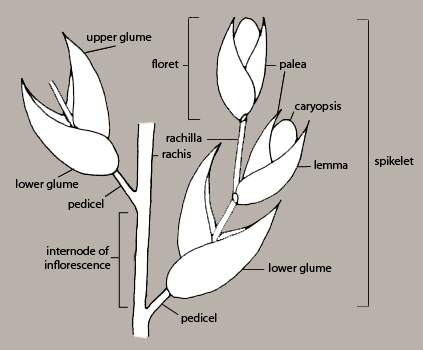 is exposed throughout. GlumesGlume:
The pair of chaffy bracts that occur at the base of a grass spikelet, often completely enclosing it.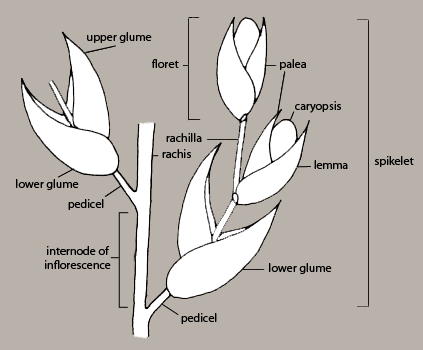 are long, thin with their bases close together over the floret lemmaLemma:
One of two bracts of the grass floret; it is located on the side nearest the embryo and opposite the rachilla..
Not listed
Not included
Poaceae
Leymus cinereus (Scribn. & Merr.) Á. Löve
Aneurolepidium piperi (Bowden) Baum
Elymus cinereus Scribn. & Merr.
Elymus cinereus Scribn. & Merr. var. pubens (Piper) C.L. Hitchc.
Elymus condensatus J. Presl var. pubens Piper
Elymus piperi Bowden