Agricultural
annual canarygrass, common canarygrass
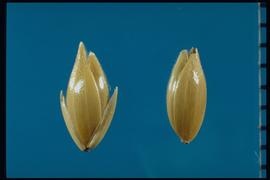
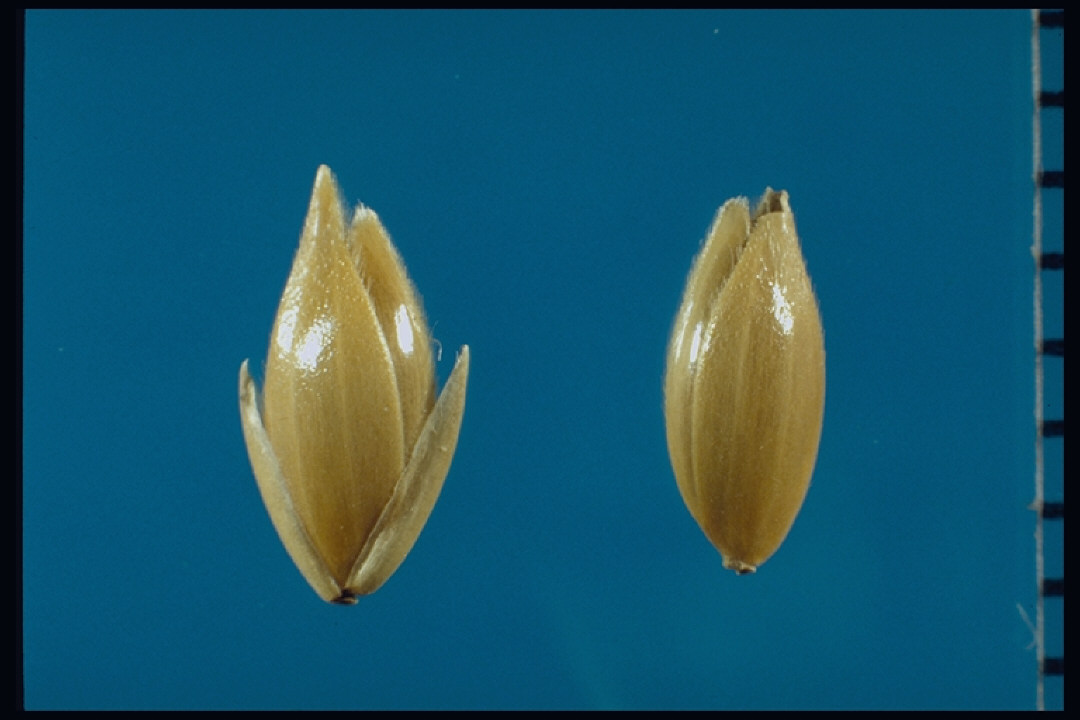
FloretFloret:
A small flower in a clustered inflorescence (e.g., sunflower, grasses). In grasses, a floret consists of the lemma, palea, stamens, and pistil.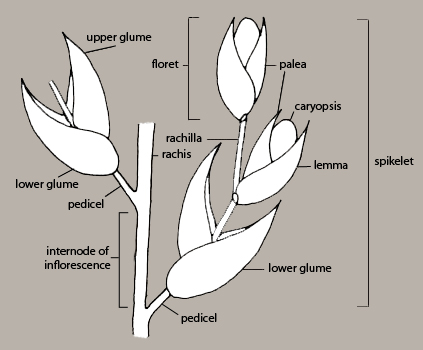
EllipticElliptic:
Outline of an ellipse; greatest width midway sloping to an equally pointed apex and base.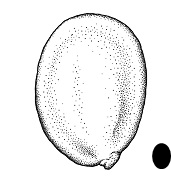
Light brown with yellow longitudinal lines
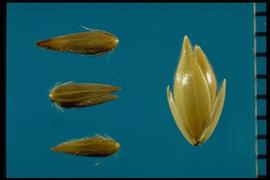
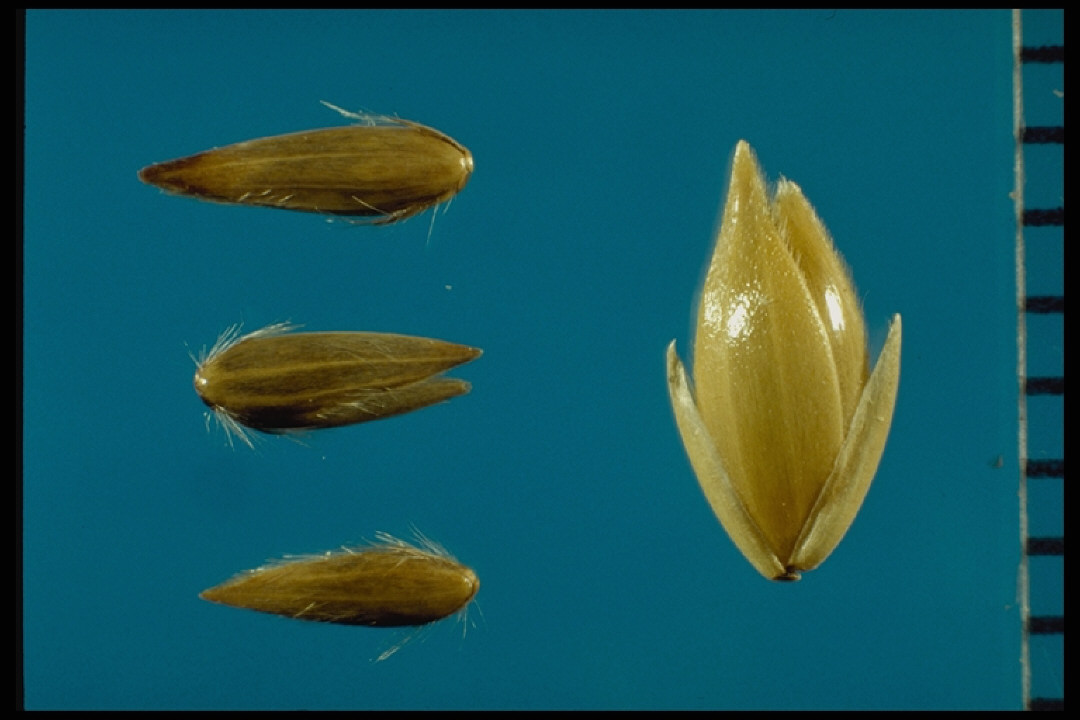
Sterile lemmasLemma:
One of two bracts of the grass floret; it is located on the side nearest the embryo and opposite the rachilla.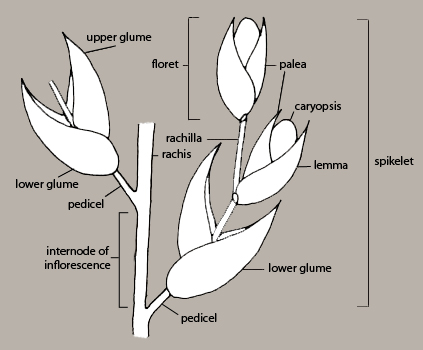 glabrous; fertile lemmaLemma:
One of two bracts of the grass floret; it is located on the side nearest the embryo and opposite the rachilla. with short hairs at tip.
Hard; laterally compressed.
Hard; mostly covered by lemmaLemma:
One of two bracts of the grass floret; it is located on the side nearest the embryo and opposite the rachilla..
Two sterile lemmasLemma:
One of two bracts of the grass floret; it is located on the side nearest the embryo and opposite the rachilla. are over half the length of the floretFloret:
A small flower in a clustered inflorescence (e.g., sunflower, grasses). In grasses, a floret consists of the lemma, palea, stamens, and pistil..
Some texts call this unit a spikelet because of the two sterile lemmasLemma:
One of two bracts of the grass floret; it is located on the side nearest the embryo and opposite the rachilla. attached to the floretFloret:
A small flower in a clustered inflorescence (e.g., sunflower, grasses). In grasses, a floret consists of the lemma, palea, stamens, and pistil.. The glabrousGlabrous:
Lacking hairs or pubescence.
sterile lemmasLemma:
One of two bracts of the grass floret; it is located on the side nearest the embryo and opposite the rachilla. are loose and spreading so that they are often broken off.
Not listed
Included
Poaceae
Phalaris canariensis L.