In all mites the pedipalpal coxae are fused into a subcapitulumsubcapitulum:
(also infracapitulum) the venter of the capitulum; the ventral faces of the fused palpcoxae; apparently formed independently in the two superorders of mites.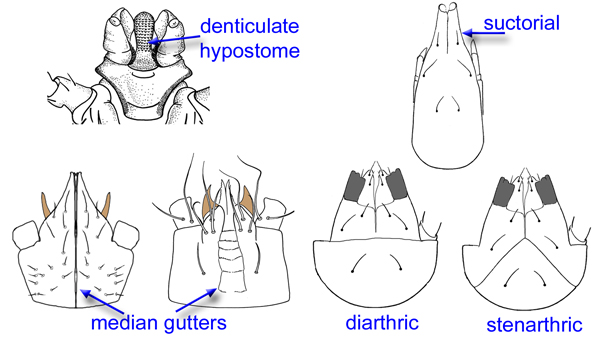 and the more distaldistal:
towards the free end of an appendage.
segments articulate with the subcapitulumsubcapitulum:
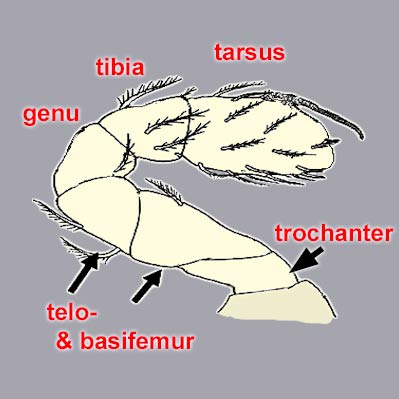
(also infracapitulum) the venter of the capitulum; the ventral faces of the fused palpcoxae; apparently formed independently in the two superorders of mites.. Typically, a maximum of 5 'free' segments is present (trochantertrochanter:
the leg segment between the coxa and the femur.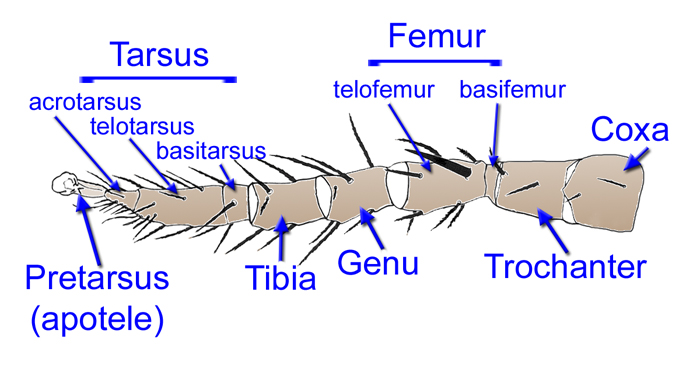 , femurfemur:
(pl. femora) major leg segment between trochanter and genu; often subdivided into a basifemur and a telofemur., genugenu:
(pl. genua) (= patella) the 4th leg segment, between the femur and tibia.
, tibiatibia:
(pl. tibiae) the leg segment between the genu and the tarsus., tarsustarsus:
(pl. tarsi) the subdistal leg segment between the tibia and the pretarsus (apotele).
) since the pretarsustarsal apotele:
(also pretarsus) the most distal segments of legs and palps bearing the claws and empodium is absent in Acariformes (and usually not treated as a segment in the Parasitiformes), but in Alicorhagia the femurfemur:
(pl. femora) major leg segment between trochanter and genu; often subdivided into a basifemur and a telofemur. is divided, giving the appearance of 6 free segments.
Author: David E. Walter
Content last updated Sept. 2006, unless indicated otherwise
Lucid key player updated Sept. 2025
idtools.org