Trichobothriatrichobothrium:
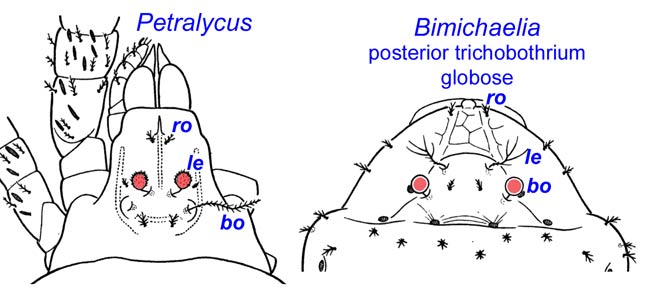
(pl. trichobothria) (= bothridial sensillum) an often elaborately modified seta set in a cup-like base; forms include filiform, ciliate, pectinate or variously thickened or clubbed (bat-like to globose or capitate).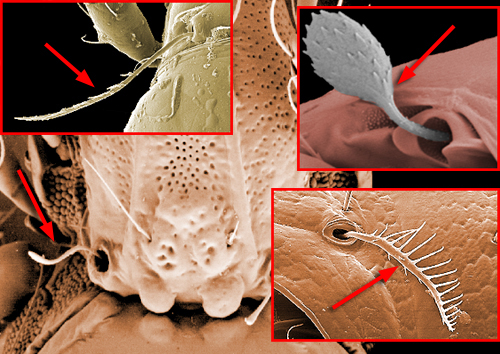 are modified setae associated with a cup-like insertion call a bothridiumbothridium:
the cup-like base of a bothridial sensillum.
. They are thought to be sensitive to air-currents and act as movement sensors (i.e., telling the mite that something is moving near them and displacing air). Trichobothriatrichobothrium:
(pl. trichobothria) (= bothridial sensillum) an often elaborately modified seta set in a cup-like base; forms include filiform, ciliate, pectinate or variously thickened or clubbed (bat-like to globose or capitate). may be capitatecapitate:
with a terminal knob or head-like swelling; clavate; globose.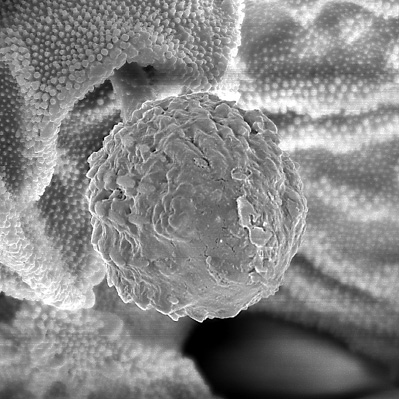 (i.e., with a globoseglobose:
spherical. head), filiformfiliform:
thread-like; long and narrow.
, or sometimes elaborately ciliated or pectinatepectinate:
a seta or other process having comb-like teeth on one side (see bipectinate).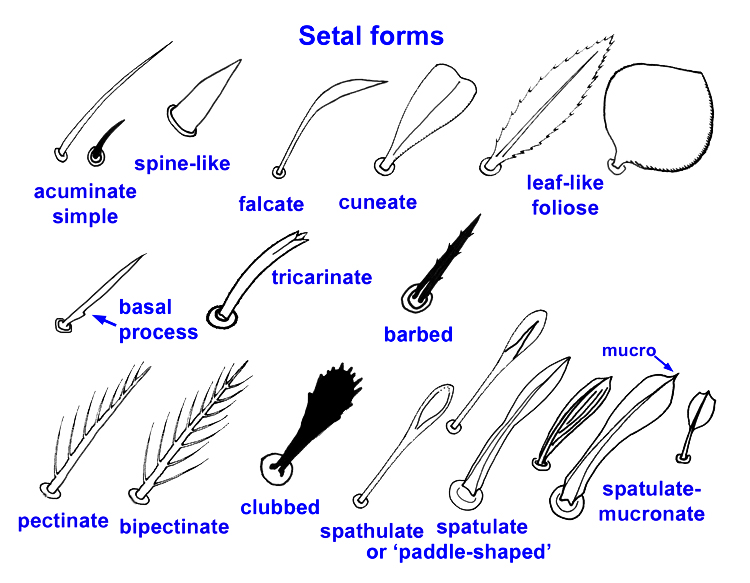 . When present, the bothridial setabothridial seta:
prodorsal seta bo (also sci or s1) in Acariformes; the bothridial sensillum or trichome.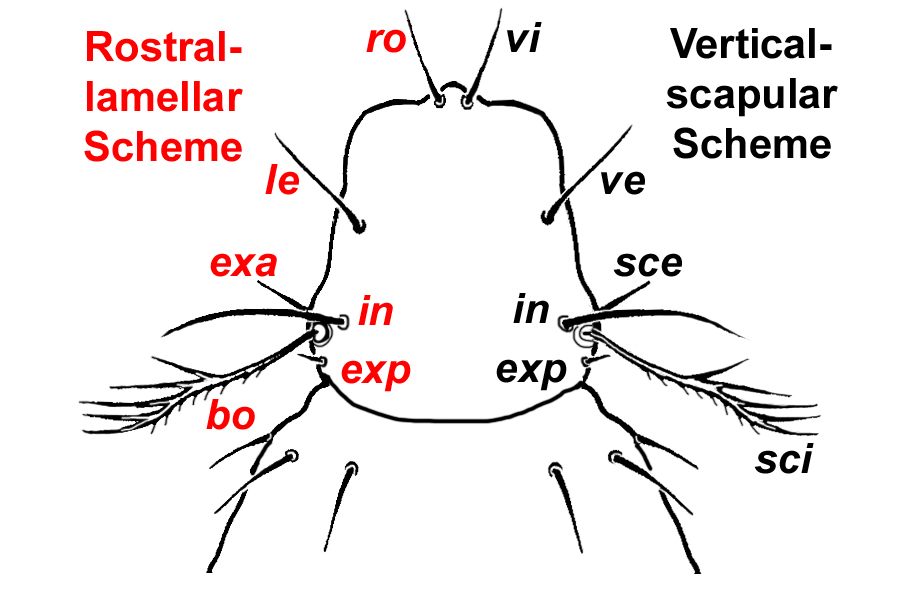 (bo = sci) is a trichobothriumtrichobothrium:
(pl. trichobothria) (= bothridial sensillum) an often elaborately modified seta set in a cup-like base; forms include filiform, ciliate, pectinate or variously thickened or clubbed (bat-like to globose or capitate)., but if a second pair is present it is either the lamellar seta (le = ve) or the rostral setarostral seta:
the anteriormost pair of prodorsal setae or an unpaired median seta (Nematalycoidea) in the Acariformes; when a naso is present, it often carries the rostral setae; various designations: ro, vi, v1. (ro = vi).
Author: David E. Walter
Content last updated Sept. 2006, unless indicated otherwise
Lucid key player updated Sept. 2025
idtools.org