t
Halolaelapidae Karg, 1965
Superorder Parasitiformes » Order Mesostigmata » Suborder Monogynaspida » Infraorder Gamasina » Hyporder Dermanyssiae » Superfamily Rhodacaroidea » Family Halolaelapidae
Halodarcia Karg, Halolaelaps Berlese & Trouessart (NB—various subgenera recognized), Halozercon Wisniewski, Karg & Hirschmann, Leitneria Evans, Saintdidieria Oudemans, Saprosecans Karg, Saprolaelaps Leitner
 I with 5 dorsaldorsal:
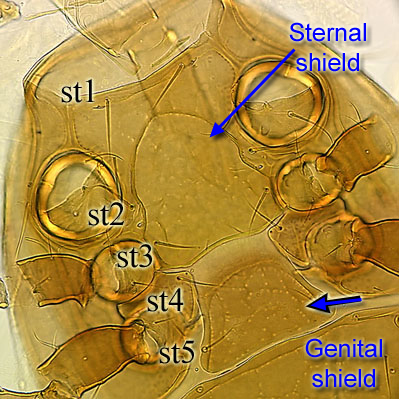 with 3 pairs of setae, usually free from endopodal elements
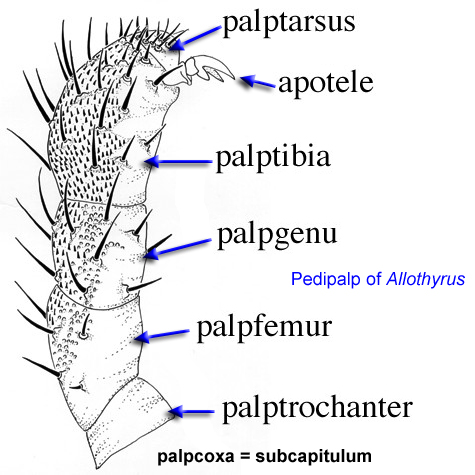 3-tined
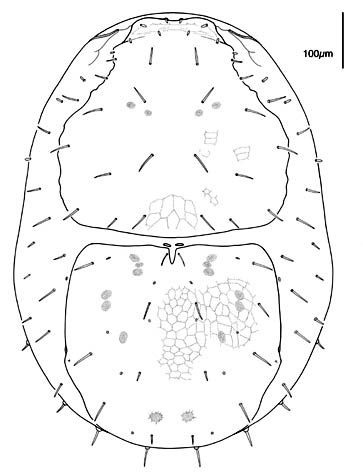
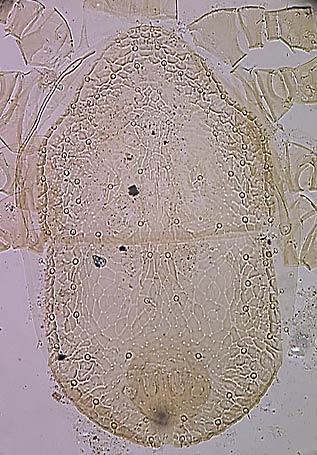
Adult female with holodorsal or divided dorsal shielddivided dorsal shield:
in Mesostigmata, adult mites have two usually subequal dorsal shields.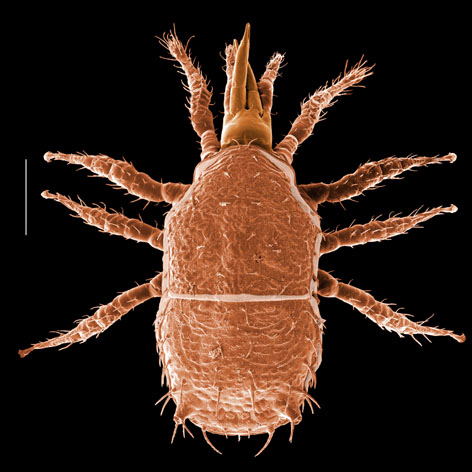 ; without posteriorposterior:
the back part of the body or towards that region in comparison, e.g., 'posterior to'.
horn-like processes.............................. 2
- Opisthonotal shieldopisthonotal shield:
the posterior shield in mesostigmatans with divided dorsal shields. fragmented into mesonotal and pygidial elements; posteriorposterior:
the back part of the body or towards that region in comparison, e.g., 'posterior to'.
of idiosoma with horn-like projections.............................. Saprosecans
Dorsaldorsal:
relating to the upper or back side; opposed to ventral.
shield divided into 2 subequal shields............................... 3
- Dorsaldorsal:
relating to the upper or back side; opposed to ventral.
shield entireentire:
a shield or sclerite with a continuous margin without incisions.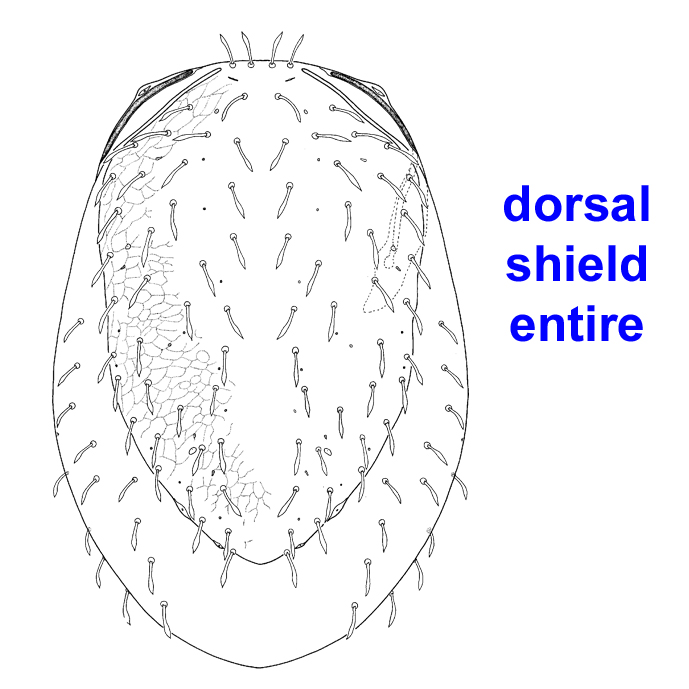 .............................. Halodarcia
Sternal shieldsternal shield:
a shield in the anterior intercoxal region of parasitiform mites that bears one or more pairs of sternal setae. subrectangular, without endopodal elements; peritremeperitreme:
a groove or gutter on the surface connecting to a stigmatal opening. In Mesostigmata the peritremes are lateral and run above the coxae of the legs and usually run to near the anterior margin of the idiosoma, but they may be very short or vestigial. In Prostigmata peritremes are usually found on the anterior margin of the idiosoma, as short processes to either side of the capitulum (emergent peritremes), or as simple to complex lines or reticulations of short, connected chambers on the dorsal surface of the chelicerae or stylophore.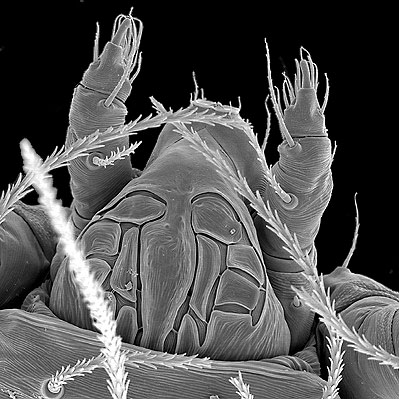 not expanded posteriorly.............................. 4
- Sternal shieldsternal shield:
a shield in the anterior intercoxal region of parasitiform mites that bears one or more pairs of sternal setae. angular, with fused endopodal elements; peritremeperitreme:
a groove or gutter on the surface connecting to a stigmatal opening. In Mesostigmata the peritremes are lateral and run above the coxae of the legs and usually run to near the anterior margin of the idiosoma, but they may be very short or vestigial. In Prostigmata peritremes are usually found on the anterior margin of the idiosoma, as short processes to either side of the capitulum (emergent peritremes), or as simple to complex lines or reticulations of short, connected chambers on the dorsal surface of the chelicerae or stylophore. expanded posteriorly.............................. Leitneria
Genugenu:
(pl. genua) (= patella) the 4th leg segment, between the femur and tibia.
III with 9 setae; coxacoxa:
the basal segment of the leg, articulating with (Parasitiformes) or fused to (Acariformes) the body wall. II without spine.............................. 5
- Genugenu:
(pl. genua) (= patella) the 4th leg segment, between the femur and tibia.
III with 8 setae; coxacoxa:
the basal segment of the leg, articulating with (Parasitiformes) or fused to (Acariformes) the body wall. II with anterior spine.............................. Saprolaelaps
Genugenu:
(pl. genua) (= patella) the 4th leg segment, between the femur and tibia.
IV with 9 setae; female with ventrianal shieldventrianal shield:
in Mesostigmata, a ventral shield bearing the anal opening, circum anal setae, and one or more pairs of ventral setae or pores (lyrifissures) [see anal shield]; maybe rather narrow or very broad and covering most of the gaster.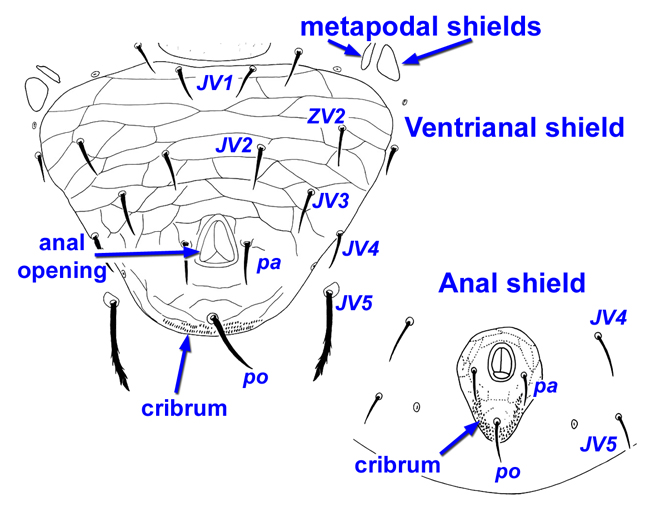 .............................. Halolaelaps
- Genugenu:
(pl. genua) (= patella) the 4th leg segment, between the femur and tibia.
IV with 10 setae; female with anal shield.............................. Saintdidieria
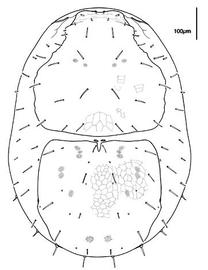
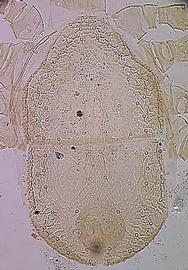
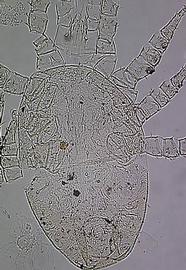
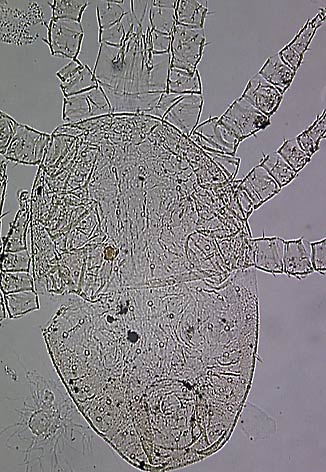
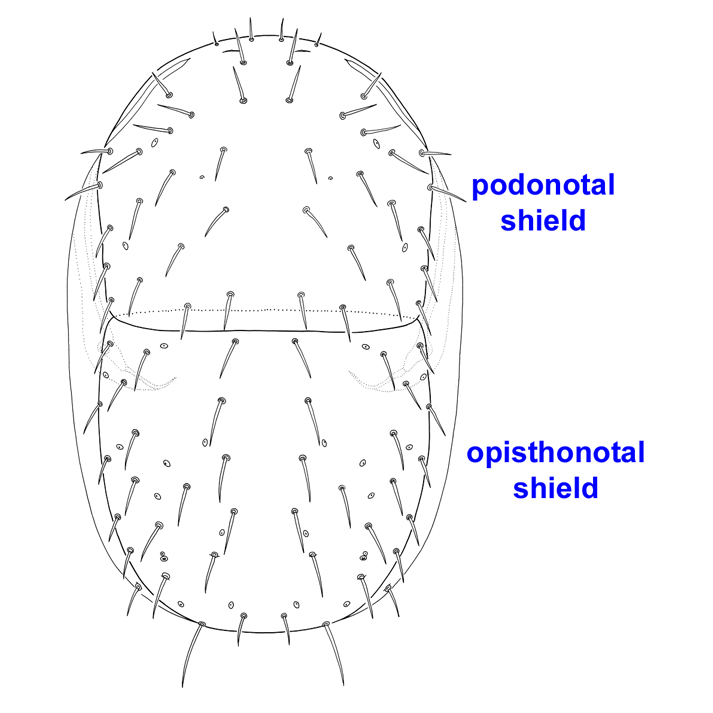
Pale to yellow or brown dermanyssine mesostigmatans mostly with subequal podonotalpodonotal:
relating to the dorsal podosoma, the region of the idiosoma over the legs.
and opisthonotalopisthonotal:
dorsal opisthosoma.
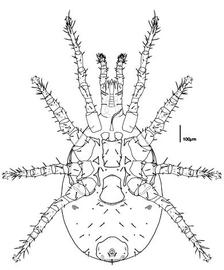
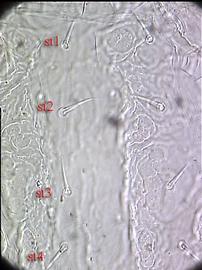
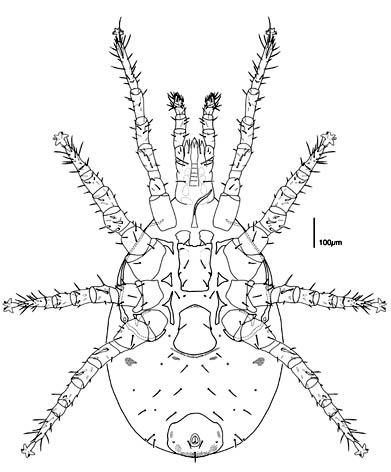
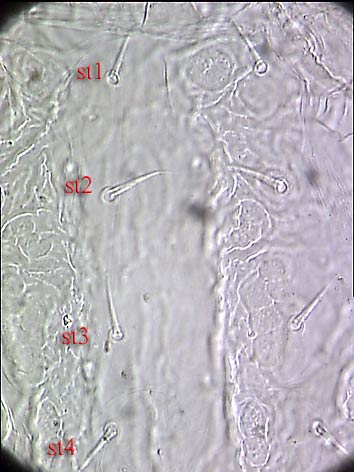
shields, rarely holodorsal (Halodarcia) or with mesonotal and pygidial shields (Saprosecans). Peritremes short or long on narrow to broad shields. Sternal shieldsternal shield:
a shield in the anterior intercoxal region of parasitiform mites that bears one or more pairs of sternal setae. rectangular, without endopodal elements (except in Leitneria) bearing 3 pairs of setaeseta:
(pl. setae, from L. = bristle) cuticular process composed of a hollow shaft (sometimes filled with a refractive material) produced from a membranous socket (the alveolus); the hair-like, spine-like, branched or variously expanded structures on the surfaces of the legs and body. Most setae function as mechanoreceptors, but others (e.g., solenidia) are chemoreceptors or have unknown or ambiguous functions.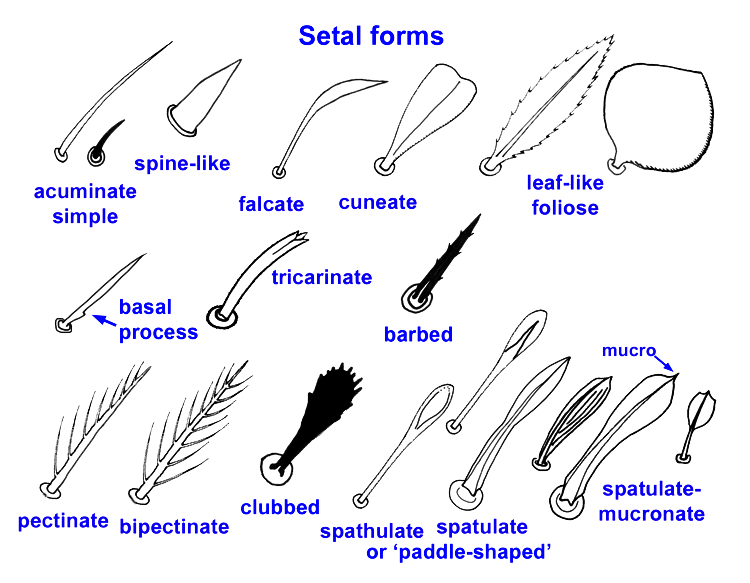 (st1–3) and 2 pairs of lyrifissures (stp1–2); metasternal shields absent or present and bearing st4, stp3; genital shieldgenital shield:
a shield or shields covering the genital opening; in female mongynaspine Mesostigmata this shield is usually called the epigynal (epigynial) shield.
usually trapezoidal to subrectangular and bearing 1 pair of setaeseta:
(pl. setae, from L. = bristle) cuticular process composed of a hollow shaft (sometimes filled with a refractive material) produced from a membranous socket (the alveolus); the hair-like, spine-like, branched or variously expanded structures on the surfaces of the legs and body. Most setae function as mechanoreceptors, but others (e.g., solenidia) are chemoreceptors or have unknown or ambiguous functions.; ventrianal shieldventrianal shield:
in Mesostigmata, a ventral shield bearing the anal opening, circum anal setae, and one or more pairs of ventral setae or pores (lyrifissures) [see anal shield]; maybe rather narrow or very broad and covering most of the gaster. broad, bearing 3–4 pairs of ventral setaeseta:
(pl. setae, from L. = bristle) cuticular process composed of a hollow shaft (sometimes filled with a refractive material) produced from a membranous socket (the alveolus); the hair-like, spine-like, branched or variously expanded structures on the surfaces of the legs and body. Most setae function as mechanoreceptors, but others (e.g., solenidia) are chemoreceptors or have unknown or ambiguous functions. or reduced to anal shieldanal shield:
in Mesostigmata, a ventral shield bearing the anal opening and circumanal setae (po, pa), but without any ventral setae or pores (lyrifissures) [see ventrianal shield].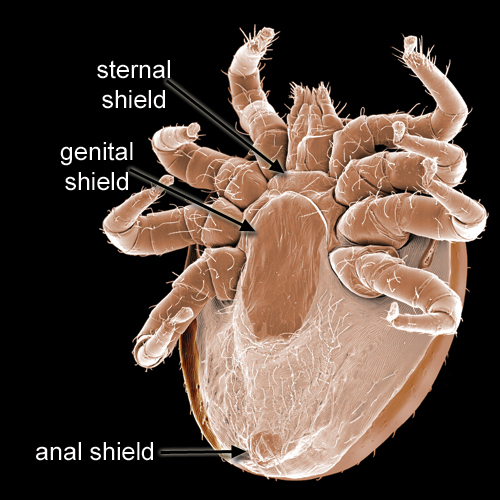 with 3 circumanal setaeseta:
(pl. setae, from L. = bristle) cuticular process composed of a hollow shaft (sometimes filled with a refractive material) produced from a membranous socket (the alveolus); the hair-like, spine-like, branched or variously expanded structures on the surfaces of the legs and body. Most setae function as mechanoreceptors, but others (e.g., solenidia) are chemoreceptors or have unknown or ambiguous functions.. Tarsustarsus:
(pl. tarsi) the subdistal leg segment between the tibia and the pretarsus (apotele).
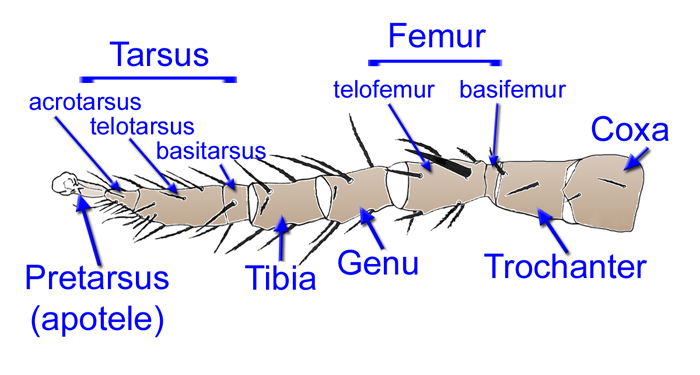
I with claws; trochantertrochanter:
the leg segment between the coxa and the femur. I with 6 setaeseta:
(pl. setae, from L. = bristle) cuticular process composed of a hollow shaft (sometimes filled with a refractive material) produced from a membranous socket (the alveolus); the hair-like, spine-like, branched or variously expanded structures on the surfaces of the legs and body. Most setae function as mechanoreceptors, but others (e.g., solenidia) are chemoreceptors or have unknown or ambiguous functions.; tibiatibia:
(pl. tibiae) the leg segment between the genu and the tarsus. and genugenu:
(pl. genua) (= patella) the 4th leg segment, between the femur and tibia.
I each with 5/3 dorsal/ ventral setaeseta:
(pl. setae, from L. = bristle) cuticular process composed of a hollow shaft (sometimes filled with a refractive material) produced from a membranous socket (the alveolus); the hair-like, spine-like, branched or variously expanded structures on the surfaces of the legs and body. Most setae function as mechanoreceptors, but others (e.g., solenidia) are chemoreceptors or have unknown or ambiguous functions.; genugenu:
(pl. genua) (= patella) the 4th leg segment, between the femur and tibia.
IV with 9–10 setaeseta:
(pl. setae, from L. = bristle) cuticular process composed of a hollow shaft (sometimes filled with a refractive material) produced from a membranous socket (the alveolus); the hair-like, spine-like, branched or variously expanded structures on the surfaces of the legs and body. Most setae function as mechanoreceptors, but others (e.g., solenidia) are chemoreceptors or have unknown or ambiguous functions., 5/1 dorsal/ ventralventral:
relating to the lower or under side; opposed to dorsal.
; coxae II sometimes with spine (Saprolaelaps). Chelicerae chelate-dentatechelate-dentate:
pincer-like chelicerae with teeth.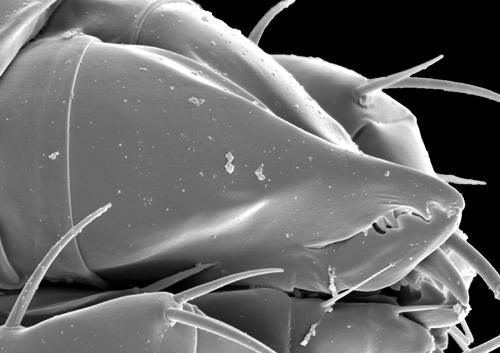 ; movable digit without excrescences. Palppalp:
(= pedipalp) the second pair of limbs in arachnids, used in feeding and originating on either side of the chelicerae. In mites, the palps may be vestigial, with only a few segments, or have a maximum of 5 freely articulating segments (rarely the femur is subdivided) and a distal or subdistal apotele. genu with 6 setaeseta:
(pl. setae, from L. = bristle) cuticular process composed of a hollow shaft (sometimes filled with a refractive material) produced from a membranous socket (the alveolus); the hair-like, spine-like, branched or variously expanded structures on the surfaces of the legs and body. Most setae function as mechanoreceptors, but others (e.g., solenidia) are chemoreceptors or have unknown or ambiguous functions., palp apotelepalptarsal apotele:
(= palp apotele, palptarsal claw) the most distal segment of the palp; absent in Acariformes, claw-like in Opilioacarida, and a subdistal, tined structure in the Mesostigmata. 3-tined; corniculicorniculus:
(pl. corniculi) (also, external malae) a usually horn-like process (sometimes toothed, bifurcate, trifurcate, spine-like, spatulate, or membranous) on the subcapitulum of parasitiform mites that usually supports the salivary styli. A toothed corniculus could be confused with a rutellum, a possibly homologous structure in Acariformes and Opilioacarida. Phytoseiid image is spatulate corniculus.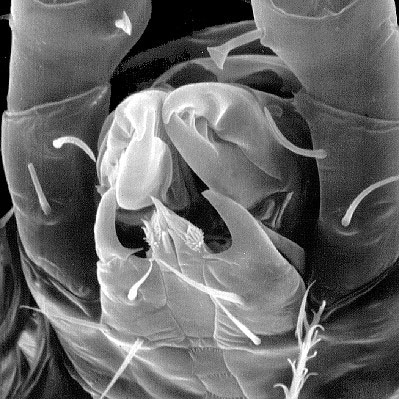 horn-like. Tritosternumtritosternum:
the sternum of the 3rd body segment (between legs I); produced as a biflagellate structure in Mesostigmata, although sometimes the flagellae (laciniae) are partially or completely fused. 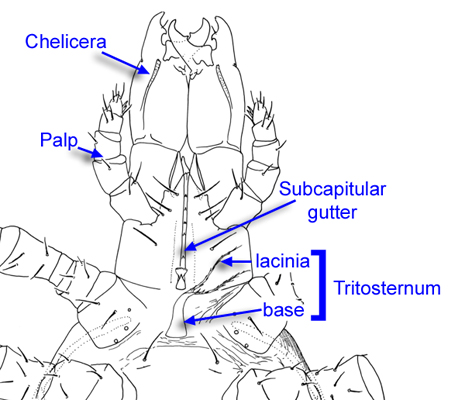 biflagellate with columnar basebase:
the usually columnar basal part of the tritosternum; sometimes expanded and rectangular or otherwise modified; the most basal part of any structure.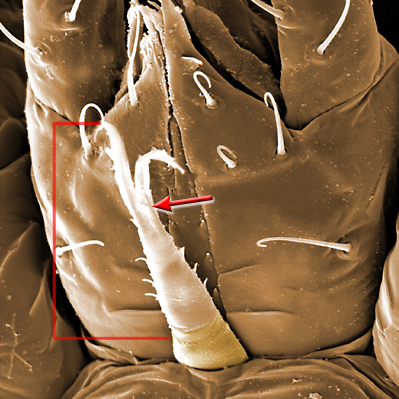 . Tectumgnathotectum:
(= epistome, tectum) an often membranous dorsal projection of the anterior margin of the basis capitulum in Mesostigmata; often diagnostic at family-, genus- or species-levels; also often difficult to see without high magnification and good optics.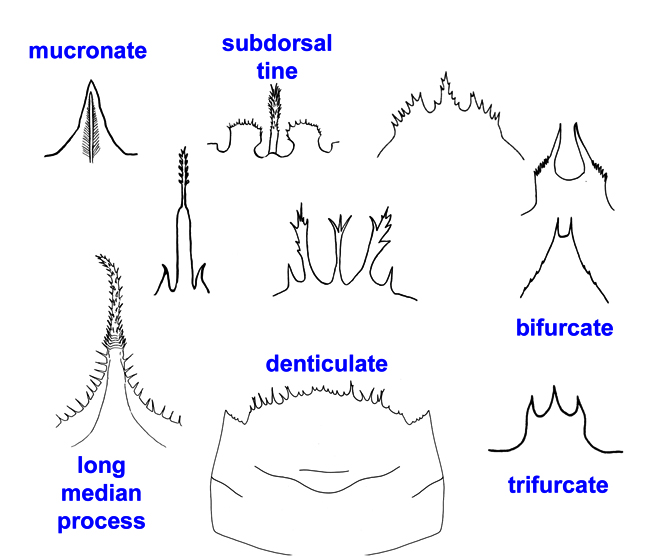 with long median prong, evenly trifurcatetrifurcate:
split into three distally.
, or denticulatedenticulate:
bearing small, sharp processes, e.g., the hypostome of ticks.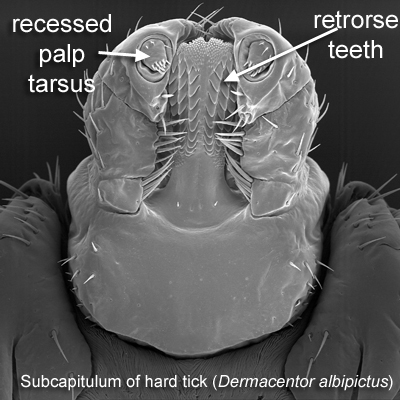 . Female sperm induction pores at basebase:
the usually columnar basal part of the tritosternum; sometimes expanded and rectangular or otherwise modified; the most basal part of any structure. of coxae IV. Males with genital opening at basebase:
the usually columnar basal part of the tritosternum; sometimes expanded and rectangular or otherwise modified; the most basal part of any structure. of tritosternumtritosternum:
the sternum of the 3rd body segment (between legs I); produced as a biflagellate structure in Mesostigmata, although sometimes the flagellae (laciniae) are partially or completely fused. in sternogenital shield; spermatodactylspermatodactyl:
(also spermadactyl) the 'sperm finger' on the chelicerae of male dermanyssine Mesostigmata used to transfer sperm to the secondary sperm system in the female; spermatodactyls take various forms, from simple finger-like processes to very long, contorted structures. 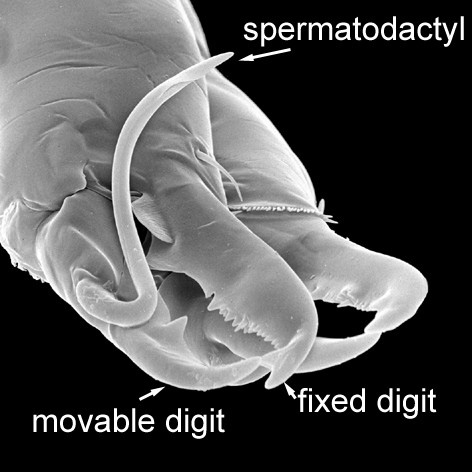 usually simplesimple:
unadorned; simple setae are needle-like and without hairs or pectins.
.
Halolaelapids are most likely to be confused with Ascidae, but have 3-tined palp apoteles. Also, ascids with 5 dorsal setae on tibia I usually have holodorsal or schizodorsal shields: halolaelapids typically have 2 subequal dorsal shields.
Author: David E. Walter
Content last updated Sept. 2006, unless indicated otherwise
Lucid key player updated Sept. 2025
idtools.org