t
Paraphytoseius Swirski & Schechter, 1961
Superorder Parasitiformes » Order Mesostigmata » Suborder Monogynaspida » Infraorder Gamasina » Hyporder Dermanyssiae » Superfamily Phytoseioidea » Family Phytoseiidae » Subfamily Amblyseiinae » Genus Paraphytoseius
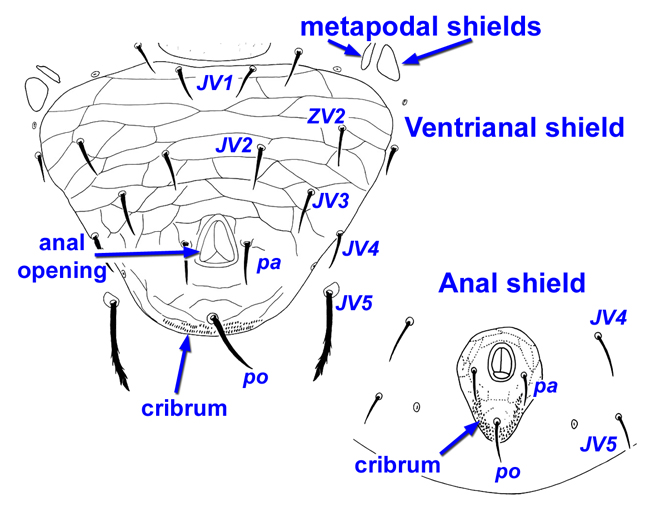 +/- vase-shaped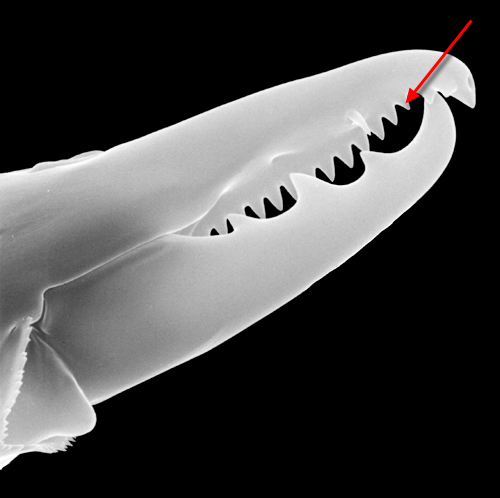
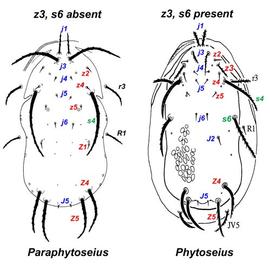
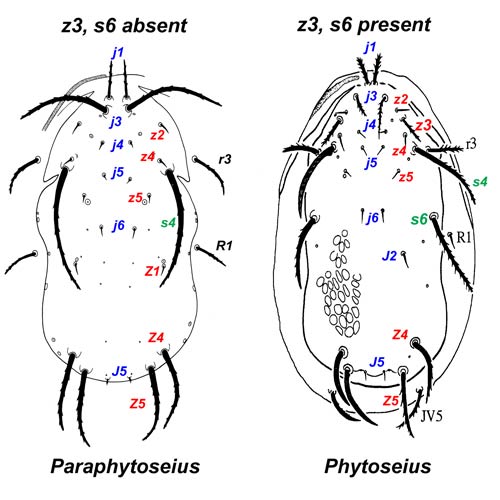
Species of Phytoseius and Platyseiella have setaeseta:
(pl. setae, from L. = bristle) cuticular process composed of a hollow shaft (sometimes filled with a refractive material) produced from a membranous socket (the alveolus); the hair-like, spine-like, branched or variously expanded structures on the surfaces of the legs and body. Most setae function as mechanoreceptors, but others (e.g., solenidia) are chemoreceptors or have unknown or ambiguous functions.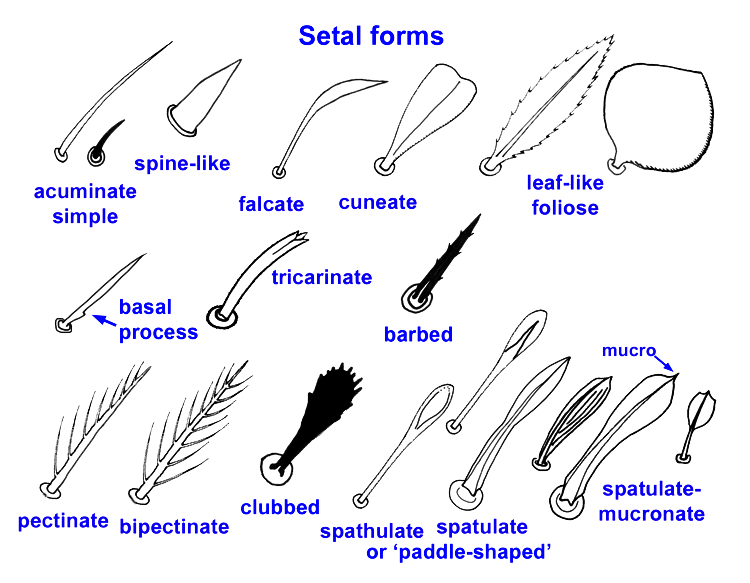 z3 (although they are often minute) and Phytoseius also has setaseta:
(pl. setae, from L. = bristle) cuticular process composed of a hollow shaft (sometimes filled with a refractive material) produced from a membranous socket (the alveolus); the hair-like, spine-like, branched or variously expanded structures on the surfaces of the legs and body. Most setae function as mechanoreceptors, but others (e.g., solenidia) are chemoreceptors or have unknown or ambiguous functions. s6; both lack setaseta:
(pl. setae, from L. = bristle) cuticular process composed of a hollow shaft (sometimes filled with a refractive material) produced from a membranous socket (the alveolus); the hair-like, spine-like, branched or variously expanded structures on the surfaces of the legs and body. Most setae function as mechanoreceptors, but others (e.g., solenidia) are chemoreceptors or have unknown or ambiguous functions. S4 and do not have serrateserrate:
with closely set teeth that resemble the cutting edge of a saw. chelicerae.
Setaseta:
(pl. setae, from L. = bristle) cuticular process composed of a hollow shaft (sometimes filled with a refractive material) produced from a membranous socket (the alveolus); the hair-like, spine-like, branched or variously expanded structures on the surfaces of the legs and body. Most setae function as mechanoreceptors, but others (e.g., solenidia) are chemoreceptors or have unknown or ambiguous functions. J2 present.............................. Neoparaphytoseius Chant & McMurtry
- Setaseta:
(pl. setae, from L. = bristle) cuticular process composed of a hollow shaft (sometimes filled with a refractive material) produced from a membranous socket (the alveolus); the hair-like, spine-like, branched or variously expanded structures on the surfaces of the legs and body. Most setae function as mechanoreceptors, but others (e.g., solenidia) are chemoreceptors or have unknown or ambiguous functions. J2 absent.............................. 2
Setaseta:
(pl. setae, from L. = bristle) cuticular process composed of a hollow shaft (sometimes filled with a refractive material) produced from a membranous socket (the alveolus); the hair-like, spine-like, branched or variously expanded structures on the surfaces of the legs and body. Most setae function as mechanoreceptors, but others (e.g., solenidia) are chemoreceptors or have unknown or ambiguous functions. S2 present.............................. Amblyseiulella Muma
- Setaseta:
(pl. setae, from L. = bristle) cuticular process composed of a hollow shaft (sometimes filled with a refractive material) produced from a membranous socket (the alveolus); the hair-like, spine-like, branched or variously expanded structures on the surfaces of the legs and body. Most setae function as mechanoreceptors, but others (e.g., solenidia) are chemoreceptors or have unknown or ambiguous functions. S2 absent.............................. Paraphytoseius
Species of Paraphytoseius, like those of Phytoseius, are largely restricted to vegetation with a moderate to dense layer of tomentum. Most species appear to have a tropical-subtropical distribution.
Author: David E. Walter
Content last updated Sept. 2006, unless indicated otherwise
Lucid key player updated Sept. 2025
idtools.org