Most of the genera of spider mites that cause economic damage, and all of those mites that spin the dense silken webbing that gives them their name, belong to the subfamily Tetranychinae (within the family Tetranychidae, superfamily Tetranychoidea). Within this subfamily, three tribes are usually recognized:
- Tenuipalpoidini—These mites have seta f1 in a marginal position or lost. This is the smallest tribe with only 5 described genera: Eonychus, Swarnanychus, Crotonella, Tenuipalpoides, and Tenuipalponychus. Currently, none of the species in these genera are considered of high quarantine importance.
- Eurytetranychini—About 11 genera of spider mites with poorly organised duplex setaeduplex setae:
a pair of setae or a seta and a solenidion sharing the same insertion.
and simplesimple:
unadorned; simple setae are needle-like and without hairs or pectins.
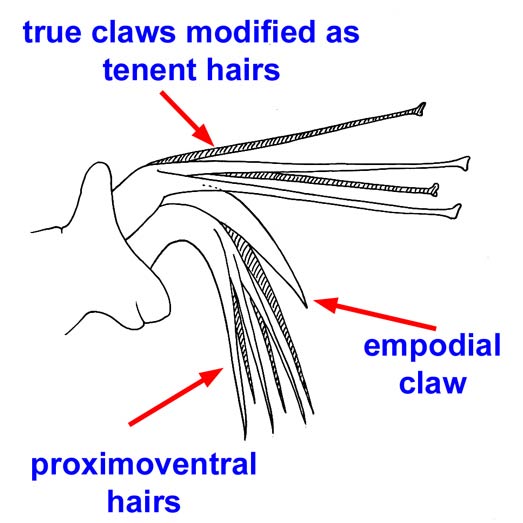
hook-like or absent empodiaempodium:
(pl. empodia) an unpaired structure arising between the tarsal claws, ranging from pad-like to claw-like and often bearing structures such as tenent hairs, dense setulae, or taking the form of a featherclaw (Eriophyoidea)..
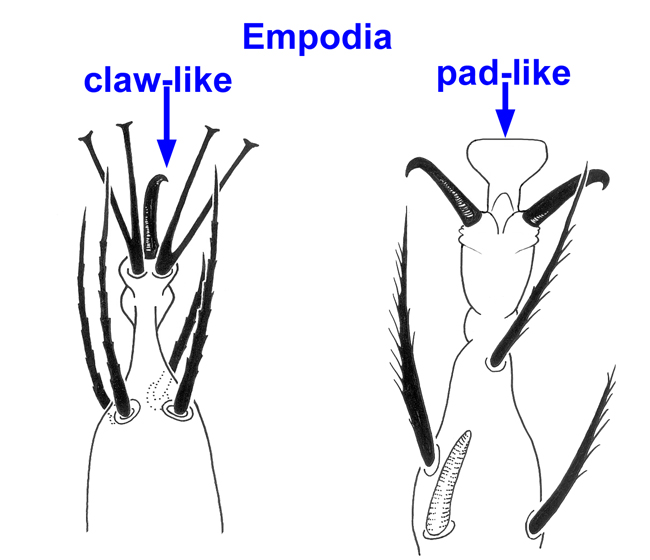 form this tribe. Several economically important pests occur in this tribe, especially in the genera Eutetranychus and Aponychus. Additionally, species in several of the other genera (Atetranychus, Synonychus, Eurytetranychus, Eurytetranychoides, Meyernychus, Paraponychus, Stylophoronychus (=Sinotetranychus), Anatetranychus, Duplanychus) may be pests.
- Tetranychini—This is the largest tribe and contains most of the spider mites of high economic importance. Currently, the genera Brevinychus, Sonotetranychus, Mixonychus, Evertella, Yunonychus, Yesonychus, Tribolonychus, Neotetranychus, Acanthonychus, Platytetranychus, Palmanychus, Atrichoproctus, Xinella, Hellenychus, and Diplonychus contain no exotic mites that are considered of high importance to US quarantine. However, the genera Oligonychus, Tetranychus, Amphitetranychus, Panonychus, Allonychus, Schizotetranychus, and Eotetranychus all contain one or more exotic species considered significant risks to US agriculture and forestry. Additionally, the cassava green mite Mononychellus tanajoa (Bondar) is a potential pest.
Anatomy
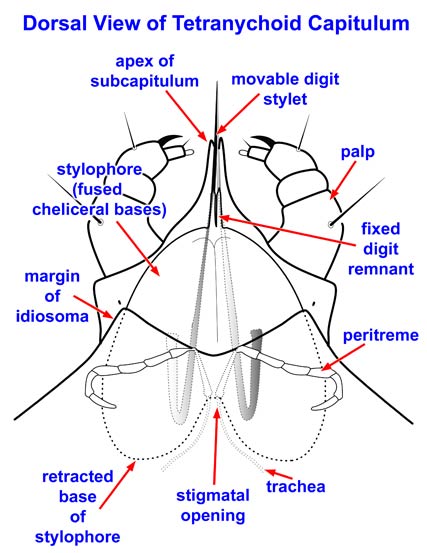
Dorsal view of tetranychoid capitulum
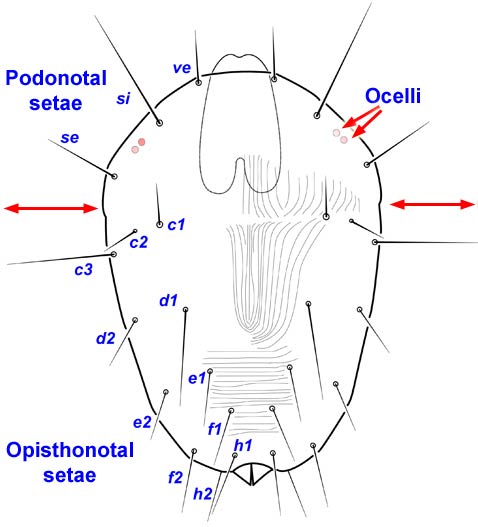
Podonotal and opisthonotal setae
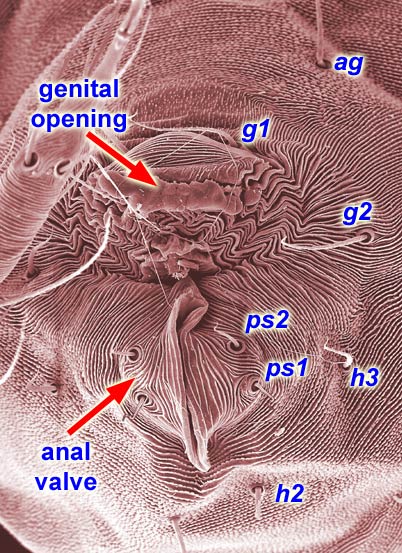
Genital opening and anal valve