Exotic mite families
t
Taxonomy
updated 2025
Name
Tarsonemidae Kramer, 1877
Classification
Superorder Acariformes » Order Trombidiformes » Suborder Prostigmata » Infraorder EleutherengonaEleutherengona:
(also Eleutherengonida, Eleutherengonina, Eleutherengonides) an infraorderwithin the Prostigmata consisting of the two hyporders Raphignathina and Heterostigmata. Eleutherengona includes many of the most important plant-parasitic mites, e.g., spider mites, broad mite, cyclamen mite.
» Hyporder Heterostigmata » Superfamily TarsonemoideaTarsonemoidea:
(also Tarsonemina) a superfamily within Prostigmata > infraorder Eleutherengona > hyporder Heterostigmata consisting of two families: Tarsonemidae and Podapolipidae.
 » Family Tarsonemidae
Common names
tarsonemids, tracheal mites, broad mite, tropical mite, cyclamen mite
Probability of encounter
very high
Quarantine importance
High. The Tarsonemidae contains about 40 genera and over 500 described species. Important plant parasites are found in the genera Polyphagotarsonemus (P. latus (Banks), the broad mite, tropical mite, tea mite), Hemitarsonemus (on ferns), Phytonemus (P. pallidus (Banks) the cyclamen mite), and Steneotarsonemus (e.g., S. ananas (Tryon) on pineapple, S. bancrofti (Michael) on sugarcane, S. spinki Smiley on rice). Damage by species of Steneotarsonemus is typically associated with fungal infections. In addition to the plant-parasitic tarsonemids, others are pests of bees, forest trees, and mushroom culture.
Diagnosis
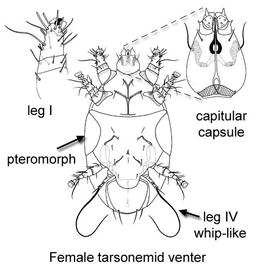
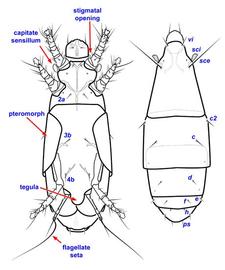
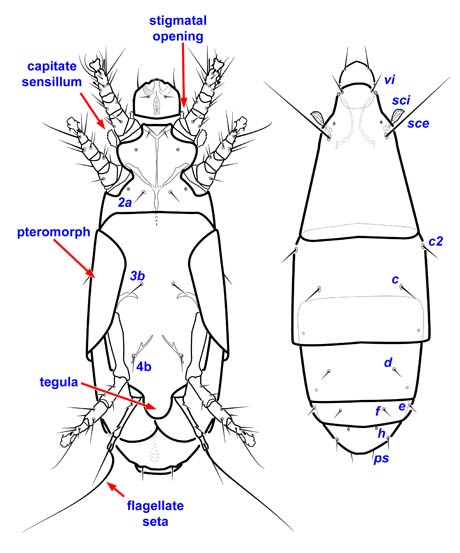
- Minute to small, oval, rounded, or dorso-ventrally flattened mites
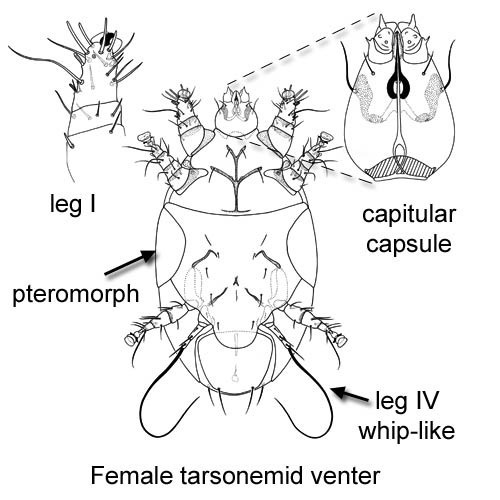
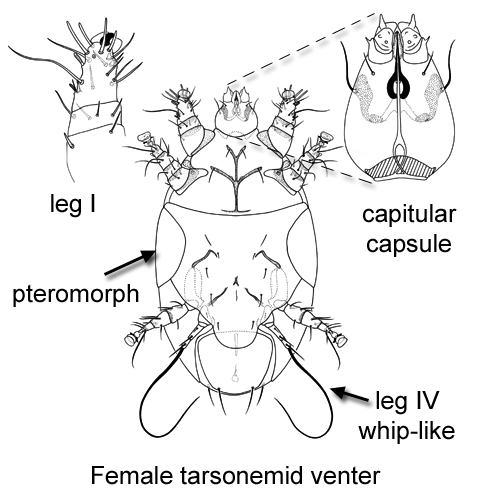
- Idiosoma covered by 1–3 lightly to moderately sclerotized shields
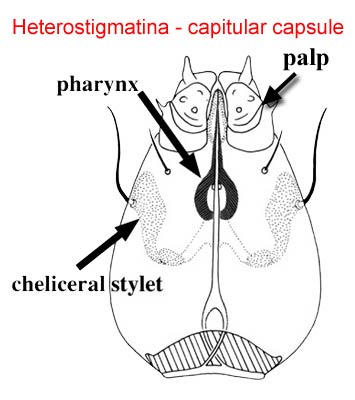
- Cheliceralcheliceral:
of or pertaining to the chelicera.
bases fused to each other and to the subcapitulumsubcapitulum:
(also infracapitulum) the venter of the capitulum; the ventral faces of the fused palpcoxae; apparently formed independently in the two superorders of mites.
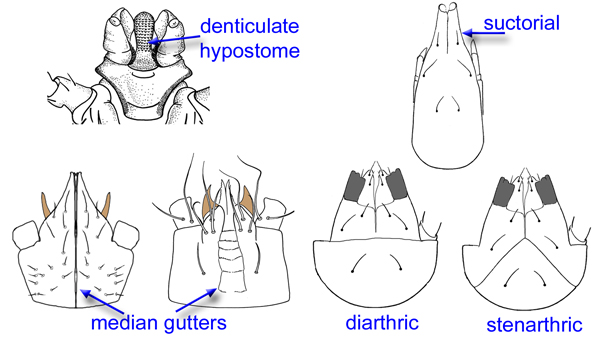 to form a stylophorestylophore:
chelicerae formed of fused cheliceral bases bearing stylet-like movable digits as in Raphignathae (Prostigmata), e.g., the plant parasitic spider mites and their relatives (Tetranychoidea). In predatory and parasitic Cheyletoidea and parasitic Myobiidae, the stylophore and subcapitulum are fused into a gnathosomal capsule.
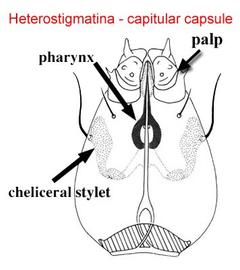
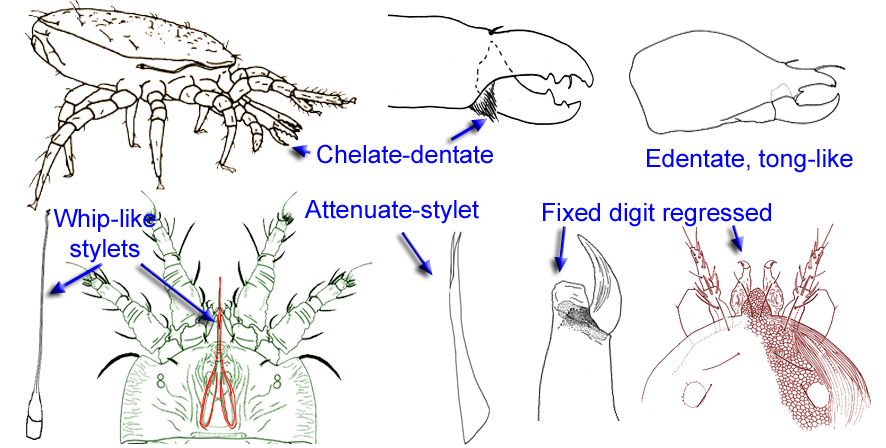
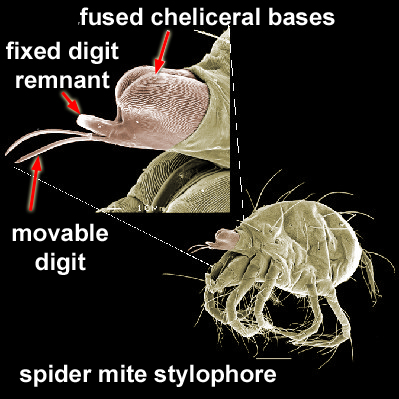 -capsule; movable digit of chelicera stylet-likestylet-like:
referring to chelicerae or movable digits that are slender, elongate, and usually acuminate. Stylet-like chelicerae may be composed of the entire chelicera (as in some parasitic Dermanyssoidea or the endeostigmatan genus Bimichaelia) or only the movable digits (as in many Prostigmata). If the cheliceral stylets are especially elongate, they may be called whip-like stylets (e.g., in spider mites and their relatives).
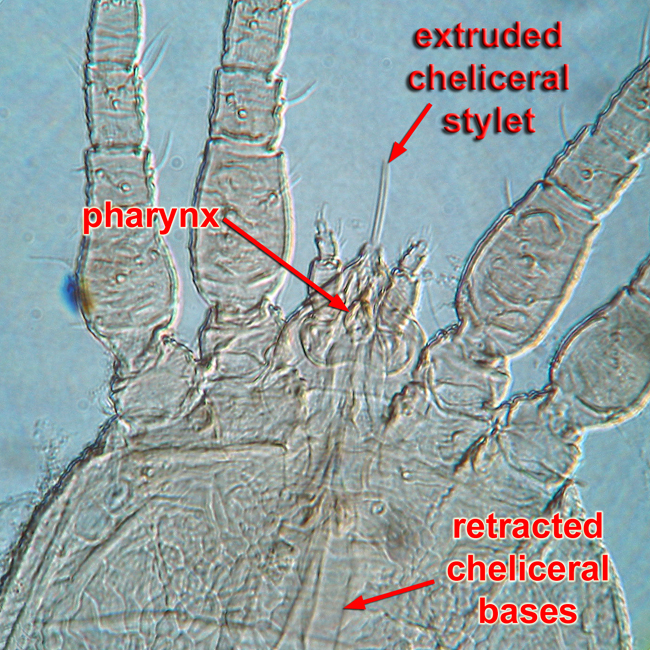 and partially retractable.
- Palps greatly reduced and difficult to distinguish
- Trichobothriatrichobothrium:
(pl. trichobothria) (= bothridial sensillum) an often elaborately modified seta set in a cup-like base; forms include filiform, ciliate, pectinate or variously thickened or clubbed (bat-like to globose or capitate).
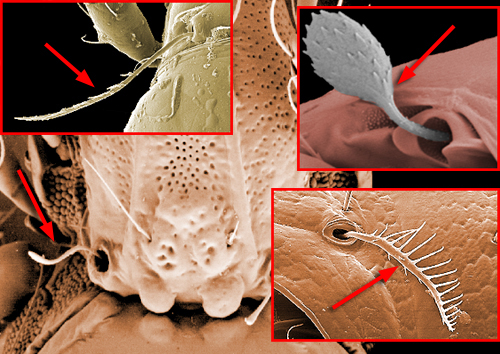 present in adult females and capitatecapitate:
with a terminal knob or head-like swelling; clavate; globose.
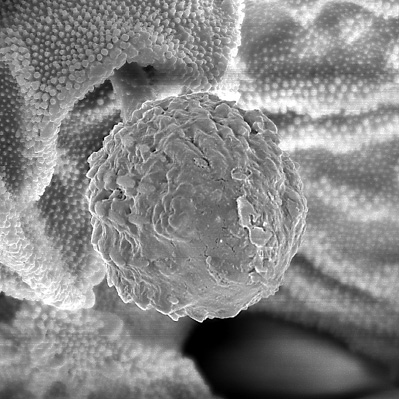 ; stigmata opening on the prodorsumprodorsum:
the dorsal surface of the propodosoma.
.
- Tarsustarsus:
(pl. tarsi) the subdistal leg segment between the tibia and the pretarsus (apotele).
of leg I with a single hooked clawclaw:
like - having a distal hook; resembling a claw.
- Legs IV of female 3-segmented, thinner than other legs, lacking tarsal claws, and ending in a whip-likewhip-like:
long, slender and sinuous as in the posterior setae of some phytoseiid mites (Mesostigmata) or the stylets of spider mites and their relatives (Prostigmata: Tetranychoidea).
 flagellate seta
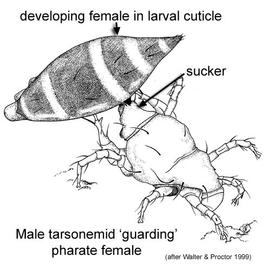
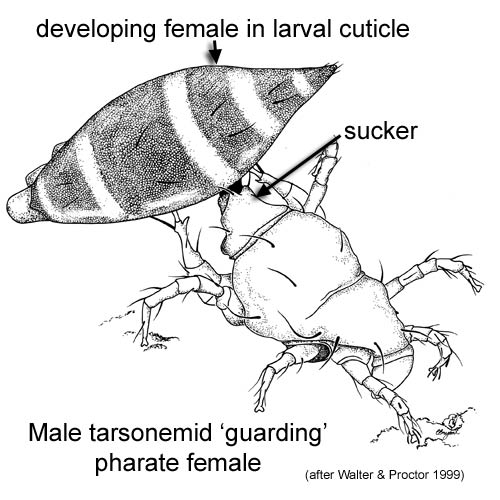
- Legs IV of male often thicker than other legs and bearing a single (often very robust) tarsal clawclaw:
like - having a distal hook; resembling a claw.
. Males with a slightly telescopic 'genital capsule' bearing copulatory suckers and the aedeagus.
Similar taxa
Immature tarsonemids may be confused with Eriophyoidea, but have 3 pairs of legs and a gnathosomal capsule. Members of other families in the Heterostigmata are likely to be confused with Tarsonemidae.
Ecology and distribution
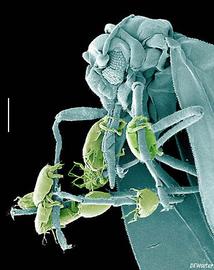
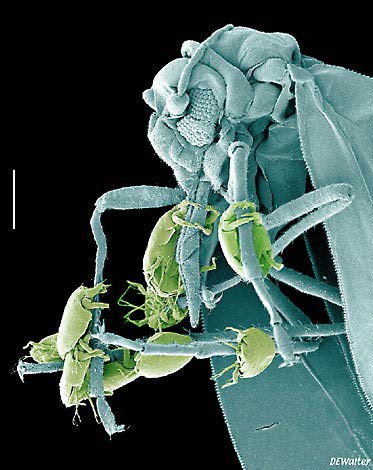
The Tarsonemidae have the most varied ecology of the Heterostigmatina, sometimes acting as parasites or predators of insects (the most famous of these being the honeybee parasite Acarapis woodi), sometimes as fungivores, and sometimes as plant parasites.
References
- Bridges and Moser 1983Bridges and Moser 1983:
Bridges JR, Moser JC. 1983. Role of two phoretic mites in transmission of bluestain fungus, Ceratocystis minor. Ecological Entomology 8: 9–12.
- Crop Protection Compendium 1999Crop Protection Compendium 1999:
Crop Protection Compendium. 1999. Global Module [CD-ROM]. CAB International.
- Jeppson et al. 1975Jeppson et al. 1975:
Jeppson LR, Keifer HH, and Baker EW. 1975. Mites injurious to economic plants. University of California Press, Berkeley.
- Lindquist 1986Lindquist 1986:
Lindquist EE. 1986. The world genera of Tarsonemidae (Acari: Heterostigmata): A morphological, phylogenetic, and systematic revision, with a reclassification of family-group taxa in the Heterostigmata. Memoirs of the Entomological Society of Canada 136: 1–517.
- Lindquist 1998Lindquist 1998:
Lindquist EE. 1998. Evolution of phytophagy in trombidiform mites. Experimental and Applied Acarology 22: 81-100.
- Ochoa et al. 1991Ochoa et al. 1991:
Ochoa R, Smiley RL, and Saunders JL. 1991. The family Tarsonemidae in Costa Rica (Acari: Heterostigmata). International Journal of Acarology 17: 41-86.
- Ochoa et al. 1994Ochoa et al. 1994:
Ochoa R, Aguilar H, and Vargas C. 1994. Phytophagous mites of Central America: An illustrated guide. CATIE, Turrialba, Costa Rica.
- Zhang 2003Zhang 2003:
Zhang Z-Q. 2003. Mites of greenhouses: Identification, biology and control. CABI Publishing, Wallingford. 244 pp.
Videos
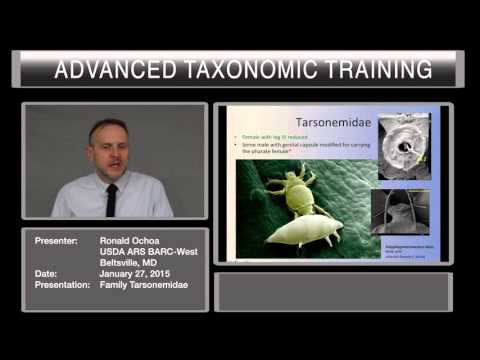
Introduction to Tarsonemidae
General overview of the mite family Tarsonemidae
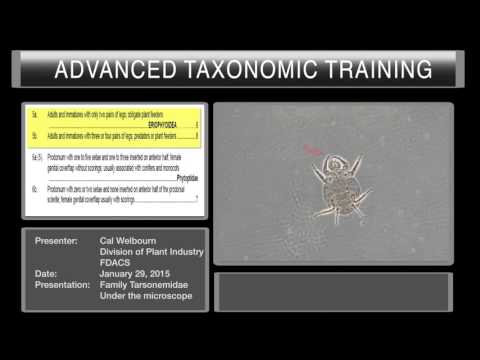
Mites under the microscope - Family Tarsonemidae
A close look at the mite family Tarsonemidae