Exotic mite families
t
Taxonomy
updated 2025
Classification
Superorder Acariformes » Order Trombidiformes » Suborder Prostigmata » Infraorder EleutherengonaEleutherengona:
(also Eleutherengonida, Eleutherengonina, Eleutherengonides) an infraorderwithin the Prostigmata consisting of the two hyporders Raphignathina and Heterostigmata. Eleutherengona includes many of the most important plant-parasitic mites, e.g., spider mites, broad mite, cyclamen mite.
» Hyporder Raphignathina » Superfamily Tetranychoidea » Family Tetranychidae » Subfamily Tetranychinae
Common names
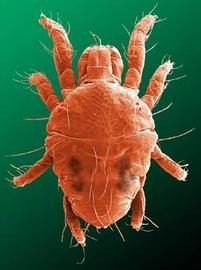
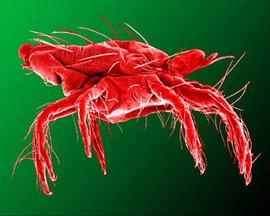
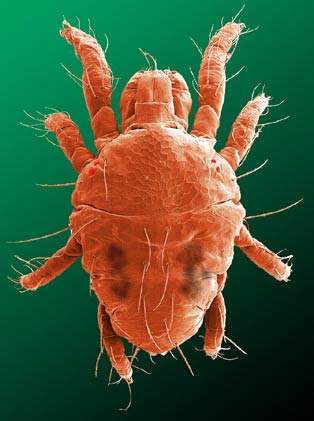
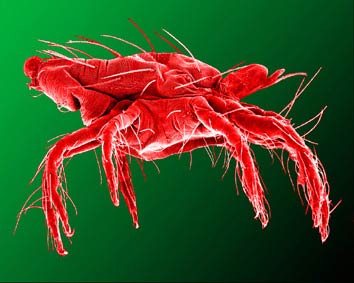
spider mites, red mites, two-spotted mites, six-spotted mites
Probability of encounter
very high
Quarantine importance
Very high. The Tetranychidae contains a number of devastating pests of plants and most of the species of high importance on the Priority Pest List.
Diagnosis
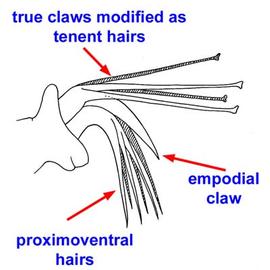
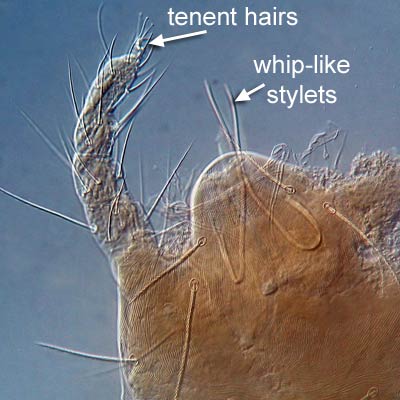
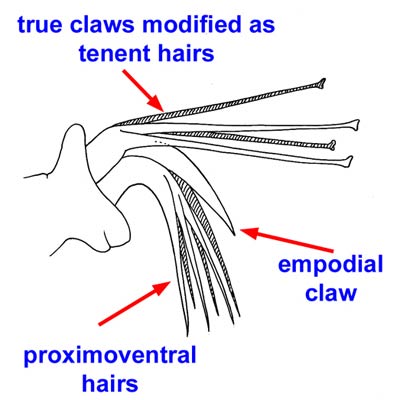
- Empodiumempodium:
(pl. empodia) an unpaired structure arising between the tarsal claws, ranging from pad-like to claw-like and often bearing structures such as tenent hairs, dense setulae, or taking the form of a featherclaw (Eriophyoidea)..
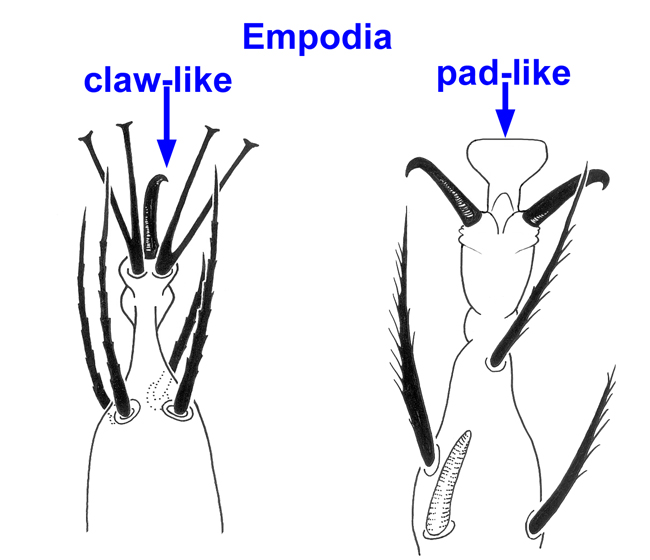 without tenent hairs, usually clawclaw:
like - having a distal hook; resembling a claw.
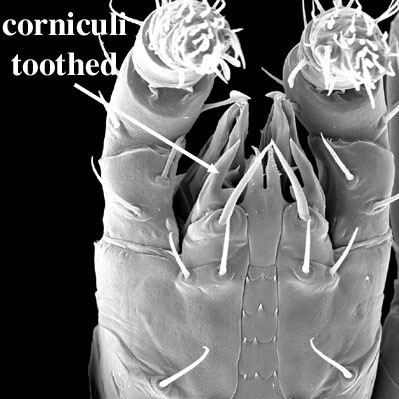
-like, bifurcatebifurcate:
split into two distally or with two projections.
 , with or without proximoventral hairsproximoventral hairs:
the hair-like processes on the empodia of some spider mites; apparently represents a finely divided empodium, and not tenent hairs.
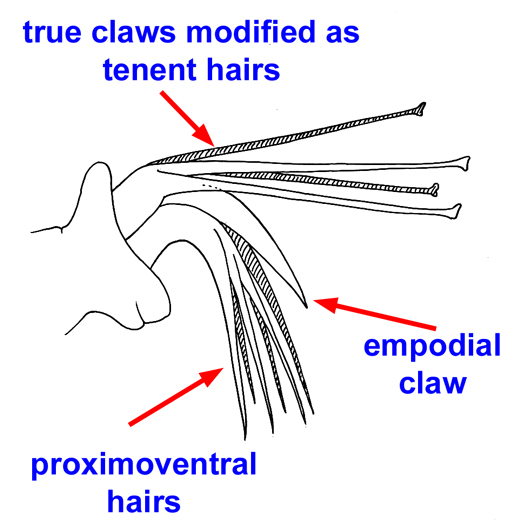 ; sometimes highly reduced and appearing absent.
- Prodorsumprodorsum:
the dorsal surface of the propodosoma.
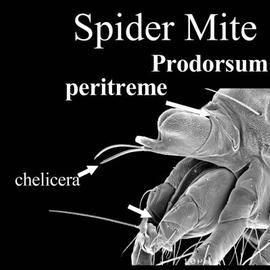
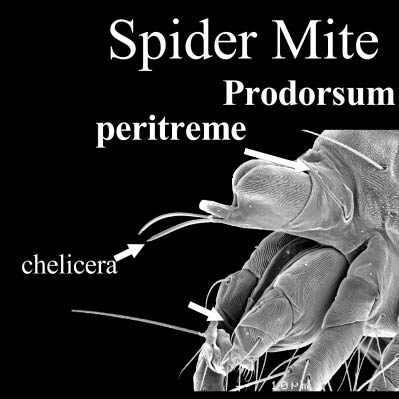
with 4 pairs of setae (vi, ve, sci, sce)
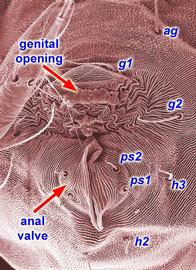
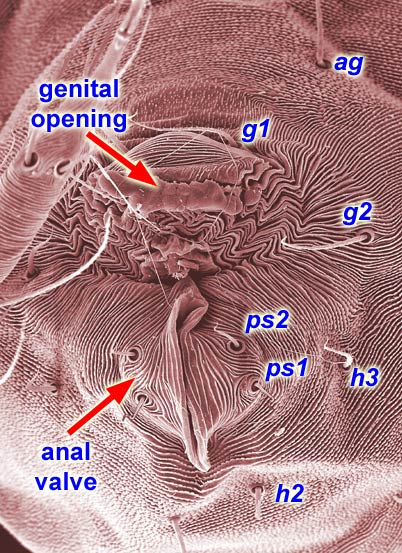
- Adult female with 1–2 pairs of anal setae (males with 4 pairs of ano-genital setae)
- Cheliceralcheliceral:
of or pertaining to the chelicera.
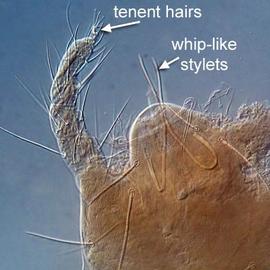
bases adnate, fused mesally into a stylophorestylophore:
chelicerae formed of fused cheliceral bases bearing stylet-like movable digits as in Raphignathae (Prostigmata), e.g., the plant parasitic spider mites and their relatives (Tetranychoidea). In predatory and parasitic Cheyletoidea and parasitic Myobiidae, the stylophore and subcapitulum are fused into a gnathosomal capsule.
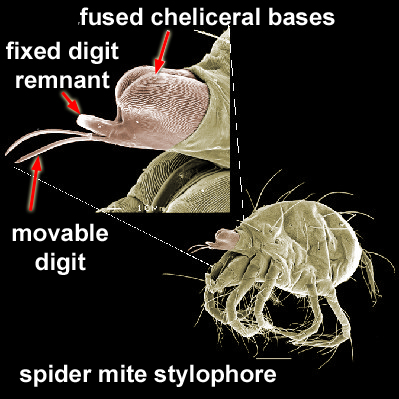 (sometimes withdrawn into the bodybody:
the idiosoma of mites.
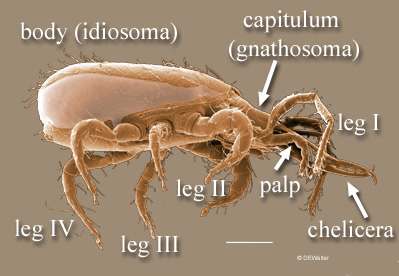 ); chelicerae with fixed digitfixed digit:
the distal extension of the middle article of the chelicera; usually bearing teeth and a distal hook and opposed to the movable digit in chelate-dentate forms, but often regressed; in Mesostigmata the fixed digit may bear the pilus dentilis.
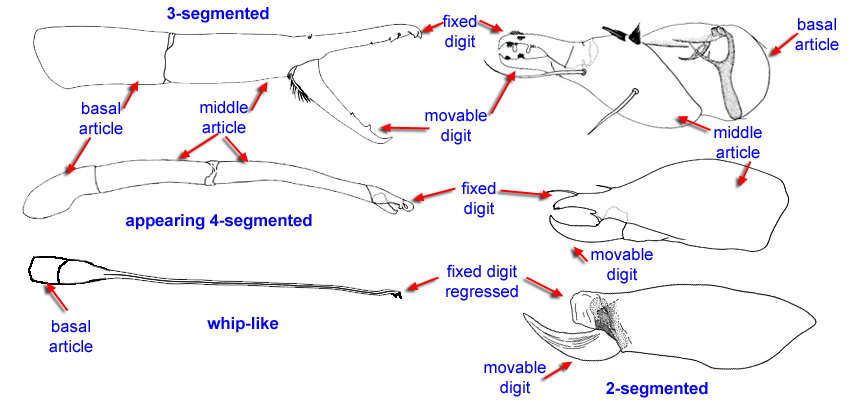 reduced and movable digit whiplike.
- Peritremes typically chamberedchambered:
a structure with discrete compartments, e.g., the peritremes of some ologamasids (Mesostigmata) and prostigmatans.
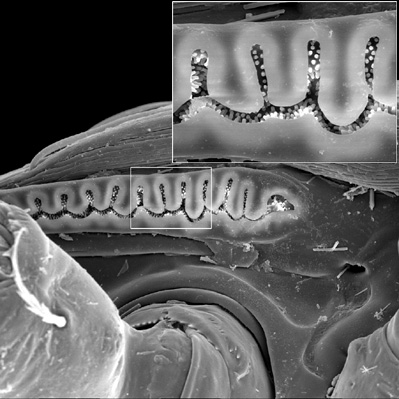 structures on the dorso-lateral surface of the prodorsumprodorsum:
the dorsal surface of the propodosoma.
; naso absent; prodorsal trichobothriatrichobothrium:
(pl. trichobothria) (= bothridial sensillum) an often elaborately modified seta set in a cup-like base; forms include filiform, ciliate, pectinate or variously thickened or clubbed (bat-like to globose or capitate).
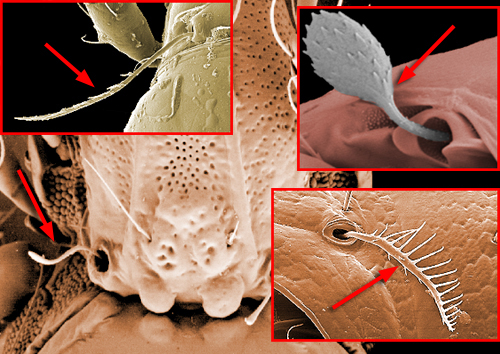 absent; 2 pairs of eye lenses usually present. Palps 5 segmented; with thumbclaw process (claw-like seta on the palp tibiatibia:
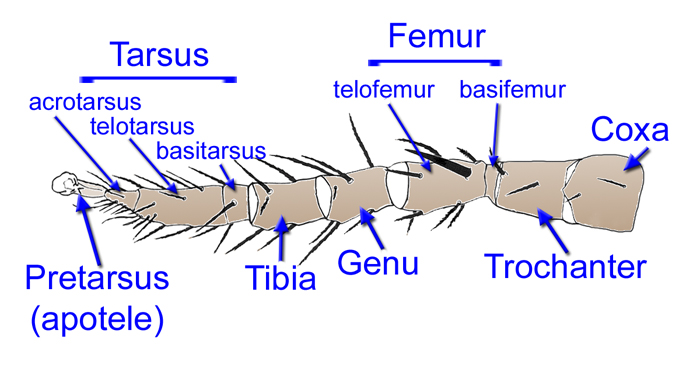
(pl. tibiae) the leg segment between the genu and the tarsus.
 and a thumb- or button-like subterminal palp tarsustarsus:
(pl. tarsi) the subdistal leg segment between the tibia and the pretarsus (apotele).
). Leg tarsitarsus:
(pl. tarsi) the subdistal leg segment between the tibia and the pretarsus (apotele).
usually with tenent hairs on claws or empodiumempodium:
(pl. empodia) an unpaired structure arising between the tarsal claws, ranging from pad-like to claw-like and often bearing structures such as tenent hairs, dense setulae, or taking the form of a featherclaw (Eriophyoidea)..
. Genital papillaegenital papillae:
1-3 pairs of extrusible finger-like to button-like projections, usually retracted into in the genital vestibule of acariform mites; sometimes formed as sessile disks around the genital opening; thought to be osmoregulatory structures; modified or multiplied and dispersed over the body in many freshwater mites. Genital papillae are absent in the larva, but may be added ontogenetically: protonymphs have one pair, deutonymphs two pairs, and tritonymphs (and adults) three pairs. The tritonymphal pair of papillae is often lost. The serially homologous Claparède's organ is usually present in the larvae (and prelarvae) of mites exhibiting genital papillae in nymphs and adults (Oudeman's Rule).
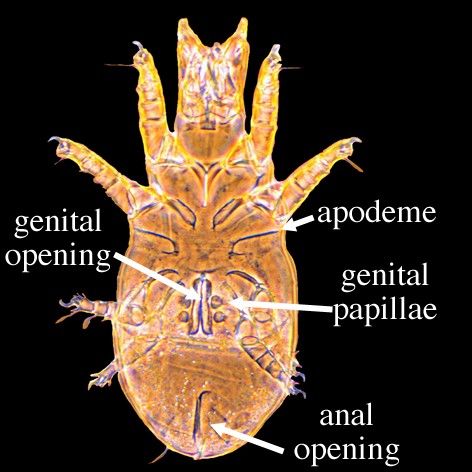 absent; males with an intromittent aedeagus.
Open Tetranychinae key
Similar taxa
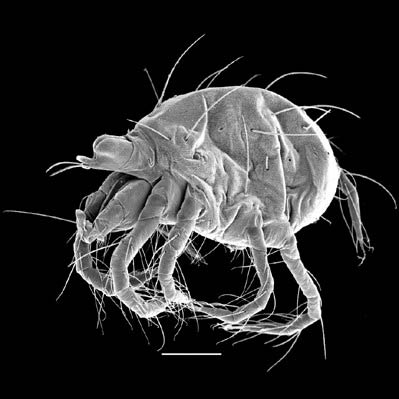
The Stigmaeidae are sometimes confused with spider mites, but these predatory mites lack the whip-like movable digits. Cryptognathidae are capable of retracting their gnathosoma, but their cheliceral bases are free and the movable digit is hook-like. Bryobiinae have empodia with tenent hairs.
Ecology and distribution
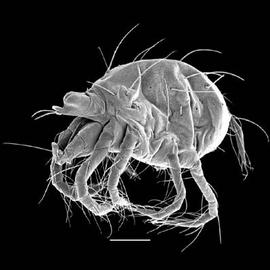
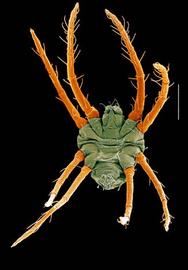
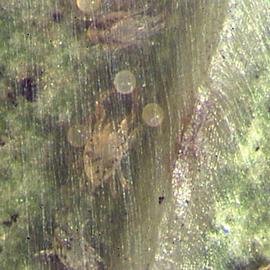
The Tetranychinae includes the infamous two-spotted and other major economic spider mitespider mite:
a member of the family Tetranychidae (Prostigmata).
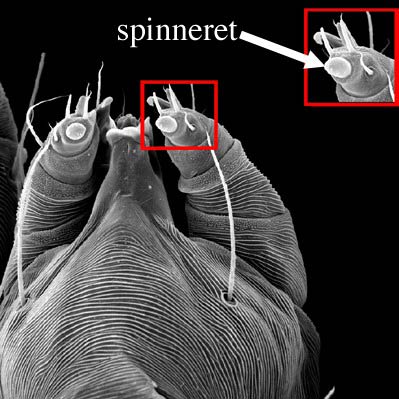
pests. Many are capable of spinning dense webs; others use silksilk:
fine threads spun by acariform mites to form a molting chamber (cocoon), protect or attach eggs, or a loosely defined to finely woven web.
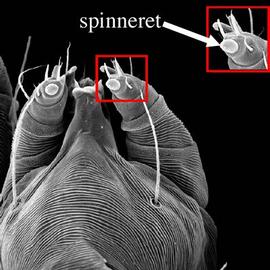
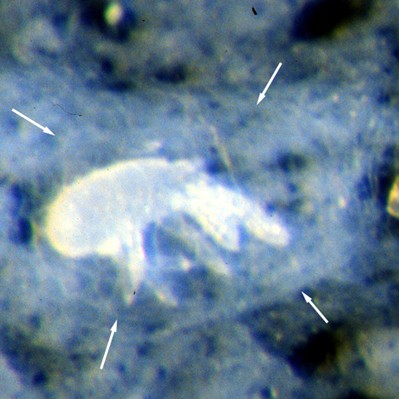 only to attach their eggs to leaves and stems.
References
- Baker and Pritchard 1960Baker and Pritchard 1960:
Baker EW, Pritchard AE. 1960. The tetranychoid mites of Africa. Hilgardia 29 (11): 455–574.
- Baker and Tuttle 1994Baker and Tuttle 1994:
Baker EW, Tuttle DM. 1994. A guide to the spider mites (Tetranychidae) of the United States. Indira Publishing House, West Bloomfield, Michigan. 347 pp.
- Beard et al. 2003Beard et al. 2003:
Beard JJ, Walter DE, and Allsopp P. 2003. Spider mites of sugarcane in Australia: A review of grass-feeding Oligonychus Berlese (Acari: Prostigmata: Tetranychidae) with the description of four new species. Australian Journal of Entomology 42: 51-78.
- Bolland et al. 1998Bolland et al. 1998:
Bolland HR, Gutierrez J, Flechtmann CHW. 1998. World catalogue of the spider mite family (Acari: Tetranychidae). Brill, Leiden.
- Evans et al. 1993Evans et al. 1993:
Evans GA, Cromroy HL, and Ochoa R. 1993. The Tenuipalpidae of Honduras (Tenuipalpidae: Acari). Florida Entomologist 76: 126-155.
- Helle and Sabelis 1985Helle and Sabelis 1985:
Helle W and Sabelis MW, eds. 1985. Spider mites: Their biology, natural enemies, and control. World Crop Pests, Vol. 1A. Elsevier, New York.
- Hislop and Jeppson 1976Hislop and Jeppson 1976:
Hislop RG and Jeppson LR. 1976. Morphology of the mouthparts of several species of phytophagous mites. Annals of the Entomological Society of America 69: 1125-1135.
- Jeppson et al. 1975Jeppson et al. 1975:
Jeppson LR, Keifer HH, and Baker EW. 1975. Mites injurious to economic plants. University of California Press, Berkeley.
- Krantz 1978Krantz 1978:
Krantz GW. 1978. A manual of acarology [2nd ed.]. Oregon State University Book Stores, Corvallis.
- Meyer 1979Meyer 1979:
Meyer MKPS. 1979. The Tenuipalpidae (Acari) of Africa with keys to the world fauna. Republic of South Africa, Department of Agricultural Technical Services, Entomology Memoir No. 50: 135 pp.
- Meyer and Ueckermann 1997Meyer and Ueckermann 1997:
Meyer MKPS and Ueckermann EA. 1997. A review of some species of the families Allochaetophoridae, Linotetranidae and Tuckerellidae (Acari: Tetranychoidea). International Journal of Acarology 23: 67-92.
- Migeon and Flechtmann 2004Migeon and Flechtmann 2004:
Migeon A and Flechtmann CHW. 2004. First additions and corrections to the World Catalogue of the Spider Mite Family (Acari: Tetranychidae). International Journal of Acarology 30 (2): 143-152.
- Ochoa et al. 1994Ochoa et al. 1994:
Ochoa R, Aguilar H, and Vargas C. 1994. Phytophagous mites of Central America: An illustrated guide. CATIE, Turrialba, Costa Rica.
- Tseng 1990Tseng 1990:
Tseng Y-H. 1990. A monograph of the mite family Tetranychidae (Acarina: Trombidiformes) from Taiwan. Taiwan Museum Special Publication Series 9. 224 pp.
- Zhang 2003Zhang 2003:
Zhang Z-Q. 2003. Mites of greenhouses: Identification, biology and control. CABI Publishing, Wallingford. 244 pp.