Exotic mite families
t
Taxonomy
updated 2025
Name
Allochaetophoridae Reck, 1959
Classification
Superorder Acariformes » Order Trombidiformes » Suborder Prostigmata » Infraorder EleutherengonaEleutherengona:
(also Eleutherengonida, Eleutherengonina, Eleutherengonides) an infraorderwithin the Prostigmata consisting of the two hyporders Raphignathina and Heterostigmata. Eleutherengona includes many of the most important plant-parasitic mites, e.g., spider mites, broad mite, cyclamen mite.
» Hyporder Raphignathina » Superfamily Tetranychoidea » Family Allochaetophoridae
Probability of encounter
low
Quarantine importance
Low. The Allochaetophoridae consists of a single genus, Allochaetophora, with two described species, one from California (from the deutonymphdeutonymph:
(also deuteronymph) the second nymphal stage or instar.
) and one from Africa (all stages). Both are associated with grasses.
Diagnosis
- Empodiumempodium:
(pl. empodia) an unpaired structure arising between the tarsal claws, ranging from pad-like to claw-like and often bearing structures such as tenent hairs, dense setulae, or taking the form of a featherclaw (Eriophyoidea)..
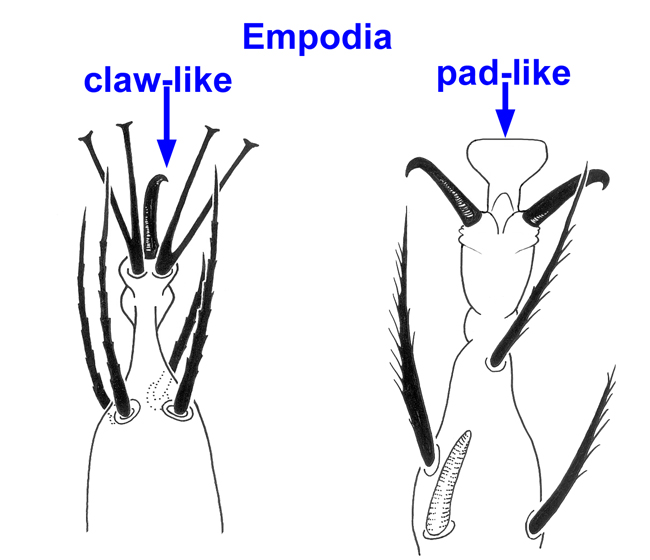 and claws with tenent hairs
- Prodorsumprodorsum:
the dorsal surface of the propodosoma.
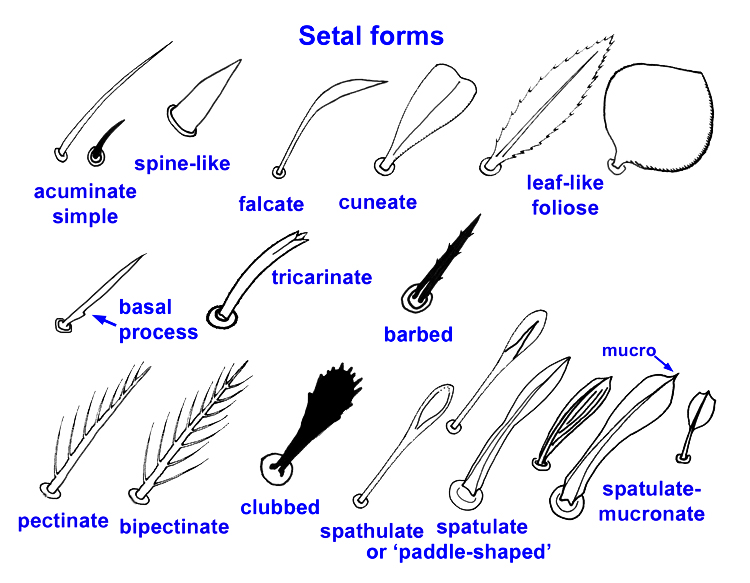
with 3 pairs of setaeseta:
(pl. setae, from L. = bristle) cuticular process composed of a hollow shaft (sometimes filled with a refractive material) produced from a membranous socket (the alveolus); the hair-like, spine-like, branched or variously expanded structures on the surfaces of the legs and body. Most setae function as mechanoreceptors, but others (e.g., solenidia) are chemoreceptors or have unknown or ambiguous functions.
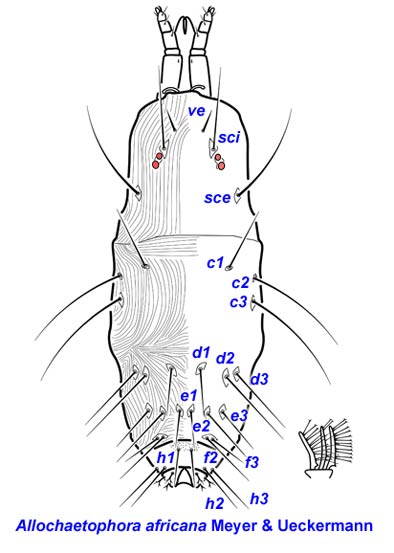
 (ve, sci, sce)
- Adult female with 3 pairs of distally divided anal setaeseta:
(pl. setae, from L. = bristle) cuticular process composed of a hollow shaft (sometimes filled with a refractive material) produced from a membranous socket (the alveolus); the hair-like, spine-like, branched or variously expanded structures on the surfaces of the legs and body. Most setae function as mechanoreceptors, but others (e.g., solenidia) are chemoreceptors or have unknown or ambiguous functions.
(males with 3 pairs of simplesimple:
unadorned; simple setae are needle-like and without hairs or pectins.
ano-genital setaeseta:
(pl. setae, from L. = bristle) cuticular process composed of a hollow shaft (sometimes filled with a refractive material) produced from a membranous socket (the alveolus); the hair-like, spine-like, branched or variously expanded structures on the surfaces of the legs and body. Most setae function as mechanoreceptors, but others (e.g., solenidia) are chemoreceptors or have unknown or ambiguous functions.
)
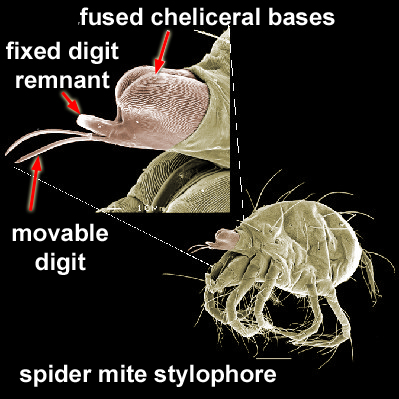
- Cheliceralcheliceral:
of or pertaining to the chelicera.
bases adnate, fused mesally into a stylophorestylophore:
chelicerae formed of fused cheliceral bases bearing stylet-like movable digits as in Raphignathae (Prostigmata), e.g., the plant parasitic spider mites and their relatives (Tetranychoidea). In predatory and parasitic Cheyletoidea and parasitic Myobiidae, the stylophore and subcapitulum are fused into a gnathosomal capsule.
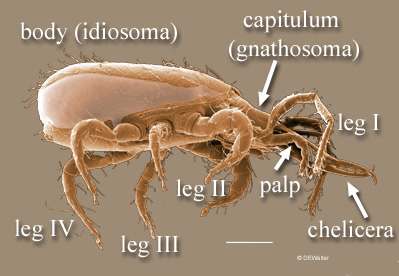
 (sometimes withdrawn into the bodybody:
the idiosoma of mites.
 ); chelicerae with fixed digitfixed digit:
the distal extension of the middle article of the chelicera; usually bearing teeth and a distal hook and opposed to the movable digit in chelate-dentate forms, but often regressed; in Mesostigmata the fixed digit may bear the pilus dentilis.
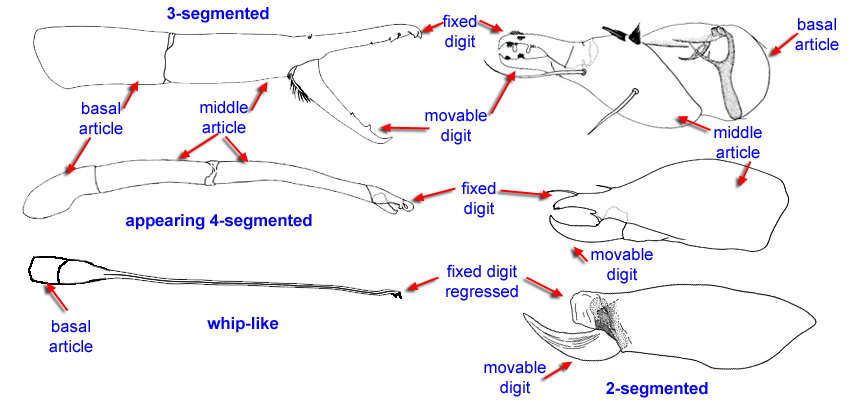 reduced and movable digit whiplike.
- Peritremes emergentemergent:
rising above, projecting, as in the peritremes of some Prostigmata which range from small bumps to elongate processes.
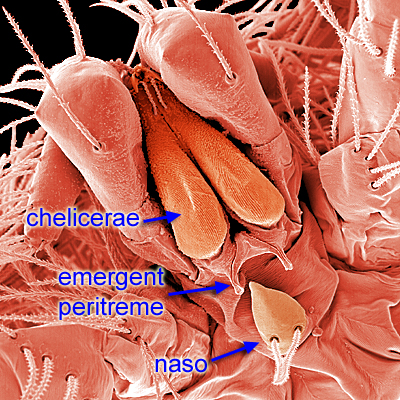 on anterioranterior:
the front part of the body or towards that region in comparison, e.g., 'anterior to'.
edge of prodorsumprodorsum:
the dorsal surface of the propodosoma.
; naso absent; prodorsal trichobothriatrichobothrium:
(pl. trichobothria) (= bothridial sensillum) an often elaborately modified seta set in a cup-like base; forms include filiform, ciliate, pectinate or variously thickened or clubbed (bat-like to globose or capitate).
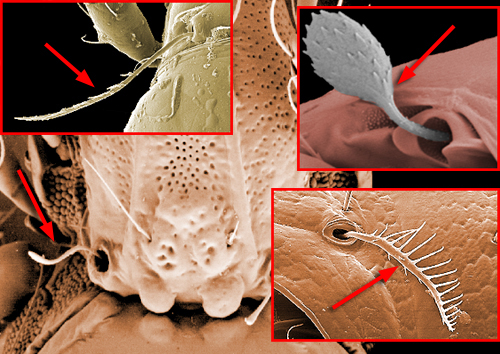 absent; 2 pairs of eye lenses present. Palps 5 segmented; with thumbclaw process (claw-like setaseta:
(pl. setae, from L. = bristle) cuticular process composed of a hollow shaft (sometimes filled with a refractive material) produced from a membranous socket (the alveolus); the hair-like, spine-like, branched or variously expanded structures on the surfaces of the legs and body. Most setae function as mechanoreceptors, but others (e.g., solenidia) are chemoreceptors or have unknown or ambiguous functions.
on the palp tibiatibia:
(pl. tibiae) the leg segment between the genu and the tarsus.
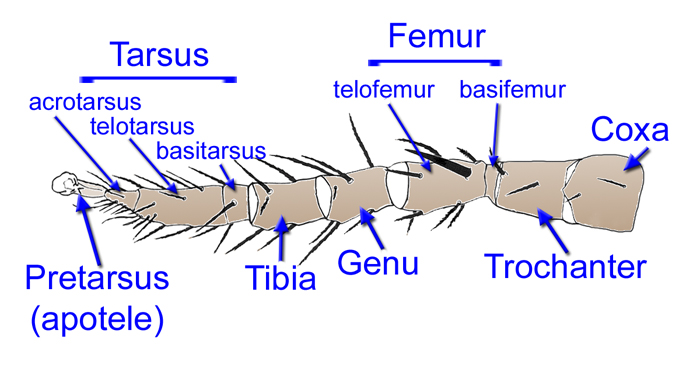 and a thumb- or button-like subterminal palp tarsustarsus:
(pl. tarsi) the subdistal leg segment between the tibia and the pretarsus (apotele).
). Leg tarsitarsus:
(pl. tarsi) the subdistal leg segment between the tibia and the pretarsus (apotele).
with tenent hairs on claws and empodiumempodium:
(pl. empodia) an unpaired structure arising between the tarsal claws, ranging from pad-like to claw-like and often bearing structures such as tenent hairs, dense setulae, or taking the form of a featherclaw (Eriophyoidea)..
. Genital papillae absent; males with an intromittent aedeagusaedeagus:
a male intromittent organ, especially when sclerotized (e.g., in Tetranycoidea, Raphignathoidea); a penis is a flexible, membranous intromittent organ, although 'penis' is often used for aedeagi (e.g., in Astigmata).
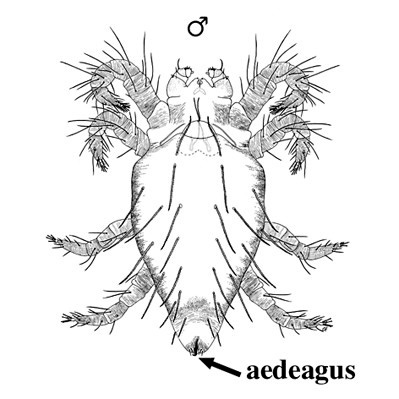 .
.
Similar taxa
Allochaetophorids resemble other elongate tetranychoids such as Linotetranidae (which are blind) and some Tenuipalpidae (which lack a thumbclaw process).
Ecology and distribution
The Allochaetophoridae consists of a single genus, Allochaetophora, with two described species, one from California (from the deutonymphdeutonymph:
(also deuteronymph) the second nymphal stage or instar.
) and one from Africa (all stages). Both are associated with grasses.
References
- Meyer and Ueckermann 1997Meyer and Ueckermann 1997:
Meyer MKPS and Ueckermann EA. 1997. A review of some species of the families Allochaetophoridae, Linotetranidae and Tuckerellidae (Acari: Tetranychoidea). International Journal of Acarology 23: 67-92.