t
Uropygi (Thelyphonida, Uropygida)
whip scorpions, vinegaroons
low
No known importance, although some species are used in the pet trade and may have small, threatened populations.
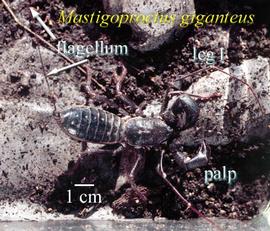
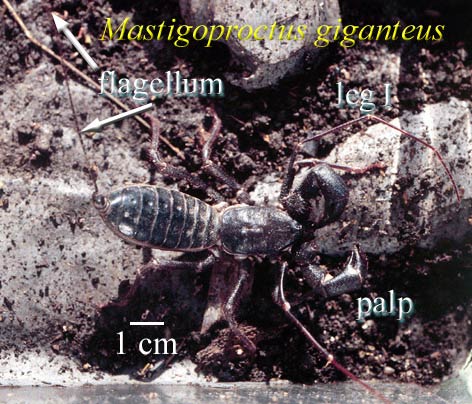
None other than general arachnid features. Whip scorpions are much larger than mites, have clearly segmented opisthosomas, and a long posteriorposterior:
the back part of the body or towards that region in comparison, e.g., 'posterior to'.
flagellum.
Normal adult length: >2 cm
Bodybody:
the idiosoma of mites.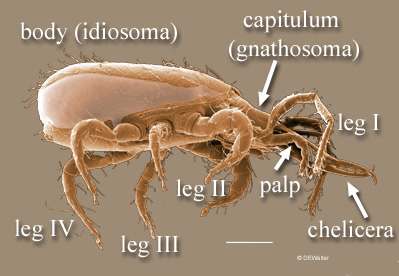 tagmata: prosomaprosoma:
(= cephalothorax) the anterior body region in arachnids; usually not distinct in mites.
, opisthosomaopisthosoma:
(= abdomen) the posterior body division in arachnids; usually not distinct in mites because of the fusion of the opisthosoma with part of the prosoma to form the idiosoma.
, telson (flagellum)
Eyes: 2–4 pairs of lateral ocelliocellus:
(pl. ocelli) a simple eye. Mites with eyes usually have one or two pairs of lateral ocelli, but some Opilioacarida have three pairs. Additionally, some acariform mites have one or two median ocelli on the underside of the naso.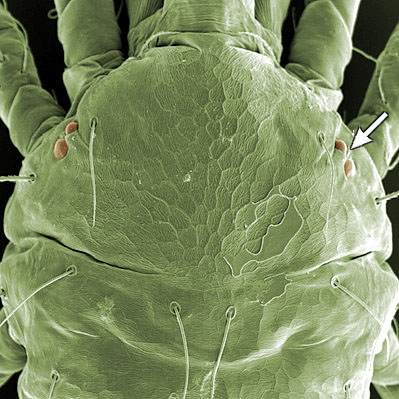
Antennae: absent
Mouthparts: 2-segmented fang-like chelicerae; robust, raptorialraptorial:
(Latin raptor = robber) modified for capturing prey; predatory. The pedipalps (e.g., many Cunaxidae) or legs I may be raptorial in mites.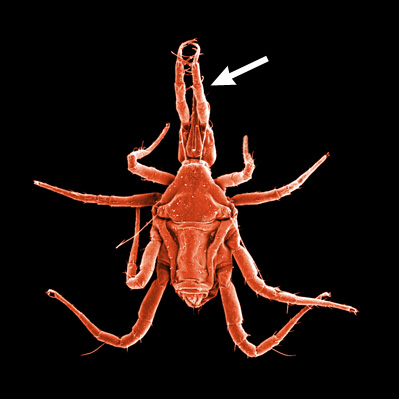 5-segmented palps with distaldistal:
towards the free end of an appendage.
claws
Legs: 4 pairs; legs I antenniform
Distinguishing features: segmented opisthosomaopisthosoma:
(= abdomen) the posterior body division in arachnids; usually not distinct in mites because of the fusion of the opisthosoma with part of the prosoma to form the idiosoma.
, stabbing chelicerae, long flagellum ('tail'), acetic acid defensive spray (vinegaroons)
1 family, 16 genera, >103 species
Author: David E. Walter
Content last updated Sept. 2006, unless indicated otherwise
Lucid key player updated Sept. 2025
idtools.org