t
water bears, tardigrades
High in appropriate products (e.g., mosses, wet soil) if appropriate collection techniques are used. Since tardigrades require a film of water for activity and they enter inactive stages when dry, only wet collection techniques (funnels, flotation) are likely to recover them.
No known importance. The species that have been studied graze on algae, fungi, lichens and similar microbial material or are predatory on small invertebrates, including other tardigrades.
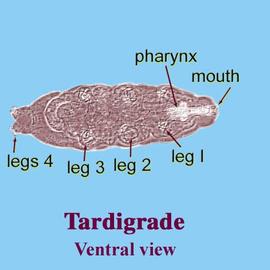
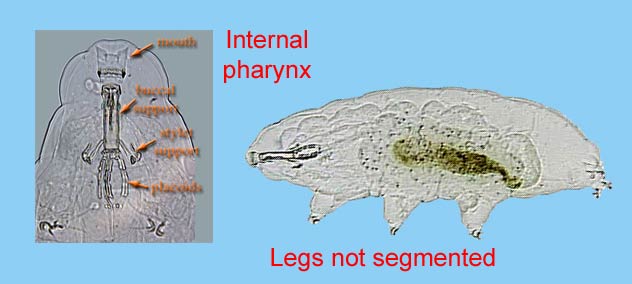
Very small size, 4 pairs of 'legs' (lobopods), and rarely with long seta-like structures, but without jointed limbs, chelicerae, or gnathosomagnathosoma:
(= capitulum) the anteriormost part of a mite or ricinuleid, composed of the cheliceral and pedipalpal segments and separated from the body (idiosoma) by a ring of soft cuticle.
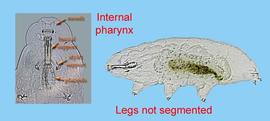
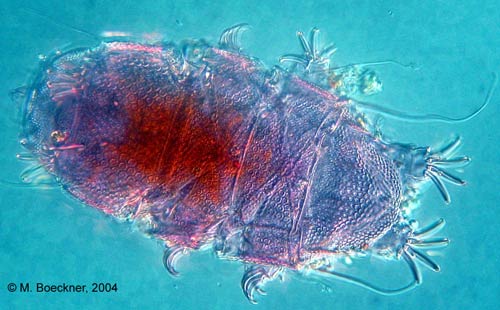
. Tardigrades could easily be confused with mites, especially the armored species, but all mites will have typical segmented arthropod legs.
Normal adult length: 0.25–0.5 mm (range 0.05–1.7 mm)
Bodybody:
the idiosoma of mites.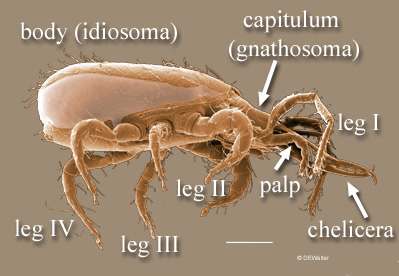 tagmata: trunk; true head absent, although cephalic segment present
Eyes: a pair of lateral eyespots or blind
Antennae: absent
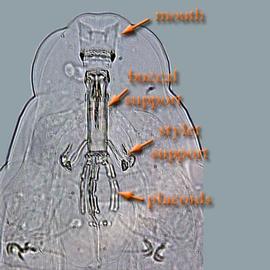
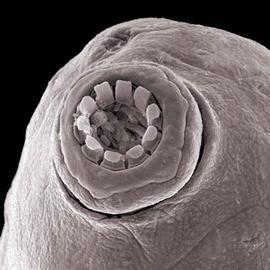
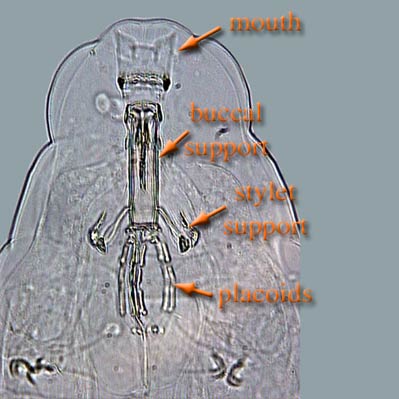
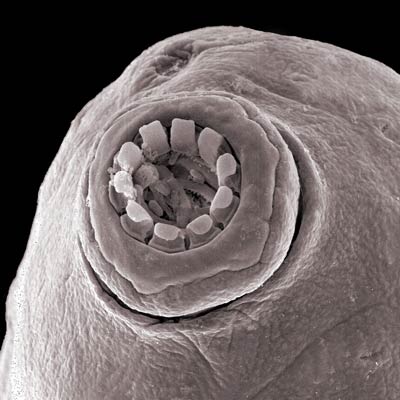
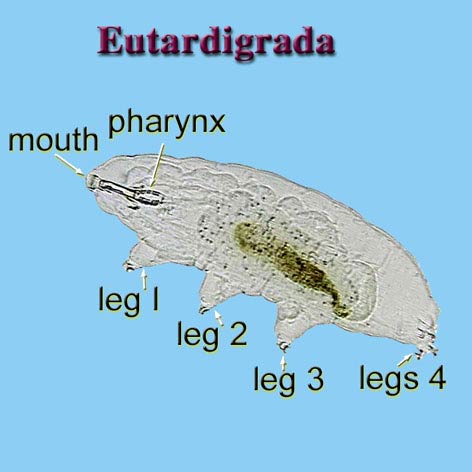
Mouthparts: internal sucking pharynxpharynx:
an organ posterior to the buccal opening that serves as a pump in fluid-feedings mites. The form of the pharynx is an important taxonomic character in the Tarsonemidae.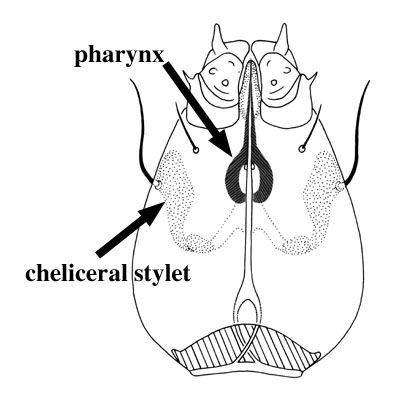 , stylets and supports
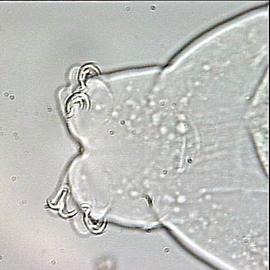
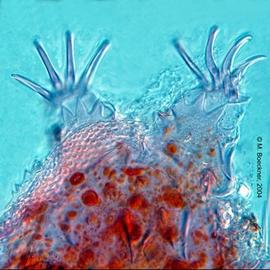
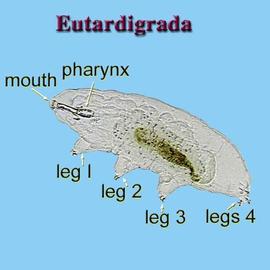
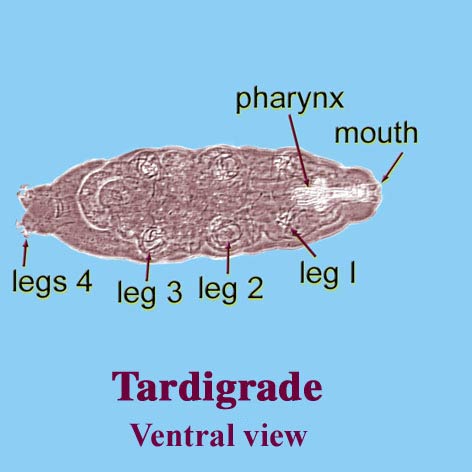
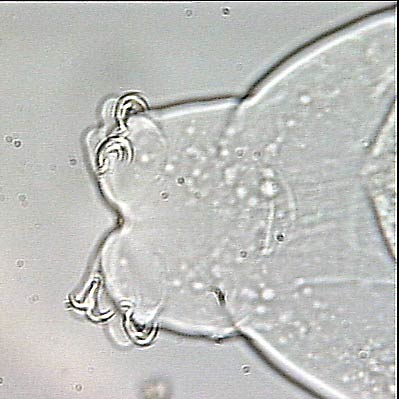
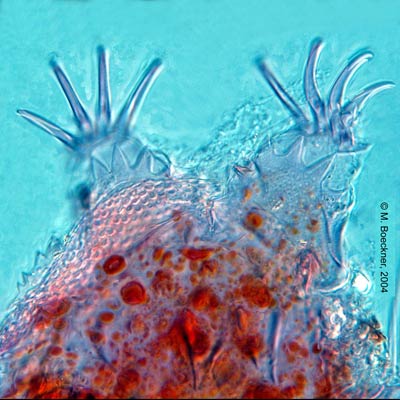
Legs: 4 pairs of lobopods ending in 2–6 claws (rarely more) or 4–6 digits ending in suckers.
Respiration: cuticular
Gonopore: obscure, subterminal
Distinguishing features: internal basket-like pharynxpharynx:
an organ posterior to the buccal opening that serves as a pump in fluid-feedings mites. The form of the pharynx is an important taxonomic character in the Tarsonemidae., placoids, buccal support, stylets, 4 pairs of lobopods with terminal claws (or toe-like suckers), 5 indistinct segments (cephalic, 3 trunk segments, terminal segment), soft-bodied or with series of armor plates.
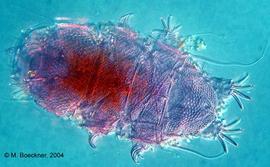
Comments: Tardigrades are commonly known as 'water bears', presumably because of their large claws and ursine build, or perhaps because of their teddy bear-like aspects. Tardi-grade means 'slow walk', an apt description of their movement. Most tardigrades have short, cylindrical bodies with either a smooth integument that lacks armor (Eutardigrada) or a series of armored plates (Heterotardigrada). Some, particularly marine species, have large spines or bodybody:
the idiosoma of mites. lobes.
Depending on species and diet, live tardigrades can be white, green, brown or red. They have four pairs of stubby, unjointed lobopod legs; the fourth pair may be reduced. Each leg ends in 2–4 or more claws that may be attached to toe-like processes. The head is not clearly set off from the bodybody:
the idiosoma of mites., but may bear a pair of eye spots. One or more seta- or horn-like cirri may be present on the head. Mouthparts are internal stylets that are protruded through the porepore:
a pore-like opening or structure in the cuticle. In Mesostigmata, lyrifissures and true pore openings are often difficult to separate and both tend to be called 'pores', e.g., the sternal pores stp1-3.
-like mouth when feeding. Anal and genital openings are terminal or between the bases of the fourth pair of legs. Tardigrades range in length from 0.1 to 1.7 mm long, with most terrestrial taxa being 0.5 mm or smaller.
ca. 900 described species in 3 classes, 5 orders; many families and genera
Author: David E. Walter
Content last updated Sept. 2006, unless indicated otherwise
Lucid key player updated Sept. 2025
idtools.org