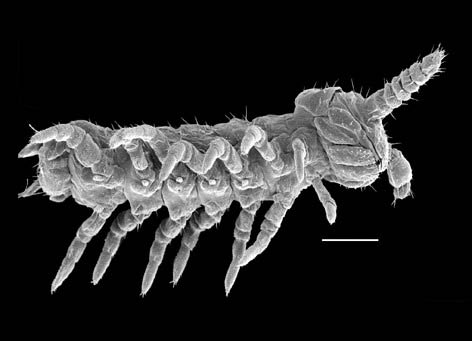
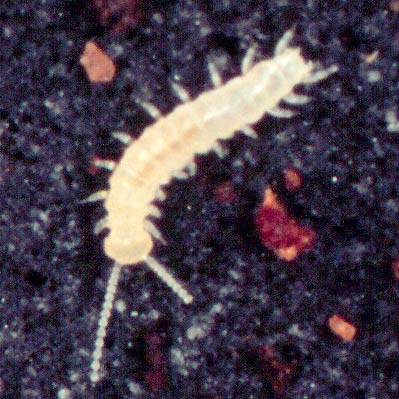
t
symphylans
medium
A few species are garden and glasshouse pests.
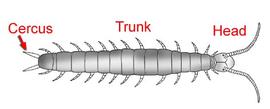
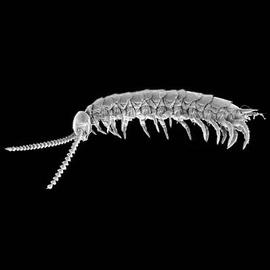
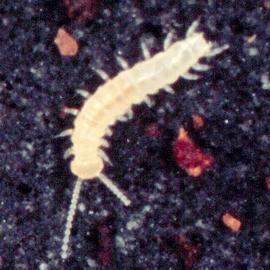
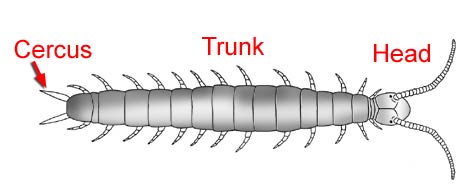
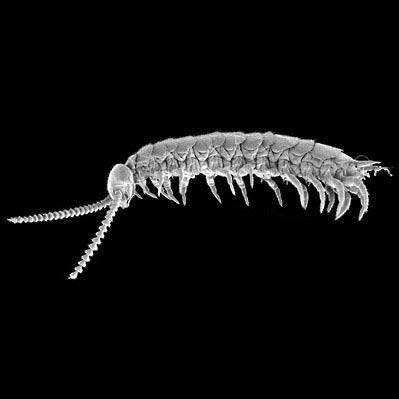
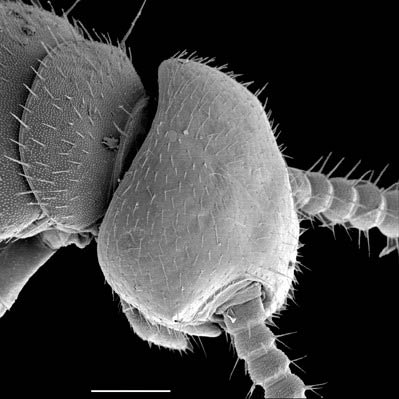
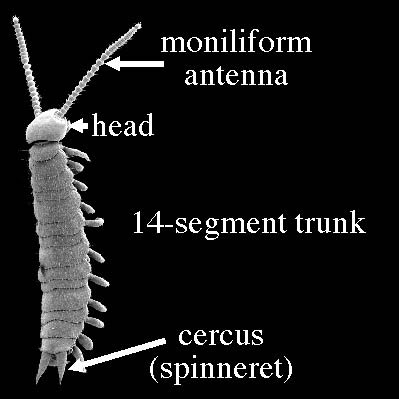
None other than small size. The distinct head with bead-like antennae and the trunk with many leg-bearing segments should distinguish symphylans from mites.
Normal adult length: 2–15 mm
Bodybody:
the idiosoma of mites.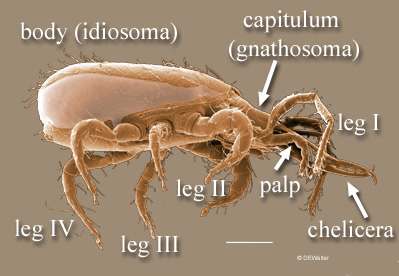 tagmata: head, trunk
Eyes: absent
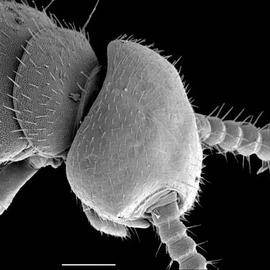
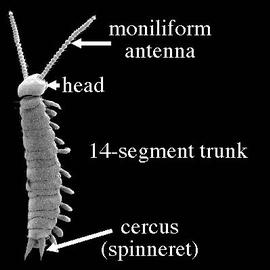
Antennae: moniliform (bead-like), many segmented
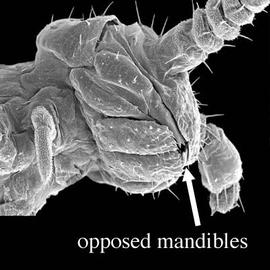
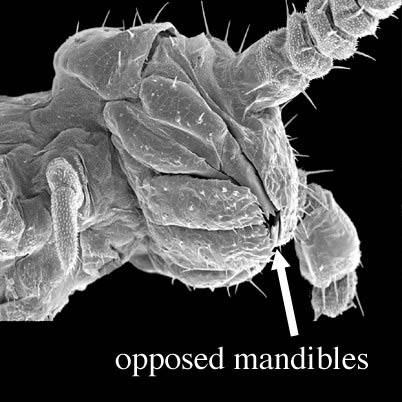
Mouthparts: entognathous mandibles, maxillae, labium (fused 2nd maxillae)
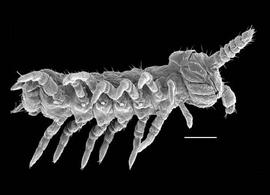
Legs: 6–12 pairs
Respiration: tracheaetracheae:
the long, filamentous tubes that ramify through the body of some mites for the exchange of gases.
, spiracles under antennae on head
Gonopore: venterventer:
the lower or under side; opposed to dorsum.
of 4th trunk segment
Distinguishing features: myriapod form; distal trichobothriatrichobothrium:
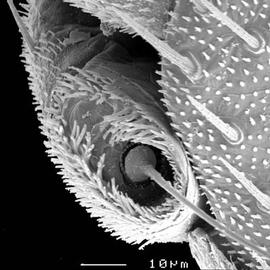
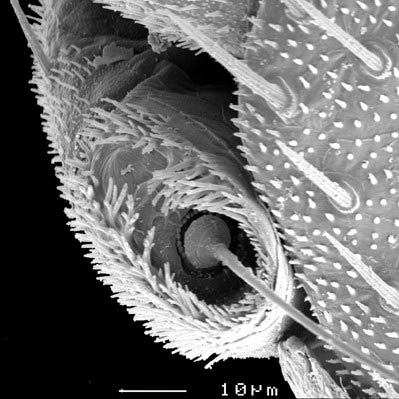
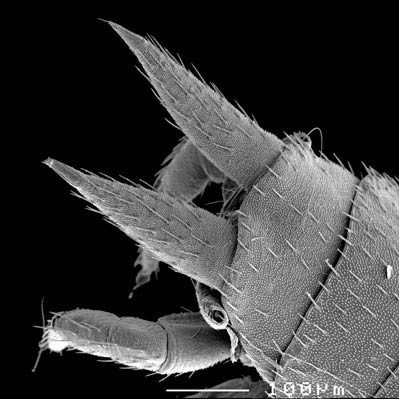
(pl. trichobothria) (= bothridial sensillum) an often elaborately modified seta set in a cup-like base; forms include filiform, ciliate, pectinate or variously thickened or clubbed (bat-like to globose or capitate).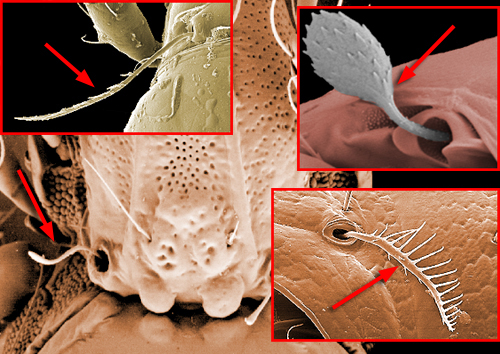 and spinneretspinneret:
a structure that produces silken fibers. In spider mites, the spinneret is in the form of a short, blunt seta-like structure on the palp tarsus.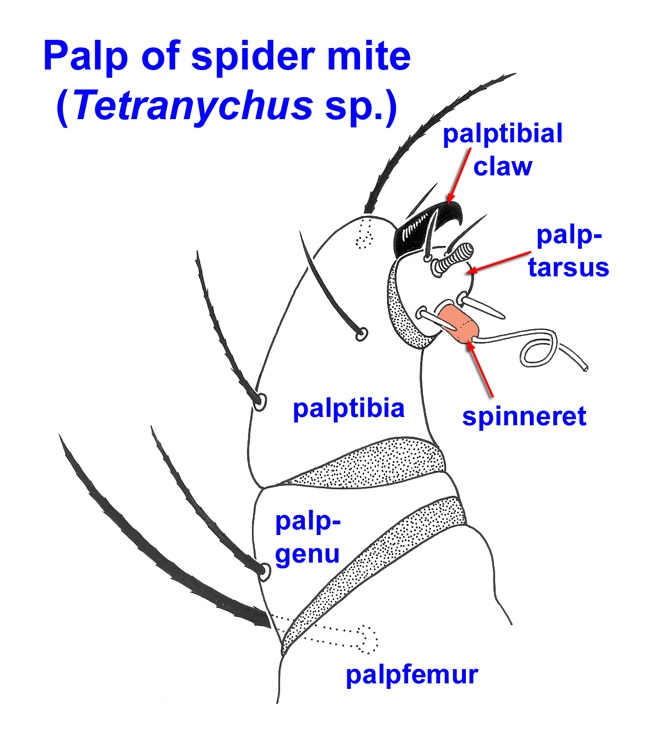 cerci
cerci
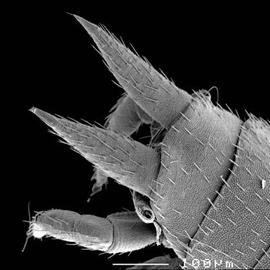
Comments: Symphylans have a number of unique features including cranial tracheaetracheae:
the long, filamentous tubes that ramify through the body of some mites for the exchange of gases.
, gonopore on trunk segment IV, and cerci used as spinnerets and flanked by well developed trichobothriatrichobothrium:
(pl. trichobothria) (= bothridial sensillum) an often elaborately modified seta set in a cup-like base; forms include filiform, ciliate, pectinate or variously thickened or clubbed (bat-like to globose or capitate).. The legs have styli and eversible sacks associated with the coxae, as do diplurans.
<200 species
Author: David E. Walter
Content last updated Sept. 2006, unless indicated otherwise
Lucid key player updated Sept. 2025
idtools.org