t
Solifugae (Solpugida)
sun spiders, camel spiders, wind spiders, solifugids
low
No known importance, but fearsome-looking, aggressive predators that are sometimes sold as pets (although they tend to be short-lived). Restricted distributions of some species could be of conservation concern. Some species are venomous.
None other than general arachnid features. Massive 2-segmented chelicerae are similar to some endeostigmatidendeostigmatid:
incorrectly formed, but commonly used, adjectival form of Endeostigmata.
and rhagidiid mites, but mites are much smaller and lack the clear opisthosomal segmentationsegmentation:
in mites distinct external segments have been lost but remnants of segmentation may be represented by hysterosomal folds or transverse arrays of setae and other cuticular sense organs. In theory, all chelicerates have a prosoma composed of 6 segments (cheliceral, pedipalpal, and four leg-bearing segments = body segments I-VI). Ventrally the positions of the prosomal segments can be identified by the insertions of their appendages, but dorsally they are obscured. The opisthosoma is thought to comprise an additional 12-13 segments (body segments VII-XVIII or XIX), but appears to be somewhat to much reduced in most mites, except possibly Opilioacarida. In early derivative Acariformes (e.g., many Endeostigmata), hysterosomal folds are thought to represent segmentation and in the Grandjean system are designated (from the sejugal furrow to the anus): C, D, E, F, H, PS AD, AN, PA. There is disagreement in the literature over the origin of 'segments' C and D. Adherents of Grandjean consider them to be opisthosomatic (with C probably representing a fusion of the pregenital [body segment VII] and genital [VIII] segments). Others believe that C and D are the dorsal regions of the last two prosomal segments that bear leggs III and IV (i.e., body segments V & VI).
of solifugids.
Normal adult length: >1 cm, range 1–10 cm
Bodybody:
the idiosoma of mites.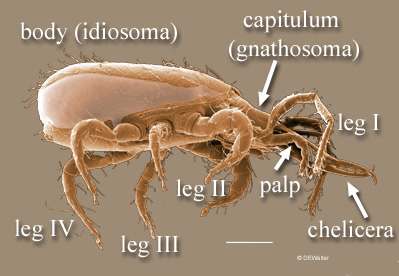 tagmata: prosomaprosoma:
(= cephalothorax) the anterior body region in arachnids; usually not distinct in mites.
, opisthosomaopisthosoma:
(= abdomen) the posterior body division in arachnids; usually not distinct in mites because of the fusion of the opisthosoma with part of the prosoma to form the idiosoma.
Eyes: 2–6 large ocelliocellus:
(pl. ocelli) a simple eye. Mites with eyes usually have one or two pairs of lateral ocelli, but some Opilioacarida have three pairs. Additionally, some acariform mites have one or two median ocelli on the underside of the naso.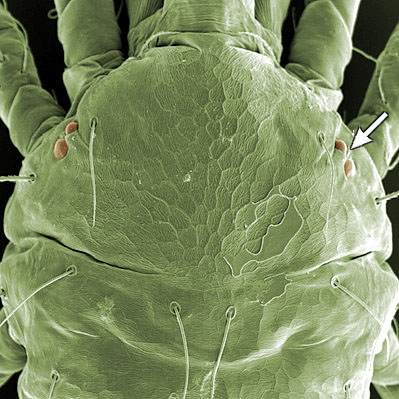
Antennae: absent
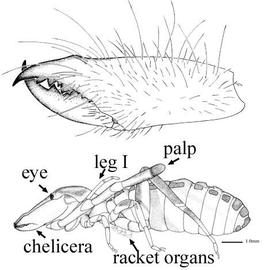
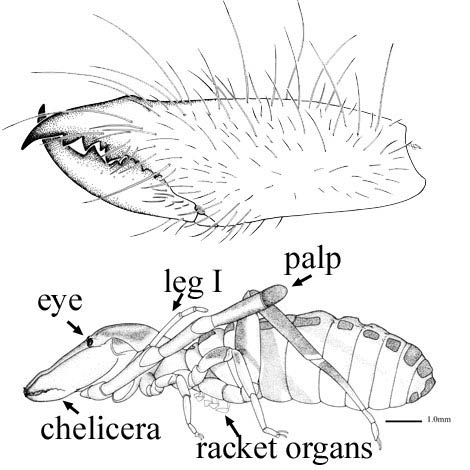
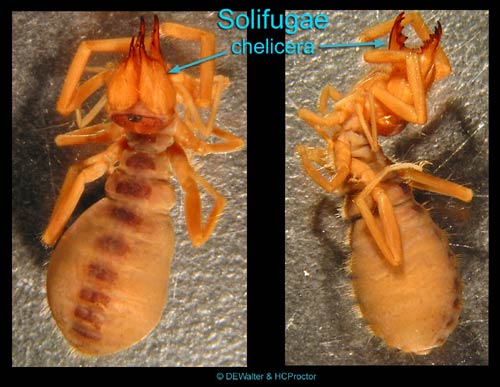
Mouthparts: 2-segmented chelicerae; leg-like palps
Legs: 4 pairs, legs I antenniform; legs II–IV ambulatory with divided trochanters.
Distinguishing features: prosomaprosoma:
(= cephalothorax) the anterior body region in arachnids; usually not distinct in mites.
with raised plate (propeltidium) protecting region of large cheliceralcheliceral:
of or pertaining to the chelicera.
muscles and bearing 2–6 often large ocelliocellus:
(pl. ocelli) a simple eye. Mites with eyes usually have one or two pairs of lateral ocelli, but some Opilioacarida have three pairs. Additionally, some acariform mites have one or two median ocelli on the underside of the naso., and smaller plates; chelicerae chelatechelate:
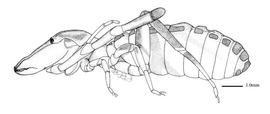
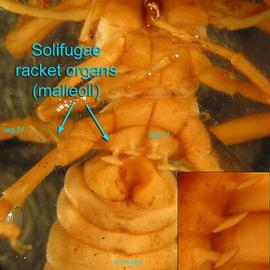
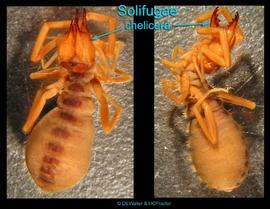
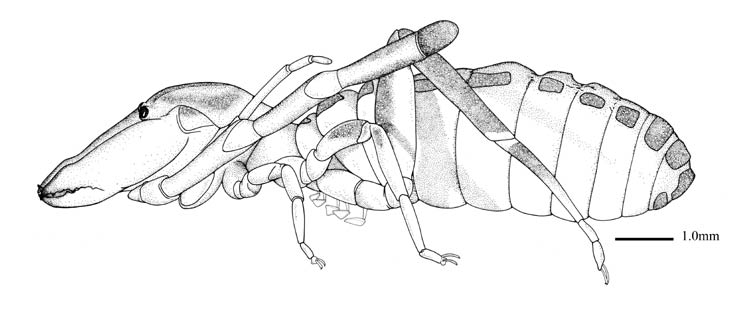
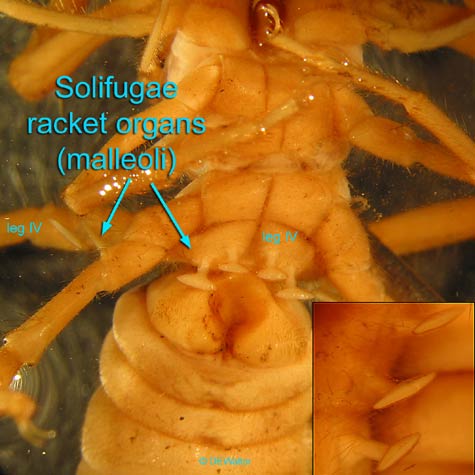
pincer-like, as in a crab's claws, a scorpion's pedipalps or many chelicerae; in water mites (Hydrachnida), chelate palps have a dorsal palptibial process opposed to a ventral movable palptarsus (opposed to uncate).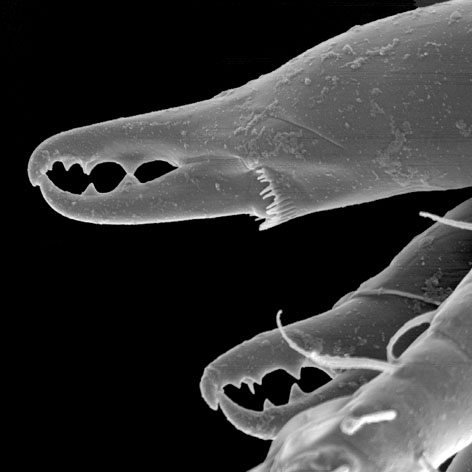 , very large and hairy; pedipalps leg-like with suckers at their tips for holding prey (and climbing); coxae and trochanters of legs IV bear 3–5 pairs of racket organs (malleoli).
Comments: Sexually mature male’s have backward pointing hookhook:
(as in cheliceral hook) the distal hook-like tips of chelicerae in the Mesostigmata, as opposed to cheliceral teeth.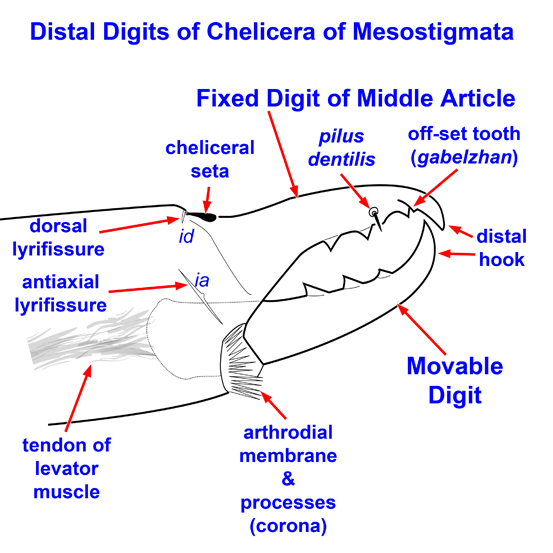 like structures called flagella on their chelicerae which are used in courtship. The opisthosomaopisthosoma:
(= abdomen) the posterior body division in arachnids; usually not distinct in mites because of the fusion of the opisthosoma with part of the prosoma to form the idiosoma.
is broadly joined to the prosomaprosoma:
(= cephalothorax) the anterior body region in arachnids; usually not distinct in mites.
and has 11 clearly defined segments with distinct tergites and sternites except where they are fused on the last segment to form a circumanal ring.
12 families, 140 genera, >1,075 spp.
Author: David E. Walter
Content last updated Sept. 2006, unless indicated otherwise
Lucid key player updated Sept. 2025
idtools.org